REVIEW · CHENNAI
Exploring Georgetown: A Heritage Walking Tour of Chennai
Book on Viator →Operated by Wonder tours · Bookable on Viator
Chennai’s market lanes can feel like time travel. This 2.5-hour heritage walk through Georgetown connects trade streets, old colonial-era milestones, and today’s busy shopping all in one practical loop. I love the no-nonsense market atmosphere at Kotwal Chavadi, where you can watch how goods move and learn what the area used to be. I also like the mix of architecture and community stops, from Madras High Court to the Armenian Church. One thing to consider: the bazaar can be a little unpredictable early on, so it’s smart to confirm the exact meeting spot and timing with your guide.
You’ll get pickup offered, group discounts, and a mobile ticket, plus a guide, bottled water, and snacks included—so you’re not scrambling mid-walk. It’s a private tour for your group, and you should expect a guided stroll through narrow, crowded commercial streets where the sights, smells, and bargaining energy are part of the experience.
In This Review
- Key things to notice before you go
- Georgetown in Chennai: why this walk feels worth your time
- Price and what $29 really buys you
- Finding your way: pickup, meeting point, and shop hours
- Kotwal Chavadi Market: where Georgetown turns into commerce
- Madras High Court: an Indo-Saracenic landmark with real civic weight
- Armenian Church: trade, refuge, and a visible community footprint
- Dare House #234: Art Deco business history in a trading neighborhood
- The Georgetown timeline you can feel while you walk
- What to bring and how to pace yourself
- Who this tour suits best
- Should you book the Georgetown heritage walking tour?
- FAQ
- How long is the Georgetown heritage walking tour?
- What is the price per person?
- Where does the tour start and end?
- Does the tour include pickup?
- Is this a private tour or a shared group?
- Are tickets or admissions included?
- What’s included besides the guide?
- Is there a cancellation policy?
- Is the tour near public transportation?
Key things to notice before you go
- Black Town to Georgetown: the neighborhood’s name and purpose shifted over centuries, and you’ll see the timeline in the places you visit.
- Kotwal Chavadi as a wholesaler’s world: this is the kind of market where many everyday goods start their journey.
- Madras High Court’s Indo-Saracenic flair: not just a landmark—an architectural statement from the mid-1800s.
- Armenian trade heritage: a centuries-old refugee community left a visible mark on Chennai’s commerce and streets.
- Dare House and Parry’s connection: an Art Deco stop that ties local business history to global trade roots.
Georgetown in Chennai: why this walk feels worth your time
Georgetown is one of those parts of Chennai where the city’s layers don’t sit politely behind glass. The streets are narrow and commercial, and the “tour” version of the neighborhood overlaps with the real one—people buying, selling, delivering, and running errands. That’s what makes this kind of heritage walk different from a museum-only day.
Historically, the area you’re walking through grew around Fort St. George and the trading community that formed afterward, when the district was called Black Town. A later reshuffle of the open area outside the fort helped set up the kind of public space that eventually led to big civic building projects. Then, in 1910, when King George visited India, the name Georgetown took over—yet the neighborhood kept functioning like a working market.
In practical terms, you’ll get a sense of what makes Georgetown tick: specialized bazaars, covered wholesale areas, street stalls, and everyday retail. You’ll also see how the city’s power centers and trade networks sit close together. One stop can feel like shopping street; the next can feel like you’ve stepped into a major civic landmark.
You can also read our reviews of more walking tours in Chennai


Price and what $29 really buys you
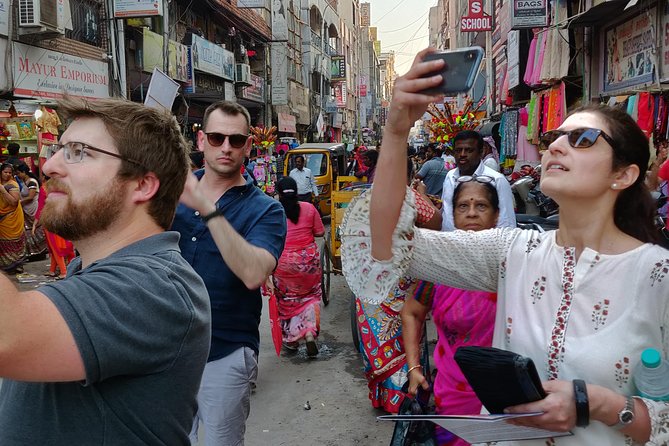
At $29 per person for about 2 hours 30 minutes, the value comes from how much is included and how much you’d otherwise need to piece together yourself. You’re paying for more than guiding; you’re paying for direction and pacing in a busy commercial zone.
Here’s what you’re getting as part of the price:
- A guide
- Bottled water and snacks
- Admission tickets for the stops
- All fees and taxes
- Pickup offered and a private setup for your group
If you tried to do this solo, you’d spend time figuring out where to start, how to time the market streets, and which buildings are worth your attention. This tour saves you that trial-and-error. And because you’re only moving for a short chunk of the day, it’s a good option when you want “city context” without committing a whole day.
Finding your way: pickup, meeting point, and shop hours
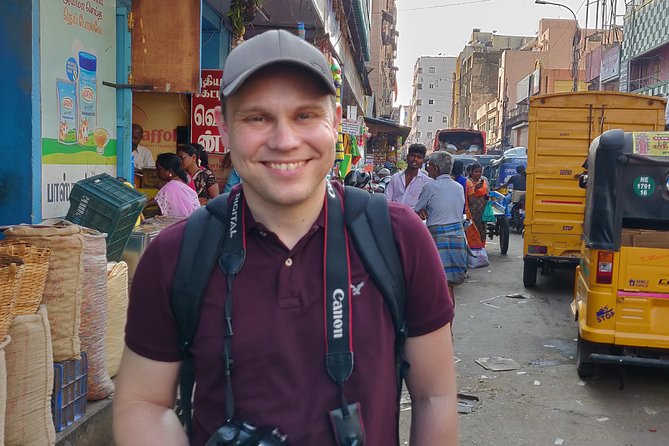
The meeting point is listed as C1 Flower Bazaar Police Station near Rattan Bazaar Rd in George Town. That’s helpful, but here’s the practical warning: in busy market districts, “the right spot” can change depending on local foot traffic and day-of conditions.
One clue is in how markets behave. Shops in these bazaars often don’t look fully alive at the same hour every day. If you arrive early or wander to the wrong side of the market, you can end up seeing only part of what the tour is designed to cover. So do yourself a favor:
- When your guide contacts you, confirm the exact starting corner.
- Give yourself a little buffer time before the scheduled start.
- If you’re coming by transit, plan to arrive near the meeting point first, then wait calmly. You’ll see more once the streets wake up.
Also note: the end point is simply George Town, so you’ll finish back in the heart of the shopping district rather than at a far-flung hotel drop-off. That’s convenient if you want to keep exploring on your own after the walk.
Kotwal Chavadi Market: where Georgetown turns into commerce
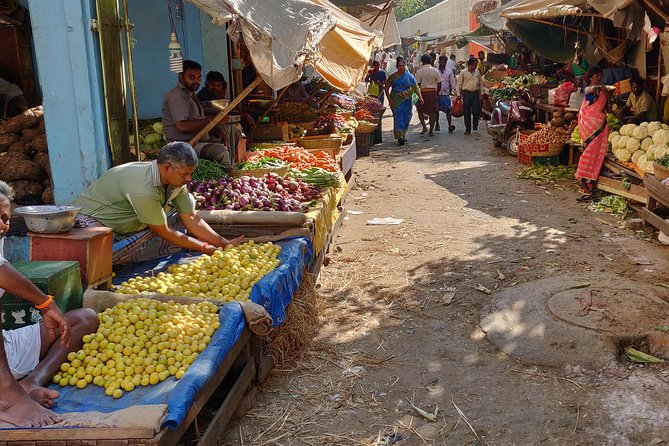
Kotwal Chavadi Market is where Georgetown makes sense fast. This isn’t a “pretty bazaar” that exists mainly for visitors. It’s a market where practically anything that can be legally sold is the goal—so you’ll see variety, fast movement, and vendors setting up their rhythm.
You’ll spend about 1 hour here, with admission ticket included. That’s a good amount of time for a working market, because long enough to notice patterns (who sells what, how stalls are arranged, where wholesale deliveries seem to flow), but not so long that you feel trapped.
A market like this also rewards the right mindset:
- Go with questions, not a shopping mission only.
- Expect tight spaces where people pass through without slowing for you.
- Be ready for visual clutter—so your guide matters. They can point out what’s worth noticing, not just what’s loud.
If you like buying practical souvenirs, Georgetown has plenty of options. Think bangles, fabrics, stationery, jewellery, and spices—the kind of goods you can actually connect to the history you learned moments earlier. And because it’s a wholesale-heavy area, the pricing energy can feel different than standard retail streets.
Drawback? Markets can be tiring. If you’re sensitive to crowds or heat, bring water (you’ll have it) and keep your pace realistic. This is also not the place to expect silent, museum-level viewing.
Madras High Court: an Indo-Saracenic landmark with real civic weight
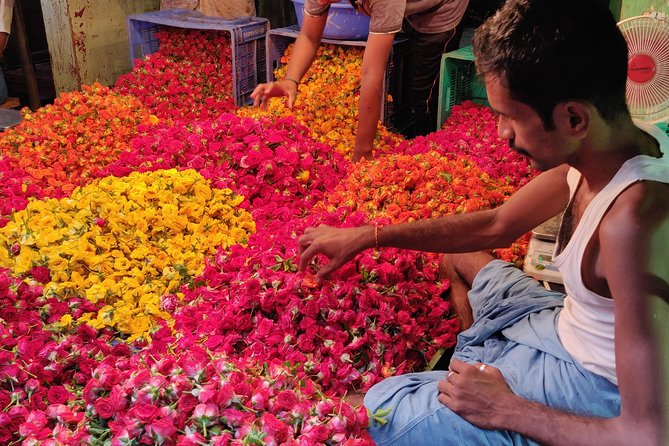
After the market noise, Madras High Court offers a clear change of pace. You’ll spend about 30 minutes here, again with admission ticket included.
What I like about this stop is the combination of story and design. The court was established in 1862 by decree from Queen Victoria, and the building is known for its Indo-Saracenic architecture. That’s more than a label. It signals a blend of styles that reflects how the colonial era shaped major public buildings—while still drawing on local influences.
For you, this is valuable because it anchors Georgetown’s commerce in the bigger machinery of administration and law. A market district doesn’t function in a vacuum. Trade needs rules, enforcement, and civic structure. Seeing the High Court after Kotwal Chavadi helps you connect daily street life to the institutions that shaped the city.
Photography-wise, you’ll likely get calmer viewing moments compared with the market lanes. Just keep expectations grounded: you’re visiting an active civic landmark, so follow your guide’s cues about where you can stand and what you can take photos of.
Armenian Church: trade, refuge, and a visible community footprint
The Armenian Church stop gives Georgetown a human layer. You’ll spend about 30 minutes here, with admission ticket included.
Armenian refugees established trade in silk, spices, and gems over 300 years ago, and this part of the walk is your chance to see how that community life left a lasting mark. Even if your main interest is markets, this stop helps you understand why certain trade networks ended up in specific streets.
What’s useful is the way the area’s past gets tied to everyday goods you might have just seen at the market. Silk and spices are not abstract here; they’re the kind of items still sold in Georgetown today. So the Armenian Church isn’t a random cultural detour. It acts like a bridge between a community story and the trading reality of the neighborhood.
The church itself is described as distinctive, and that distinctiveness matters because it makes the Armenian presence easier to recognize among the surrounding commercial scene. If you’re the type who enjoys architecture but also cares about who lived where and why, this is the stop that often connects the dots best.
Potential drawback: if you’re expecting a long sitting-and-reading museum experience, this is more like a guided look and context session. You’ll get the meaning, but you won’t be hanging around for hours.
Dare House #234: Art Deco business history in a trading neighborhood
Next comes Dare House #234, an iconic Art Deco building that once served as the headquarters of Parry’s company. The connection is specific: Parry’s was founded by Thomas Parry, a Welshman and one of Chennai’s first free merchants.
You’ll spend about 15 minutes here, with admission ticket included. Short stop, but it works. This is one of those moments where a building tells you how global trade and local enterprise blended. In a market area shaped by centuries of commerce, it makes sense that a major company’s headquarters would be part of the same story.
I also like that this stop shifts your perspective from “items in a shop” to “systems behind the items.” Market streets move fast, but companies and logistics make that movement possible. Seeing a business landmark right after the church and court helps you feel the full network: community trade, civic authority, and corporate organization.
The Georgetown timeline you can feel while you walk
This walk is effective because it keeps pairing past and present. You start in a market zone that grew after Fort St. George, then you see how open space and civic construction shaped the area later, and finally you reach buildings tied to major shifts—like the renaming to Georgetown during King George’s India visit in 1910.
Along the way, you’re not just learning facts. You’re watching the neighborhood do its current job:
- People still come for specialized shopping.
- Streets still function like corridors for trade.
- Goods you can buy today fit the categories the neighborhood is known for, from fruits and vegetables to spices and stationery.
That continuity is the point. Georgetown doesn’t feel like a staged historical set. It feels like a working district with deep roots.
If you’re a first-time visitor to Chennai, this is also a fast way to get oriented. You learn the “why” behind what you’re seeing, and that makes your later independent exploration much easier.
What to bring and how to pace yourself
This is a walking tour through active streets. You’ll move enough that comfort matters.
My go-to checklist for a market-and-landmark day like this:
- Wear breathable shoes with grip. Floors can be uneven and crowded.
- Keep your phone and wallet secure but accessible when you want to check prices.
- Drink water as you go (you’ll have bottled water, but don’t wait until you feel thirsty).
- Bring modest patience. Markets run on their own schedules.
Also, remember that you’ll hit a mix of environments: market alleys, a major civic building, a church, then an Art Deco structure. Each one changes the pace. Let your body keep up. If you try to “tour harder” than your feet can manage, you’ll miss the best part: the context.
Who this tour suits best
This Georgetown heritage walk fits best if you like two things: real city life and clear historical context.
Book it if you:
- Want a short, guided plan that covers both commerce and landmarks
- Enjoy architecture, especially Indo-Saracenic and Art Deco styles
- Like shopping for practical items like spices and fabrics but want understanding, not just sales pitches
- Prefer private guiding for your group so you can ask questions and move at a comfortable pace
You might want to choose something else if you:
- Only want quiet viewpoints and minimal crowd contact
- Are looking for a long museum-style itinerary with lots of downtime
Should you book the Georgetown heritage walking tour?
I think you should book it if you want Georgetown to make sense fast—markets plus the big-name anchors that shaped the district. The pricing feels fair for what you get: guided time, admissions, and basic comforts like water and snacks.
The main reason not to book is if you’re very strict about early shop hours or you hate the idea of a working market environment. If you do book, the best move is simple: confirm the meeting point with your guide and arrive a few minutes early so your start isn’t stressful.
If you’re ready for a walk where the past and present shake hands, this one’s a solid pick.
FAQ
How long is the Georgetown heritage walking tour?
It’s about 2 hours 30 minutes.
What is the price per person?
The price is $29.00 per person.
Where does the tour start and end?
The meeting point is C1 Flower Bazaar Police Station in George Town, and the tour ends in George Town, Chennai.
Does the tour include pickup?
Pickup is offered.
Is this a private tour or a shared group?
It’s a private tour/activity, so only your group participates.
Are tickets or admissions included?
Yes. Admission tickets are included for the stops.
What’s included besides the guide?
Bottled water, snacks, and all fees and taxes are included.
Is there a cancellation policy?
There’s free cancellation. You can cancel up to 24 hours in advance for a full refund, based on the experience’s local time.
Is the tour near public transportation?
Yes, it’s near public transportation.