REVIEW · PARIS
Paris Medieval Heart: Walking Tour in Ancient Marais
Book on Viator →Operated by My Super Tour · Bookable on Viator
Medieval Paris, made easy on foot. This 2.5-hour Marais tour strings together major landmarks and quieter corners, from the oldest synagogue to Victor Hugo’s home and Sully’s garden. I especially like the small group size (max 15) and the fact that most stops are marked free.
One thing to keep in mind: the meeting point at 3bis Pl. de la Bastille can be tricky if you’re arriving late. If you want a smooth start, plan to get there early and use your phone map before you’re standing in the wrong spot.
In This Review
- Key Things I’d Prioritize About This Tour
- Why the Marais’s Medieval Core Fits a 2.5-Hour Walk
- From Bastille to Rue des Tournelles: The Oldest Synagogue Stop
- Place des Vosges: Paris’s Oldest Square With Stories You Can Spot Later
- Maison de Victor Hugo: A Writer’s Apartment Stop That Feels Personal
- Hotel de Sully’s Courtyard and Garden: Architecture’s Quiet Side
- Paroisse Saint-Paul Saint-Louis: Gothic Break, Baroque Shift, Jesuit Twist
- Rue des Rosiers and Jardin des Rosiers: Food Quarter Meets Medieval Defenses
- Halles des Blancs Manteaux: A Templar Fortress Moment
- Rue des Francs Bourgeois: The Ash Factory That Worked Until the 1800s
- Musee Picasso-Paris and Archives Nationales: Museum Energy Without the Full Commitment
- Hotel de la Bretonnerie and Centre Pompidou: Modern Paris Comes In After the Medieval Layer
- What the Small Group Really Changes (And Why Guides Can Make It)
- Price and Value: What $51.66 Buys You in Real Terms
- Is This Tour Right for You? My Best Fit Guide
- Should You Book Paris Medieval Heart: Walking Tour in Ancient Marais?
- FAQ
- How long is the Paris Medieval Heart walking tour?
- What does the tour cost?
- Where does the tour start and where does it end?
- What time does it begin?
- Is it offered in English?
- What’s included in the ticket price?
- Are there admission fees at the stops?
- What group size should I expect?
- Is the tour refundable if my plans change?
Key Things I’d Prioritize About This Tour
- Max 15 people keeps the pace human, with room for questions.
- Most stops are free so you can focus on seeing, not budgeting for entry fees.
- A smart mix of themes: Jewish Paris, medieval defenses, architecture shifts, and landmark museums.
- Guide style matters: people describe a guide with strong preparation and visuals.
- You finish at Centre Pompidou, so you can extend the day right where the tour ends.
- Local recommendations (food, boutiques, cafés) help you keep exploring after the walk.
Why the Marais’s Medieval Core Fits a 2.5-Hour Walk
The Marais can feel like a maze when you’re on your own: streets that look similar, courtyards behind walls, and big-name sights that steal your attention from everything else. This tour is designed to solve that problem by moving you through the “why it matters” parts of the neighborhood in a manageable time window.
I like that the schedule keeps its momentum. You get frequent short stops (often around 10 minutes) that are long enough for context and photos, but not so long that you lose the group. In practice, that means you leave with a mental map of the Marais that you can actually use later.
This is also a good format if you’re traveling with kids or teens. The pace is walkable, and the stops are varied, so you’re not stuck listening to one topic for too long.
You can also read our reviews of more walking tours in Paris

From Bastille to Rue des Tournelles: The Oldest Synagogue Stop
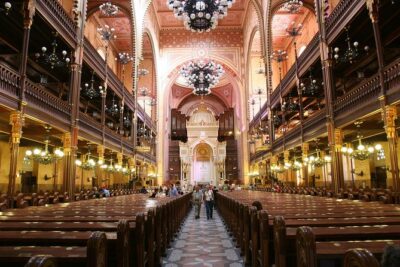
You start at 3bis Pl. de la Bastille at 10:00am, then head into the older layers of the Marais. Stop 1 lands at 21bis Rue des Tournelles, where you’ll discover the oldest synagogue in Paris. It’s listed as 10 minutes, and the admission ticket is free.
This is a powerful way to begin, because it sets the tone: the Marais isn’t just postcards and grand squares. It’s also about communities and buildings with long continuity.
If you’re the type who likes details, this stop is a reminder to slow down for a minute. Pay attention to how the guide frames what you’re seeing, because the “what” is right there, but the “why” is what makes it stick.
Place des Vosges: Paris’s Oldest Square With Stories You Can Spot Later
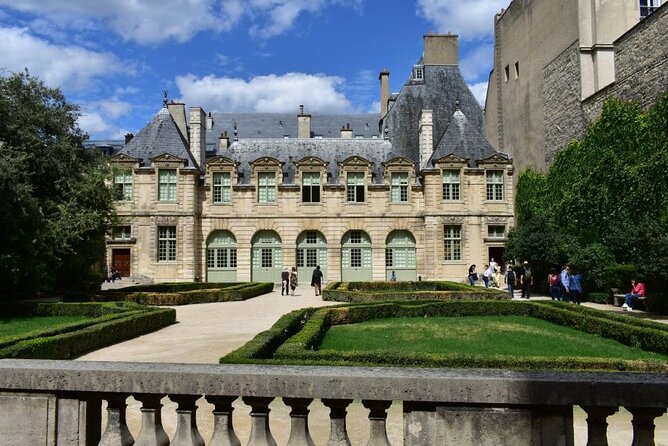
Next up is Place des Vosges, introduced as the oldest square in Paris with many stories and lesser-known moments. The stop is 10 minutes, and there’s no admission ticket included for this segment.
This is one of those places where it’s easy to glance and keep walking. The value here is that you’ll learn what to look for so the square becomes more than a pretty backdrop.
After you leave, you’ll likely find yourself circling back on your own walk, because now you understand how the square fits into the Marais’s long timeline. It’s also a great visual checkpoint: once you know where you are here, the rest of the quarter makes more sense.
Maison de Victor Hugo: A Writer’s Apartment Stop That Feels Personal
You’ll then visit Maison de Victor Hugo, with a 15-minute stop and free admission ticket listed. This segment focuses on the writer’s apartment, so it’s less about monuments and more about the everyday space where a major French literary figure lived.
I like this stop because it breaks up the architecture-and-street rhythm. Even if you’re not a museum person, an apartment visit can help you imagine the humans behind the buildings.
Practical note: 15 minutes flies. If you’re curious about how the place is arranged or what the guide points out, this is the stop to lean in and ask questions while your guide is there.
Hotel de Sully’s Courtyard and Garden: Architecture’s Quiet Side

Stop 4 takes you to Cour et jardin de l’Hotel de Sully, described as a real treasure-like garden inside a magnificent mansion. It’s a 10-minute introduction with free admission.
The big clue here is ownership and time. The mansion is connected to Sully, the finance minister of King Henry IV (1589–1610), which helps you place the site in a specific historical frame instead of vague “old Paris” storytelling.
If you like Paris when it’s not screaming for attention, this is the moment. Courtyards and garden spaces in the Marais reward calm walking. You’ll get the sensation that you just stepped into a different pace of life.


Paroisse Saint-Paul Saint-Louis: Gothic Break, Baroque Shift, Jesuit Twist
At Paroisse Saint-Paul Saint-Louis, your guide will show you an original church tied to a major stylistic change. The tour frames it as the first church to break away completely from Gothic style and adopt the newer Baroque style of the Jesuits.
This stop is 10 minutes, and admission is listed as free. It’s also one of the best “quick learning” stops on the route, because the guide gives you a clear way to compare styles you might not otherwise notice on a first pass.
If you’re into architecture, treat this as your “look training.” After you’ve been shown what changed and why, you start seeing the building language everywhere else you walk.
Rue des Rosiers and Jardin des Rosiers: Food Quarter Meets Medieval Defenses
Then you get two connected stops that mix senses and time.
First is La Rue des Rosiers, a 15-minute look at the gastronomical delicatessen in the heart of the ancient Jewish Quarter. Admission is listed as free because you’re not paying to stroll a street.
Next is Jardin des Rosiers – Joseph-Migneret, where you’ll see traces of the Medieval defensive wall of Paris. That’s 10 minutes and again marked free.
I like how this pair works. Street food energy is one thing, but the medieval wall angle gives you a different kind of satisfaction: the physical evidence of how this part of the city protected itself.
If you’re planning what to eat later, Rue des Rosiers is a useful starting point. Even if you don’t buy anything during the stop, you’ll leave with a sense of where to return.
Halles des Blancs Manteaux: A Templar Fortress Moment

At Halles des Blancs Manteaux, you’ll spend 10 minutes getting acquainted with a fortress used by the Templar Knights in the Middle Ages. This stop is listed as free, and the guide’s job is to make the connection feel real instead of abstract.
This is one of the stops that can quietly shift your whole understanding of the Marais. You tend to think of the area as elegant now, but the buildings also carry older functions.
Take a few minutes to look around, not just at the main façade. The guide’s framing helps you notice why places like this were built to be functional, not just decorative.
Rue des Francs Bourgeois: The Ash Factory That Worked Until the 1800s
Next comes a stop that sounds odd in the best way: Rue des Francs Bourgeois, where the guide shows you the factory of ashes, described as a unique institution that worked until the middle of the 19th century. It’s 10 minutes with free admission.
This is a strong example of why a guided walk beats wandering. When you’re on your own, you’ll likely pass by without realizing what the place once did.
Also, this kind of stop adds texture to your Marais day. It’s not only about elite mansions and famous authors. You get a glimpse of practical urban work that kept the city moving over time.
Musee Picasso-Paris and Archives Nationales: Museum Energy Without the Full Commitment
The tour then includes quick museum-focused segments, mostly framed as viewing and orientation.
You’ll have a stop in front of Musee Picasso-Paris, described as dedicated to Pablo Picasso, inventor of Cubism. The stop is listed as 10 minutes, and admission isn’t noted here as part of the tour cost.
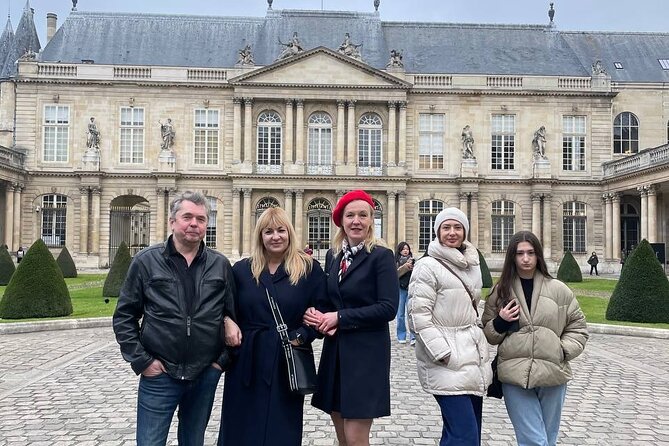
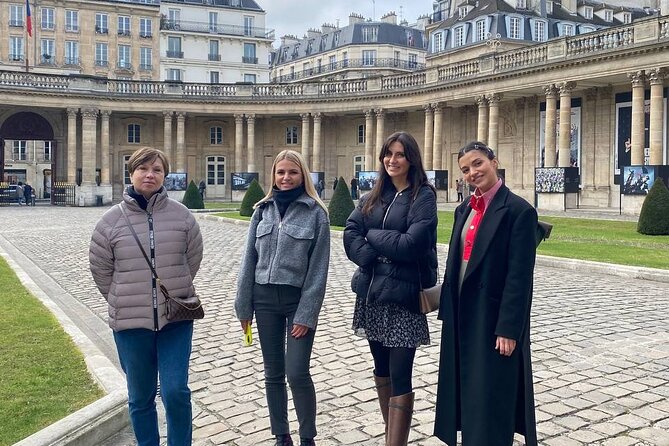
After that, Musee des Archives Nationales appears as a behind-the-front-side experience. You get 15 minutes to discover hidden gardens where noble people had luxury mansions in the time of the kings. Admission is listed as free for this segment.
I like this museum pairing because it’s a sampler. It gives you enough context to decide later if you want to return and do a deeper museum day on your own schedule.
Hotel de la Bretonnerie and Centre Pompidou: Modern Paris Comes In After the Medieval Layer
Stop 12 is Hotel de la Bretonnerie, where your guide walks you through an area with trendy fashion stores, food shops, and cafés around the LGBT community. It’s 10 minutes and listed as free.
This matters because it changes the emotional tone of the walk. You go from medieval walls and historic churches into a place where people shop, eat, and meet. It’s a reminder that the Marais stays alive.
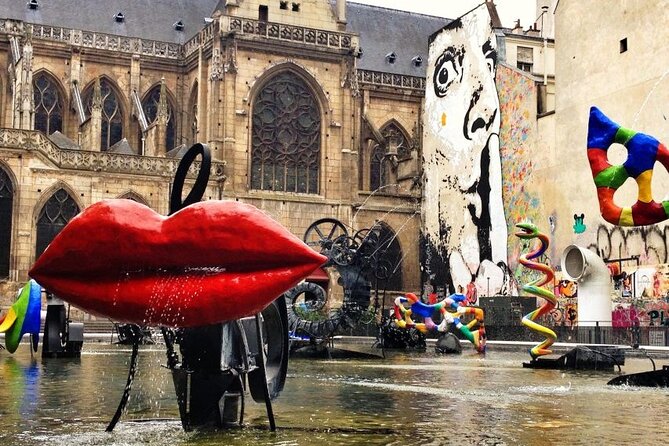
Finally, you end at Centre Pompidou, with a 15-minute stop. The tour describes the building as a postmodern museum for contemporary art, plus a library and cinema. Your tour ends on the square in front of Centre Pompidou at Place Georges-Pompidou (75004).
One detail from people who took the tour: you may get a great view of Paris from higher up during the Pompidou stop. That’s the kind of payoff that makes the walk feel like more than just sightseeing.
What the Small Group Really Changes (And Why Guides Can Make It)
This tour caps at 15 travelers, and that size changes everything from comfort to pacing. You’re not stuck sprinting to keep up with a big crowd, and you can actually ask a question when something catches your attention.
I also like that different guides bring the same core approach: clear explanations and ways to picture what you’re looking at. Several people mention that their guide used a prepared notebook with illustrations and pictures timed to the right moments, which helps if you learn best by seeing.
And when the group is small, the tour can flex. One account notes an experience where the group was tiny, which helped people ask questions and still keep to a thorough route length.
Price and Value: What $51.66 Buys You in Real Terms
At $51.66 per person, you’re paying for something that can be hard to replicate on your own: a local guide who connects sites across different themes. This isn’t a museum ticket package. It’s a guided route that orients you and gives you a reason to care about what you pass.
The good news is that many stops are marked free for admission ticket. The oldest synagogue, Victor Hugo’s apartment, Sully’s courtyard and garden, the church, the Jardin des Rosiers traces, Halles des Blancs Manteaux, and the Archives Nationales gardens are all listed as free ticket segments.
The one named site where admission ticket isn’t included is Place des Vosges—but since it’s a square, you’re mostly there to look and learn. The route is also listed as English, with a mobile ticket.
Two practical notes: bottled water is not included, and you’ll be on foot for about 2 hours 30 minutes. I recommend carrying some water and planning light layers, because even a short walking tour can feel longer if the weather turns.
Is This Tour Right for You? My Best Fit Guide
This one is ideal if you want a first-rate orientation to the Marais without doing a full-day museum marathon. You’ll walk from landmark squares into smaller sites that connect religion, architecture, and city life across centuries.
It also fits families. People describe the tour as enjoyable for both teens and a 10-year-old, which suggests the guide keeps it engaging without losing the historical thread.
If you dislike walking, or if you need long indoor time at each stop, you might prefer a slower tour. The format here is short stops and constant moving, which is the whole point—fast orientation, then you explore on your own.
Should You Book Paris Medieval Heart: Walking Tour in Ancient Marais?
I’d book it if you want the Marais explained in a way that helps you keep exploring after the tour ends. The mix of free stops, the small group feel, and the way the route moves from medieval defenses to today’s Paris vibe make it strong value for a half-day plan.
Book it with one expectation: this is a walking overview, not a deep museum day. If that matches your style, you’ll finish with a clearer mental map of the Marais and a list of places you’ll want to revisit.
If you want, tell me your travel dates and whether you’re more into food, architecture, or Jewish history—I can suggest a smart “after the tour” plan around Rue des Rosiers and the Centre Pompidou area.
FAQ
How long is the Paris Medieval Heart walking tour?
It runs for about 2 hours 30 minutes (approx.).
What does the tour cost?
The price is $51.66 per person.
Where does the tour start and where does it end?
It starts at 3bis Pl. de la Bastille, 75004 Paris, France, and ends at Place Georges-Pompidou, in front of the Centre Pompidou.
What time does it begin?
The start time is 10:00am.
Is it offered in English?
Yes, the tour is offered in English.
What’s included in the ticket price?
An experienced local guide is included.
Are there admission fees at the stops?
Many stops are listed with admission ticket free, while Place des Vosges is listed as not included for admission. Bottled water is not included.
What group size should I expect?
The tour has a maximum of 15 travelers.
Is the tour refundable if my plans change?
Free cancellation is available up to 24 hours in advance for a full refund.