REVIEW · ATHENS
Footsteps of Apostle Paul in Ancient Corinth Biblical
Book on Viator →Operated by Exclusive Pickups · Bookable on Viator
Paul’s Corinth feels close up.
This is a private, full-day day trip that pairs big-sky ancient sites with a smooth private ride and a guide who knows the story behind what you’re seeing. I really like the balance of major stops plus breathing room for photos and a relaxed lunch. I also like that several key places on the route have free admission, so you’re not constantly calculating extra tickets. One drawback: the Temple of Apollo area ruins and the Archaeological Museum have entrance fees that aren’t included, so plan for that cost before you go.
You’ll be in the region for about 8 hours, moving between landscapes that shaped Corinth’s trade and Paul’s message. The day works best if you want both geography and faith-history context, not just a photo sprint. If you prefer to wander totally on your own with no structured stops, you might find the schedule a bit more guided than you’d like.
In This Review
- Quick takeaways on Footsteps of Apostle Paul in Ancient Corinth
- A private Athens day trip that connects Paul to real geography
- Corinth Canal: a modern reminder of why Corinth mattered
- Apostolos Pavlos Church: reflection near the ancient city
- Temple of Apollo at Ancient Corinth: where ruins meet the Paul story
- Archaeological Museum of Ancient Corinth: artifacts that fill the gaps
- Acrocorinth: fortress walls and panoramic context
- Ancient Port of Kenchreai: following Paul’s sailing point
- How the timing and pacing work in real life
- Price and value: $336.43 for up to 3 people
- What to bring (and what to skip) for a smooth day
- Who this tour suits best
- Should you book Footsteps of Apostle Paul in Ancient Corinth Biblical?
- FAQ
- Is this tour private?
- How long is the tour?
- Does the tour include transportation from Athens?
- What language is the tour in?
- Is lunch included?
- Are entrance fees included?
- What’s included in the car?
- Is a mobile ticket used?
- When should I book?
Quick takeaways on Footsteps of Apostle Paul in Ancient Corinth
- Private group, up to 3 people: just your group in the car, so the pace feels personal rather than rushed.
- Comfort included for a long drive: air-conditioning, bottled water, and WiFi on board.
- Corinth Canal first: see the modern Isthmus cut before you tackle the ancient city.
- Acrocorinth views help you understand the whole region: it’s one of those places where height makes history click.
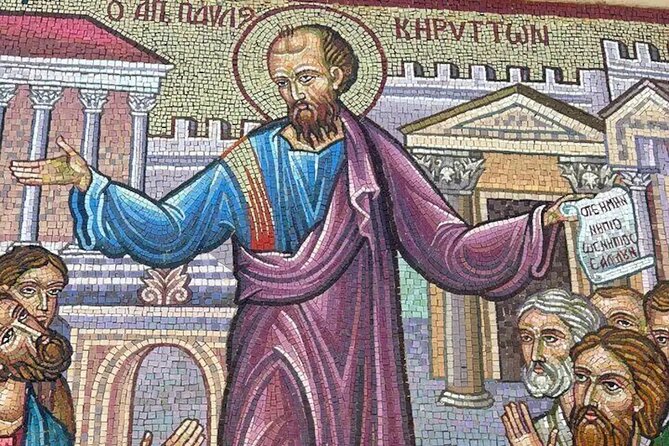
- A clear biblical thread through the day: Paul’s stops connect to Bema tradition and the port of Kenchreai.
- Budget for two paid admissions: Temple of Apollo ruins and the Archaeological Museum aren’t included.
A private Athens day trip that connects Paul to real geography
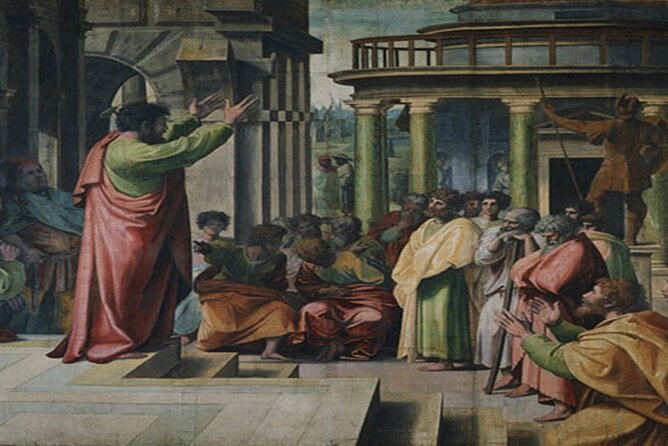
This tour is built for one main goal: following the footsteps of Apostle Paul in Ancient Corinth, with enough context that the city makes sense on the ground. The route starts with a modern engineering landmark, then moves into churches and ruins tied to Paul’s time in Corinth. The best part is how the day teaches the “why” behind the “where.”
You’re not just seeing stones. You’re seeing a strategic crossroads: Corinth’s position made it a trade hub, and that same connectivity shaped how ideas traveled too. And because it’s a private experience (up to 3 in your group), you can ask questions and spend extra minutes at the viewpoints that catch your eye.
If you’re the type who likes biblical history but also enjoys practical travel details, this hits a sweet spot.
You can also read our reviews of more tours and experiences in Athens.

Corinth Canal: a modern reminder of why Corinth mattered
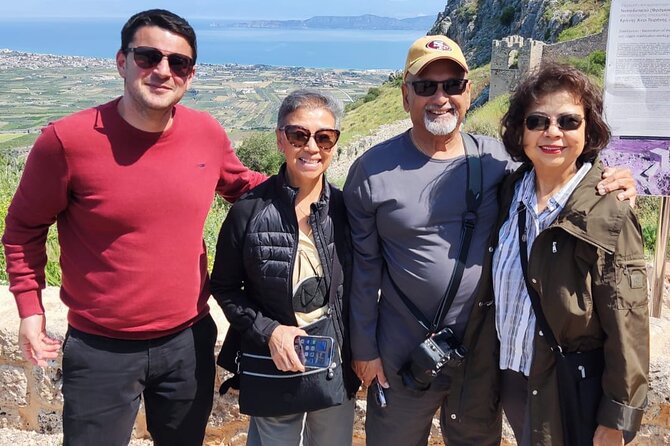
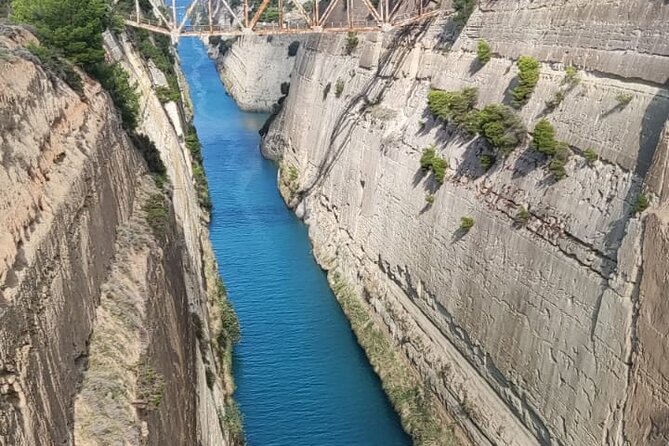
Your day kicks off at the Corinth Canal, a narrow waterway linking the Aegean Sea with the Ionian Sea. The canal slices through the Isthmus of Corinth and is surrounded by steep rock walls, towering more than 70 meters. It’s only about 24 meters wide, so standing near it gives you a vivid sense of how tightly space was used here.
Even though the canal itself didn’t exist in Paul’s time, you’ll still get a powerful “big picture” moment. Corinth’s strategic importance as a connector between seas was always there. The canal is just the modern version of that same logic: moving people and goods efficiently through a chokepoint.
Practical tip: you’ll only have about 30 minutes here, so pick your photo spot quickly and use the time to watch how the canal sits in the rock landscape. It makes the rest of the day easier to picture.
Apostolos Pavlos Church: reflection near the ancient city
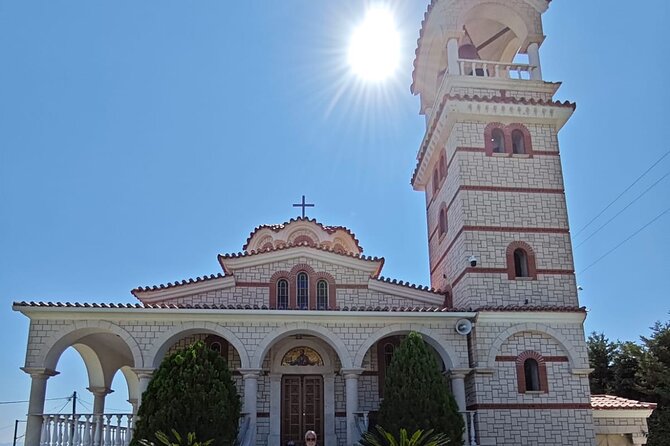
Next comes the Holy Church of Apostle Paul in Ancient Corinth, a calm site near the ruins associated with Paul’s work. This stop is short—around 30 minutes—but it matters because it shifts the tone of the day. After the canal’s engineering scale, you’re in a more reflective atmosphere tied to the legacy of Paul’s preaching and the early Christian community that formed in Corinth.
What I like about this kind of stop is that it gives you a pause between archaeology and belief. You don’t need to be religious to appreciate it; the location simply helps you stay focused on why these places matter historically and spiritually.
If you’re sensitive to heat and light, this church stop can also be a good breather—plan to use it for a moment of quiet and a few slower photos rather than rushing through.
Temple of Apollo at Ancient Corinth: where ruins meet the Paul story
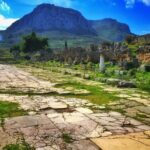
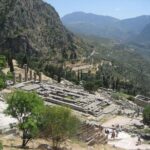
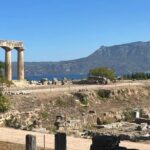
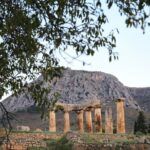
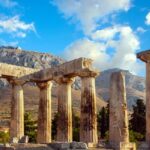
Then you get into the heart of the ancient city: the Temple of Apollo area and the wider ruins at Ancient Corinth. This is one of the stops where the tour’s biblical “thread” is most tangible, because Paul’s time in Corinth connects to key public areas in the city.
You’ll have about 45 minutes at this site, and entrance isn’t included. That fee is worth treating as part of the experience value, because this is where the city’s architecture and layout can help you understand the environment Paul would have navigated while preaching.
A helpful way to think about this stop: ruins can look like scattered fragments unless you know what they used to represent. Here, focus less on trying to read every stone and more on figuring out how a major religious center sat near civic and commercial space. Corinth was a city where public life mixed with belief. That’s the atmosphere you’re walking through.
Practical note: wear shoes you trust on uneven ground. You’ll be outdoors and moving between ruin zones.
Archaeological Museum of Ancient Corinth: artifacts that fill the gaps
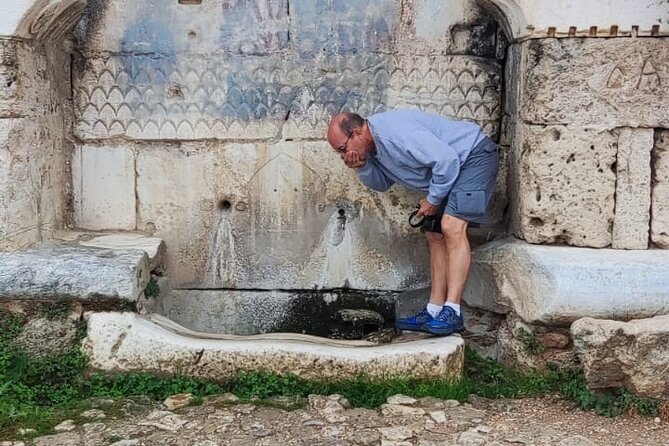
After the ruins, you’ll head to the Archaeological Museum of Ancient Corinth for about 30 minutes. This is where the day stops feeling like a sightseeing checklist and starts becoming a real explanation of the city.
The museum holds artifacts that show Corinth’s mix of trade, culture, and early Christianity-related finds from the period. Expect to see things like sculptures, mosaics, pottery, and inscriptions—objects that help you “see” what daily life and city power looked like when Corinth was at its peak.
Because your museum time is limited, don’t try to read everything. Instead, look for items that connect to the feel of the city: inscriptions and objects tied to the era you’re tracing. That’s where a short visit still pays off.
One budgeting caution: admission is not included. Since this museum is part of the same historical arc as the ruins, I’d treat it as a key portion of the experience rather than an optional add-on.

Acrocorinth: fortress walls and panoramic context
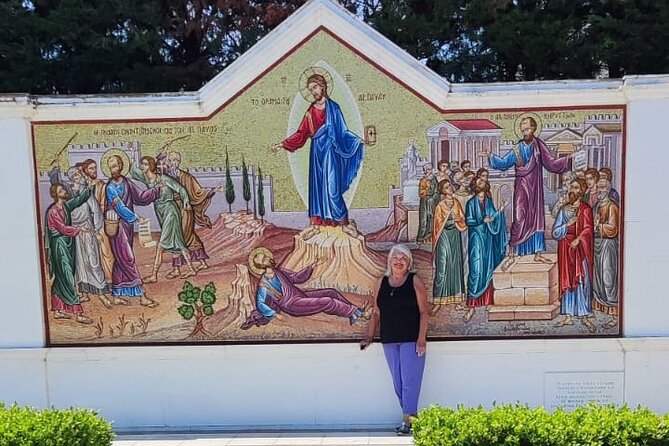
Now for one of the most memorable stops: Acrocorinth. This is the hilltop fortress above Ancient Corinth, and it’s been used as a stronghold across many eras. The walls and strategic position make it clear why control of this region mattered for centuries.
You’ll have about 45 minutes here, and entrance is listed as free. Even better, this is the part of the day where the views do the teaching. When you look out toward the sea and the surrounding landscape, the geography stops being abstract. You can start imagining travel routes, sight lines, and why people would gather where they did.
There’s also a spiritual layer. In ancient times, the fortress area included temples and shrines, so it’s not just military architecture. Today it’s still layered with meaning.
In the reviews I’ve seen, people often mention a lunch with a view around this area. If your driver sets that up in a nearby restaurant, take it. It’s a rare chance to sit back during a packed day and connect the food moment to the big landscape around you.
Practical tip: bring water and pace yourself on the climb. Even if you’re used to walking, the hilltop can feel more intense than it looks from below.
Ancient Port of Kenchreai: following Paul’s sailing point
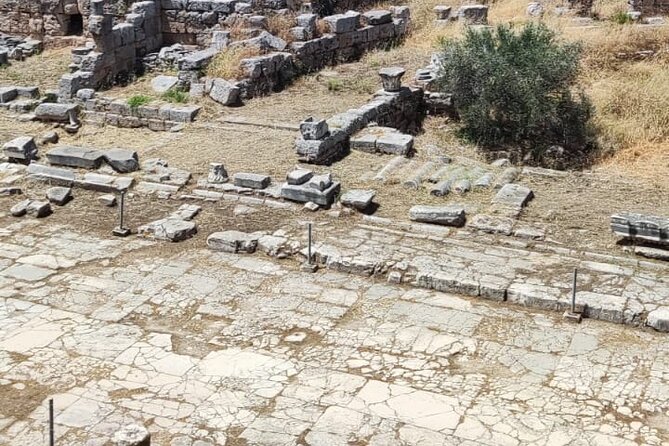
Finally, you’ll reach Kenchreai, the eastern port of ancient Corinth. This is a quieter stop than the fortress, but it’s a smart way to close the loop. Ports explain movement—commerce, travel, and the movement of ideas.
This port matters for Paul because it’s associated with the way he set sail for missionary journeys. Today you can see remains of docks and submerged ruins in the port area, with a coastal feel that makes it easier to picture ships and departures.
You’ll have about 25 minutes here. Use it for a short walk and a few photos rather than trying to cover everything. The point is to end the day with a sense of “where Paul went next,” not a final deep-history lecture.
How the timing and pacing work in real life
The tour runs about 8 hours total. That’s a classic length for an Athens-based day trip where you’re balancing driving time, outdoor ruins, and a couple of indoor stops.
Here’s the pacing logic that makes it work:
- You start with something easy to understand fast: the Corinth Canal.
- You switch to faith-history landmarks: the Apostolos Pavlos Church and then the major ruins.
- You switch gears to details: the museum helps you interpret what you saw.
- You end with landscape context: Acrocorinth and then Kenchreai.
This kind of schedule is ideal if you want fewer decisions. You show up, ride in comfort, and get a planned sequence that builds understanding.
It’s also private, so your group can keep the pace comfortable. Reviews around the experience often highlight careful, smooth driving and a welcoming tone at the start—exactly what you want for a long day with multiple stops.
Price and value: $336.43 for up to 3 people
At $336.43 per group (up to 3), this can be excellent value if you’re traveling with friends or family and want the convenience of a private day out of Athens. The biggest thing to understand is what’s included vs. what you’ll pay separately.
Included:
- Private transportation in an air-conditioned vehicle
- WiFi on board
- Bottled water
- All fees and taxes (with specific exclusions noted)
- A mobile ticket and English service
Not included:
- Lunch (there’s free time to eat at a traditional Greek restaurant)
- Entrance fees for the Temple of Apollo site and the Archaeological Museum
So the real comparison isn’t just the headline price. It’s whether you’d otherwise pay for: a taxi/rental plus parking plus site fees plus the time cost of coordinating. If you split the group rate, you’re effectively buying a comfortable, planned route with transportation handled for you.
Also, the short durations at each stop are part of the value math. You’re paying for interpretation and access, not for a slow drift all day. If you want a slow, self-guided archaeology day, you might prefer to spend more time onsite and less time driving. But if your priority is seeing the key Paul-in-Corinth story beats, this does a lot with limited time.
What to bring (and what to skip) for a smooth day
This is a practical outdoor-and-indoor mix. You’ll move through ruins and viewpoints, then step into a museum.
Bring:
- Comfortable walking shoes (ruins and hilltop terrain)
- Water (there’s bottled water, but extra is smart)
- A light layer if mornings are breezy or afternoons are bright
Skip:
- Too much gear. You only have limited time at each place, and you don’t want to wrestle with bags during climbs and viewing stops.
If you’re sensitive to heat, I’d plan to hydrate and take advantage of the indoor museum time. The church stop can also help you cool down briefly.
Who this tour suits best
I’d strongly consider this if:
- You want a biblical context day that connects Paul to real sites in Corinth.
- You like viewpoint time at Acrocorinth, not just ground-level ruins.
- You prefer private transport over public connections from Athens.
- You’re okay with two paid admissions because the rest of the day includes multiple stops without extra entry fees.
I’d think twice if:
- You want to spend long hours wandering with no schedule.
- You dislike paying additional entrance fees for major sites.
- Your group wants a very casual, slow pace with lots of unscheduled detours.
Should you book Footsteps of Apostle Paul in Ancient Corinth Biblical?
Book this if you want the “Paul in Corinth” story to feel coherent. The route is designed so the sites talk to each other: a canal reminder of Corinth’s connections, a church stop for reflection, major ruins tied to public life, a museum to explain what you’re seeing, and then Acrocorinth and Kenchreai to give the region’s geography and travel rhythm.
Don’t book it if your top priority is flexible free-time roaming, or if you really don’t want to handle extra site admissions for the Temple of Apollo area and the museum.
If you do book it, I’d go in with a simple mindset: focus on understanding how Corinth worked—trade routes, public spaces, and how movement shaped belief—and you’ll get a lot out of an already packed day.
FAQ
Is this tour private?
Yes. It’s a private experience for your group, sized up to 3 people.
How long is the tour?
The duration is about 8 hours.
Does the tour include transportation from Athens?
Yes. Private transportation is included. Pickup is offered, but pickups from Athens International Airport have an additional cost due to extra driving distance.
What language is the tour in?
The tour is offered in English.
Is lunch included?
No. Lunch is not included, but there is free time to eat at a traditional Greek restaurant.
Are entrance fees included?
Entrance is not included for the Archaeological site and the Museum of Ancient Corinth. Other stops are listed as free admission.
What’s included in the car?
You’ll have an air-conditioned vehicle, WiFi on board, and bottled water.
Is a mobile ticket used?
Yes, the tour includes a mobile ticket.
When should I book?
On average, it’s booked about 8 days in advance, so booking earlier can help lock in your preferred date.