REVIEW · TOKYO
Asakusa: Japanese kitchen knife store visits after history tour
Book on Viator →Operated by Arumachi · Bookable on Viator
Asakusa has a knife lesson tucked in. This small-group morning mixes temple-area stories with a focused stop in the knife shops, and it does it with small-group pacing and headsets that help you hear the guide even when you’re not right next to them.
I really like the way the day flows from the river and temple gateways into serious kitchen-tool shopping at Kappabashi. It’s the kind of pairing that makes sense if you enjoy both culture and practical stuff, and guides such as Akiko, Amy, Sue, and Kay have helped people tailor the time toward what they care about most. One trade-off: there’s no hotel pickup, so you’ll need to get yourself to Kaminarimon by 9:30am and keep moving during the 3.5-hour schedule.
In This Review
- Key points to know before you go
- A 3.5-hour Asakusa morning that turns shopping into context
- Meeting at Kaminarimon: the Thunder Gate start you can’t miss
- Sumida Park: where the neighborhood story starts with the river
- Asakusa Culture Tourist Information Center and the observation deck
- The gate-and-temple sequence: Kaminarimon to Hozomon to Senso-ji
- Asakusa Shrine and the religious next-door factor
- Sensō-ji Denboin Garden: a calmer pocket after the main route
- Kappabashi Street (Kitchen Town): where chefs and knife buyers meet
- Guides and group size: why Akiko, Amy, Sue, and Kay matter
- Price and value: is $78.18 fair for 3.5 hours?
- Practical tips that make the morning easier
- Should you book this Asakusa knife-and-history tour?
- FAQ
- How long is the Asakusa history and kitchen knife shopping experience?
- Where does the tour start and where does it end?
- What is the maximum group size?
- Are headsets included?
- Is hotel pickup or drop-off included?
- What does the tour cost?
- Which stops include paid admission?
- Is free cancellation available?
Key points to know before you go
- You’re hearing the story, not just looking at sights, thanks to headsets for groups of 3 or more
- Sumida Park sets up the Senso-ji origin story, including how the nearby river ties to the temple’s beginnings
- You’ll walk through the temple’s main gate sequence, from Kaminarimon to Hozomon and into the complex
- Sensō-ji Denboin Garden gives you a breather, shifting from the main area into a quieter pocket
- Kappabashi Street is the shopping focus, with dozens of stores known for kitchen knives used by restaurant operators
- Your guide can adjust the balance, including when someone’s mainly there for the knives
A 3.5-hour Asakusa morning that turns shopping into context
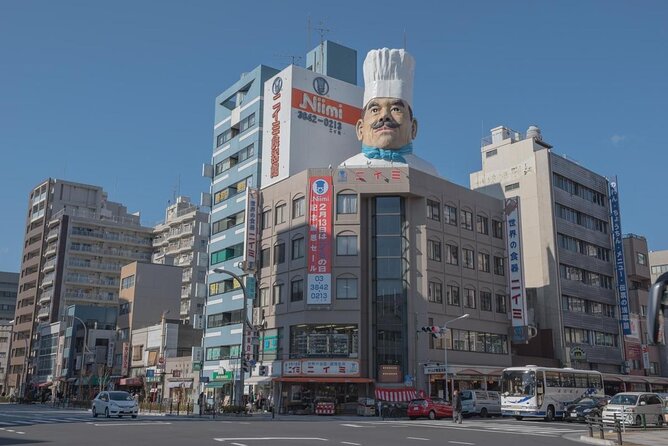
This tour works well because it treats knife shopping as part of the neighborhood’s living story, not a random add-on. You start in the Asakusa temple zone and work your way through the sights, then you end in the Kappabashi area where people actually go to buy kitchen tools.
The timing also helps. With about 3 hours 30 minutes on the clock, you get a full slice of Asakusa without turning the day into a marathon. And since the group is capped at 8 travelers, you’re not fighting for space or getting lost in a sea of noise.
One more practical perk: for groups of 3 or more, you get headsets. That matters in Asakusa, where streets can get crowded and you might drift a bit while taking photos or reading shop signs.
You can also read our reviews of more historical tours in Tokyo
Meeting at Kaminarimon: the Thunder Gate start you can’t miss
The tour begins at 2-chōme-20-6 Kaminarimon, Taito City, with a 9:30am start time. It’s a smart place to begin because Kaminarimon is instantly recognizable. You don’t need a map to find where the action starts—you just need comfortable shoes.
From the first steps, you’re in the thick of the temple approach area. You’ll also get a clear sense of direction early, which helps later when you’re walking from gate to gate and then transitioning into the shopping streets.
If you’re prone to lateness, plan a buffer. There’s no hotel pickup or drop-off, so you’re relying on public transit and your own timing.
Sumida Park: where the neighborhood story starts with the river
One of the best ways to understand Asakusa is to start with the water. The tour includes Sumida Park, and the guide connects it to the temple origin story from long ago—specifically, how the nearby river relates to Senso-ji’s beginnings around 1,400 years ago.
This is one of those stops that makes the rest of the morning click. When you know the river’s role, Senso-ji feels less like an isolated monument and more like a landmark that grew alongside the city’s movement, trade, and daily life.
The time here is short (about 15 minutes), but it sets the mood. You’ll spend more effort listening than wandering.
Asakusa Culture Tourist Information Center and the observation deck
Next you head to the Asakusa Culture Tourist Information Center, where you’ll spend about 30 minutes. From the top-floor observation deck, you can get a broader view of what you’ve been walking through and what you’ll reach next.
I like this kind of stop because it turns a maze of streets into something you can mentally map. Even if you don’t memorize anything, you’ll usually walk out with a clearer sense of where the temple zone ends and where the shopping areas begin.
The gate-and-temple sequence: Kaminarimon to Hozomon to Senso-ji
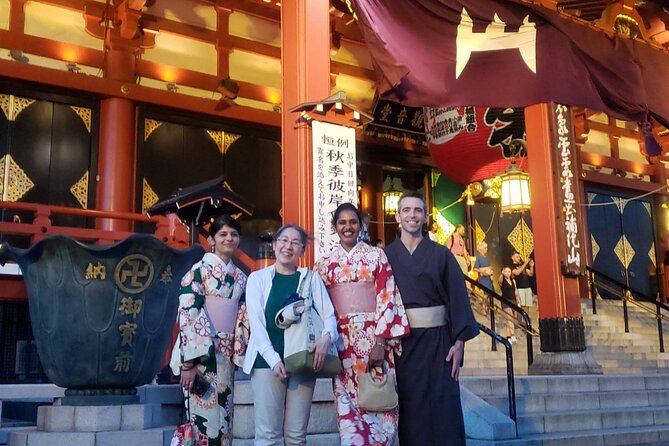
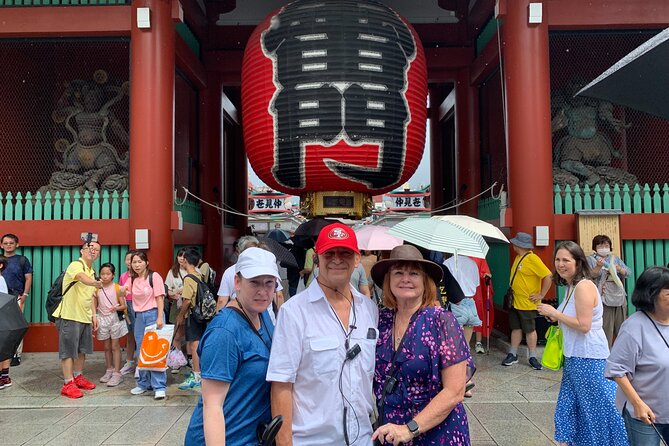
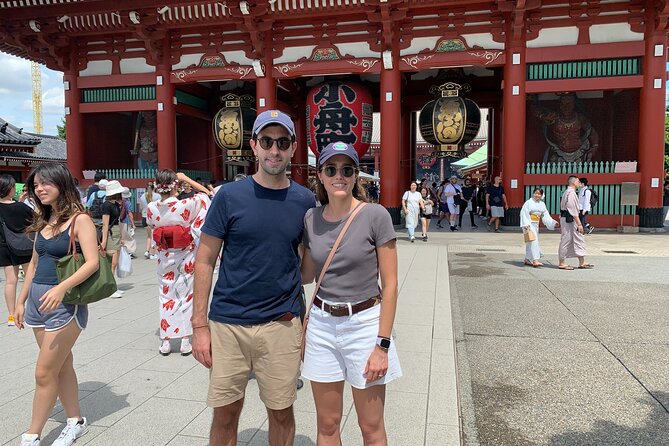
Then the tour settles you into the heart of the complex. You’ll pass through Kaminarimon (Thunder Gate)—the famous entrance with the giant red lantern—where the experience shifts from general sightseeing into a guided look at the spiritual layout.
From there, you walk along Nakamise Shopping Street toward the temple. This is where the area’s character shows up fast: it’s not only solemn; it’s practical and friendly, with shops lining the route.
After Nakamise, you reach Hozomon, the inner gate, and then Senso-ji Temple itself. The guide frames Senso-ji as Tokyo’s oldest temple and shares details about the adjacent five-story pagoda and the goodwill story linked to Sri Lanka.
If you’re wondering how to enjoy a temple visit without feeling rushed, here’s the trick: focus on understanding the complex as a system—gate to gate, entrance to the main space—rather than trying to see everything as fast as possible. The walk gives you that structure.
Asakusa Shrine and the religious next-door factor
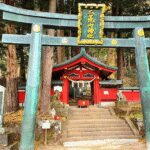
The tour also includes Asakusa Shrine, located next to Senso-ji. One of the interesting points here is how the area brings together two different traditions side by side—Shinto and Buddhism—right next to each other.
This is a subtle, “wait, that’s real” moment. The guide explains the relationship in a way that helps you see the premises not as a contradiction, but as part of how places can evolve over time.
The stop is short (about 15 minutes), but it adds a layer to what you’re seeing. You’re no longer just photographing buildings; you’re learning how the neighborhood thinks about sacred space.
Sensō-ji Denboin Garden: a calmer pocket after the main route
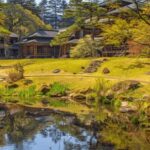
After the main sights, you shift into Sensō-ji Denboin Garden. This part is about 30 minutes, and it works as a reset.
You’re moving from the more intense temple approach and shopping streets into a calmer setting. If you want a break from constant foot traffic, this is where you’ll feel it. The guide also connects the area to Asakusa’s traditional entertainment district identity—an angle that helps the neighborhood feel like a living place, not a museum.
I like this stop because it gives your eyes and brain a breather. It also makes the ending feel better: once you’ve had a pause, you can shop with clearer focus rather than shopping on full sensory overload.
Kappabashi Street (Kitchen Town): where chefs and knife buyers meet
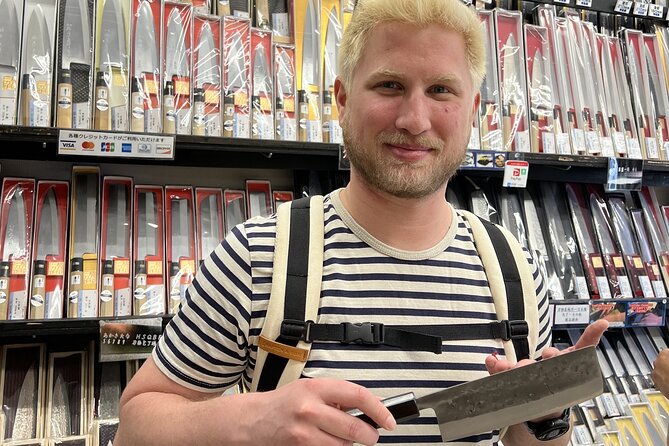
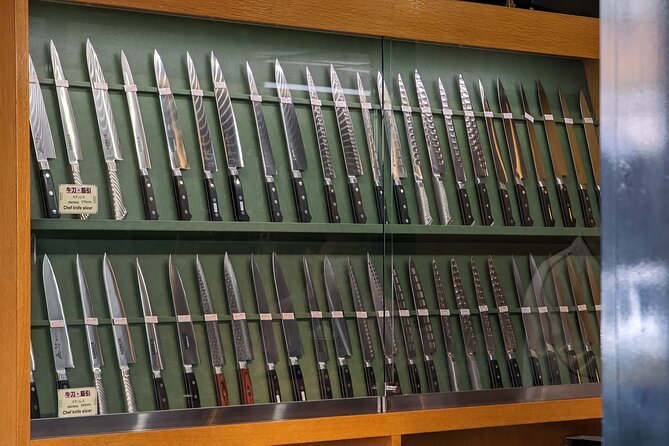
The final stretch is the reason many people sign up: Kappabashi Street (Kappabashi Dogugai), adjacent to Asakusa. You’ll spend about 1 hour here, and it’s the part that turns the morning into something you can take home.
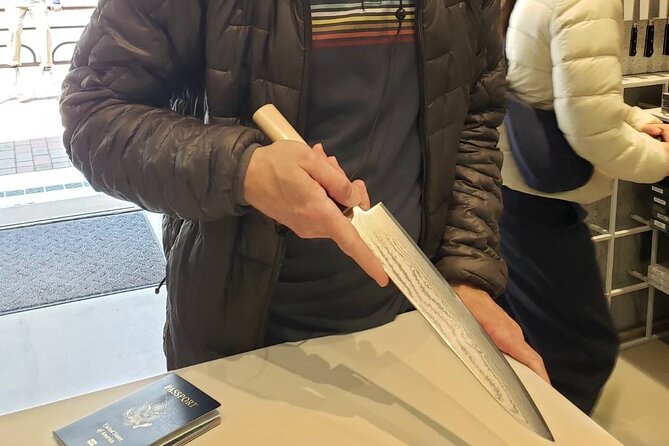
This street is lined with shops selling items used by restaurant operators, including kitchen knives. In practical terms, it’s one of the easiest places in Tokyo to shop for cooking tools because the whole area is built around it.
Here’s how to shop smarter during the hour:
- Ask the guide for help comparing options, especially if you’re picking knives as gifts
- Take a quick photo of any blade profile you like, so you can remember it later when you’re comparing across shops
- Set a budget before you enter. Knife shopping can turn into “just one more” fast
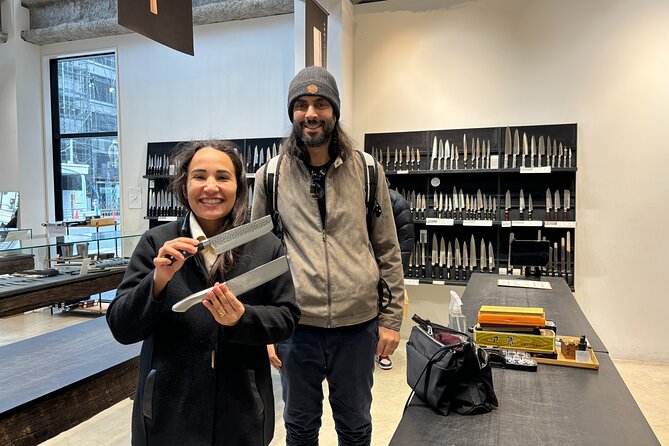
If you’ve ever bought a knife without knowing what to look for, this is a safer way to do it. The guide’s role is real here: you’re not left alone staring at display cases.
And buying for chef friends is common in this area—people use the knives as gifts because they’re personal, practical, and easy to understand as a thoughtful present.
Guides and group size: why Akiko, Amy, Sue, and Kay matter
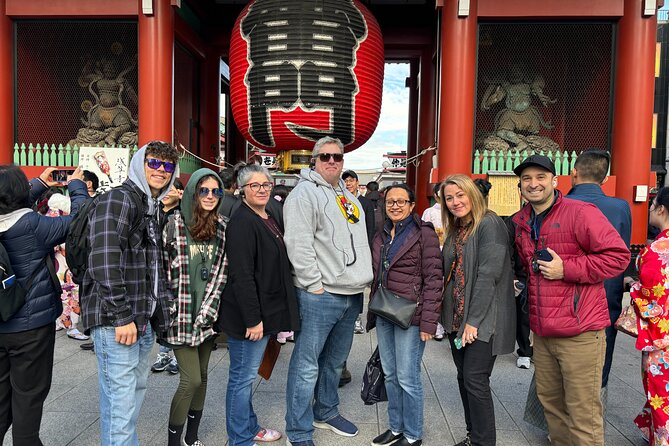
Small-group tours can be great, but only if the guide can shape the experience to you. This is where the reviews’ praise really lines up with what you’ll feel on the walk.
Guides like Akiko, Amy, Sue, and Kay have shown flexibility—especially when someone’s main goal is knives rather than getting every detail of the temple area. One guide adjusted the pace and shortened history focus when knife shopping was the priority.
That flexibility is a big value add. If you’re a foodie who cares about knives, you don’t want your time swallowed by a generic script. If you care more about temple history, you don’t want the shopping part to feel like a hard sell. This format tries to balance both.
Headsets also help protect that balance. When you can hear clearly, you don’t miss the points that make the stops meaningful.
Price and value: is $78.18 fair for 3.5 hours?
At $78.18 per person, you’re paying for three things:
1) a guided walk through one of Tokyo’s most visited temple areas,
2) the headset setup for better communication, and
3) help with the knife-shopping portion at Kappabashi.
For the time (3 hours 30 minutes) and the small group size, the value makes sense if you’ll actually use the guide during the shopping segment. If you’re the kind of person who loves browsing but also wants help narrowing choices, this price can feel reasonable fast.
Where you should be honest with yourself: if you only want temple sightseeing and you’re not interested in the knife shops, you might get more satisfaction doing the sights on your own. On the other hand, if you want both culture and a practical purchase, this tour saves you the guesswork of matching history with the right shopping streets.
Practical tips that make the morning easier
You’re walking a lot, and your time is tight enough that comfort matters.
- Wear shoes you can stand in for a couple hours. Asakusa walkways and shopping streets add up.
- Bring a tote or small bag you can use for purchases in the knife district.
- Bring questions. Even if you don’t know the right terminology, asking what to consider for gifts or everyday cooking helps the shopping hour work.
- Arrive early enough to find the meeting point without stress. No hotel pickup means you’re responsible for getting yourself there.
If you’re traveling with someone who’s less into shopping, this tour can still work because the history stops come first, and you can lean into the garden and shrine portions as the quieter highlights.
Should you book this Asakusa knife-and-history tour?
Book it if you want a morning that connects two worlds: Tokyo’s temple heritage and the practical craft side of kitchen culture. The best fit is for food lovers, home cooks, and gift shoppers who like having guidance when it’s time to make a decision.
Skip it if your goal is purely temple sightseeing and you’re not interested in knives at all. With only about 1 hour at the knife street, this isn’t the right choice for someone who wants a long, slow retail day.
FAQ
How long is the Asakusa history and kitchen knife shopping experience?
It runs for about 3 hours 30 minutes.
Where does the tour start and where does it end?
The tour starts at 2-chōme-20-6 Kaminarimon, Taito City and ends at Kappabashi Dougugai Kitchen Town, 3-chōme-18-2 Matsugaya, Taito City.
What is the maximum group size?
The tour has a maximum of 8 travelers.
Are headsets included?
Headsets are included for a group of 3 or more so everyone can hear the guide clearly.
Is hotel pickup or drop-off included?
No. Hotel pickup / drop-off is not included.
What does the tour cost?
The price is $78.18 per person.
Which stops include paid admission?
Sumida Park lists admission as not included. The other major stops shown (including the tourist information center, temple grounds/gates, and Denboin Garden) are listed with admission as free.
Is free cancellation available?
Yes. You can cancel up to 24 hours before the experience for a full refund.