REVIEW · ATHENS
Small-Group Women History in Ancient Greece Walking Tour
Book on Viator →Operated by Culture Hunters · Bookable on Viator
Women in Ancient Greece are easy to miss. That changes on this small-group walk in Athens, where the stories stay grounded in daily life and then snap back to myth. I love the way the tour connects famous names like Athena, Penelope, Pandora, Sappho, Aspasia, and Agnodice to places you can actually stand in. You’ll also appreciate the pacing and size: max 12 people means you’re not stuck listening from the back row.
Two things I especially like: first, the route is built around education, marriage, public space, and politics, so the theme never feels like a loose lecture. Second, the guide, Maelle (Culture Hunters), brings the material to life with a warm, funny, inclusive style that makes hard topics easier to follow. You’ll get context fast, without needing a degree in classical history.
One drawback to consider: this is a walking tour through uneven areas and steep spots near viewpoints, so it’s not recommended for mobility issues. If stairs and longer walking stretches are tough for you, plan on another Athens option.
In This Review
- Key highlights you’ll remember after the walk
- Price and what you actually get for $44.71
- Where the tour starts: Monastiraki to Hadrian’s Library (education and daily life)
- Marriage, love (EROS), and myths around churches and the Gate of Athena
- Dioskouron: the women-only festival moment
- The Ancient Agora of Athens: public life, private limits
- Areopago trials and the women who pushed back
- Pnyx and the politics of voting: when only men decided
- Philopappos Hill: a view, a wrap-up, and the Hill of the Muses
- Group size, guide style, and who will enjoy this most
- Practical tips so you get the most from the 2 hours
- Should you book this Women in Ancient Greece walking tour?
- FAQ
- FAQ
- How long is the Women History in Ancient Greece walking tour?
- Where does the tour start and where does it end?
- Is this a small-group tour?
- Do I need to buy separate tickets to enter the stops?
- Who leads the tour?
- Is the tour accessible if I have mobility issues?
- What’s the meeting time like at Monastiraki?
- Is cancellation refundable?
Key highlights you’ll remember after the walk

- Women-focused Athens route built around daily life, not just famous myths
- Maelle’s storytelling ties locations to themes like education, marriage, love (EROS), and politics
- Small-group format (max 12) keeps questions and conversation realistic
- No paid site entries at the stops you visit (admission tickets are free)
- End with a view from Philopappos Hill toward the Acropolis
Price and what you actually get for $44.71

At $44.71 per person for about 2 hours, this isn’t one of those “sit and watch a slideshow” tours. You’re paying for time with a guide who organizes Athens around women’s lives and then walks you to the key points where those stories attach. That matters, because the biggest value here is perspective—seeing Athens with the gender roles of the ancient world as your lens.
There’s also a practical value in the structure. The tour includes a mobile ticket, and each stop is set up so you’re not scrambling for extra museum fees. The stops are mostly about looking at the city and recognizing what the guide is pointing out, which keeps the experience moving at a human pace.
One more detail that helps your odds of a good tour: it’s typically booked about 37 days in advance, so if you’re visiting during a busy season, don’t wait until the last minute.
You can also read our reviews of more walking tours in Athens


Where the tour starts: Monastiraki to Hadrian’s Library (education and daily life)
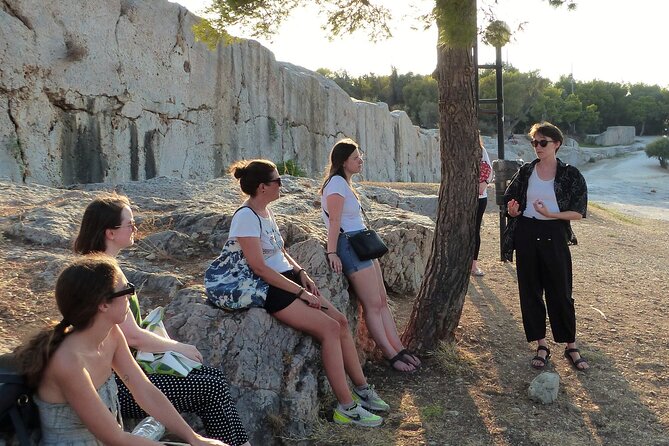
Most walks in Athens start big and end big. This one starts with a theme. You meet at Pl. Monastirakiou 2 on the emblematic square of Monastiraki. It’s a smart starting point because it puts you in the middle of modern Athens right away—so the contrast between then and now feels immediate.
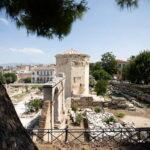
From there, the walk heads toward Hadrian’s Library, where the focus turns to the education of girls and women in ancient Athens. Even if you’ve read about male scholars and schools, this angle changes the story. Instead of treating education as a side topic, the guide frames it as part of how society shaped who could speak, learn, and influence.
What you’ll likely notice here is tone: the tour doesn’t just list facts. It builds a line of cause and effect. When you understand who had access to learning, you can better understand why later figures like Sappho and Aspasia mattered so much. It also sets up the rest of the walk: education, power, and restriction all show up again in different disguises.
Marriage, love (EROS), and myths around churches and the Gate of Athena
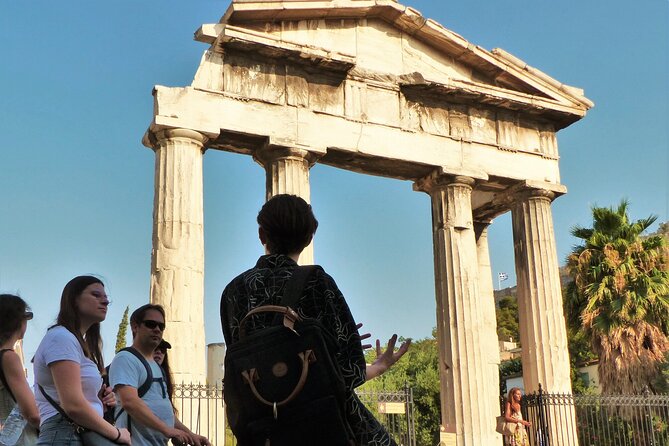
After Hadrian’s Library, you move into the emotional and social side of life. A stop at the Holy Church of the All-Great Taxiarchs and the Virgin Mary Gregorousa focuses on the meaning of marriage in ancient Athens and ancient Sparta, plus the idea of EROS, the passionate kind of love.
This is where the tour becomes more than archaeology talk. You’re not only learning what ancient people believed—you’re seeing how belief shaped daily routines and relationships. The church stop also works as a reminder that Athens layers eras on top of eras. The setting is not ancient Greece in pure form, but it’s in the right city for the guide’s point: themes survive even when buildings change.
Next comes the Gate of Athena Archegetis, where the guide connects the myths tied to Athena with married life for women in ancient Athens and Sparta. If Athena’s name is familiar, you’ll appreciate how this tour uses that familiarity to go somewhere new. The goddess isn’t just a figure from a storybook; she becomes a bridge to how people interpreted virtue, protection, and social order.
I like this portion because it addresses something most visitors don’t think about before they arrive: mythology wasn’t separate from life. In ancient Athens, myth and social expectations were part of the same conversation.
Dioskouron: the women-only festival moment
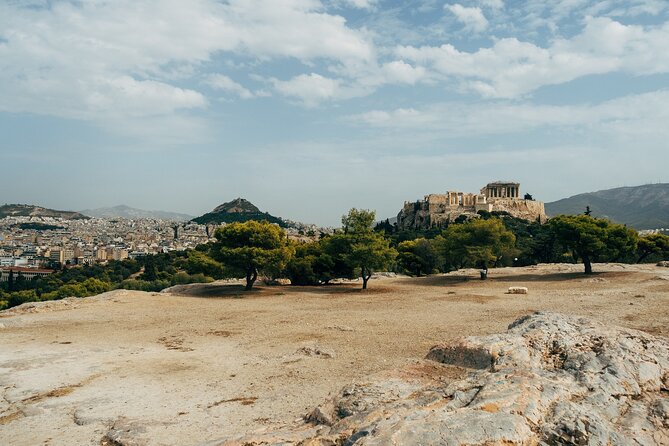
The route then includes Dioskouron, described as a mysterious ancient festival dedicated exclusively to women. This stop is short (about 10 minutes), but it’s exactly the kind of detail that makes this tour feel different from the standard Athens highlights circuit.
A women-only festival is a simple idea, but it raises big questions. Who organized it? What did it celebrate? How did it reinforce the roles women were expected to play? The guide uses the mystery to your advantage: instead of pretending everything is fully known, the tour helps you think about what’s implied when you see space carved out specifically for women.
If you like your history with a little uncertainty and a lot of human meaning, this is one of the best turns in the whole walk.
The Ancient Agora of Athens: public life, private limits
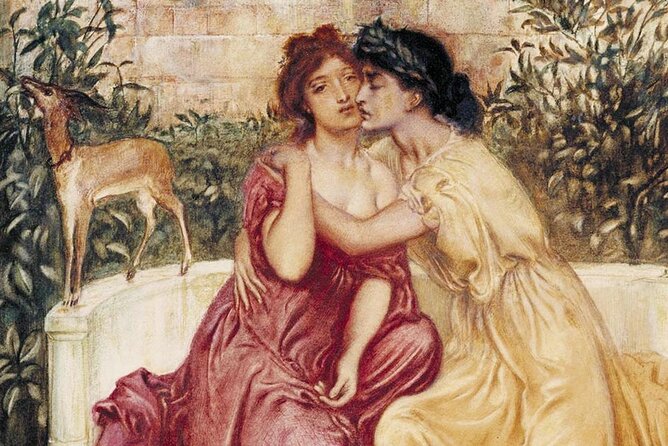
Then you hit the Ancient Agora of Athens, the marketplace and the center of public life. The big takeaway here is uncomfortable and important: the guide explains the role of women in public space—and what that meant for female slaves or courtesans living in the city.
Even though you don’t go inside an archaeological site here, you still get context by seeing the area from the outside. That outside-view approach keeps the tour realistic for a 2-hour format. It also pushes you to connect the dots yourself instead of relying on indoor interpretation.
This is another reason the women-focused framing works so well. The Agora is where many tourists picture political speeches, trade, and civic activity. But the guide makes clear that women weren’t part of that public machinery in the same way men were. So the Agora stops feeling like a “general Athens” highlight and starts feeling like a map of rules—who could be visible, who had to stay behind the scenes, and how power moved.
If you’ve already seen big ruins like the Acropolis, this is the part that makes Athens feel like a society instead of a postcard.
You can also read our reviews of more historical tours in Athens


Areopago trials and the women who pushed back
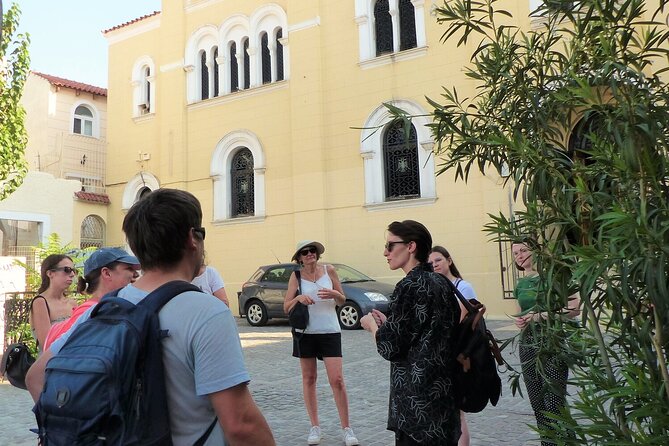
Next: Areopago. This stop is described as the place where the worst sinners were tried in ancient times. The guide then uses it for stories that focus on women and resistance—specifically an inspiring woman who risked a death sentence to change women’s rights.
This is one of the most emotionally heavy parts of the tour, but it’s also one of the most memorable. The guide doesn’t treat women as just victims. The story is about agency, even when agency carried a brutal cost.
If your only experience of ancient history comes from kings, wars, and big battles, you’ll likely feel the shift here. Athens also produced conflict over rights and justice, and women were not removed from that story—they were in it, sometimes at the worst possible end of the consequences.
Pnyx and the politics of voting: when only men decided
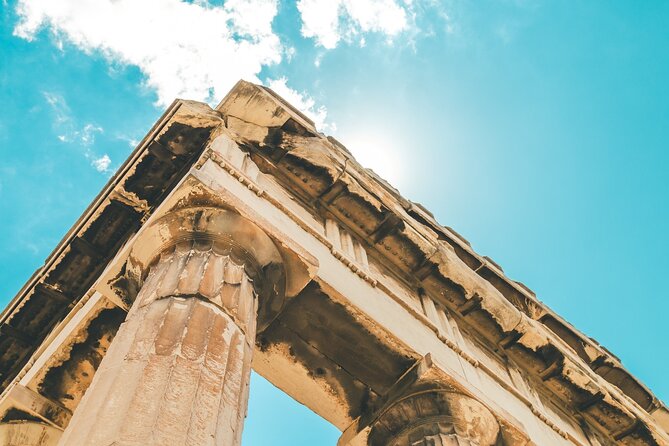
From Areopago, you walk toward Pnyx, the place where democracy is said to have begun. The guide focuses on the uncomfortable reality that only men citizens used to vote.
Now for the twist that makes this stop more than a fact check. The guide explains how, against the odds, a woman influenced politics during Athens’s Golden Age. In a tour packed with names, this is where Aspasia often comes into the conversation, because she’s one of the women highlighted by the tour theme.
You’ll probably walk away here with a new mental model: democracy wasn’t just a system of ballots and speeches. It was also a social system with boundaries. Understanding those boundaries makes modern political ideals feel less like slogans and more like something that had to be fought for—then and later.
Philopappos Hill: a view, a wrap-up, and the Hill of the Muses
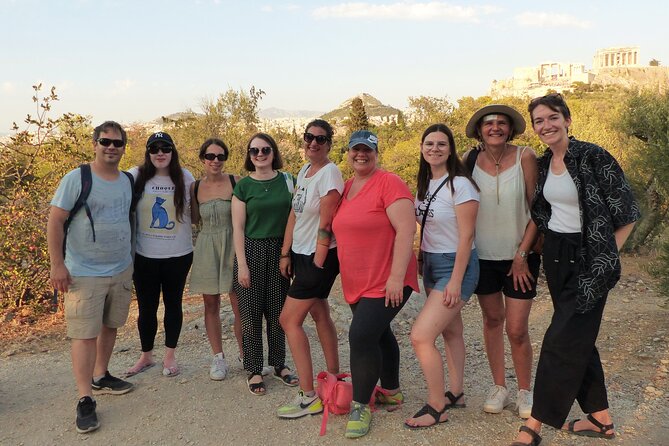
The tour finishes at Philopappos Hill, described as the Hill of the Muses—an inspiration source for Athenians that still matters. You’ll end with one of the best rewards in the city: a great view on the Acropolis area.
This ending choice is practical and smart. Pnyx and Areopago can leave your head full of rules and arguments. Then Philopappos gives you space to reorient. You get the scenic payoff without turning the tour into a “photo stop marathon.”
Also, because the meeting and end points are positioned near central Athens and a good viewpoint, you don’t feel trapped after the tour. You can keep exploring, grab food, or head to the metro if you want a smooth transition into the rest of your day.
Group size, guide style, and who will enjoy this most
With a maximum of 12 travelers, this is ideal if you want to ask questions and hear explanations in plain language. The guide Maelle is repeatedly described as kind, knowledgeable, inclusive, funny, and curious, and you’ll feel that in how the stories land—more human than academic.
This tour is especially good if you’re:
- visiting Athens for the first time and want a different lens than the usual top sights
- traveling with a teen or partner who likes strong narratives and clear takeaways (the women-in-history angle tends to hook people fast)
- a history buff who wants something credible but not stuck in dates-only mode
It may be less ideal if you:
- have mobility challenges or struggle with hills and uneven terrain
- want only classic “Ancient Athens monuments” with entrances and long site exploration (this tour stays focused on theme and street-level context)
Practical tips so you get the most from the 2 hours
- Wear shoes you’re happy to walk in. The route is built for a walk, not a tram ride.
- Bring a few questions. The whole format works best when you engage with the guide’s story threads.
- Plan this earlier in your Athens trip. The tour’s perspective tends to make later sights click with more meaning.
Should you book this Women in Ancient Greece walking tour?
Yes—if you want Athens in a way most tours don’t offer. The strongest reason to book is the focus: the walk is structured around women’s lives, education, marriage, love (EROS), festivals, public limits at the Agora, and the politics of voting and influence. That theme stays coherent from Monastiraki to Philopappos.
I’d skip it only if your mobility limits your walking or if you’re chasing a route that’s mostly about entering sites and standing inside major ruins. For a theme-driven, conversation-friendly Athens experience with a small group and a great ending view, this is a smart pick.
FAQ
FAQ
How long is the Women History in Ancient Greece walking tour?
It runs for about 2 hours.
Where does the tour start and where does it end?
It starts at Pl. Monastirakiou 2, Athina 105 55, Greece and ends at Philopappos Hill (Φυλής 215, Athina 117 41, Greece).
Is this a small-group tour?
Yes. The group size is capped at a maximum of 12 travelers.
Do I need to buy separate tickets to enter the stops?
The listed stops show admission tickets as free, and the Agora stop notes no entrance to the archaeological site (you’ll see it from outside).
Who leads the tour?
The tour is led by Maelle from Culture Hunters.
Is the tour accessible if I have mobility issues?
It is not recommended for travelers with mobility issues.
What’s the meeting time like at Monastiraki?
You meet your guide at Monastiraki Square, with the first stop listed as around 10 minutes.
Is cancellation refundable?
Yes. You can cancel for a full refund up to 24 hours in advance. If you cancel less than 24 hours before the start time, the amount paid is not refunded.