REVIEW · ST AUGUSTINE
Walking Guided History Tour of Old St. Augustine
Book on Viator →Operated by Spyglass Tours · Bookable on Viator
Old St. Augustine has a story trail. I like the small-group size (max 15) because it leaves room for real Q&A at each stop, and I love how the route connects Spanish-era landmarks to Henry Flagler’s Gilded Age boom. The only drawback: a couple of stops may involve optional admission, and the tour runs only with good weather.
This is a 90-minute walking guided history tour that’s a smart move for first timers and repeat visitors alike. You’re not just getting dates—you’re getting the why behind the city’s layout, defenses, religion, and the big economic shift that turned sleepy streets into a famous winter destination.
I also appreciate the practical touches that show up in the tour experience, like ponchos when Florida rains hard. Guides you might meet, such as Kevin or Angie, tend to stay approachable and answer follow-up questions instead of rushing you onward.
In This Review
- Key highlights to look forward to
- Entering Old St. Augustine on Foot: What This Tour Is Best At
- Start at the USCG Memorial on Granada Street (and why that matters)
- Plaza de la Constitución: The Colonial Center You’ll Keep Coming Back To
- Bridge of Lions: Icon views plus the founding story behind them
- Castillo de San Marcos National Monument: The oldest stone fortress moment
- City Gate Spirits: A surviving wall section and what it protected
- Tolomato Cemetery: Old Catholic roots and real stories in stone
- Flagler’s churches: Grace United Methodist and Memorial Presbyterian
- Historic Tours of Flagler College: The Ponce de Leon Hotel era explained
- Price at $25: What you’re really paying for
- The guide experience: stories, pace, and handling Florida weather
- Who should book this tour (and who might skip it)
- Should you book the Walking Guided History Tour of Old St. Augustine?
- FAQ
- How long is the Walking Guided History Tour of Old St. Augustine?
- What does the tour cost?
- Where does the tour meet?
- What time does the tour start?
- Is the tour offered in English?
- Is there a group size limit?
- Are admissions included for the stops?
- What happens if the weather is bad?
- Can I cancel for a full refund?
- Are service animals allowed?
Key highlights to look forward to
- A 15-person max group keeps the walk interactive and easier to manage in tight historic streets
- Historic stops that explain purpose, from defenses to cemeteries to churches
- Flagler era coverage connects the Gilded Age to what you can still see today
- Clear route flow that starts in the city center and fans out to major icons
- Ask-anything guidance, with time for questions as you walk
Entering Old St. Augustine on Foot: What This Tour Is Best At
This tour works because it gives you a guided mental map of St. Augustine. Instead of bouncing between random sights, you get a walking storyline that moves from the city’s colonial center to the places that shaped safety, faith, and power.
If you’re the kind of traveler who wants more than a selfie stop, you’ll like the pacing. It’s short visits at each location, but the guide explains the connections—why these places were built, what they were for, and how that shaped daily life.
The best value here is not just the price. It’s that you leave with a clearer sense of how old Spanish St. Augustine and later Flagler-era St. Augustine relate to each other in real, walkable space.
You can also read our reviews of more walking tours in St Augustine

Start at the USCG Memorial on Granada Street (and why that matters)
The tour meets at the USCG E2C Memorial at 1-51 Granada St, St. Augustine, FL 32084. Starting here makes sense because Granada Street puts you close to the core of downtown, so you can orient fast and walk without long dead stretches.
You’ll start at 10:00 am and plan for about 1 hour 30 minutes. In a small group, that’s long enough for meaningful storytelling but short enough that you can still enjoy the rest of your day on your own.
Also, you’ll get a mobile ticket, and the tour is offered in English. Service animals are allowed, and it’s near public transportation—handy if you’d rather not fight for parking.
One more practical point: the tour depends on weather. Florida can switch from fine to pouring fast, so bring a light rain layer or be ready for the guide’s approach to quick weather changes.
Plaza de la Constitución: The Colonial Center You’ll Keep Coming Back To
Stop one is Plaza de la Constitución, the traditional heart of the colonial city. This is where your guide sets the tone: you learn why the plaza mattered, not just that it existed.
What I like about starting here is simple. After you understand the role of the plaza—social center, civic center, the place where power shows up—you’ll spot the logic of everything else around it much faster.
The stop is about 10 minutes and there’s no admission ticket required. Even if you’ve seen plazas in other cities, this one is a useful baseline for St. Augustine because it helps you read the downtown streets with intention instead of wandering.
Bridge of Lions: Icon views plus the founding story behind them

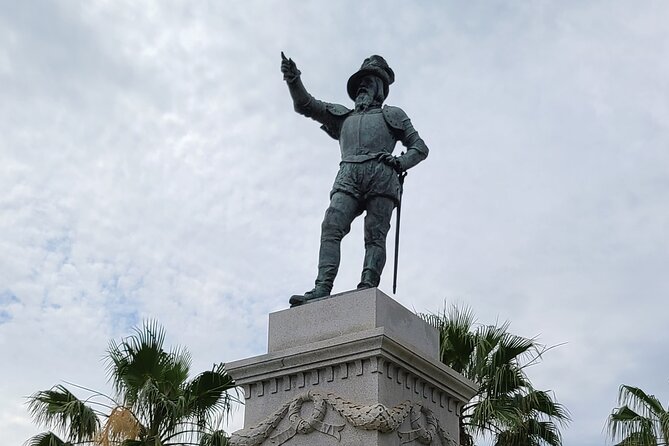
Next up is the Bridge of Lions, one of the city’s most recognizable symbols. The guide ties the landmark to the story of the Spanish founding of Florida, which gives the bridge more meaning than a pretty crossing photo.
A short 10-minute stop like this can still pack in real context. You’ll learn how the founding story shaped what came next—where people built, where they defended, and why the city grew along certain paths.
No admission ticket is required here either. If you’re traveling with someone who wants action but also loves history, this stop is usually a good middle ground.
Castillo de San Marcos National Monument: The oldest stone fortress moment
Then you’ll head to the Castillo de San Marcos National Monument. This is a big visual anchor in downtown St. Augustine, and the guide explains the story of the fort—often described as the oldest stone fortress in North America—and how it became central to the city’s defenses.
This is where you’ll feel the tour shift from background to muscle memory. You start seeing the city’s past in terms of protection: walls, viewpoints, and why people needed that level of security.
Plan for about 10 minutes at this stop. Admission here is not included, so you may need to budget extra if you want to go inside or take advantage of what the monument offers beyond the exterior learning moment.
You can also read our reviews of more guided tours in St Augustine

City Gate Spirits: A surviving wall section and what it protected
After the fort, the tour moves to City Gate Spirits. The focus here is the only portion of the city wall that still exists, along with the story of how this location protected the colony and supported the city’s function.
This stop is small but satisfying. You’re not just hearing about defenses in general—you’re pointing at a physical remnant and understanding what it did.
The stop is about 10 minutes and admission isn’t required. If you like when a tour turns into “look at this exact thing and here’s what it meant,” this is one of the best spots on the walk.
Tolomato Cemetery: Old Catholic roots and real stories in stone
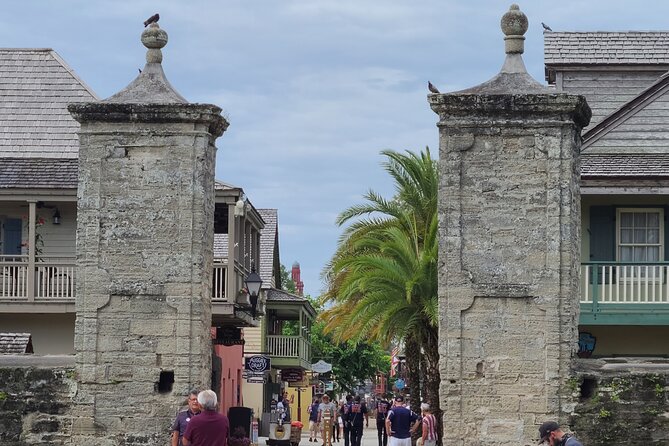
Next is Tolomato Cemetery, described as the oldest Catholic cemetery in Florida. This is where the tour gets more human. The guide talks about famous and infamous characters buried at St. Augustine’s first official cemetery, and it adds weight to the city’s long timeline.
Even if you’re not usually into cemetery stops, this one can be a standout because it connects faith, community identity, and the way a city honors—or remembers—its people.
The stop lasts about 10 minutes and admission is not required. I’d still encourage you to slow down mentally. A cemetery tour can be uplifting, but it also changes your lens on the places you’ve just walked past.
Flagler’s churches: Grace United Methodist and Memorial Presbyterian
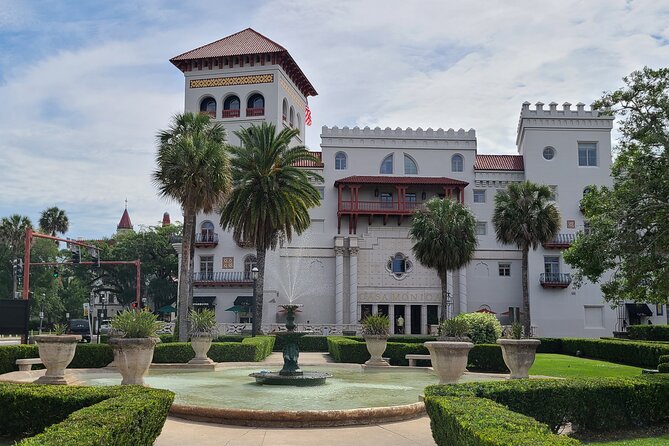
Two stops bring Henry Flagler’s influence into focus through places of worship. First is Grace United Methodist Church, built as the first church constructed by Henry M. Flagler in his development of Gilded Age St. Augustine. The guide also covers the key role it played in his plans for revitalization.
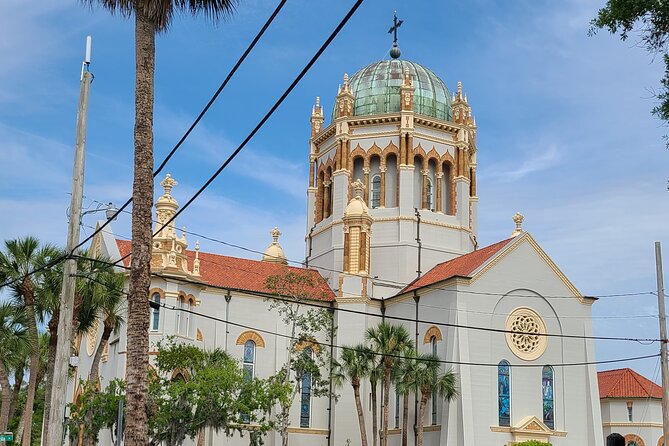
Then you’ll see Memorial Presbyterian Church, which many consider the most beautiful building in the city. The explanation here centers on Flagler’s family connection and how that influence shaped the area.
These stops work because they show how power and money weren’t just about hotels and trains. They were also about institutions that gave permanence and legitimacy to a new era of St. Augustine.
Each visit is around 10 minutes, and admission is not required. If you’ve been wondering how the Flagler boom translated into everyday city life, these churches help answer that without turning into a lecture.
Historic Tours of Flagler College: The Ponce de Leon Hotel era explained
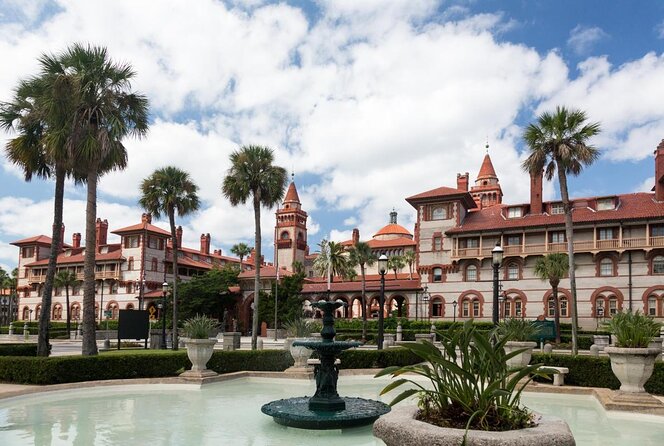
The tour wraps with Historic Tours of Flagler College, focusing on the former Ponce de Leon Hotel. The guide explains how the hotel drew the richest and most powerful of the Gilded Age to the area—and how that shift changed the city, state, and history.
This is a great final stop because it ties your whole walk together. You’ve already seen colonial defense and civic center logic. Now you see how a later era used architecture, prestige, and destination marketing to reshape the story of the city.
The stop is about 10 minutes, and admission is not included. If you’re interested in going beyond the outdoor or limited viewing, you’ll want to plan for any ticketed component associated with the site.
Price at $25: What you’re really paying for
At $25 per person, this tour is priced like a straightforward walking experience, but the value comes from what’s included: a guided historical narrative that connects multiple eras. You’re not paying for museum entry at every stop, and most stops don’t require admission.
That said, two parts of the route may require additional admission: the Castillo de San Marcos National Monument and the Historic Tours of Flagler College stop. So think of the $25 as the foundation, and then decide on the spot whether you want to add official site entry where it’s available.
The tour also keeps the group small—max 15—which matters. You’re more likely to get real answers to your questions, and you can hear the guide without turning your head every few seconds.
If you’re comparing alternatives, I’d treat this as an “orientation plus story” purchase. You’ll get a stronger sense of where to spend your time afterward, instead of guessing which sites deserve your deeper attention.
The guide experience: stories, pace, and handling Florida weather
One theme shows up again and again in how people describe this kind of tour: the guide is the product. When the storytelling is good, you start noticing details you would otherwise miss—like why a location exists where it does, and how a later era built over earlier city needs.
Guides such as Kevin or Angie are often described as friendly and willing to answer questions. That’s not a tiny detail. It changes the tour from a one-way lecture into a conversation where you can steer your curiosity.
And yes, Florida weather is a wildcard. If rain shows up, you may be offered practical help like ponchos. Even without that, build in flexibility: bring a light layer, keep your phone protected, and don’t plan anything too tight for afterward.
The walking format also means you’ll want to dress for sidewalks and short transitions between stops. Even if your pace is slower, the short stops help prevent “stuck dragging” energy.
Who should book this tour (and who might skip it)
This walking history tour is ideal if you:
- are visiting St. Augustine for the first time and want a fast, meaningful orientation
- like history that ties into buildings and street layout
- enjoy asking questions and getting direct answers
- want a plan that’s short enough to enjoy the rest of the day independently
Skip it if you mainly want ticketed museum time. The walk includes explanation at key places, but not all admissions are included. If you want full interior exploration at every stop, you’ll likely need to pair this with additional self-guided time.
If you’re traveling with family, couples, or solo, the small group setup helps. It’s also suitable for many mobility levels because the route is designed for short stops, but still think about sidewalks and uneven historic areas.
Should you book the Walking Guided History Tour of Old St. Augustine?
If you want your first hours in St. Augustine to make sense, I’d book it. This tour is the fastest way to connect the dots between the Spanish founding era, the city’s defensive features, and Henry Flagler’s Gilded Age impact—without turning your day into a marathon.
Choose it especially if you love guided Q&A and you’d rather understand what you’re looking at than just see it. Just budget a bit of flexibility for optional admission at Castillo de San Marcos and the Historic Tours of Flagler College, and plan to go on a day when weather is cooperative.
FAQ
How long is the Walking Guided History Tour of Old St. Augustine?
It runs about 1 hour 30 minutes.
What does the tour cost?
The price is $25.00 per person.
Where does the tour meet?
It starts at USCG E2C Memorial, 1-51 Granada St, St. Augustine, FL 32084, USA.
What time does the tour start?
The start time is 10:00 am.
Is the tour offered in English?
Yes, it is offered in English.
Is there a group size limit?
Yes. The tour has a maximum of 15 travelers.
Are admissions included for the stops?
Most stops do not require admission tickets, but Castillo de San Marcos National Monument and the Historic Tours of Flagler College are listed as not included.
What happens if the weather is bad?
The experience requires good weather. If it’s canceled due to poor weather, you’ll be offered a different date or a full refund.
Can I cancel for a full refund?
You can cancel for a full refund if you cancel at least 24 hours before the experience starts.
Are service animals allowed?
Yes, service animals are allowed.