REVIEW · BUSAN
Gyeongju UNESCO World Heritage Guided Day Tour from Busan
Book on Viator →Operated by TOURSTORY · Bookable on Viator
Silla-era sights in one long day. This guided trip from Busan takes you to Gyeongju UNESCO landmarks by air-conditioned coach, with two different routes so you can match the day to your interests. You’ll also get admission coverage on key stops, so you spend less time calculating tickets and more time looking up at ancient stone and wood.
Two things I like a lot are the guided stop format (you know what you’re seeing, and you don’t get lost in a big city) and the fact that the entrance fees are included on the UNESCO option. I also love that the group stays fairly small—up to 43—so the logistics don’t feel chaotic.
One possible drawback is simple: it’s a 10–12 hour day with a lot of walking outdoors. If you’re easily tired by long sit-and-wait travel days, you’ll want to plan your energy and snacks carefully.
In This Review
- Quick takeaways before you commit
- Two Ways To See Gyeongju: UNESCO Route vs Museum Route
- Price and value: what $57.14 buys you (and what it doesn’t)
- From Central Busan With a Guide: coach comfort and group size
- Bulguksa Temple: where the day gets its “why”
- UNESCO Route Stop: Yangdong Folk Village and walking history
- Daereungwon Tomb Complex: royal scale and a short, intense visit
- Hwangnidan-gil Street and Woljeonggyo Bridge: snacks, shopping, and ancient stone
- Donggung Palace and Wolji Pond: best time for photos and evening mood
- Museum Route: the indoor reset at Gyeongju National Museum
- Meals on your own: where people feel the difference
- Guides make or break it: what stands out in real-world experiences
- Tips to make the long day easier (without ruining the fun)
- Should you book the Gyeongju UNESCO Guided Day Tour from Busan?
- FAQ
- How long is the Gyeongju day tour from Busan?
- What are the two tour options?
- Are entrance fees included?
- Are meals included in the price?
- What languages are available for the guide?
- What is the group size limit?
Quick takeaways before you commit
- Two tour routes: UNESCO-focused with Yangdong, tombs, bridge, and Wolji Pond, or a museum-centered day with indoor relief at Gyeongju National Museum
- Entrance fees covered on major stops: UNESCO tickets include Yangdong Village and key sites like Donggung & Wolji, plus a Cheonmachong Tomb ticket
- Comfortable coach from central Busan: air-conditioned transport with English/Chinese/Korean speaking guides
- Photo-friendly timing at dusk: Wolji Pond and the bridge area tend to land well for evening light
- Food is on you: meals cost extra, and the provided lunch/dinner setup can be hit-or-miss depending on what you order
- Tech needs can pop up: one traveler reported needing WhatsApp and a Google account to fully participate
Two Ways To See Gyeongju: UNESCO Route vs Museum Route
The biggest decision is which version of the day you choose. The UNESCO tour leans into the UNESCO sites themselves—temple, traditional village, royal tomb grounds, plus the pond-and-bridge area that gives Gyeongju its postcard look. The Museum tour keeps things simpler, adding Gyeongju’s top museum stop while still including Bulguksa and Hwangnidan-gil Street time.
If you want the feeling of stepping through Silla-era “power locations,” the UNESCO tour is the better fit. If you prefer less outdoor walking and more organized indoor viewing, the museum route can feel more relaxed. Either way, you’re moving between important sites with a guide to translate the meaning of what you see—something you really feel when the architecture and layout start to make sense.
You can also read our reviews of more guided tours in Busan
Price and value: what $57.14 buys you (and what it doesn’t)
At about $57.14 per person, the value mainly comes from three things: transport from central Busan, a multilingual guide, and entrance coverage on several stops. For the UNESCO option, tickets are included for Yangdong Village and Donggung & Wolji, plus a Cheonmachong Tomb ticket.
What’s not included is meals. That matters, because some people judge the whole day based on lunch and how the food break is handled. You’ll likely spend extra on lunch, dinner, and snacks, so plan that into your budget from the start.
From Central Busan With a Guide: coach comfort and group size
This is set up as a hassle-free day trip. You’ll get a round-trip ride from central Busan in an air-conditioned coach or minivan, and you’ll travel with an English, Chinese, and Korean speaking guide. Your ticket is mobile, so you’re not hunting for paper tickets in the morning.
The day also moves with a group of up to 43 people. That’s big enough to feel lively on the bus, but small enough that guides can keep track of everyone without turning it into a stampede. One traveler even noted the group vibe on a large bus—more fun than they expected.
Timing depends on traffic and weather. That’s not just a legal line; it’s the reality of trying to visit temples, ponds, and outdoor streets in a single day. If your plan is fragile (tight airport transfer, wedding, or a specific dinner reservation), keep a buffer.
Bulguksa Temple: where the day gets its “why”
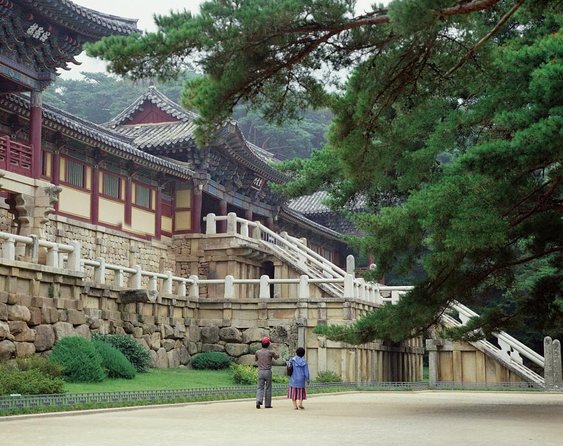
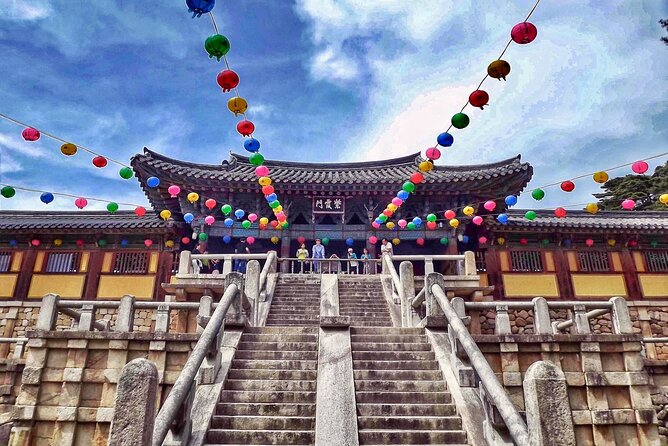
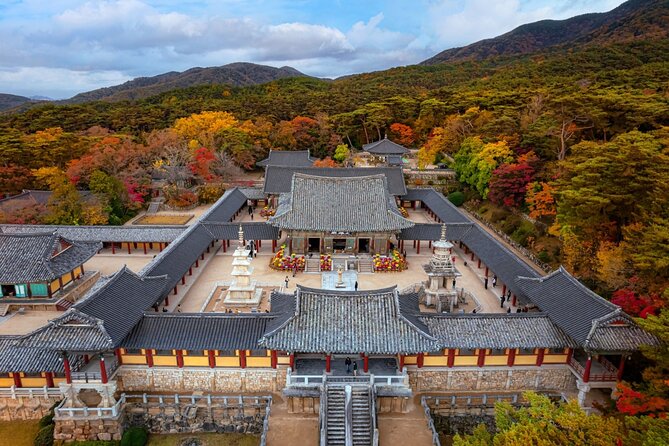
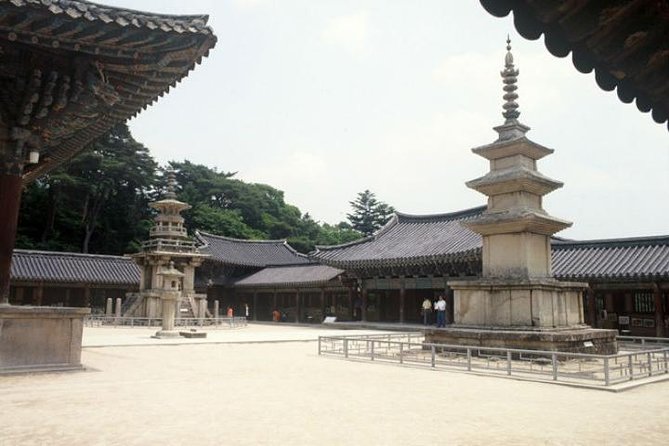
Bulguksa is the anchor stop. You’ll spend about 1 hour 10 minutes here on the day, and for the UNESCO tour the admission is included. Even if you’ve never studied Silla art, Bulguksa is the kind of place where a guide can turn details into meaning—how the complex was built, why it looks the way it does, and what people have been admiring for centuries.
Expect a lot of classic temple photography: stone details, layered structures, and long lines that reward slow looking. It’s also one of those stops where the pace can make or break your experience. If you like moving quickly, great. If you want time to wander without being pulled along, you may feel the schedule squeeze.
Guides can help a lot here. From names I’ve seen mentioned—Tomy, Bobby Kim, Vincent, and Irene—there’s a consistent theme: they keep the explanations clear and the group moving without leaving you behind.
UNESCO Route Stop: Yangdong Folk Village and walking history
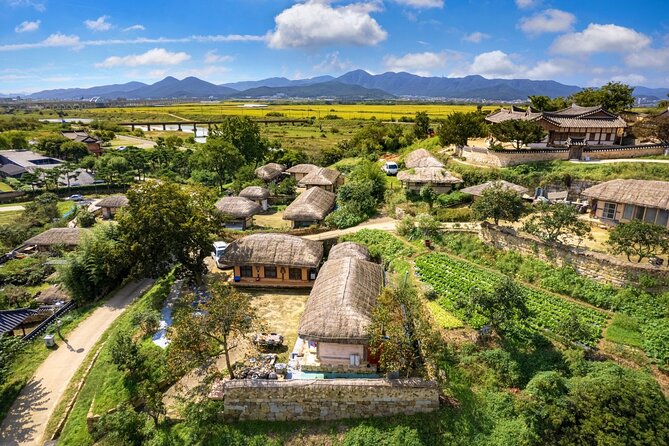
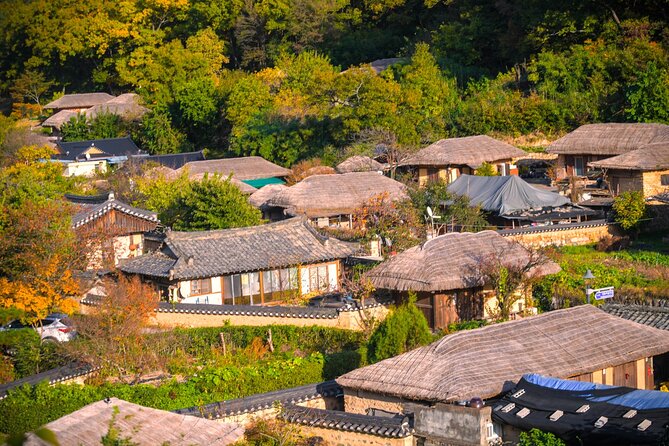
Yangdong Folk Village is the big UNESCO addition on this itinerary. On the UNESCO tour you get about 2 hours 15 minutes, plus admission included. This is Korea’s largest and best-preserved traditional village designated as a UNESCO World Heritage site, and it’s designed for you to slow down and look at how everyday life might have felt in older times.
I like this stop because it’s not just “look at buildings.” It’s about seeing a whole environment—homes, village layout, and the mountain setting that frames the place. Many people focus on photos, but the time feels more valuable when you use it to notice the village rhythm.
One practical note: lunch options in/near the village can be limited. One traveler described the lunch stop as being the only cafe in the hanok village, with cash-only payment. If you’re vegetarian, that same comment recommended packing your own lunch as a safer plan. In other words: don’t assume you’ll have a wide restaurant menu waiting for you.
You can also read our reviews of more historical tours in Busan
Daereungwon Tomb Complex: royal scale and a short, intense visit
Next up on the UNESCO tour is Daereungwon, also called the Park of Royal Tombs. You’ll get around 45 minutes, and the UNESCO route includes admission coverage tied to the tomb area (including a Cheonmachong Tomb ticket). The stop is shorter than Yangdong, but that can work: you see a lot of “royal statement” in less time, then you move on before you feel worn out.
This is also a good place to ask your guide questions—about how tombs were laid out, what Silla royalty wanted to communicate, and why these areas matter. Guides like Kim Ji Song and Charles are singled out for helping people take photos and understand what they’re seeing.
Because this is outdoors, you’ll want comfortable shoes. It’s also a spot where the schedule can feel tight later in the day, especially if you’ve already been walking since morning.
Hwangnidan-gil Street and Woljeonggyo Bridge: snacks, shopping, and ancient stone
Hwangnidan-gil Street is a free-time stop (about 45 minutes on the UNESCO route). It’s known for the mix of old-meets-new—street food, specialty coffee in hanok-style cafés, and general wandering time. I like this break because it’s not a museum or temple lecture. You can just breathe, snack, and buy a few small items if you want souvenirs that actually fit the vibe.
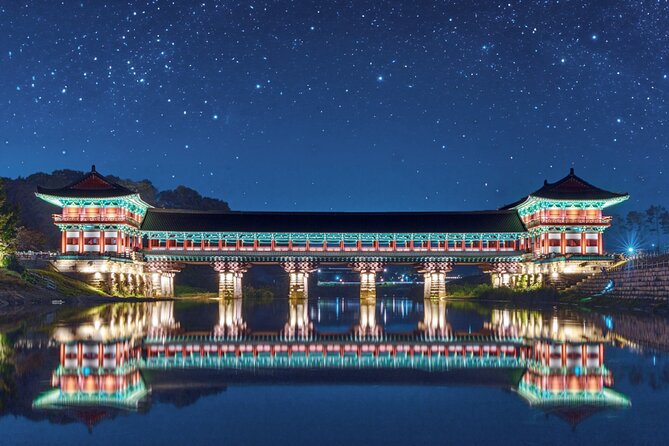
Woljeonggyo Bridge is another quick stop (about 20 minutes) with history tied to ancient engineering. It’s not a long visit, but it hits nicely between tombs and the pond area. If your legs are tired, the short duration helps.
One thing to keep in mind: these “free” or quick stops can feel optional, but they’re still timed. If you want to shop, plan for it like you would during a layover: decide what you’re after fast, or you’ll lose the moment.
Donggung Palace and Wolji Pond: best time for photos and evening mood
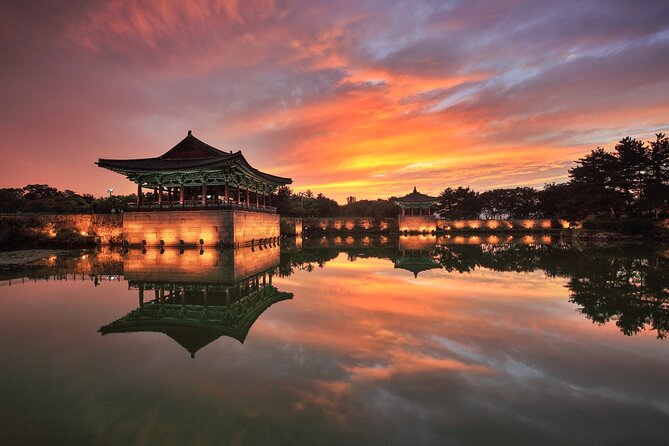
For the UNESCO route, you’ll visit Donggung Palace and Wolji Pond for about 1 hour, with admission included. Even on a packed day, this is the stop that tends to feel special because of the scenery and the attention people give to the pond area.
In the comments tied to this tour, I keep seeing sunset or evening-lit experiences around Wolji Pond and the surrounding palace view. That’s exactly when a guided stop can pay off: the guide helps you find a good viewpoint and explains what you’re looking at, so it doesn’t become “just standing near water and taking photos.”
If you’re choosing between UNESCO and museum, this is a strong reason to lean UNESCO. You get the temple-and-tombs day, then you end with a place that feels cinematic at dusk.
Museum Route: the indoor reset at Gyeongju National Museum
If you choose the museum option, the day includes Bulguksa and Hwangnidan-gil Street time, plus about 1 hour at Gyeongju National Museum. The idea here is simpler: you see the famous sites outside, then you get an indoor break with artifacts from the Silla Kingdom.
One clear advantage is that museums let you control your pace. When it’s raining or you’re heat-fatigued, an indoor hour can feel like a reset button. Another advantage is context. A museum guide gives you anchors—like golden crowns and Buddhist relics—so you understand why the outdoor buildings look the way they do.
If you dislike rushed outdoor walking, the museum route can feel more comfortable. If you want “experience the UNESCO grounds,” the UNESCO route is still the better match.
Meals on your own: where people feel the difference
Meals are not included, and that is the one part of the day you directly control. Some people report enjoying lunch, including a traditional Korean restaurant meal during the village stop. Others say lunch quality was mediocre or that portions felt small for the price.
A common pattern: lunch is tied to the village area, and dinner is later near the tombs. One traveler also noted dinner is on your own along the street next to the tombs, and that most places take credit cards. If you’re picky or have dietary restrictions, it’s worth planning what you’ll do when the day is tired and your options narrow.
My practical advice: bring a snack you can rely on (especially for later afternoon), and treat the official meal break as convenience—not a guarantee of a perfect lunch.
Guides make or break it: what stands out in real-world experiences
This tour wins a lot of its goodwill from guide quality. Names that come up again and again include Tomy and Lan, Bobby and Christina, Lucy, Irene, Vincent, Lee, Charles, Victoria, Bryan, Sol, and Roy. The consistent theme is that guides keep the day organized and helpful, and they answer questions without acting like your group is a distraction.
You’ll also feel a difference in how photos are handled. Several comments mention guides assisting with pictures and finding good viewpoints. That matters because many Gyeongju photo moments are angle-dependent—bridge, pond, temple structures—so a guide who knows where to stand saves you time and produces better shots.
Tips to make the long day easier (without ruining the fun)
- Dress for outdoors: a large share of the day happens outside, so plan clothing for sun, wind, and shifting temperatures. One tip echoed that you’ll want clothes that cover expected weather.
- Wear comfortable shoes: temples, tomb grounds, and village paths add up, even if each stop is time-limited.
- Plan for meal surprises: cash-only lunch has been mentioned for a village cafe setup, and dinner is on your own near the tombs area.
- Bring patience for timing: traffic and weather can shift things, and that affects how much you linger at each stop.
- If you hate tech hassles, prepare: one traveler said they needed WhatsApp and a Google account to fully participate. That doesn’t mean it will happen to you, but it’s smart to be ready.
Should you book the Gyeongju UNESCO Guided Day Tour from Busan?
Book it if you want a guided day that packs the big UNESCO sights into one smooth loop. This is a strong choice if you value context—Bulguksa, royal tomb grounds, Yangdong Village, and Wolji Pond are all easier and more satisfying when someone explains what you’re looking at as you go.
Don’t book it if your tolerance for a long outdoor-heavy day is low. The schedule is full, and the shorter stops can feel rushed if you’re hoping for deep wandering at every location.
If you’re on the fence between UNESCO and Museum, use this rule: choose UNESCO for grounds + pond-at-dusk energy, choose Museum for artifacts + an indoor pause. Either way, go in with comfortable shoes and a flexible attitude about meals, and you’ll get a day that feels like a fast, well-guided introduction to one of Korea’s most important historical areas.
FAQ
How long is the Gyeongju day tour from Busan?
It runs about 10 to 12 hours.
What are the two tour options?
You can choose either a UNESCO tour or a Museum tour. The UNESCO tour includes stops like Yangdong Folk Village, Bulguksa, Daereungwon Tomb Complex, Woljeonggyo Bridge, and Donggung & Wolji. The Museum tour includes Bulguksa, Hwangnidan-gil Street, and Gyeongju National Museum.
Are entrance fees included?
Entrance fees are included on the tour stops listed as included for the UNESCO option (including Yangdong Village and Donggung & Wolji, plus a Cheonmachong Tomb ticket). Other stops on the itinerary may be free on the tour route.
Are meals included in the price?
No. Meals are not included, and other personal expenses are also not included.
What languages are available for the guide?
The guide speaks English, Chinese, and Korean.
What is the group size limit?
The tour has a maximum of 43 travelers.