REVIEW · BUCHAREST
Half-Day Jewish Heritage Walking Tour in Bucharest
Book on Viator →Operated by Laura Genescu · Bookable on Viator
Jewish Bucharest has layers. You’ll see key sites like the Great Synagogue and the Choral Temple, with a guide who uses historical photos on an iPad to make the story click. I especially love the way the tour stays active as a walking route, and how the private setup keeps your questions from getting lost.
There’s one catch to plan for: admission tickets aren’t included for all synagogue and museum stops, and you should budget around $25 per person for those entrances.
In This Review
- Key Highlights You’ll Actually Feel
- Jewish Heritage Bucharest: Why This Walk Works
- Great Synagogue Bucharest: More Than a Stunning Exterior
- The “Choral” Temple: A Vienna Model in Bucharest
- Museum of the History of the Jewish Community: The Building Survives
- The Private Guide Factor: How the Story Gets Personal
- Price and Value: What You’re Really Paying For
- Timing, Meeting Point, and How to Show Up Ready
- Who This Tour Suits Best (and Who Should Rethink It)
- Should You Book This Half-Day Jewish Heritage Tour?
- FAQ
- FAQ
- How long is the Half-Day Jewish Heritage Walking Tour in Bucharest?
- What time does the tour start?
- Where does the tour meet?
- Is this tour private or group-based?
- Is the tour offered in English?
- What is included in the price?
- Are synagogue and museum admission tickets included?
- What should I do if the weather is bad?
- What is the cancellation policy?
Key Highlights You’ll Actually Feel
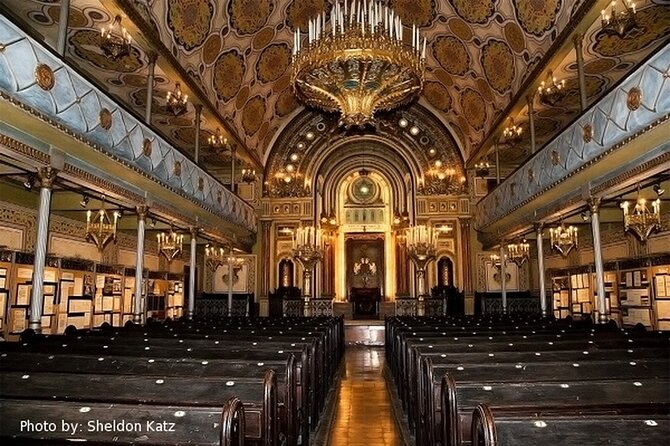
- Great Synagogue details that aren’t just dates, including its Rococo repainting in 1936 and later restoration after devastation by the Iron Guard
- A Choral Temple visit that connects Bucharest to Vienna, since the design copies the Leopoldstadt-Tempelgasse Great Synagogue
- Jewish Museum context inside a WWII-surviving synagogue, so the building itself carries weight
- Historical photos shown on an iPad, which helps you place what you’re seeing into its larger timeline
- Private guide attention for a small group (up to 8), so the pace can match your interests
- A solid half-day rhythm (about 3 to 4 hours) starting at 9:30 am and ending where you begin
Jewish Heritage Bucharest: Why This Walk Works
This is a half-day Jewish heritage walking tour designed for people who want more than a quick photo stop list. The format makes sense: you move through a few major landmarks on foot, and your guide stitches the buildings to the people, politics, and community shifts that shaped them. You’re not just learning names and years. You’re connecting why one synagogue was repaired, redesigned, repainted, and restored again—sometimes because of conflict, sometimes because the community’s needs changed.
One thing I like a lot is the pace. Three to four hours is long enough to feel like you learned something real, but short enough that you can still plan lunch or another site after. And because it’s private for your group, you can ask follow-up questions without waiting for a large group to catch up.
Still, be realistic about entrances. The walking tour covers the narration and the stops, but admission fees for synagogues and the museum are extra. If you hate budgeting surprises, factor this in at booking time.
You can also read our reviews of more tours and experiences in Bucharest.

Great Synagogue Bucharest: More Than a Stunning Exterior
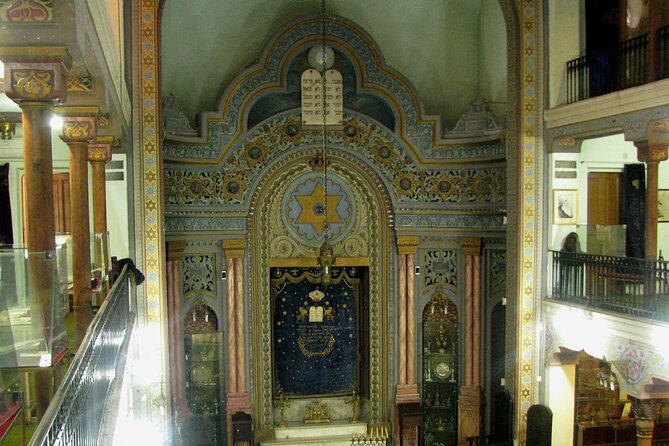
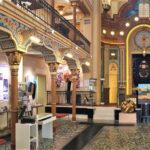
Your tour starts at the Great Synagogue, one of the most important landmarks for Jewish life in Bucharest. The key here isn’t only that it looks grand. It has a past that shows how community identity can persist through repeated change.
You’ll hear a timeline that isn’t textbook-flat. The synagogue was raised in 1845 by the Polish-Jewish community, then repaired in 1865. Later it was redesigned in 1903 and 1909, and in 1936 it was repainted in Rococo style by Ghershon Horowitz. Then the story takes a darker turn: in 1945, the synagogue was restored after being devastated by the far-right Legionnaires (Iron Guard movement).
That sequence matters for you as a visitor because it turns a building into a living archive. You’ll look at the architecture with more purpose, noticing that the changes you see likely correspond to people adapting, resisting, and rebuilding. It also helps you understand why Jewish heritage in Eastern Europe often doesn’t read like a straight line.
Admission for this stop is listed as included by ticket, but the tour pricing information also states that admission fees for synagogues and museums are extra (about $25 per person). In practical terms: plan on paying entrance fees at some point for the synagogue and museum sites, then treat the “ticket included” notes as part of the package details you’ll confirm during booking.
Best for: anyone who likes history with clear timelines and visible impact in the architecture.
Possible drawback: it can get emotionally heavy because the narrative includes violence and destruction.
The “Choral” Temple: A Vienna Model in Bucharest
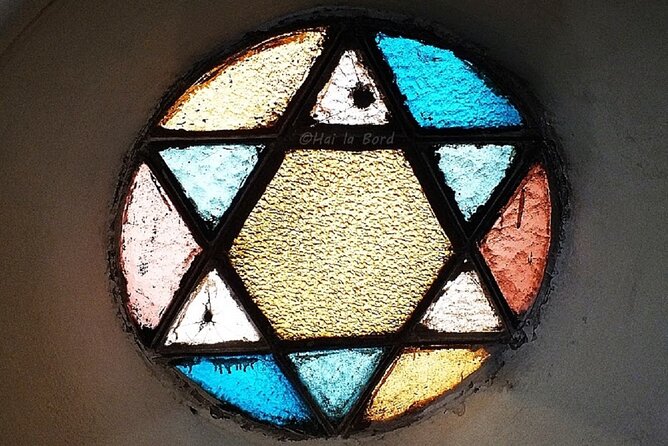
Next you’ll visit the Choral Temple, a synagogue built between 1864 and 1866. This stop is fascinating because it’s a design story, not only a community story. The tour shares that it’s a very close copy of Vienna’s Leopoldstadt-Tempelgasse Great Synagogue, which had been built in 1855–1858.
For you, the value is that this turns a city-to-city connection into something visual. You’re standing in Bucharest, but the design choices point to a wider Jewish architectural conversation across Europe. It’s a reminder that heritage travels. People bring ideas with them, and buildings can echo cultural links even when the local story is uniquely Bucharest.
The Choral Temple stop runs about 30 minutes, so it’s not long. That can actually be a plus: you get to absorb the key points without feeling like you’re being rushed through too many rooms.
If you’re sensitive to crowds, check your timing. Because you’re on a walking tour that’s small-group oriented, the experience often feels more orderly than big bus-style visits, but entrance spaces can still be busy depending on the day.
Best for: architecture lovers and people who want the broader European context without extra reading.
Museum of the History of the Jewish Community: The Building Survives
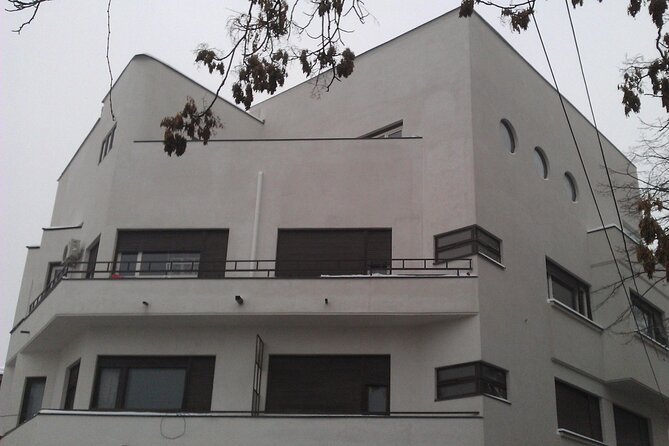
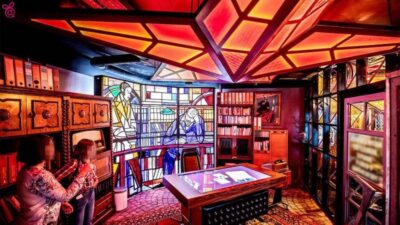
Your third stop is the Museum of History of the Jewish Community, located in the former Templul Unirea Sfântă synagogue. This detail is more than a trivia line. The museum’s location means the building itself survived World War II, so you’re learning in a place that lived through the era you’re studying.
The museum name is listed in a couple of variants, including one that points to the history of the Romanian Jewish community. During your visit, you should expect a short museum window—about 20 minutes—focused on what you need to understand the bigger arc of Jewish life in Bucharest.
For you, this short time box is both good and limiting. Good because the tour won’t send you down a rabbit hole of endless galleries when you still have other stops. Limiting because a museum visit at this size can only skim the surface. Think of it as a guided orientation, then consider returning later on your own if you want deeper reading.
What makes it special: you’re not just seeing artifacts. You’re seeing a site that carried continuity through a catastrophic period.
The Private Guide Factor: How the Story Gets Personal

A big reason people rate this tour so highly is the guide approach. The tour is private for your group (up to 8), and it includes fully narrated storytelling plus practical recommendations for your stay in Bucharest. You’re also told that historical photos are shown on an iPad during the walk. That’s not a gimmick. It helps you make sense of what no longer exists, and it makes the timeline feel real.
The reviews mention guides by name—like Laura and Jacky, and a guide named Loan in another experience—so you can expect different voices from one run to another. But the common thread is how they handle questions. People highlight that guides connect past and present, answer follow-ups with patience, and can steer the tour toward your group’s interests when you ask.
Also, the tone can be emotional. One guide was described as sharing the broader context of Bucharest life and even personal experience growing up under Communism and the transition afterward. That kind of framing matters because it helps you understand that Jewish heritage in Bucharest isn’t isolated to synagogues. It sits inside a national story of rule, ideology, and change.
Practical takeaway: if you’re bringing a friend group, older relatives, or anyone who likes to talk, this format is ideal. You’ll feel like someone is meeting you where you are.
Price and Value: What You’re Really Paying For

The tour price is $318.06 per group, up to 8 people, lasting about 3 to 4 hours. That can look steep at first glance—until you do the math per person and compare it to typical walking tours that often sell per-person pricing while still giving you group-style attention.
Here’s the value logic:
- You’re paying for private guiding, not just a route.
- You get historical photo context on a tablet, plus narration across multiple major sites.
- You’re not handling planning details between stops; your guide keeps the flow moving.
Then add the likely extra cost. The tour data says admission tickets for synagogues and museums are not included, with an estimated $25 per person for entrances. So the all-in total depends on how many stops you enter and how the exact ticket details apply to your booking.
My suggestion: when you book, treat the base price as the guiding and planning component, then budget entrance fees for the sites. If you arrive ready for that, the cost becomes easier to justify—especially because you’re touring key landmarks rather than random streets.
One more planning note: it’s typically booked about 65 days in advance on average. If you have a specific date, lock it in early.
Timing, Meeting Point, and How to Show Up Ready
The tour starts at 9:30 am, and it meets at Starbucks, Str. Franceză 62, București 030106, Romania. It ends back at the meeting point, which is helpful when you’re trying to map the rest of your day.
Since it’s a walking tour, wear shoes that can handle uneven sidewalks and lots of short stops. You’ll also want to dress for weather—this experience requires good weather, and you’ll be offered a different date or a full refund if it’s canceled due to poor weather.
What to bring:
- A charged phone and your confirmation details for the mobile ticket
- A light layer, especially in shoulder seasons
- Curiosity. This isn’t a tour that only covers facts. The guide answers questions about past, present, and future of Jewish life in Bucharest.
Near public transportation is listed as a plus, so you’re not stuck with complicated logistics.
Who This Tour Suits Best (and Who Should Rethink It)
This tour is a strong match if you:
- want a walking format instead of a static museum morning
- like guided context and visual aids (those iPad historical photos)
- prefer a smaller group size where questions are welcome
- care about Jewish heritage through major Bucharest landmarks, including the Great Synagogue, the Choral Temple, and the Jewish Community Museum
It may be less ideal if you:
- want only free outdoor viewing and hate paying separate entrance fees
- dislike emotionally heavy historical narratives, since the Great Synagogue story includes episodes tied to the Iron Guard
- prefer self-guided pacing with lots of wandering time in museums (this is a guided half-day with short museum windows)
Should You Book This Half-Day Jewish Heritage Tour?
I’d book it if you want a focused introduction to Jewish Bucharest that balances architecture, timeline, and real human context. The private-group format (up to 8), the iPad photo storytelling, and the fact that the guide can handle questions make it feel less like a checklist and more like learning with a mentor.
Your decision comes down to two practical points: you’ll likely pay entrance fees for synagogues and the museum, and the tour needs good weather. If that fits your plan—and you want meaning, not just sightseeing—this is a very good use of your half-day in Bucharest.
FAQ
FAQ
How long is the Half-Day Jewish Heritage Walking Tour in Bucharest?
It runs about 3 to 4 hours.
What time does the tour start?
The start time is 9:30 am.
Where does the tour meet?
The meeting point is Starbucks, Str. Franceză 62, București 030106, Romania.
Is this tour private or group-based?
It’s a private tour/activity, and only your group participates (up to 8 people).
Is the tour offered in English?
Yes, it’s offered in English.
What is included in the price?
The tour includes a fully narrated walking tour, historical photos presented on a tablet/iPad, and recommendations for your stay in Bucharest.
Are synagogue and museum admission tickets included?
Admission tickets to all synagogues and to the Jewish state theater are not included. The data also indicates admission for synagogues and museums is about $25 per person.
What should I do if the weather is bad?
The experience requires good weather. If it’s canceled due to poor weather, you’ll be offered a different date or a full refund.
What is the cancellation policy?
Free cancellation is available. You can cancel up to 24 hours in advance for a full refund, and cancellations less than 24 hours before the start time are not refunded.