REVIEW · VARANASI
Spiritual and Heritage Walking Tour in Varanasi
Book on Viator →Operated by Landmark Tour Guide · Bookable on Viator
Varanasi feels like a living scripture. This walking tour through Kashi focuses on spiritual continuity you can actually see on the street, from the Ganges ghats to landmark temples, guided with stories that make the city easier to understand.
I particularly like the way the guide uses the temple setting for a calmer moment, including a meditation on temple premises. I also like the historical framing, with clear explanations of what you’re looking at and why it matters, not just what to photograph.
You’ll also get smart street-level culture at Godowlia, including guidance around local chaat (think tomato chat) and the funny local style of bargaining in the tight lanes. One consideration: some stops touch on death rites at cremation ghats, so keep your comfort level in mind and dress respectfully.
In This Review
- Key highlights to look forward to
- Why this Kashi walk feels different from regular sightseeing
- Meeting at Luxa Road: what to expect before you start walking
- Nepali Mandir (Kathwala/Kama Temple): Mini Khajuraho energy
- Manikarnika Ghat: the holy cremation site you’ll understand better after the talk
- Kashi Vishwanath Temple in Vishwanath Gali: Shiva pilgrimage at street level
- Dasaswamedh Ghat and the evening aarti tradition
- Godowlia street food: tomato chat and the bargaining mindset
- Kashi Labh Mukti Bhawan: the compassionate side of a sacred city
- Maan Mandir Ghat: Rajasthani style details near Dashashwamedh
- Price and value: what $21 really covers
- Should you book this spiritual and heritage walk in Varanasi?
- FAQ
- How long is the Spiritual and Heritage Walking Tour in Varanasi?
- Where does the tour start?
- What is the tour price?
- Is a mobile ticket included?
- How many people are in the group?
- Which stops include admission tickets?
- Is any stop free of admission?
- Does the tour include street food?
- Is Kashi Labh Mukti Bhawan included, and is it free?
- Is airport or departure tax included in the price?
Key highlights to look forward to
- Nepali Mandir (Kathwala/Kama Temple) with terracotta, stone, and wood details that feel different from the usual temple look
- Manikarnika Ghat as one of Varanasi’s most meaningful cremation sites on the Ganges
- Kashi Vishwanath Temple in Vishwanath Gali, a top Shiva pilgrimage destination
- Dasaswamedh Ghat with daily evening aarti traditions tied to multiple deities
- Godowlia street food stops focused on chaat culture and how locals shop and bargain
- Charity-run Kashi Labh Mukti Bhawan and the quieter, compassionate side of city spirituality
Why this Kashi walk feels different from regular sightseeing
Varanasi can be overwhelming fast. The streets are narrow, the sounds are constant, and the sights can feel intense all at once. What makes this tour worth your time is that it gives you a path through it, with context that turns chaos into something you can follow.
I like that the tour is built around spiritual places that are still active. You’re not just looking at old stones from a distance. You’re watching how belief lives in daily routines, temple rhythms, and even the way people gather along the river.
And you’ll hear the city’s nickname—Kashi—and how it connects to older traditions. The guide also brings in big picture ideas: Varanasi is known for 84 ghats along the Ganges, and stories about ghats like Burning Ghat help explain why people describe life and death as running together here. That framing matters because it changes how you interpret what you see.
You can also read our reviews of more walking tours in Varanasi


Meeting at Luxa Road: what to expect before you start walking
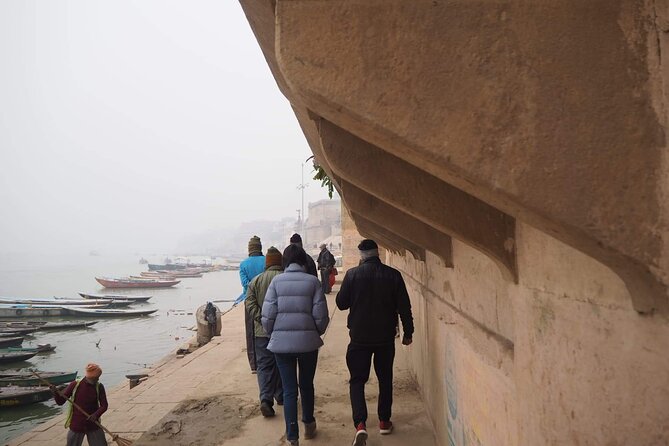
The tour starts at Luxa Road (Luxa Rd, Girja Ghar, Varanasi, Uttar Pradesh 221010). It ends back at the same meeting point, so you don’t have to manage getting back after your walk. That seems small, but in Varanasi, convenience is a big deal.
You’re also in a smaller group, up to 15 people. That makes it easier for the guide to keep track of you, answer questions, and move at a pace that works for temples and ghats. The tour includes a mobile ticket, so you don’t need to hunt for paper at the last minute.
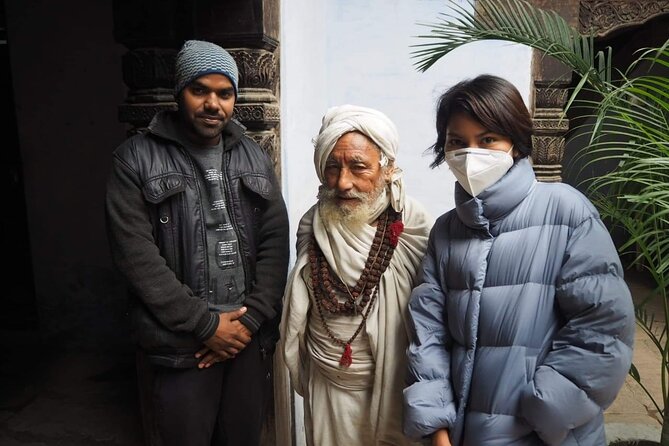
One of the best practical perks: you get a guide who can handle the human side of the city. In guides like Jain Kumar’s case, the experience comes across as organized and well explained, with a sense of humor that helps when the city feels busy. In one review-style account of the tour vibe, the guide even met people right on time at their hotel and guided them thoroughly.
Nepali Mandir (Kathwala/Kama Temple): Mini Khajuraho energy
Stop one is the Nepali Temple, also known as Nepali Mandir, Kathwala Temple, or Kama Temple. It’s one of the oldest and most famous temples in the city, and it has a look that stands out for a reason: it’s made of terracotta, stone, and wood. That mix gives it texture you won’t get from plain stone-only temple buildings.
You’ll also hear the nickname Mini Khajuraho tied to the temple’s carvings and architectural mood. Even if you’ve never been to Khajuraho, this is a useful point of comparison because the guide uses it to help you read the details. The 20-minute stop includes admission ticket entry, so it’s not a quick walk-by.
What I like here is that the guide treats this as more than a photo spot. You get a guided eye for symbolism—how materials, ornament, and placement communicate something about devotion and craftsmanship. If you enjoy architecture and you want one temple that feels slightly unusual in Varanasi’s wider mix of styles, this is a strong first stop.
Practical note: this early temple stop is a good moment to reset your senses. Before you reach the ghats, you get a calmer, more architectural start.
Manikarnika Ghat: the holy cremation site you’ll understand better after the talk
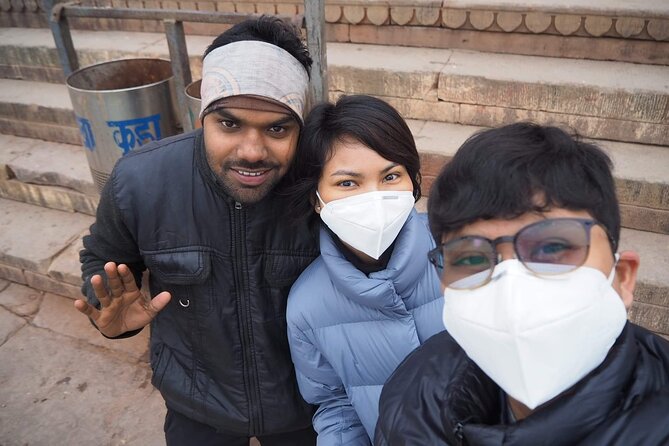
Then you move to Manikarnika Ghat, one of the holiest cremation grounds among the sacred riverfronts. This is where Varanasi stops being a set of landmarks and becomes a lived spiritual geography.
The guide’s explanation connects the location to Hindu mythology, including the belief that either the earring or the eye of Sati fell here. That kind of story doesn’t make the place lighter, but it helps you see why people treat it as spiritually central rather than just grim.
You’ll spend about 15 minutes here, and admission is included. The time is short for a reason: this is not a place where you want to stay too long without breaks, especially if the experience hits you emotionally. I recommend you watch respectfully, keep your distance, and focus on what the guide tells you to look for.
One consideration: this stop deals with death rituals, and it can feel confronting if you’re not used to viewing death as part of religious life. If you’re sensitive, don’t force yourself to be tough. Just follow the guide’s cues and give yourself a mental pause.
Kashi Vishwanath Temple in Vishwanath Gali: Shiva pilgrimage at street level
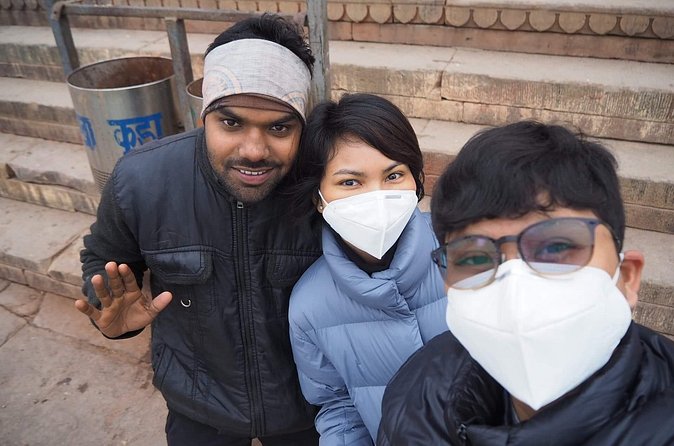
Next comes the Kashi Vishwanath Temple, dedicated to Lord Shiva. It’s located in Vishwanath Gali, near Varanasi, Uttar Pradesh, India, and it’s one of the most sacred pilgrimage sites for Shaivites. The guide also frames it as among the twelve Jyotirlingas, which is helpful if you want to understand why this isn’t just one famous temple among many.
This stop matters because it’s a shift from the riverfront’s immediacy to a shrine-centered focus. You’ll feel the density of devotion in the way people move, wait, and pray. And because it’s in a busy lane context (Vishwanath Gali), you’ll also get a sense of how the city’s religious life feeds into everyday street flow.
From the tone described in strong guide-based reviews, the experience here includes a short meditation on temple premises, which changes the vibe from rush to reflection. That’s a big quality marker for this tour: it doesn’t only show you what’s dramatic. It also shows you how people slow down inside it.
If you’re going to visit Kashi Vishwanath in a short time window, the guided approach is especially helpful. Without context, temples can feel like a maze of crowds and rules. With a guide, you understand what you’re seeing faster and you spend more time actually absorbing the meaning.
You can also read our reviews of more historical tours in Varanasi



Dasaswamedh Ghat and the evening aarti tradition
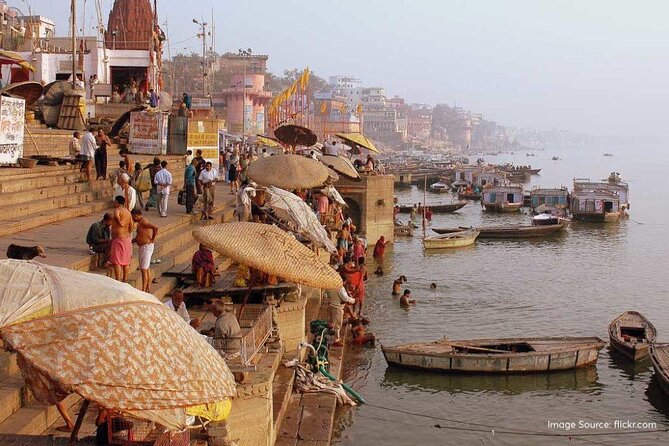
After the temple focus, the tour heads to Dasaswamedh Ghat, a main ghat on the Ganges. This is a key place for the city’s evening devotional energy: every evening an aarti is performed here, dedicated to Shiva, goddess Ganga, Surya, Agni, and the whole universe.
The tour time at the ghat is about 10 minutes, and the admission is listed as free. Even in a short stop, this is one of the best areas to grasp how the river is treated as a spiritual stage. The guide’s job is to connect the visuals you see—ritual motion, crowd focus, and the riverfront setting—to why it’s done.
Timing is everything here. If your walk passes during the lead-up or the devotional window, you might catch the rhythm of the ceremony. If not, you’ll still understand the role the ghat plays each day, because the guide explains what happens in the evening.
I also like the way this stop supports the tour theme: earlier you saw life and death symbolism through cremation rites. At Dasaswamedh, the city’s spiritual energy feels organized, communal, and tied to daily cycles.
Godowlia street food: tomato chat and the bargaining mindset
If you love food, this tour makes room for it. You’ll stop around Godowlia, known for its street food. The area is famous for chaat, including tomato chat, a savory snack made with fried dough, potatoes, and spices (as described in the tour info).
This isn’t a random “buy something when you’re hungry” detour. The guide explains the local food culture and the logic behind what you’re tasting. That turns street food from a gamble into something more you can make sense of.
You’ll also hear about the city’s narrow lanes where shopping isn’t the main goal, and where bargaining becomes a playful local skill. The guide’s stories here tend to make visitors laugh because they translate social expectations into plain language.
Practical tip: street food is best treated as part taste and part experience. If you have a sensitive stomach, start with something small. And if you see a line, don’t panic—just ask the guide what the safe bet item is for first-timers.
Kashi Labh Mukti Bhawan: the compassionate side of a sacred city
Not every stop is loud or dramatic. The tour includes Kashi Labh Mukti Bhawan, a charity-run home for old and very sick people. It’s a place where people spend their last days in Varanasi, and it also involves the spreading of ashes in the Ganges.
That changes how you think about the city’s spirituality. In places like Manikarnika Ghat, the focus can feel like the end of life. Here, the focus is care—how the city supports people through the final chapter.
The stop runs about 10 minutes, and admission is listed as free. Even in a short visit, I find the information stickier than a temple-only itinerary. It gives you a fuller portrait of why Varanasi is called Kashi and why people come not only for rituals, but for meaning and support.
Respect matters most at places like this. Keep your voice low, follow the guide’s signals, and treat it like a real institution, not a sightseeing backdrop.
Maan Mandir Ghat: Rajasthani style details near Dashashwamedh
One of the later stops is connected to the ghat area near Dashashwamedh: Maan Mandir Ghat, also known as Maan Mahal or Maan Singh Vedshala. The tour info highlights it as having Rajasthani-style architecture, which is a useful detail if you’re trying to notice how different regions influence temple and ghat design.
You’ll likely see the ghat in the context of the broader riverfront—not in isolation. That matters because ghats aren’t just steps to water; they’re platforms for community, ritual, learning, and daily life.
Because the stop is shorter and the architecture focus depends on your walking pace and the guide’s routing, it’s smart to be attentive rather than scanning only with your camera. This is the kind of stop where the guide’s pointing out carvings or structure elements is what makes it memorable.
Price and value: what $21 really covers
At about $21 for roughly 2 hours 15 minutes, this tour is unusually good value for Varanasi. You’re paying for guided interpretation of multiple high-meaning sites, not just movement from one photo stop to another.
The tour includes a walking tour with a funny guide and a tourist guide. It also uses a mobile ticket, and the experience caps at 15 people, which usually improves the quality of guidance.
Entrance details are mixed by stop. Admission tickets are included for the Nepali Temple (Kathwala/Kama Temple) and for Manikarnika Ghat. Dasaswamedh Ghat is free. That mix is normal for a walking route with varied site types, and it’s still a strong deal overall when you compare it to paying for guided entry and separate guides across multiple stops.
The only cost-related catch noted is that airport or departure tax isn’t included. For most people on a guided walking day, that won’t matter, but it’s worth keeping in mind for your total trip math.
Should you book this spiritual and heritage walk in Varanasi?
Book it if you want a guided path through Kashi that covers both famous temples and the river’s real spiritual gravity. I’d especially recommend it if you’re the type who likes context—stories that explain why people do what they do at ghats, not just the names of places.
Skip it or choose another option if you know you’re uncomfortable with death rites as a public spiritual reality. Manikarnika Ghat is a central stop, and the tour doesn’t try to soften that fact.
For most visitors, though, this format hits a sweet spot: you get architectural temple texture, Shiva pilgrimage focus at Kashi Vishwanath, riverfront devotion at Dasaswamedh, and local taste culture at Godowlia—all guided with a sense of humor from people like Jain Kumar, who come across as organized and clear.
If you’ve got limited time and you want Varanasi to make sense quickly, this walk is a practical way to do it.
FAQ
How long is the Spiritual and Heritage Walking Tour in Varanasi?
It runs for about 2 hours 15 minutes.
Where does the tour start?
The meeting point is Luxa Road (Luxa Rd, Girja Ghar, Varanasi, Uttar Pradesh 221010, India).
What is the tour price?
The price is $21.
Is a mobile ticket included?
Yes, you receive a mobile ticket.
How many people are in the group?
The tour has a maximum of 15 travelers.
Which stops include admission tickets?
Admission ticket is included for the Nepali Temple (Kathwala Temple) and for Manikarnika Ghat.
Is any stop free of admission?
Dasaswamedh Ghat is listed as free admission.
Does the tour include street food?
Yes, Godowlia is included, and it’s known for street food such as chaat (including tomato chat).
Is Kashi Labh Mukti Bhawan included, and is it free?
Yes, it’s included and listed with free admission.
Is airport or departure tax included in the price?
No, airport/departure tax is not included.