REVIEW · ISLE OF MAN
Isle of Man Viking and Celtic Heritage Tour
Book on Viator →Operated by Isle of Man Guided Tours and Adventures · Bookable on Viator
Vikings and saints in one long day. On the Isle of Man Viking and Celtic Heritage Tour, I like how the route ties together early Christian sites with Viking-era places, so you don’t just see monuments—you see the timeline in motion. I also like that the guide’s explanations (especially if you’re with Louise) connect the archaeology to how the island works today. One drawback to plan for: lunch and refreshments aren’t included, so you’ll want to budget for food during the day.
This is a private tour in an air-conditioned vehicle, usually timed with pickup from the Douglas ferry area (or another agreed spot). That matters on the Isle of Man because you’re moving between coast, churches, and historic centers without worrying about public transport schedules.
The pace is packed but not rushed. You’ll spend short blocks at each major site, then get the payoff at places like Peel and Castletown where the story changes size—from small carved stones to full-on Viking fortification legends.
In This Review
- Key things to know before you go
- Why the Isle of Man is perfect for Viking and Celtic Christian stories
- Starting at Douglas and easing into the day
- Lonan Old Church (St. Adamnan): carved crosses with a sense of place
- Kirk Maughold: Celtic and Viking heritage in the same parish area
- Jurby Church: untouched Viking burial mounds and carved crosses
- Peel and House of Manannan: Viking stronghold ruins plus reconstructions
- Tynwald Hill: symbol of self-rule and a parliament tradition
- Balladoole Heritage Site (Gansey): burials from Bronze Age to Viking
- Castletown and Castle Rushen: closing with Viking royal power
- Final viewpoints via Fairy Bridge and The Braaid (John Martin’s Plains of Heaven)
- Pace, comfort, and what you should pack
- Price and value for a private group of up to 4
- Who should book this tour (and who might want something different)
- Should you book the Isle of Man Viking and Celtic Heritage Tour?
- FAQ
- How long is the Isle of Man Viking and Celtic Heritage Tour?
- What does it cost and how many people can be in my group?
- Is this a private tour?
- Is pickup included?
- Where does the tour start and end?
- Is there entry to museums and castles included?
- Is lunch included?
- Are refreshments included?
- What language is the tour offered in?
- Is free cancellation available?
- Is the tour suitable if I’m using public transportation or bringing a service animal?
Key things to know before you go

- Private group up to 4 means you can ask questions and set the pace with your guide.
- Carved stone crosses in multiple settings give you a clear sense of Christian and Norse overlap.
- Peel + House of Manannan adds reconstructions like a Celtic roundhouse and Viking longhouse, plus a replica ship.
- Tynwald Hill ties Viking settlement stories to modern self-rule as the oldest continuous parliament tradition.
- Little food is included, so plan snacks or meal breaks rather than assuming you’ll be fed.
Why the Isle of Man is perfect for Viking and Celtic Christian stories
The island has a rare advantage for heritage touring: it’s small enough to feel like one connected chapter, yet layered enough to show multiple eras side by side. This tour leans into that. You move from ancient church sites with carved crosses to Viking burial places and then into places where power structures show up—castles, fort walls, and parliament symbolism.
The best part is that the sites aren’t treated like separate attractions. You’ll hear how Christianity, Viking settlement, and later island governance all sit in the same space. That’s where tours like this beat a DIY drive: your guide helps you connect what you’re seeing to what it meant.
Starting at Douglas and easing into the day
Most trips start at the Isle of Man Steam Packet Company Ferry Travel Shop in Douglas (Sea Terminal area, IM1 2RF). From there, the tour company offers pickup, and you can usually arrange an easier meeting point by contacting them in advance. The end point returns you back to the meeting spot, though drop-off can be arranged if needed.
You’ll want to arrive with a bit of patience and a little curiosity. The tour runs about 7 hours 30 minutes, and the timing assumes you’ll travel between stops and have a chance to grab refreshments along the way.
Good news for comfort: the tour includes a private, air-conditioned vehicle, so you’re not stuck overheating in transit. If you’re traveling with a service animal, the tour also states that service animals are allowed.
Lonan Old Church (St. Adamnan): carved crosses with a sense of place
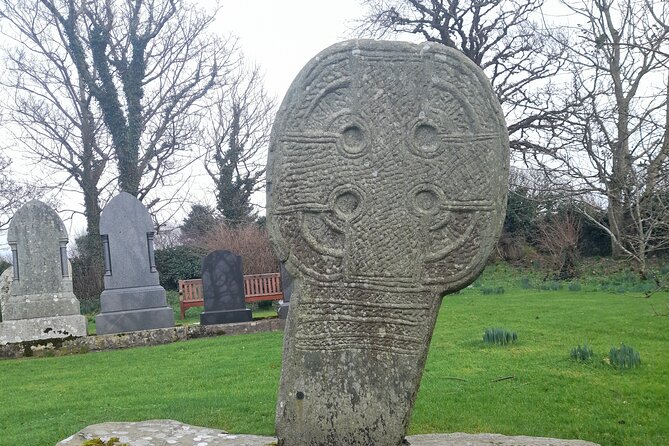
Your first stop is St. Adamnan’s in Lonan Old Church. This is one of those quiet, almost off-to-the-side places that feels like it should come with a low voice and slow steps. The church is dedicated to St. Adamnan, Abbot of Iona, and the site dates back to the 12th century.
What makes this stop especially worthwhile is the carved stone work from earlier eras. You’ll see crosses that date back to the 7th century, plus an impressive 10th century wheel head cross that’s described as being in its original position. That detail matters. When you can see an old carving where it was meant to stand, it changes your relationship to the artifact—from decoration into evidence.
This is also a short visit (about 30 minutes), so I treat it like a warm-up. Look first for the overall layout, then focus on the cross details. If your guide points out specific carvings, take notes mentally; you’ll use that context later when Viking burial sites and later monumental sites show up.
Kirk Maughold: Celtic and Viking heritage in the same parish area
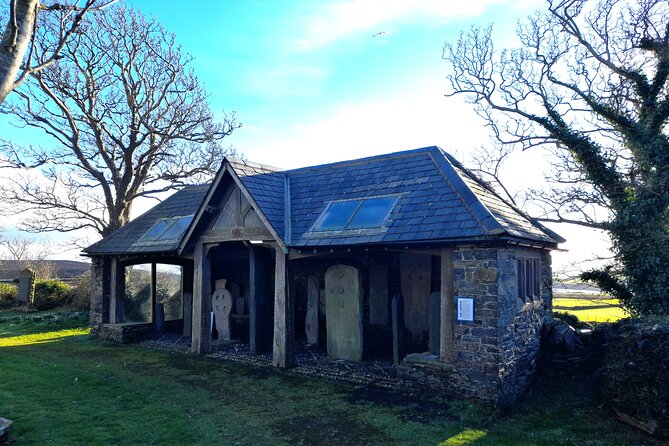
Next you head toward Kirk Maughold Church in the Maughold area, set in what the tour describes as natural beauty. Here you’ll spot more examples of carved stone crosses and explore remnants of the first monastery on the island, dating back to the 6th century.
This stop works because it links the Christian thread to the island’s earlier religious use. It also sets up the Viking elements that come later. You’ll see that the island didn’t erase the past—it layered it. That theme is basically the backbone of the whole tour.
If you’re someone who likes to photograph stone carvings, this is a good moment. The setting helps, but don’t spend the entire 1 hour chasing perfect angles. Get your bearings, listen for what your guide emphasizes, then take your shots.
Jurby Church: untouched Viking burial mounds and carved crosses
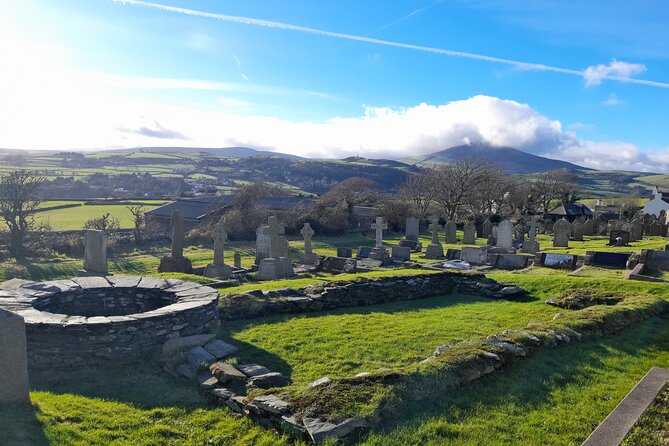
At Jurby Church (St. Patrick’s Church in Jurby), you get a more distinctly Viking-flavored component: the churchyard includes untouched Viking burial mounds. Inside, you’ll also find an array of carved stone crosses.
This is where the tour’s name earns its keep. You’re not only seeing Christianity in one place and Vikings in another. You’re seeing a Viking burial landscape located by a Christian worship site, which tells you the island’s human use didn’t flip like a switch.
It’s a shorter stop (about 30 minutes), but it’s emotionally heavier than some of the others. Give yourself a minute to stand back from the details and take in the yard before focusing on the stonework.
Peel and House of Manannan: Viking stronghold ruins plus reconstructions
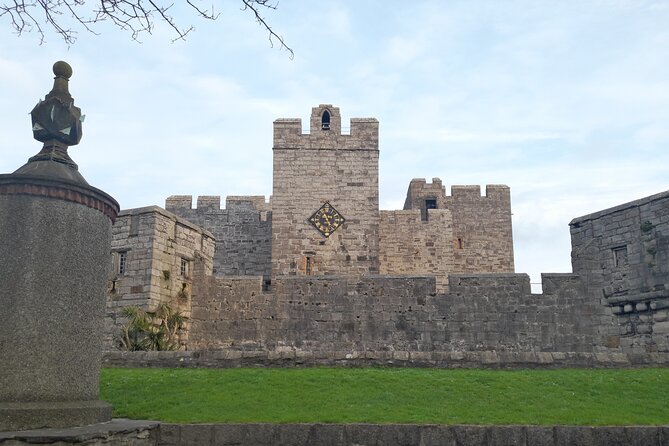
Heading west, you’ll reach Peel and the adjacent St. Patrick’s isle, described as among the most important historic and religious sites in the British Isles. The real visual anchor here is Peel Castle’s sprawling ruins, which connect a long stretch of use: first settlement activity more than 7000 years ago, then a Celtic monastery and religious center, and later a Viking stronghold and fortress.
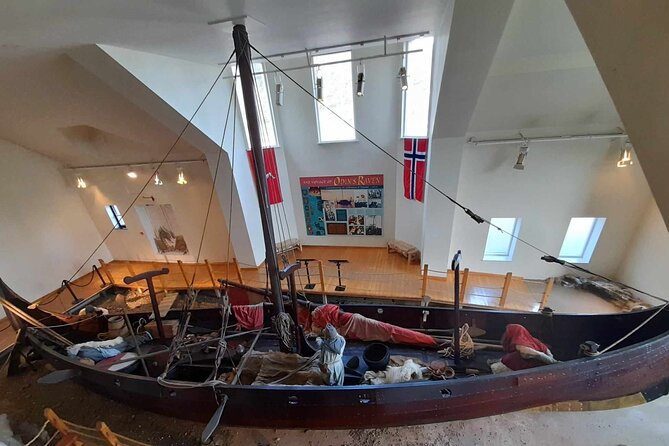
One of the smartest adds on this tour is House of Manannan. This isn’t just a museum stop; it’s where you get reconstructions meant to make the eras feel tangible. You’ll experience reconstructions of a Celtic roundhouse and a Viking longhouse, plus an opportunity to view a replica Viking ship called Odin’s Raven.
This is the point where I’d say the tour shifts from “heritage sites” to “heritage understanding.” Ruins can be hard to read if you don’t know what to imagine. Reconstructions give your brain a bridge.
Expect about 1 hour here. If you move quickly, you can hit the highlights. If you slow down and read, you might wish the stop lasted longer—but that’s the tradeoff with a 7.5-hour day.
Tynwald Hill: symbol of self-rule and a parliament tradition
After Peel, you’ll go to Tynwald Hill. Here, the Viking thread connects to governance rather than just graves and crosses. Tynwald is believed to have been established by Norse Viking settlers over a thousand years ago, and it’s described as the oldest continuous parliament in the world.
The hill symbolizes the Isle of Man’s independence as a self-governing crown dependency. Even if you’re not a politics nerd, this stop is useful because it shows you how the island’s identity didn’t come only from language or religion. It came from institutions and traditions that carried forward.
The tour gives about 45 minutes here. Don’t treat it like a quick photo stop. Take a moment to understand the symbolism and what it implies about continuity.
There’s also mention that the Royal Chapel may have been built on the site of an ancient Keeill. That’s another layering detail worth paying attention to. A “keeill” type chapel connects the pre-monument and early Christian eras.
Balladoole Heritage Site (Gansey): burials from Bronze Age to Viking
You then visit Gansey / Balladoole Heritage Site, set with scenery and stunning views described on the tour overview. This stop is short (about 30 minutes), but it’s a big-picture layer cake.
You’ll explore multiple time periods in one area, including a Viking ship burial, a Bronze Age burial, and a Christian Keeill. When a site compresses multiple eras like this, your guide’s interpretation becomes extra important. Listen for what makes each layer distinct and why the same location kept being used.
This is a good stop for anyone who likes archaeology that is still readable. It’s not just names on plaques; it’s the idea that the island’s coastline and chosen ground kept mattering across centuries.
Castletown and Castle Rushen: closing with Viking royal power
The tour ends in Castletown, where you’ll see Castle Rushen. This castle was built by a Viking king, and it’s also where the last Viking king on the Isle of Man died. That kind of detail is catnip for people who like a narrative arc.
You’ll have about 1 hour at this stage. Castle Rushen is the main event here, but there may also be a chance to visit Rushen Abbey, described as steeped in Christian heritage.
I like how the day closes on a place of power. Earlier stops focus on religious meaning and burial landscapes. Castle Rushen brings you back to fortification, rule, and survival—then it hands the story back to you as you head toward the final viewpoints.
Final viewpoints via Fairy Bridge and The Braaid (John Martin’s Plains of Heaven)
On the return, you’ll pass via Fairy Bridge and The Braaid, taking in views that inspired John Martin’s The Plains of Heaven, which is in the Tate Modern. You’ll also see an abandoned farmstead area, described as having an Iron Age roundhouse and two Norse longhouses.
This is a nice way to end because it turns history into scenery. It helps you imagine how people lived before castles and before curated exhibits. Even if you’re not an art fan, that link to John Martin’s painting gives the views extra meaning.
Pace, comfort, and what you should pack
The tour is 7 hours 30 minutes total, and timing allows for travel between points of interest plus refreshments stops. Still, since lunch and refreshments aren’t included, I suggest you bring a simple plan: water, a snack you can eat quickly, and a willingness to buy something when you stop.
Wear shoes that handle uneven ground. Several stops involve churchyards and older sites where surfaces aren’t designed for perfect grip.
Also plan for a wide variety of “viewing styles.” Some stops are about stones you’ll want to look closely at (carved crosses), others are about ruins and reconstructions where your brain needs to visualize the past.
Because it’s private in an air-conditioned vehicle, you’re covered for transit comfort. The main variable is weather once you step out—so dress in layers if conditions are changeable.
Price and value for a private group of up to 4
The price is $563.89 per group for up to 4 people. That works out as a fair value if you share costs. For a private vehicle, admission where applicable, and a Blue Badge driver guide, the structure is basically built for people who want a guided story without splitting into a bigger group.
Where you’ll feel the value most is at stops where context matters. Church carvings can be confusing. Ruins can feel like random walls. The guide’s explanations—especially topics like island culture and how the Isle of Man relates to the UK in political terms—turn scattered sights into a narrative you can hold.
If you’re traveling solo or as a couple, it’s still doable, but you’ll want to be honest about your priorities. If you love heritage storytelling and don’t want to spend time figuring out logistics, the private format earns its keep.
Who should book this tour (and who might want something different)
This is a strong fit if you:
- Want a single-day hit of Viking sites and Celtic Christian places
- Like your history explained with real-world context (how the island works today)
- Prefer a private guide who can adjust to questions and pacing
It may be less ideal if you:
- Need long, slow time at one site (this is multiple stops with shorter blocks)
- Expect lunch to be provided (you’ll need to plan your own food)
Language is English, and it’s listed as suitable for most travelers. Service animals are allowed, and it’s near public transportation, which can help if you’re coordinating independently.
Should you book the Isle of Man Viking and Celtic Heritage Tour?
I’d book it if you want the island’s Viking-and-Celtic layers explained in a logical route, not a patchwork of stops. The mix of stone crosses, Viking burial elements, Peel castle ruins, and reconstructions at House of Manannan makes the day feel like more than sightseeing.
I would double-check your plan for food and snacks, and I’d treat it as a guided day rather than a free-roam adventure. If you show up curious and ask questions, this tour gives you exactly what you paid for: a clear thread through a very old island.
FAQ
How long is the Isle of Man Viking and Celtic Heritage Tour?
It runs about 7 hours 30 minutes.
What does it cost and how many people can be in my group?
It’s $563.89 per group, with a maximum group size of up to 4.
Is this a private tour?
Yes. Only your group participates.
Is pickup included?
Pickup is offered. You can arrange it by contacting the provider, and you’ll also start at a Douglas ferry terminal meeting point if pickup isn’t arranged.
Where does the tour start and end?
It starts at the Isle of Man Steam Packet Company Ferry Travel Shop, Sea Terminal, Douglas, Isle of Man IM1 2RF. The tour ends back at the meeting point.
Is there entry to museums and castles included?
Yes, entry into museums and castles is included where applicable.
Is lunch included?
No. Lunch is not included.
Are refreshments included?
No. Refreshments aren’t included, though the tour timing allows for travel plus refreshments stops.
What language is the tour offered in?
The tour is offered in English.
Is free cancellation available?
Yes. You can cancel for a full refund up to 24 hours in advance of the experience start time.
Is the tour suitable if I’m using public transportation or bringing a service animal?
It states that the tour is near public transportation, and service animals are allowed.