REVIEW · DA NANG
Da Nang Epic History Tour by Cham Museum & Tasty Cuisine/Cafe
Book on Viator →Operated by Hung Le Travel-The Local Signature · Bookable on Viator
Da Nang tells its story in stone. In this 3-hour private walk, you move from Cham Pa religious art to pagoda practice, then end with food and coffee that explain the city’s past in plain human terms.
I especially like the English-speaking guide with a background historian (Hung Le Travel’s local signature), because the stops don’t feel like random photo breaks. I also like that you’re not just looking—you’re eating and tasting along the way, including pho and coconut or salt coffee.
One thing to consider: there’s no pick-up or drop-off, so you’ll need to get to the start point at Cham Museum on your own, and the tour needs good weather to run smoothly.
In This Review
- Key highlights that make this tour worth your time
- A smart 3-hour mix of temples, war context, and street food
- Da Nang Museum of Cham Sculpture: stone Hindu art and a disappearing kingdom
- Long An Pagoda: Mahayana Buddhism in local life, not just incense
- APEC Park, Dragon Bridge, and the Han River walk with wartime context
- Pho at Hanoi Quarter, the Chicken Church cathedral, and Han Market stories
- Hanoi Quarter pho and Ha Noi corner herbal tea
- Da Nang Cathedral, locally called Chicken Church
- Han Market and Chinese community stories
- Coffee finale: coconut or salt coffee plus war-generation stories
- If you chose the rice wine option
- Price, what’s included, and why value depends on your expectations
- Who this tour is best for (and who might want a different option)
- Should you book Da Nang Epic History Tour?
- FAQ
- How long is the Da Nang Epic History Tour?
- What is the price per person?
- Is this tour private?
- Where does the tour start and end?
- Is hotel pick-up or drop-off included?
- What food and drink are included?
- Which main sights will we visit?
- What kind of guide do I get?
- Does the tour require good weather?
- Is there a cancellation window?
Key highlights that make this tour worth your time
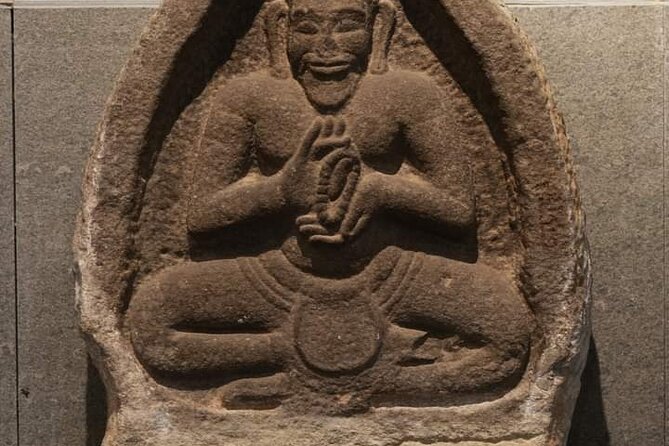
- Da Nang Museum of Cham Sculpture: see hundreds of stone Hindu art pieces linked to the 7th-14th century Cham Pa Kingdom
- Long An Pagoda stop: learn Mahayana Buddhism and how beliefs show up in everyday local life
- Dragon Bridge (666m): iconic views plus context about Da Nang during the Vietnam War era
- Local food stops: pho at Hanoi Quarter and herbal green tea at Ha Noi corner
- Cathedral called Chicken Church: a local nickname you’ll understand once you see it
- Coffee as the finale: coconut coffee or salt coffee, explained with stories about how wars affected generations
A smart 3-hour mix of temples, war context, and street food
This tour works because it stitches together Da Nang’s identity from several angles. You get the big visual payoff first (Cham Museum), then the “why people live like this” lesson (Long An Pagoda). After that, you walk the river area and see modern icons (Dragon Bridge), with wartime background that helps the buildings around you make sense.
The route also stays realistic. It’s long enough to cover key sights, but short enough that you’re not stuck all day. For many visitors, that matters. Da Nang is often treated as a base between other places, so having a tour that gives you a coherent city-story in about 3 hours is a practical win.
Price is another reason it’s appealing: at $29 per person, you’re paying for a private, English-guided walking format plus included entrance and tastings. That’s usually where value lives—fewer paid extras, less wandering to find your own food stops.
You can also read our reviews of more historical tours in Da Nang

Da Nang Museum of Cham Sculpture: stone Hindu art and a disappearing kingdom
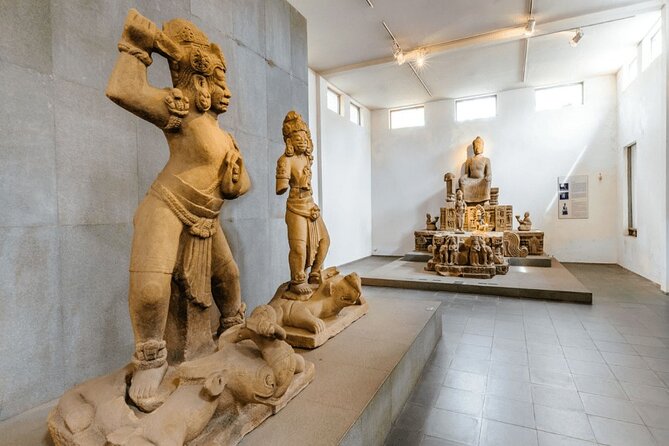
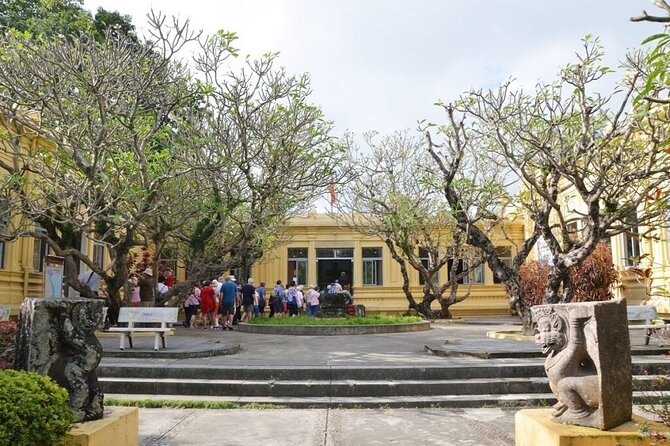
You start at Da Nang Museum of Cham Sculpture at Số 02 Đ. 2 Tháng 9, Bình Hiên, Hải Châu, Đà Nẵng 550000. This matters because the tour begins right where you’ll likely want to be anyway: at the site that anchors the whole theme.
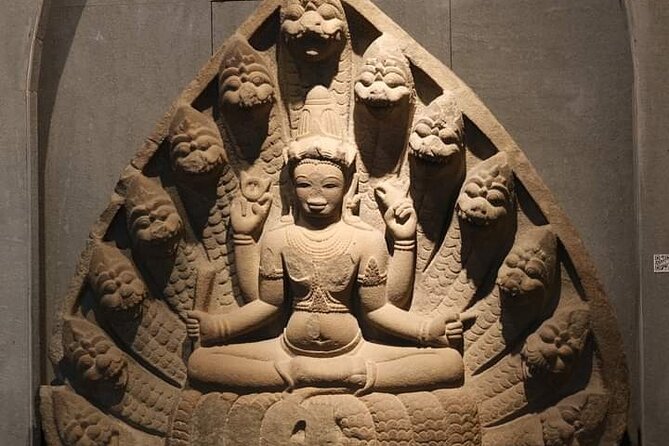
What makes this stop special is the scale and focus. The museum is described as the world’s largest Hinduism sculpture collection, with hundreds of antique stone statues dating from the 7th-14th centuries connected to the Cham Pa Kingdom. Even if you’re not a “museum person,” the concentration helps. You’re not chasing bits and pieces across town. You’re seeing a single cultural thread in one place.
You’ll also get the context that turns statues into meaning. Expect to hear about Cham Pa, an early Southeast Asian kingdom in central Vietnam, and how its religion left major artistic traces. The tour also connects Cham Pa art to My Son relics, which are mentioned as part of Vietnam’s broader historical story. My Son is described as about 60 km from Hoi An, so you’ll come away with a mental map if you’re deciding whether to visit that area later.
A practical note: museum time can feel slower than street time. Wear comfortable shoes anyway. Even if you move at a walking pace around exhibits, you’ll still spend a chunk of the tour inside, reading labels and listening.
Long An Pagoda: Mahayana Buddhism in local life, not just incense
After the museum, you step into the quieter, more everyday side of spiritual Vietnam. The next stop is Long An Temple / Pagoda, where you learn Mahayana Buddhism and how local beliefs affect daily life.
The goal here isn’t to treat religion like a “sight.” It’s about understanding how it shows up in routines and community expectations—things like how people interpret luck, morality, and respect for tradition. The tour description emphasizes that you’ll hear interesting stories behind the practices, which is the part I always look for on temple visits. If you only see architecture, you miss the human meaning.
If you’re sensitive to sound or crowds, pagodas can vary by time of day. This tour is roughly 3 hours total, so the time you spend there should be manageable. Still, go in with a relaxed mindset: temple visits reward slower attention.
APEC Park, Dragon Bridge, and the Han River walk with wartime context
The route then shifts back toward the city’s landmarks. You’ll pass a stop at APEC Park and then head to Dragon Bridge.
Dragon Bridge gets billed as the most iconic bridge on the world, with a length of 666m—and you can see why. It’s the kind of structure that gives you an immediate “this is Da Nang” moment. But what elevates this stop is the explanation around it.
The tour is built to connect the bridge and river area to the Vietnam War era, when Da Nang served as a major military base before 1975. The walk along the Han River includes the story of what American constructions were built to serve during the war. You’re not just seeing buildings; you’re learning why they sit where they do and what they were designed to support.
If you’ve ever felt confused by how a city can look modern while still carrying heavy history, this is the piece that helps. It gives you a lens for what you see around the river—why certain areas feel strategic, why certain structures look the way they do, and why the past stays present.
A small planning tip: bring a light layer. River walks can feel cooler near water, but weather can flip fast in central Vietnam.
Pho at Hanoi Quarter, the Chicken Church cathedral, and Han Market stories
The tour then turns to the food and street-level fabric of Da Nang.



Hanoi Quarter pho and Ha Noi corner herbal tea
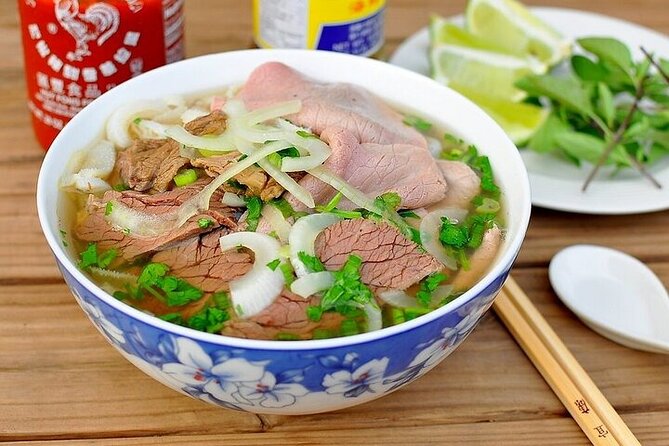
You stop at a quiet-street corner where you can taste the city’s best pho, described as coming from the old Hanoi Quarter inside Da Nang. Pho isn’t just a snack here. It’s a cultural shortcut: you taste something you can return to later when you want comfort food that feels local, not touristy.
You’ll also have Ha Noi herbal green tea at Ha Noi corner. That’s a nice balance after hot street walking. If you’re the kind of traveler who always forgets to hydrate until it’s too late, this is a gentle fix.
You can choose chicken or beef pho (that choice is explicitly part of what’s included). If you eat lightly, pho might be enough to carry you through the rest of your day.
Da Nang Cathedral, locally called Chicken Church
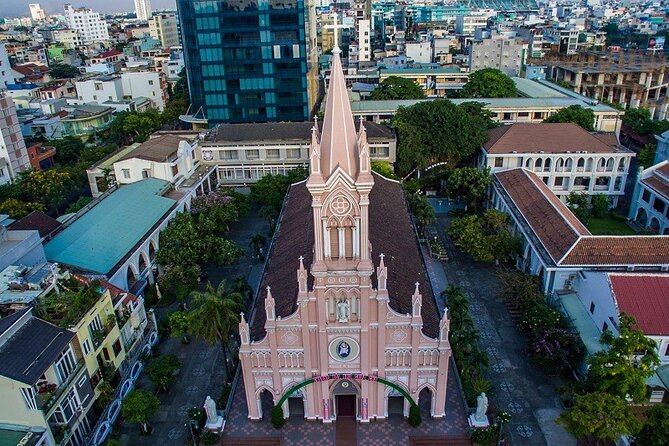
Next up is Da Nang Cathedral Church, a landmark locals nickname the Chicken Church. You’ll likely notice why once you see it—this tour’s angle is that you’ll hear local naming explanations rather than just being shown a building.
Cathedral stops can go two ways: either you get a history lecture with no personal connection, or you get local color that makes the place feel like it belongs to residents, not just visitors. This one is set up to do the second.
Han Market and Chinese community stories
Then you walk through Han Market, described as the biggest market in central Vietnam and noted as having French colonial origins. The tour includes stories about the Chinese community living in Vietnam, which gives you a clearer picture of why markets don’t just sell goods—they map community relationships.
Markets also help you understand the pace of the city. Even if you don’t buy anything, you’ll see how locals move: quick decisions, practical shopping, and steady routines.
Coffee finale: coconut or salt coffee plus war-generation stories

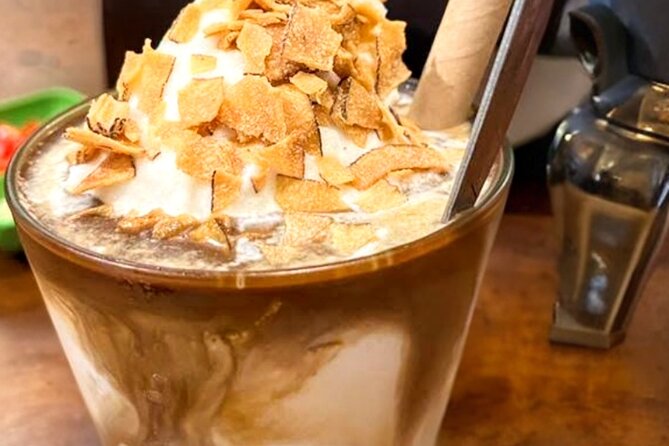
You finish with a tasting of coconut coffee or salt coffee, described as among the best coffee in Vietnam. This is a smart ending. People tend to remember food sensations longer than they remember museum labels—and coffee is part of Vietnam’s everyday life, not just a souvenir.
The tour also frames the coffee with untold stories about Vietnam’s past, including how wars affected your fathers’ generation’s sleep so far. That wording is emotional for a reason: it gives the taste a context beyond flavor.
If you chose the rice wine option
Depending on the specific option you select, there may also be rice wine distillery and tasting included. If you went with a package that includes it, expect this to be an extra local sensory stop before the coffee finale.
My practical advice: if you’re sensitive to alcohol, pace yourself. You’ll already have pho and tea in your system, which helps, but rice wine tasting can still be strong.
Price, what’s included, and why value depends on your expectations
At $29 per person, you’re paying for a lot of “friction removal.” Most independent travelers spend time figuring out:
- which museum to start with,
- how to connect temples logically,
- where to eat pho without wasting time hunting,
- and how to end with a coffee tasting that actually explains something.
This tour includes key items:
- a private English-speaking guide with a background historian
- Cham Museum entrance tickets
- Chicken or Beef pho
- Coconut coffee or Salt coffee
- Ha Noi herbal green tea at Ha Noi corner
- optional additions like rice wine distillery and tasting, if you choose that option
What’s not included: pick-up/drop-off, plus any extras beyond the listed food and tastings, and tips for your guide.
Also, it’s a private tour, meaning only your group participates. That typically improves the experience for two reasons: you can ask questions without fighting for attention, and the timing can feel smoother—especially on museum and temple stops where curiosity might slow you down.
One more value detail: it uses a mobile ticket, which makes day-of logistics simpler. Less paper, fewer last-minute problems.
Who this tour is best for (and who might want a different option)
This experience is a great match if you want:
- a compact city story in one outing,
- a guide who connects art, religion, and modern landmarks with real context,
- included tastings (pho and coffee) without having to plan every meal.
It’s also a solid choice if you like tours that feel like walking with a local teacher. The mention of guide Hung in the feedback you provided is a big clue that the delivery matters here—people clearly respond to his friendly, engaging style and historical background.
If you’re the type who prefers long unscheduled wandering, you might find 3 hours a little tight. This is structured. You’ll get key points, but you won’t have hours to drift off-script.
And remember: since there’s no pick-up, you need to be comfortable meeting at Cham Museum and moving on foot with the group.
Should you book Da Nang Epic History Tour?
Yes—if you want Da Nang with context, not just checkboxes. The strongest reason to book is the balance: Cham Museum art + Long An Pagoda practice + Dragon Bridge/Han River wartime lens + local food and coffee. That mix is rare in a short tour.
Book this especially if:
- you care about understanding what you see,
- you’re happy to walk and listen for 3 hours,
- you want pho and coffee baked into the experience.
Skip it if:
- you need transportation included,
- you dislike structured routes,
- you’re only chasing beach time and don’t want temples/museums during your visit.
If the weather looks good, this is the kind of tour that helps Da Nang feel like a place you understand, not just a place you pass through.
FAQ
How long is the Da Nang Epic History Tour?
It runs for about 3 hours.
What is the price per person?
The tour costs $29.00 per person.
Is this tour private?
Yes. It’s listed as private, so only your group participates.
Where does the tour start and end?
It starts at Da Nang Museum of Cham Sculpture (Số 02 Đ. 2 Tháng 9, Bình Hiên, Hải Châu, Hải Châu, Đà Nẵng 550000, Vietnam) and ends back at the meeting point.
Is hotel pick-up or drop-off included?
No. Pick-up/Drop-off is not included.
What food and drink are included?
You’ll get Chicken or Beef Pho, coconut coffee or salt coffee, and Ha Noi herbal green tea at Ha Noi corner. If you select an option that includes it, there’s also rice wine distillery and tasting.
Which main sights will we visit?
You’ll visit Da Nang Museum of Cham Sculpture, Long An Temple/Long An Pagoda, APEC Park, Dragon Bridge, Da Nang Cathedral Church (locally called Chicken Church), and Han Market.
What kind of guide do I get?
You’ll have an English-speaking guide with a background historian.
Does the tour require good weather?
Yes. It requires good weather. If it’s canceled due to poor weather, you’ll be offered a different date or a full refund.
Is there a cancellation window?
Yes. You can cancel for a full refund up to 24 hours before the experience starts.