REVIEW · OLBIA
Olbia: Archaeological Tour of Ancient Sardinia + Transport
Book on GetYourGuide →Operated by Smeralda 360 · Bookable on GetYourGuide
Olbia’s past rolls by at tuk-tuk speed. In 2.5 hours you’ll jump across 4,000 years of Sardinian history, from Nuragic sacred spaces to Roman engineering and medieval granite, while a multilingual audio guide keeps the story clear as you ride. I also love how the route favors the most important monuments rather than random stops, which makes each pull-over feel worth it. The only real watch-out: the photo-stop areas include walking on uneven ground, so bring comfortable shoes and don’t count on flat, easy steps everywhere.
This is a small-group, eco-friendly style tour where you’re not stuck negotiating buses or parking lots. You’re in a tuk-tuk or minivan with a local driver, and the pace stays friendly—think short visits at each site, plus scenic stretches as you move around the Olbia area.
One more thing: this tour isn’t set up for wheelchair users. If you’re moving slowly, you’ll still likely manage the stops, but plan to take your time at the castle and tomb areas where you’ll do a bit of walking.
In This Review
- Key highlights worth your attention
- How the 2.5-hour loop around Olbia really feels
- Basilica di San Simplicio: the granite-medieval stop that anchors the tour
- Su Mont’e s’Abe Giants’ Tomb: the monumental Nuragic moment
- Pozzo Sacro di Sa Testa: where water rituals meet atmosphere
- Acquedotto Romano, Olbia: Roman water engineering you can still picture
- Pedres Castle: a quick photo stop with real viewpoint payoff
- Getting around: tuk-tuk, minivan, and why audio guides matter here
- Small-group eco-friendly format: comfort without the crowds
- Price and value: what $106 gets you (and what you’ll need to plan yourself)
- Practical itinerary walkthrough: what to expect at each stop
- Who should book this Olbia archaeology tour
- Should you book it? My honest take
- FAQ
- How long is the Olbia Archaeological Tour?
- Where do I meet the group if I’m not picked up?
- What languages are included in the audio guide?
- Is pickup available from areas like Costa Smeralda and Olbia?
- Which major sites are included on the tour?
- Are food or drinks provided?
Key highlights worth your attention
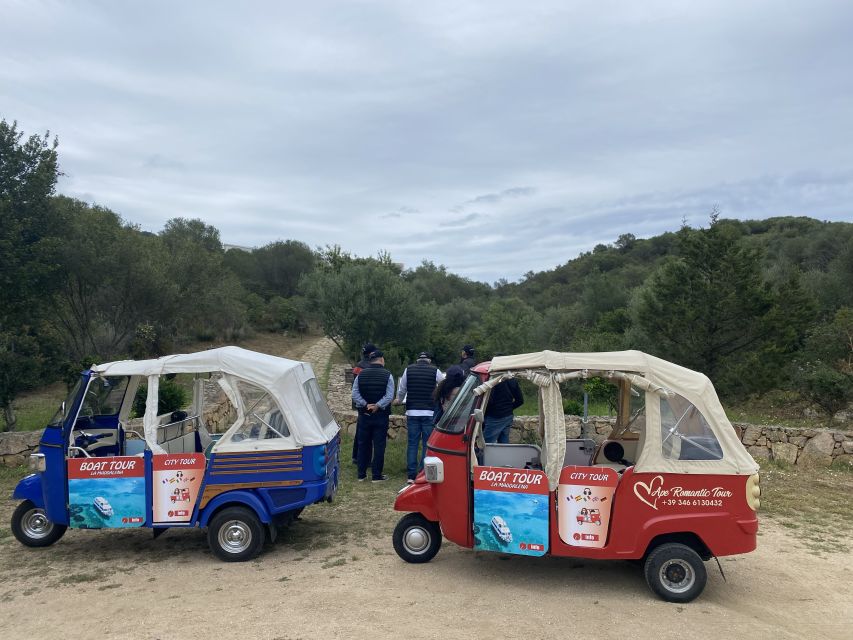
- Tuk-tuk or minivan ride that keeps transfers simple around Olbia
- Speaker audio guide in Italian, English, French, German, and Spanish
- Big monument hits: Su Mont’e s’Abe tomb, Sa Testa sacred well, and San Simplicio
- Nuragic + Roman + medieval mix without feeling like three separate tours
- Photo stops with strong viewpoints, including Pedres Castle
- Small-group feel that helps you get through the sites without hassle
How the 2.5-hour loop around Olbia really feels
This tour is built for people who want the core archaeology of the Olbia area without spending a whole day behind a steering wheel. You get a scenic drive start, then a sequence of major monuments with guided stops where you can pause, look around, and get the context from the audio guide.
The pacing is a key part of the value. You’re not treated like you’re on a long museum crawl. Instead, you’re moving between sites, and each stop is short enough that you can keep energy for the best views. Even better, the vehicle options—tuk-tuk or minivan—match the vibe. The tuk-tuk ride is fun and quick, while the minivan feels smoother if you’re sensitive to bouncing around.
If you’re coming from Costa Smeralda, Golfo Aranci, or central Olbia, pickup is an option. If you’re not picked up, the meeting point is the bus parking area at Molo Brin in Olbia. Either way, it helps to be ready at the time set, since the driver can’t wait around for long.
You can also read our reviews of more tours and experiences in Olbia.
Basilica di San Simplicio: the granite-medieval stop that anchors the tour
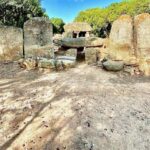
Your medieval anchor is the Basilica di San Simplicio, a Romanesque church built entirely from granite between the 11th and 12th centuries. This kind of church isn’t just pretty—it’s a local identity marker. In Olbia, this is one of the monuments that tells you how the town’s story continued long after the ancient Nuragic and Roman eras.
What I like about this stop for first-timers: the architecture is the lesson. Even on a short visit, you get to see how medieval builders worked with Sardinia’s local materials and how religious sites became community landmarks. You also get a natural “reset” in the itinerary—after the older ceremonial and burial spaces, the church offers a different kind of human scale: craftsmanship you can actually read with your eyes.
Practical tip: bring a light jacket. Even if the day is warm, the granite and shaded areas can feel cooler.
Su Mont’e s’Abe Giants’ Tomb: the monumental Nuragic moment
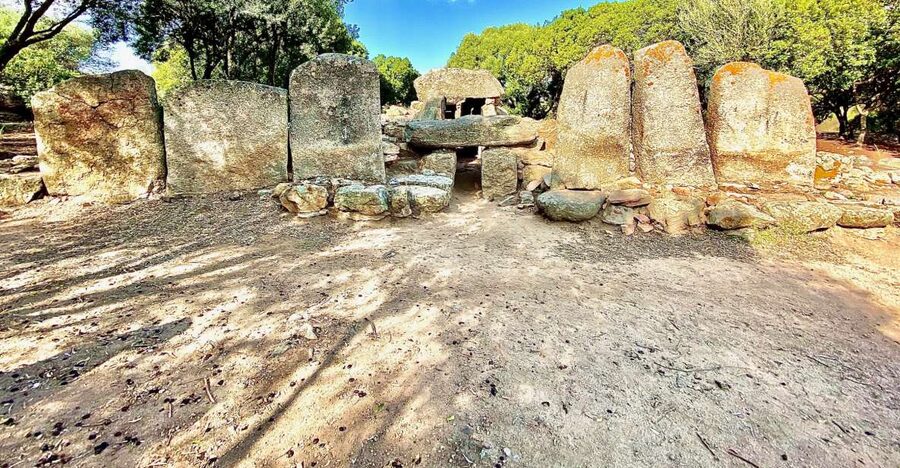
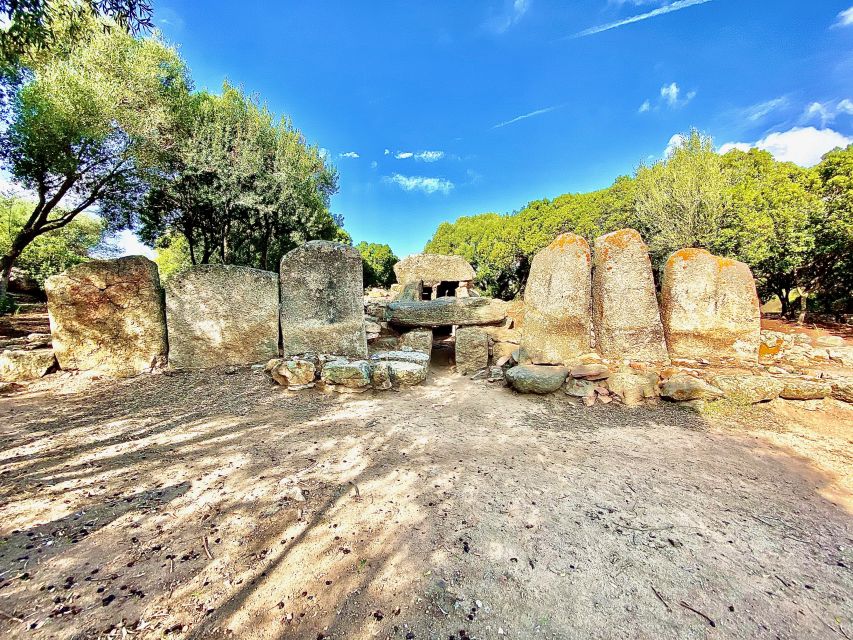
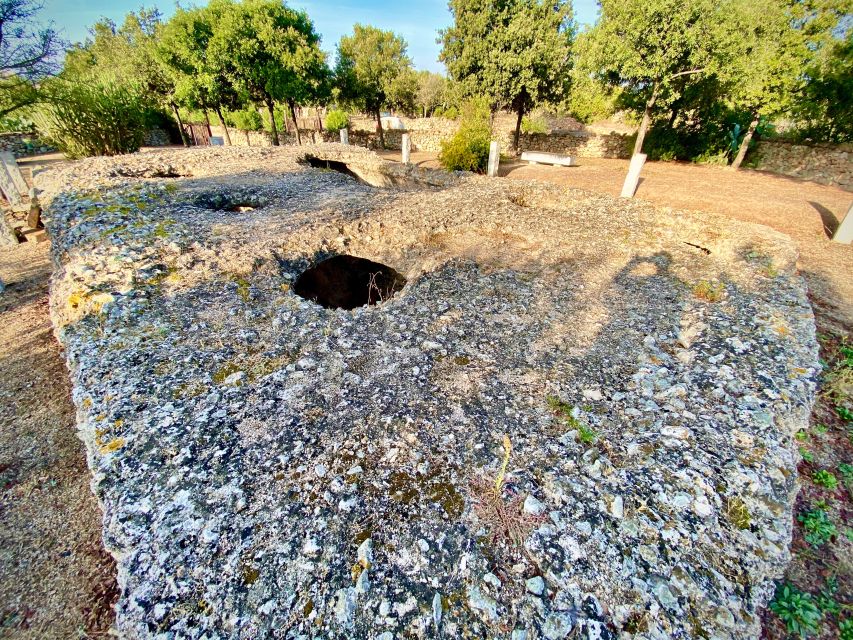
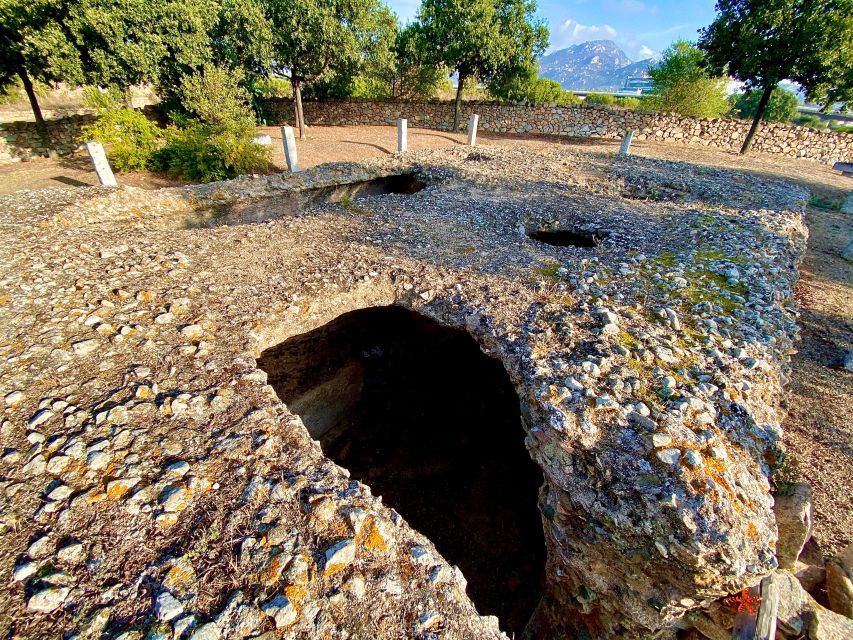
Then you hit one of the tour’s headline sights: Su Mont’e s’Abe, a Nuragic burial monument that’s about 28 meters long. This is the kind of site that makes you pause because the scale is hard to fake. Whether you’re a big history nerd or just a curious traveler, a long burial hall gives you an instant sense of planning and belief—this was built for a reason, not just as a curiosity.
I also like that the tour doesn’t treat Nuragic culture as a single photo-op. You’re shown a core ritual place (the tomb) and later another (the sacred well), so the audio guide can connect the dots between spirituality, water, and community memory.
One consideration: the time at this stop includes a walk and sightseeing (around 10 minutes on the schedule). Don’t rush it. If you’re not great with uneven ground, slow down and keep your footing. A helpful detail from past participants is that small steps and steep bits can be involved around the photo-view areas, so your best move is to plan carefully rather than sprint.
Pozzo Sacro di Sa Testa: where water rituals meet atmosphere
After the tomb, you’ll visit Pozzo Sacro di Sa Testa, a sacred well dating back to the Nuragic period. The “sacred well” label matters because it changes how you look at it. This isn’t just a historical structure—it’s a place tied to water rituals and spiritual ceremonies, which explains why the site feels so focused and intentional.
The audio guide gives you the background so you’re not standing there guessing what you’re seeing. That’s especially important here because the meaning is the point. You’ll likely find it more memorable if you take a quiet moment—step back, look at the structure as a whole, and let the guide’s explanation guide your eyes.
Time-wise, you’re there for about 20 minutes (photo stop plus visit and sightseeing). That’s enough to take photos, but also enough to actually understand what makes a sacred well different from other archaeological ruins.
Acquedotto Romano, Olbia: Roman water engineering you can still picture
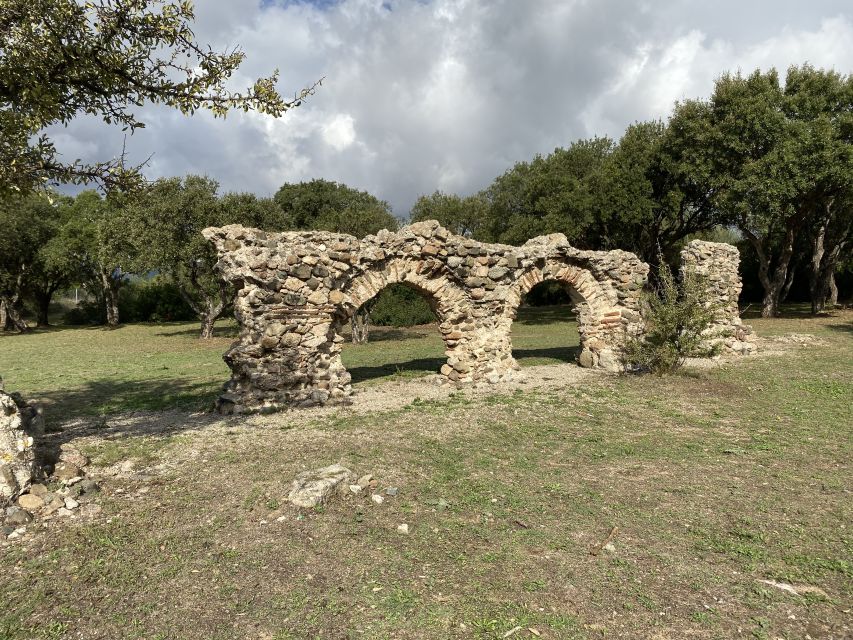
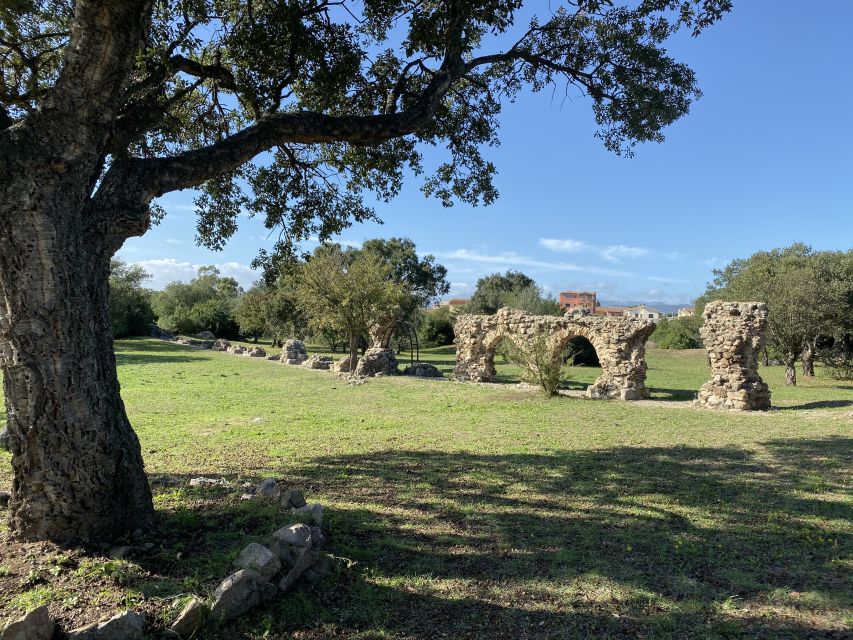
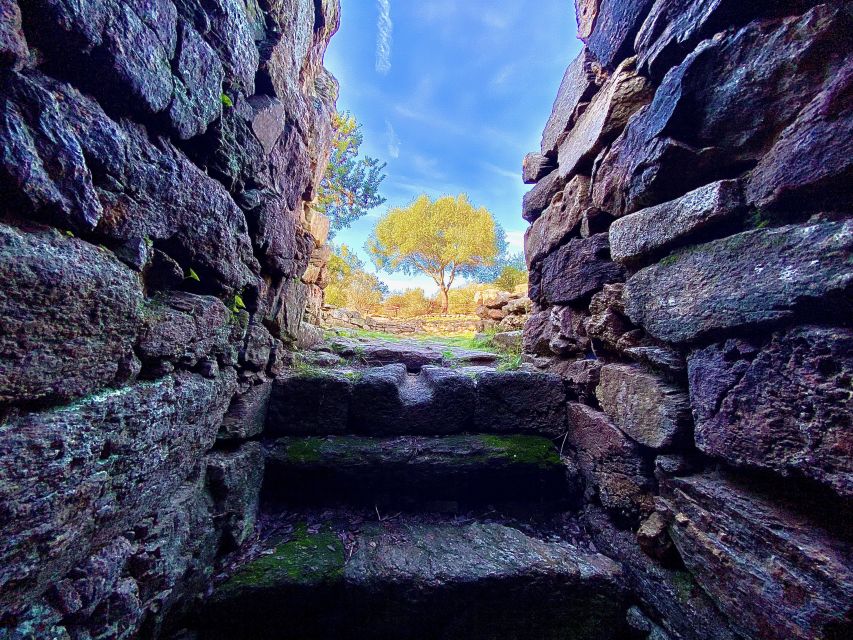
The Roman stop is the Roman Aqueduct in Olbia, described as an engineering work that supplied water from the springs of Mount Cabu Abbas to the ancient city. This part of the route is a smart choice because it shows Roman power in a practical way. Yes, there are ruins and old stones—but the story is about water management, planning, and daily life support.
I like it because it’s easy to visualize. When you hear about how water traveled from springs to a city, the aqueduct stops being random old masonry. It becomes infrastructure. That makes the Roman portion of the tour feel grounded instead of vague.
On the schedule, you’ll have a photo stop and a visit (about 20 minutes total). It’s not long, but it doesn’t need to be. The key is using the audio guide while you look at what remains.
Pedres Castle: a quick photo stop with real viewpoint payoff
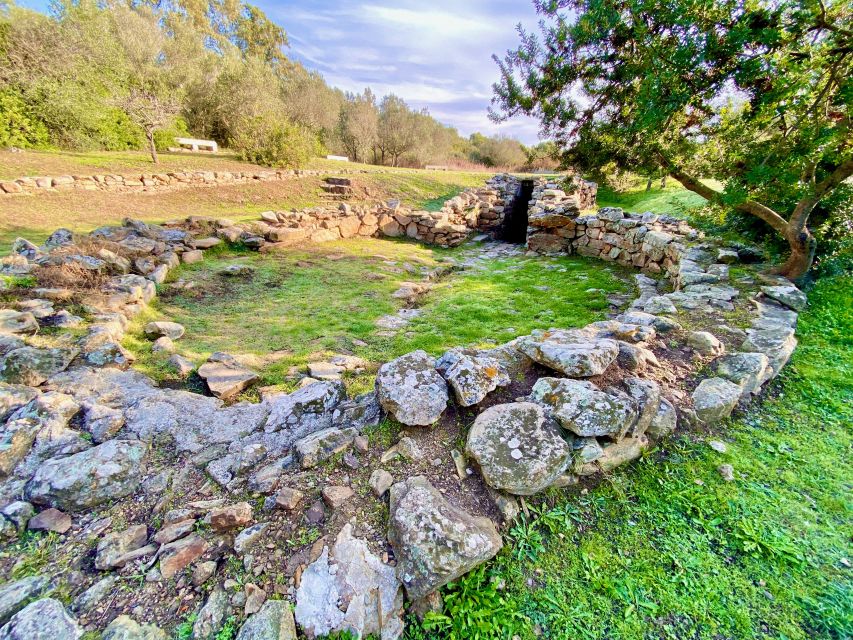
Your castle stop is Castello di Pedres, a 14th-century fortress perched on a rocky hill just outside Olbia. The schedule includes a short walk (around 10 minutes), plus a photo stop and sightseeing, but the ruins themselves aren’t accessible—so your main focus is the views.
This is one of those places where the tour design makes sense. A full climb might be too hard for most people, but stopping below the hill lets you get the countryside panorama without turning the visit into an exhausting hike. If you’re traveling with mixed mobility in your group, this style helps.
A practical heads-up: some people found the steepness or small steps around the castle area could be a challenge. If that’s you, wear shoes with good grip and be ready to move slowly. If you’re lucky, your driver will help you find the easiest curb or step option when getting in and out of the vehicle—one participant specifically praised that kind of hands-on help.
Getting around: tuk-tuk, minivan, and why audio guides matter here
Transport is the secret sauce of this tour. The route is spread across several key sites around Olbia, and doing it by car on your own would mean juggling parking, timing, and local driving. Here, you sit back while the vehicle—either tuk-tuk or minivan—handles the transfers.
Two things I’d call out:
First, the vehicle experience is part of the fun. Someone summed it up perfectly: riding in the tuk-tuk is simply fun. Even if you’re not a thrill-seeker, it keeps things light and makes the stops feel like chapters in a story rather than separate errands.
Second, the audio guide setup is serious. You get a clear system with speakers, not just a handheld device. It’s multilingual—Italian, English, French, German, and Spanish—so you can match your language comfort fast. That matters at archaeology sites, where small cues (period, purpose, construction idea) are what make ruins click.
Also note the tour language detail: the audio guide languages are listed, and the driver is Italian. In practice, the audio guide does the heavy lifting for understanding.
Small-group eco-friendly format: comfort without the crowds
This is described as a small-group, eco-friendly tour. Even without a lot of detail on group size, the emphasis is clear: you’ll be part of a group small enough to keep the ride coordinated and the stops moving.
That’s a big deal at sites where time is limited. With a smaller group, you’re less likely to feel stuck in a slow line or doing the “everyone waits for everyone” thing. You’ll still want to be prompt for each stop, but the whole rhythm tends to feel smoother.
One more comfort point: you’re protected from the stress of constant planning. There’s no need to figure out where to park between monuments or which side of the road to cross. You just show up, listen, and walk when it’s time.
Price and value: what $106 gets you (and what you’ll need to plan yourself)
The listed price is $106 per person for about 2.5 hours with transport and an audio guide. For a route that includes multiple major monuments, transportation by tuk-tuk or minivan, and speaker-based multilingual audio, it can be good value—especially if you’re staying in Costa Smeralda or around Olbia and don’t want to rent a car.
But I’ll be straight with you: value depends on what you expect to be included.
You do not get cardigans for entrance to churches. And food and drinks are not part of the experience. One person felt the tour price was too high and specifically noted the lack of refreshment options for the duration. Another noted that the price didn’t feel great for what was included beyond the sights.
So my practical advice: plan to bring your own water and a snack if you want one—then follow the vehicle rule that food and drinks in the vehicle aren’t allowed. Even if the tour feels short, 2.5 hours in the sun can add up.
Also, bring a jacket. The tour notes it as a thing to bring, and you’ll be happier if you’re comfortable during scenic drives and time outside.
Practical itinerary walkthrough: what to expect at each stop
Here’s the tour flow in plain terms, and what each part means for you on the day.
1) Scenic drive start + views
You’ll get transfer time plus scenery on the way. This is where you settle in, set your expectations, and let the audio system get going.
2) Monumento ai caduti + Lungomare di Olbia
These are sightseeing moments from the road. They help you get oriented with Olbia before the archaeology stops.
3) Castello di Pedres (photo stop + short walk)
You’re there mostly for viewpoints. Expect a brief walk and time to take photos. The ruins aren’t walkable from this stop, so plan your expectation around views.
4) Su Mont’e s’Abe Giants’ Tomb (photo + visit)
This is a main event. Take time to look at the scale and listen to the guide context so it feels meaningful, not just stone.
5) Pozzo Sacro di Sa Testa (photo + visit)
Think ritual water space. Pause and look slowly; the best understanding comes when you treat it like a designed place rather than random ruins.
6) Acquedotto Romano (photo + visit)
Roman engineering as a story about water delivery. This one works well if you like infrastructure and practical history.
7) Parco Fausto Noce (scenic drive)
Another “between sites” scenic segment that keeps the drive feel pleasant.
8) Basilica di San Simplicio (photo + visit)
Your medieval granite finish. It’s a strong emotional landing spot after the older sites.
Then you’re returned with drop-offs across multiple nearby towns and resorts, based on the selected option.
Who should book this Olbia archaeology tour
This fits best if:
- you want the main monuments around Olbia in a short time
- you like guided context (audio guide with speakers) more than wandering alone
- you’d rather ride in a tuk-tuk or minivan than coordinate a car day
- you’re traveling with limited time but want meaningful archaeology stops
It might not be your best choice if:
- you need full wheelchair access (the tour isn’t suitable for wheelchair users)
- you dislike short walks on uneven terrain
- you expect long, guided museum-style explanations at each site (this is a circuit with short stops)
If your priority is “see everything” in one day, this might feel like a fast taste. If your priority is “see the right things without headaches,” this route makes a lot of sense.
Should you book it? My honest take
I’d book this tour if you’re doing Sardinia for a mix of beaches and culture and you want a straightforward archaeology win near Olbia. The mix of Nuragic, Roman, and medieval monuments is the big draw, and the transport method makes the day easy. The audio guide with speakers also helps a lot; it turns ruins into a story you can actually follow.
I wouldn’t oversell it as a deep, all-day archaeological seminar. It’s short. That’s the point. If you’re okay with a few minutes here and there and you come prepared with shoes and a jacket (and ideally a water plan since drinks aren’t part of the experience), you’ll probably feel like your time was well spent.
If you’re worried about steps or uneven ground, it’s smart to go in with a calm mindset. The route includes some walking at the stops, and good footwear will save you.
FAQ
How long is the Olbia Archaeological Tour?
The tour lasts 2.5 hours.
Where do I meet the group if I’m not picked up?
The meeting point is the bus parking area at Molo Brin in Olbia.
What languages are included in the audio guide?
The audio guide is available in Italian, English, French, German, and Spanish.
Is pickup available from areas like Costa Smeralda and Olbia?
Yes. Pickup is optional from accommodations in Costa Smeralda (including Porto Cervo, Baja Sardinia, Cannigione, San Pantaleo), Golfo Aranci, and Olbia.
Which major sites are included on the tour?
Key stops include the Basilica di San Simplicio, the Roman Aqueduct in Olbia, the Sacred Well of Sa Testa, and the Giants’ Tomb of Su Mont’e s’Abe, plus a photo stop at Castello di Pedres.
Are food or drinks provided?
Food and drinks are not mentioned as included, and food and drinks are not allowed in the vehicle.