REVIEW · ZANZIBAR CITY
Private Zanzibar Stone Town Historical Tour
Book on Viator →Operated by Hamad Mady · Bookable on Viator
Stone Town tells stories fast. This private tour uses a local guide to connect the dots between slave-trade landmarks, heritage buildings, and today’s street life—plus a stop that few history tours bother with: the Freddie Mercury Museum.
You also get round-trip transportation from your area hotel, so you spend less time figuring out logistics and more time understanding what you’re seeing.
I especially like how the tour doesn’t treat Stone Town as one-note. With Hamad Mady leading, the explanations stay detailed and history-focused, and he’s the kind of guide who adds context you might not get on a quick walk-by. I also like the balanced mix of stops: heavy subjects (like the Old Fort prison site and slave monuments) paired with lighter, everyday moments at Forodhani Gardens and Darajani Bazaar.
One drawback to plan around: the Hamamni Persian Baths stop is short, and the baths entry is not included. If you want extra time inside or want to budget for fees, build that into your day.
In This Review
- Key things to know before you go
- Why Stone Town needs a guide like this
- Price and what you get for $30
- How the 2.5 hours are structured on the ground
- Stop 1: Old Fort (Ngome Kongwe) and the prison site
- Stop 2: Old Slave Market, Anglican Cathedral, and Edward Steers’ tomb
- Freddie Mercury Museum: music in the middle of old streets
- Forodhani Gardens: a free coastal pause that resets your feet
- Hamamni Persian Baths: short visit, cultural context, extra fees
- Darajani Bazaar: spices, fruit, and souvenir shopping without the stress
- Transportation, comfort, and the “good weather” factor
- What you’ll notice about Stone Town after this route
- Should you book this Stone Town historical tour?
- FAQ
- How long is the Private Zanzibar Stone Town Historical Tour?
- How much does the tour cost?
- Is hotel pickup included?
- Is this a private tour?
- What entrance fees are included?
- Does the tour include time for shopping?
- What’s included besides the guide?
- Does the tour require good weather?
- What is the cancellation policy?
Key things to know before you go
- Private guide with focused storytelling: you get direct, local-led context instead of a rushed group script.
- Slave-trade sites are part of the route: you’ll see monuments and a notable tomb connected to that history.
- Freddie Mercury Museum on a historical itinerary: pop culture meets old streets in a way that works.
- Coastal break at Forodhani Gardens: a free, scenic pause along the water.
- Market time you can actually use: shopping moments at Darajani Bazaar for spices, fruit, and small souvenirs.
- Admission included at key stops: Old Fort and the Old Slave Market/Anglican Cathedral area include tickets; Hamamni does not.
Why Stone Town needs a guide like this

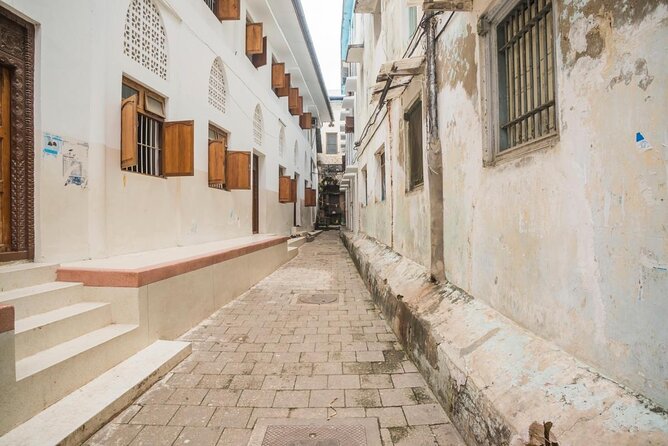
Stone Town looks like a maze until someone shows you what the maze is for. The streets, forts, and religious landmarks aren’t random—they’re pieces of a story about trade, power, and the people caught inside it.
A big reason this tour works is that it stays private. You’re not competing for time with a big bus group, so you can ask practical questions as you go. And it’s guided by Hamad Mady, who’s known for a passionate, history-first approach—exactly what you want when visiting sites tied to the slave trade.
You’ll also appreciate the pacing. The day is built around short, meaningful stops rather than one long lecture. That matters because Stone Town is walking-heavy and the best parts come from looking closely, not trying to cram everything into one rushed photo sprint.
You can also read our reviews of more tours and experiences in Zanzibar City.

Price and what you get for $30
At $30 per person for about 2 hours 30 minutes, this is solid value if you care about having context. What you’re paying for isn’t just someone walking ahead—it’s the ability to understand why each place exists and what you’re looking at when you reach it.
The price stacks up better than it sounds because several items are included:
- Experienced professional guide
- Round-trip transportation from area hotels
- Mineral water
- Admission tickets included at the Old Fort and the Old Slave Market/Anglican Cathedral stop
- Shopping time
Only one common add-on shows up clearly: Hamamni Persian Baths entry is not included. So if you plan to go in, treat that as your likely extra cost.
One more value point: the tour is listed as commonly booked about 13 days in advance. If you’re traveling during a busy season, booking earlier helps you lock in a time slot rather than scrambling at the last minute.
How the 2.5 hours are structured on the ground
This is a compact route, built to cover multiple “must-see” Stone Town landmarks without turning it into an all-day endurance test.
Here’s what the timing suggests in practical terms:
- You start with the Old Fort (short but high-impact).
- You move into the Old Slave Market/Anglican Cathedral area, where the guidance needs time to land properly.
- You then shift to sites that are more reflective and atmospheric: Freddie Mercury Museum, Forodhani Gardens, and Hamamni Persian Baths.
- Finally, you finish with Darajani Bazaar, where you can browse, smell spices, and pick up small souvenirs.
Because there are multiple ticketed stops, having a guide who handles the flow matters. You’ll spend less time trying to figure out where to go next and more time understanding each stop as you reach it.
Stop 1: Old Fort (Ngome Kongwe) and the prison site
The tour begins at Ngome Kongwe, also known as the Old Fort. This part is only about 10 minutes, but it’s chosen for a reason. You’re going to a place used as a prison, which sets the tone for the rest of the walk.
What I like about starting here is that it gives you a framework. Even if you don’t know Stone Town’s details yet, the Old Fort helps you connect later landmarks to the systems that shaped the city.
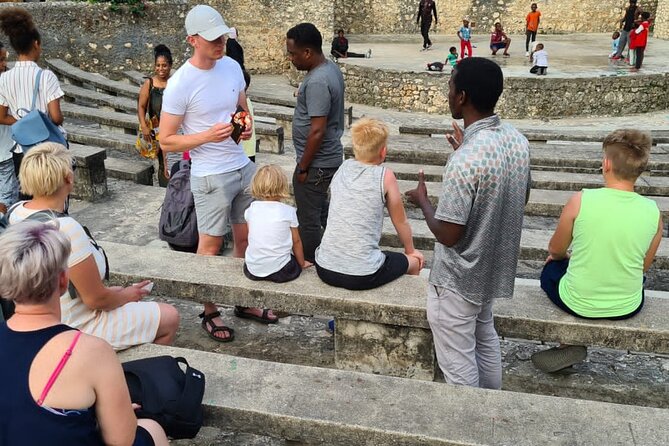
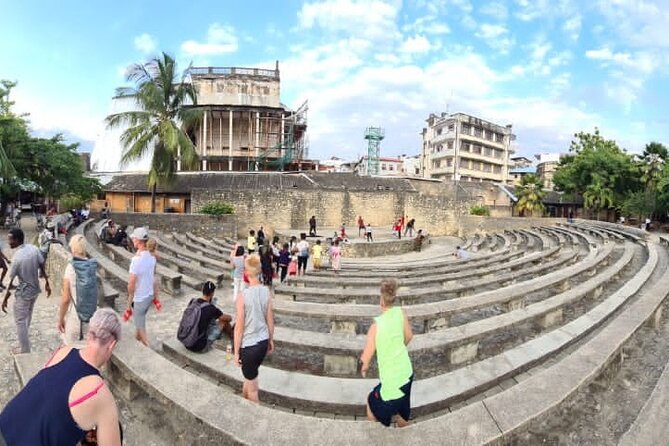
You’ll also see an older amphitheater described as being used for ladies, which adds another layer beyond the prison-only story. And there’s time associated with traditional handcrafts during this segment, so you get a quick sense of how everyday culture and historical power sit side by side in Stone Town.
Consideration: Because this is a short stop, it’s not the place to expect long wandering. If you want extended time at the fort beyond the guided window, you may need to plan extra time later on your own.
Stop 2: Old Slave Market, Anglican Cathedral, and Edward Steers’ tomb
Next comes the part many people remember the most: the Old Slave Market/Anglican Cathedral area. You’ll spend about 45 minutes here, with admission ticket included.
This longer time slot makes sense. The guide doesn’t just point at stones. You’re shown slave monuments and you visit the tomb of Edward Steers—an important detail that gives the area a specific anchor, not just vague memorial energy.
The Anglican Cathedral nearby also matters in how you understand the layers of Stone Town’s past. Religious and civic spaces often sit close to places of major historical events, and a good guide helps you notice how those spaces relate without turning the visit into a simple checklist.
What to keep in mind: This is emotionally heavy content. Dress respectfully and be ready for a more reflective portion of the tour. If you’re bringing teens, it can still work well, but you’ll want to prepare them for the subject matter.
Freddie Mercury Museum: music in the middle of old streets
Then the route shifts gears to something surprising: the Freddie Mercury Museum. This stop is described as an immersion into the iconic musician’s world, with exhibits that include memorabilia, personal artifacts, and interactive displays about his musical journey and cultural impact.
Why this belongs in a history tour: Stone Town is not a museum town frozen in time. It’s a living place, and the Freddie Mercury connection shows how global culture can grow out of local streets, families, and identities.
I like that the visit includes both personal elements (artifacts) and bigger meaning (his legacy and cultural impact). Even if you’re not a superfan, it tends to land because it’s framed against the city’s character rather than floating separately from it.
Consideration: If you’re traveling with someone who isn’t interested in pop music at all, this stop might feel less relevant. But the museum is positioned as part of Stone Town’s broader story, not as a random detour.
Forodhani Gardens: a free coastal pause that resets your feet

After the museum, you get a breather: Forodhani Gardens (about 30 minutes, and admission is free). This is a coastal garden oasis with lush greenery, flowers, and palm trees that provide shade.
This stop matters because Stone Town walking can stack up quickly. Forodhani gives you a visual and physical reset. You’re also near the waterfront, and that change of scene helps you digest everything you just learned.
What I like here is that it’s not only a photo stop. The description makes clear it’s a real place with plants, shade, and atmosphere—so it’s useful as a pause between more structured sights.
Tip: Use this time to slow down. Look at the coastline, notice street energy around you, and give your guide a chance to summarize what you’ve seen so far.
Hamamni Persian Baths: short visit, cultural context, extra fees
The next stop is Hamamni Persian Baths. You’re there for about 5 minutes, and the baths entry is not included.
Even in a short window, you’ll learn the historical significance of the baths. The guide explains that these baths were once important meeting places and a symbol of communal life in Stone Town, tied to traditional bathing rituals and local cultural practices.
Because the time is brief, this isn’t the stop to expect deep, slow wandering. It’s more of a context-and-overview stop, designed to help you understand why people historically treated these baths as social spaces rather than just hygiene stops.
Consideration: Since the admission isn’t included, bring cash or plan for an extra payment if you want to go in. Also, the short time means you may need to decide quickly whether you want the full baths experience or a brief look.
Darajani Bazaar: spices, fruit, and souvenir shopping without the stress
Finally, the tour heads to Darajani Bazaar for about 15 minutes. Admission is free, and this is where the tour becomes hands-on and sensory.
You’ll walk narrow streets where you can see bright spices, fresh fruits and vegetables, and handmade items. This is a great place to buy small souvenirs without feeling like you’re guessing what to look for.
I also like that shopping time is included in the tour overall. Markets are easier when your guide can point out what’s worth looking at, and when you can ask simple questions without feeling rushed.
Practical note: 15 minutes goes fast in a busy market. Set a small goal before you enter—one spice or one fruit snack, one or two handmade items—so you don’t spend the whole time deciding.
Transportation, comfort, and the “good weather” factor
You’re offered pickup, plus round-trip transportation from area hotels. That’s a real quality-of-life upgrade in Stone Town, where navigation can be tricky even when you think you know where you’re going.
The tour is also noted as requiring good weather. That matters because walking and outdoor stops make rain a real problem. If weather threatens, you might want to keep your schedule flexible so you can accept a reschedule or refund if the operator cancels.
Also, this is listed as private and geared for “most travelers.” If you have mobility limits, you’ll still want to consider the walking and the market crowd environment, but the tour is built for general participation rather than extreme activities.
What you’ll notice about Stone Town after this route
This tour does something many Stone Town experiences don’t: it connects the “big landmarks” to lived experiences.
You’ll see how a prison setting (Old Fort) links to later slave-trade monuments and specific memorial sites like Edward Steers’ tomb. Then you’ll see how Stone Town also holds music history and modern cultural identity through the Freddie Mercury Museum.
And you’ll finish with market energy and coastal garden calm. That mix is why the tour feels like more than a photo lineup. It helps you understand Stone Town as a place where past and present overlap on the same streets.
If you’re the type who likes your travel with meaning—and you want a guide who can answer questions—this format fits.
Should you book this Stone Town historical tour?
Yes, I think you should book it if you want:
- a private guide who explains what you’re seeing, not just where to stand for photos
- a route that covers major Stone Town themes quickly but clearly
- a balanced day: heavy historical sites plus museum and street-life stops
- included admission at some of the key locations, which helps your budget
I’d hesitate if:
- you strongly dislike market environments, because the tour ends at Darajani Bazaar
- you’re expecting a long, detailed sit-down visit inside Hamamni Persian Baths (it’s short, and entry isn’t included)
If you’re planning your first serious visit to Stone Town and you care about getting the story straight, this is a good value way to do it without spending the whole day on logistics.
FAQ
How long is the Private Zanzibar Stone Town Historical Tour?
The tour runs about 2 hours 30 minutes.
How much does the tour cost?
It costs $30.00 per person.
Is hotel pickup included?
Yes. Pickup is offered, and the tour includes round-trip transportation from area hotels.
Is this a private tour?
Yes. It’s private, and only your group participates.
What entrance fees are included?
Admission tickets are included for the Old Fort (Ngome Kongwe) and for the Old Slave Market/Anglican Cathedral stop. Admission at Forodhani Gardens and Darajani Bazaar is free. Hamamni Persian Baths entry is not included.
Does the tour include time for shopping?
Yes. Shopping time is included.
What’s included besides the guide?
You get mineral water, plus the services of an experienced professional tour guide.
Does the tour require good weather?
Yes. The experience requires good weather, and if it’s canceled due to poor weather you’ll be offered a different date or a full refund.
What is the cancellation policy?
You can cancel up to 24 hours in advance for a full refund. If you cancel less than 24 hours before the start time, the amount paid is not refunded.