REVIEW · LISBON
1 Guide 1 Tuk Tuk — Complete Historical Tour — True Local Guide
Book on Viator →Operated by Castles & Waves Tours · Bookable on Viator
Lisbon hills fit neatly into four hours. This private tuk tuk tour gives you a big-picture feel for the city, then pairs that with very specific sights—from earthquake-era squares to lookout points where Lisbon makes sense.
I like two things most. First, the ride itself: the open-sided tuk tuk helps you enjoy narrow streets and hills without feeling stuck behind a window, and it makes photos easy. Second, the history comes from Gonçalo Seabra, who tailors the pace and stops, including snack breaks that work well for a multi-generational group.
One thing to consider: the stops are short by design, with many timed around 5–20 minutes, so if you want long inside visits everywhere, you’ll need to plan follow-up time on your own.
In This Review
- Key takeaways for your Lisbon plan
- A private Lisbon overview that actually moves
- Meeting the colorful Mandala tuk tuk with Gonçalo Seabra
- The earthquake-and-dictatorship square: where Lisbon’s turning points show up
- Elevador de Santa Justa: a short stop with a big viewpoint payoff
- Ginjinha Sem Rival: the snack stop Lisbon does best
- Igreja de S Domingos: church history with a twist
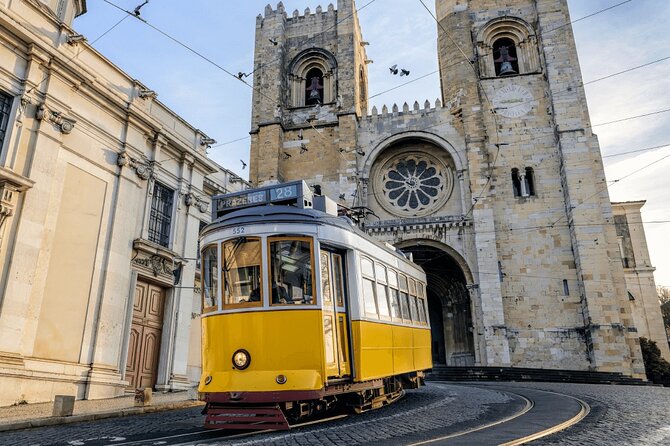
- Lisbon Cathedral and the oldest layers of the city
- Church of St. Anthony: faith, birthplace, and a playful local custom
- Museu de Lisboa – Teatro Romano: Roman foundations after the earthquake
- Alfama and the Miradouro trio: learn Lisbon by looking down
- Miradouro de Santa Luzia and Miradouro das Portas do Sol
- Miradouro da Senhora do Monte
- Alfama: narrow labyrinth streets
- Big church and convent, then the patron saint church and Lisbon’s pantheon
- The final square with the triumphant arch and Portuguese discoveries
- Price and timing: when $432.50 per group becomes good value
- Should you book this Lisbon Historical Tour?
- FAQ
- How long is the Lisbon historical tour?
- What does the tour cost?
- Is the tour private?
- Do you get pickup, and who is the driver?
- What languages is the tour offered in?
- Are admissions included for the stops?
- Is there a minimum age for participants?
- Are service animals allowed?
- What is the cancellation policy?
Key takeaways for your Lisbon plan
- Private tuk tuk comfort with photo-friendly views as the driver handles the hills and tight streets
- Gonçalo Seabra tailors the route, including extra snack breaks if your group needs them
- Viewpoints are built into the flow, with Santa Luzia, Portas do Sol, and Senhora do Monte stops
- A church-and-squares route that links Lisbon’s Roman roots, medieval faith, and later political moments
- Many listed stops are free (platforms and sights in the route are marked ticket-free in the plan)
- Up to 6 people per group keeps it flexible and often good value when shared
A private Lisbon overview that actually moves
This tour is built for people who want a strong first read on Lisbon without spending the whole day in transit. You’re not wandering randomly. Instead, you’re moving in a loop of connected areas—hills, squares, churches, and viewpoints—so the city’s geography starts to click.
The private setup matters here. With only your group onboard, you can ask questions as you go and adjust on the fly. That’s especially useful in Lisbon, where directions, elevations, and neighborhood borders can feel confusing even when you’re looking at a map.
And yes, the open-sided tuk tuk helps. Lisbon’s best moments often happen along the edges of streets, not in big plazas. Being able to angle your camera while the driver navigates makes the ride feel like part of the sightseeing.
You can also read our reviews of more guided tours in Lisbon


Meeting the colorful Mandala tuk tuk with Gonçalo Seabra
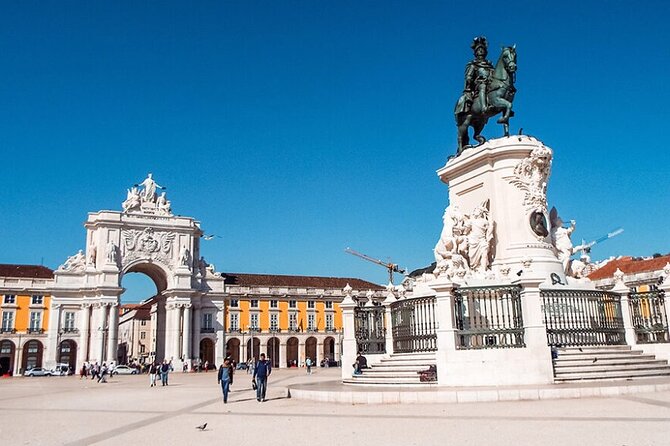
Your guide is Gonçalo Seabra, and you’ll pick up from a nearby meeting point (pickup is offered). Look for the tuk tuk with colorful Mandalas—simple, but helpful when you’re in the middle of the city’s busy streets.
The tour also includes time for driving between stops, plus short explanations along the way. That means you’re not just getting dropped at sights and left to figure out the story. You get context in the moment, which helps when you walk a few minutes into a viewpoint or church and realize you’re not looking at random architecture.
This is an English-language tour, and it’s a good match if you want facts and story beats, not just sightseeing. It’s also described as suitable for most participants, and service animals are allowed.
The earthquake-and-dictatorship square: where Lisbon’s turning points show up
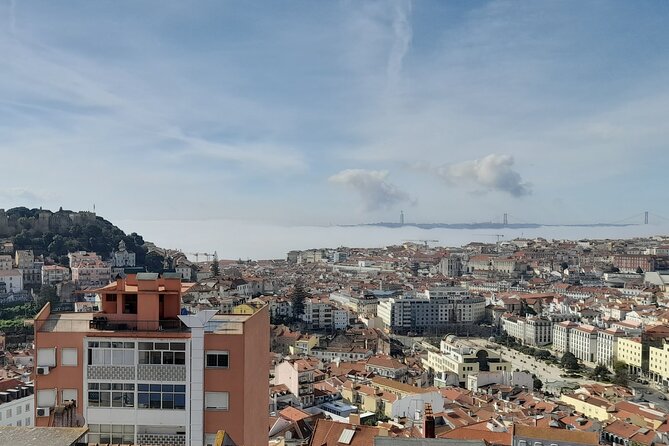
The route starts at a historical square tied to major events—first linked to the memories of the 1755 Lisbon earthquake, and then to the end of the Portuguese dictatorship. Even without getting lost in dates, this is a smart opener because it frames Lisbon as a city that repeatedly rebuilt itself.
From there, the tour flows into concrete landmarks with names you can later research or revisit. That structure is the real value: you’re not only seeing places, you’re learning how to connect them.
Elevador de Santa Justa: a short stop with a big viewpoint payoff
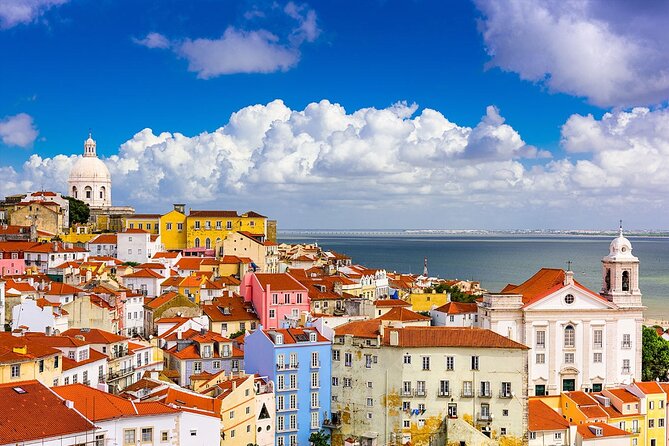
One of the first timed highlights is Elevador de Santa Justa, specifically a free visit to the platform at the top, with views over downtown. The stop is about 15 minutes, so it’s enough time to take in the panorama and orient yourself.
Why it’s worth it: Santa Justa functions like a quick 3D diagram of the city. From up high, Lisbon stops looking like a tangle of hills and starts looking like a city with layers—river, downtown, and neighborhoods stacked above each other.
Tip for your own planning: since this stop is quick, come with your phone/camera battery ready and decide where you want to stand for photos before you start walking around.
Ginjinha Sem Rival: the snack stop Lisbon does best
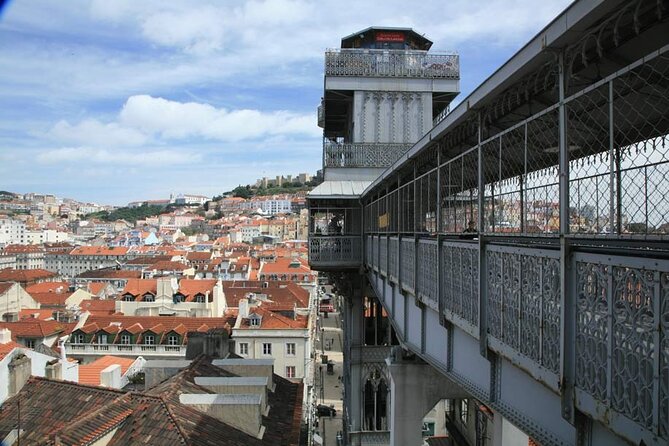
Next up is Ginjinha Sem Rival, a famous spot for ginjinha (cherry liqueur). It’s not the oldest shop in Lisbon, but it’s presented as a top choice after 133 years of service—one of those local details that makes a quick stop feel meaningful.
The time here is about 10 minutes. It’s short, but that’s the point. You taste a local tradition, you get a small break in the ride, and you’re ready to move on while the energy stays high.
If you’re traveling with kids or multiple ages, this kind of stop can be more useful than another 30 minutes of looking at a stone facade. And in one account of this tour, the guide adjusted for kids with snack breaks, which is exactly the kind of practical kindness that makes a “few hours” tour feel smoother.
You can also read our reviews of more historical tours in Lisbon






Igreja de S Domingos: church history with a twist
At Igreja de S Domingos, the tour leans into what makes this church stand out for reasons beyond its age. It’s described as unusual among Roman Catholic churches, and the story connects it to major life events in Portugal, plus darker moments like the Portuguese Inquisition.
This stop is about 20 minutes. That’s enough time to appreciate the oddities the guide is pointing out, without rushing you out.
Consideration: churches can vary a lot by time of day (crowds, lighting, and whether you can look around comfortably). If you want slower pacing here, you might have to rely on what the guide thinks fits your group.
Lisbon Cathedral and the oldest layers of the city
Before heading into Lisbon Cathedral, you visit an older square described as the oldest in the city—marking limits from Roman times northward until the earthquake of 1755. That setup makes the cathedral stop feel less like a standalone monument and more like a continuation of Lisbon’s long timeline.
The cathedral stop itself is brief—about 5 minutes—and the plan frames it as the first Portuguese church in town, with sacred ground used for temples for around 2000 years. Short stop, big impact.
If you’re a detail person, you’ll likely want to return later. But as an orientation move, this works. You get the name, the location in Lisbon’s story, and a sense of why people kept building here.
Church of St. Anthony: faith, birthplace, and a playful local custom

The route then goes to the Church of St. Anthony, described as the birth place of Saint Anthony of Padua—Lisbon’s namesake saint. The plan includes time for a look at his birth room and a playful option: if you’re single, you can try your luck with his blessing for the right partner.
Stop time is about 15 minutes. It’s a good length for a church visit in a multi-stop tour—long enough to see what matters, short enough to keep your day moving.
A practical note: if you’re traveling with people who don’t like long indoor stops, this is one of the better compromises because it’s both a religious site and a place where local tradition shows up in a very approachable way.
Museu de Lisboa – Teatro Romano: Roman foundations after the earthquake
At Museu de Lisboa – Teatro Romano, you’re in the part of the route that connects the distant past to later Portuguese history—especially around the 1755 earthquake. The stop is about 10 minutes, and it’s designed to make you notice how one building from 2000 years ago can still tie into Lisbon’s later rebuilding and identity.
Why this matters: Lisbon’s story isn’t linear. This stop helps you see the city as something layered, where one era doesn’t simply replace the last.
Alfama and the Miradouro trio: learn Lisbon by looking down
Lisbon gets educational once you start looking from above. That’s why the tour spends time at multiple miradouros (viewpoints) and then flows into Alfama, the city’s oldest neighborhood.
Miradouro de Santa Luzia and Miradouro das Portas do Sol
You get two related viewpoint stops.
- Miradouro de Santa Luzia (about 15 minutes) is described as the most photographed viewpoint in Lisbon, overlooking the rooftops of Alfama.
- Miradouro das Portas do Sol (also about 15 minutes) is the sister viewpoint—more ample and still focused on that Alfama roofline.
These are great stops if you want your eyes to understand what your feet will later experience. After seeing these views, Alfama’s street layout feels less random when you step onto the ground.
Miradouro da Senhora do Monte
Then comes Miradouro da Senhora do Monte, the plan’s pick for the best panoramic view, with a sweeping look that can include the castle, the Christ, the bridge, downtown, and even mention of a notable high-value apartment linked to Cristiano Ronaldo. The stop is about 15 minutes.
Why I think this viewpoint is a smart anchor: you leave with a wide mental map. Even if you forget names, you remember shapes—river line, hill ridges, and where major landmarks sit relative to each other.
Alfama: narrow labyrinth streets
Finally, you reach Alfama itself for about 15 minutes to explore. The tour describes Alfama as the oldest neighborhood, known for the narrowest streets and a labyrinth-like layout.
This short walking portion is a perfect follow-through. You’ve already seen the roofs and angles from above, so now you can recognize the way Lisbon’s old streets twist and climb.
Practical consideration: narrow streets can mean limited walking space and uneven footing. Keep your shoes comfortable and expect you won’t cover every corner in 15 minutes—you’re just tasting the neighborhood.
Big church and convent, then the patron saint church and Lisbon’s pantheon
Between viewpoints and Alfama, the route includes a major stop described as one of the biggest churches and convents in Lisbon, plus a church dedicated to Lisbon’s patron saint that the plan notes is not Portuguese by origin. There’s also a pantheon stop for the tombs of important Portuguese figures.
Stop lengths here vary, and the tour keeps each one short enough to maintain the overall flow. The value is in the linking: you move from Lisbon’s religious life to the way the city commemorates national figures.
If you like to read inscriptions and absorb details, you may want to do a longer visit on a separate day. But for context and direction, these stops help you prioritize.
The final square with the triumphant arch and Portuguese discoveries
The tour wraps with a historical square tied to Lisbon’s big era of Portuguese discoveries, described as the most significant square of Lisbon’s history, and it includes mention of a triumphant arch.
This ending feels right because it pulls the narrative forward: Lisbon isn’t only a city of hills and churches. It was also a launch point for exploration and empire, and squares like this are where the story becomes public and symbolic.
You then return to the meeting point. It’s a tight loop, which is exactly what most people want after a first day in town.
Price and timing: when $432.50 per group becomes good value
The price is $432.50 per group, for up to 6 people, and the tour lasts about 4 hours. That setup can be a great deal if your group shares the cost, because you’re paying for a private guide and a tuk tuk ride rather than a bus-style crowd experience.
Here’s the math that matters to you: if you fill all 6 spots, the per-person cost drops a lot. If you’re a small group, the tour still can be worth it because many stops in the plan are marked ticket-free (including viewpoints and multiple church-related stops), and you’re saving time on planning who does what.
Timing wise, it’s also efficient. You get multiple viewpoints, several major religious and historical stops, and guided context, while still leaving your later hours free for slower wandering and dinner.
Should you book this Lisbon Historical Tour?
Book it if you want a fast, guided path through Lisbon’s key neighborhoods and stories, especially viewpoints and church sites. It’s also a strong pick for mixed-age groups, because the guide can tailor the route and include snack breaks when you need them.
Pass or plan a different day if you’re the type who wants long visits inside every church and museum. This tour is designed as an overview with short, high-impact stops, so think of it as the start of your Lisbon learning—not the final chapter.
If your goal is to get your bearings fast and leave with names, mental maps, and a clear sense of how Lisbon layers its past onto its present, this private tuk tuk route is an excellent match.
FAQ
How long is the Lisbon historical tour?
It’s about 4 hours.
What does the tour cost?
The price is $432.50 per group, up to 6 people.
Is the tour private?
Yes. Only your group participates.
Do you get pickup, and who is the driver?
Pickup is offered. The driver listed is Gonçalo Seabra, and you should look for the tuk tuk with colorful Mandalas.
What languages is the tour offered in?
It’s offered in English.
Are admissions included for the stops?
Many stops are listed as free in the plan, including free visits or ticket-free entry at several viewpoints and churches.
Is there a minimum age for participants?
Children under 3 aren’t allowed.
Are service animals allowed?
Yes, service animals are allowed.
What is the cancellation policy?
You can cancel for a full refund up to 24 hours before the experience’s start time.