REVIEW · NEW ORLEANS
New Orleans French Quarter Walking and History Tour
Book on Viator →Operated by Historic New Orleans Tours · Bookable on Viator
New Orleans hits you fast. This French Quarter history walk gives you the map, then the stories. You’ll start by the Mississippi River, then work your way through the big landmarks of the Quarter, with a guide who connects the city’s past to the places you’ll see today.
I love the small group size (max 9), because it keeps the pace relaxed and the questions actually get answered. I also like how the tour blends the big names and events with the on-the-ground stuff you can spot yourself, from the levee story to Jackson Square’s architecture and museums.
One thing to consider: you’re doing about 2 miles of walking, mostly outdoors. That’s totally manageable at an easy pace, but you’ll want comfy shoes and to dress for heat, sun, or rain since the experience depends on decent weather.
In This Review
- Key highlights you’ll actually care about
- Musical Legends Park to the Mississippi: why the tour starts with the river
- The levee story and the views near the river levee
- French Market: an easy way to eat your way into history
- Jackson Square: where the architectural story starts
- Cabildo and Presbytere museums: short stops, big context
- Inside St. Louis Cathedral: the fire story you can see
- Literary and film stops: Tennessee Williams, Faulkner, and the streets in between
- Pirate’s Alley and the Quadroon Ballroom balcony: Creole society with context
- The Old Ursuline Convent Museum: early colonization through a single building
- How the walking pace feels in real life (and how to prep)
- Price and value: is $29 worth it?
- Who should book this tour (and who might skip it)
- Should you book the New Orleans French Quarter Walking and History Tour?
- FAQ
- FAQ
- What is the tour price?
- How long is the tour?
- How far do I walk?
- How big is the group?
- Where do I meet the guide?
- Where does the tour end?
- What’s included in the price?
- Is the tour offered in English?
- Is the tour dependent on weather?
- What is the cancellation window?
Key highlights you’ll actually care about
- Meet at Cafe Beignet on Royal Street and begin with a quick, easy start before the real walking starts
- River levee history explains how swamp became workable land that helped shape the region
- Oldest open-air market stop at the French Market, where you can browse local produce and Creole food
- Jackson Square architecture + museums around the Cabildo and Presbytere give context in short, smart chunks
- Literary and film spotting for Tennessee Williams and William Faulkner, plus the Quadroon Ballroom area
- St. Louis Cathedral inside visit ties the 1788 fire story to what you see today
Musical Legends Park to the Mississippi: why the tour starts with the river
Starting near Musical Legends Park (with the meet-up at Cafe Beignet on Royal Street), the guide doesn’t begin with ghosts and legends. They begin with water and engineering. That’s the smartest move in New Orleans, because the French Quarter only makes sense once you understand why the city could even exist where it does.
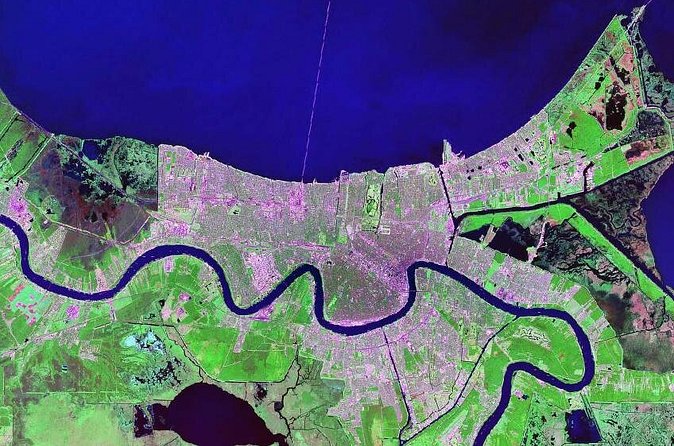
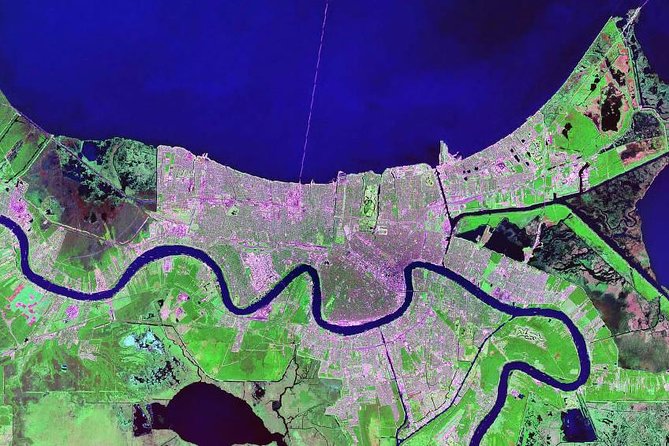
You’ll head toward the Mississippi Riverbank and learn how the levee system changed sea-level swampland into livable ground. That transformation turned an area that was hard to farm into space that could support agriculture and building. It’s the kind of fact that makes everything else click later, especially when you see the long stretches of water nearby and feel how flat the city is.
A few practical notes for you here:
- Expect an easy rhythm. Even with a short walking route, the guide keeps moving you along without rushing.
- Keep an eye out for paddlewheel steamboats drifting on the water when timing lines up. It’s the exact kind of visual the river story is built for.
You can also read our reviews of more walking tours in New Orleans

The levee story and the views near the river levee
One of the best parts is how the tour gives you both a lecture and a viewpoint. The Mississippi stop helps you understand the Quarter’s location in a way that a photo can’t. You’ll hear how rebuilding and development grew around the need to manage water, then you’ll move on before you wear out.
The walk is planned as a leisurely circuit, with time at stops so you can regroup. This matters because the French Quarter can feel chaotic if you’re trying to read everything at once. When you have a guide timing the route, you get to look instead of just trying to survive the crowd flow.
French Market: an easy way to eat your way into history

Next comes the French Market, described as the oldest open-air market in the US. Even if you’re not shopping hard, it’s worth walking through because it’s where the city’s daily life shows up in a very physical way.
The guide shares the legend that this was once a bartering market for Native Americans. Whether you treat it as legend or history, the bigger point is that the market has long been a meeting place. Once you’re in the stalls, you’ll spot local produce, fish, and Creole delicacies.
If you want to make this stop pay off for you:
- Take a quick lap before you stop to read signs or pick something up.
- If you’re planning to eat later, treat this as a taste-and-smell checkpoint rather than a full meal.
Jackson Square: where the architectural story starts
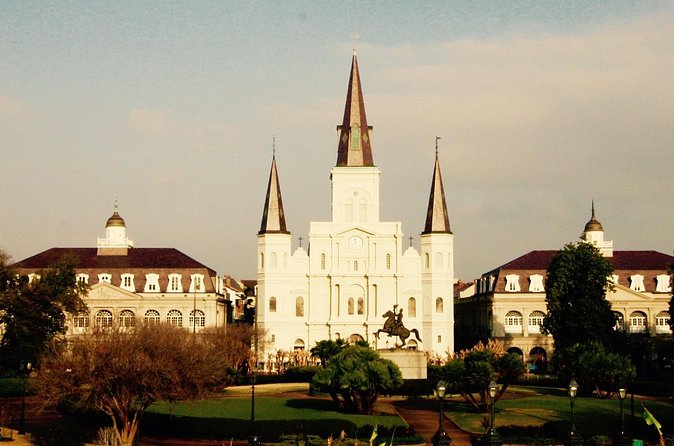
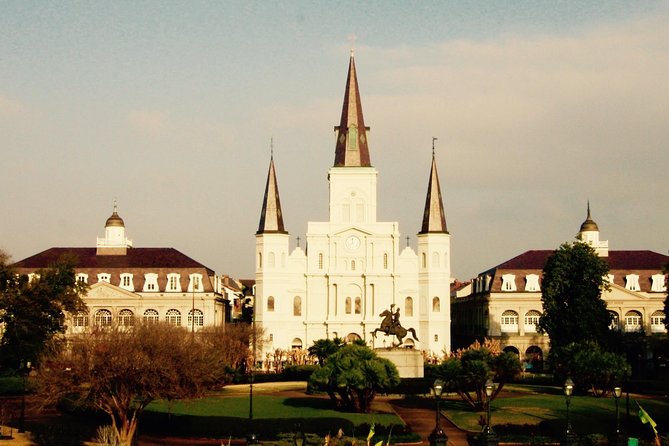
Jackson Square is the heart of the French Quarter, and the tour treats it like an outdoor classroom. You’ll head to the square after the French Market and get oriented fast: what it is, why it matters, and what surrounds it.
The guide points out the block-long buildings that form two sides of the square, as well as big-name landmarks tied to city power and rebuilding. You’ll also get your first clean look at the classic lineup around the square: Cabildo, Presbytere, and St. Louis Cathedral.
Then there’s the Great New Orleans Fire of 1788. The guide explains where it started and how the post-fire rebuilding shaped the classic architectural look people associate with the Quarter. This is one of those topics you can feel when you walk the streets: the city changes fast, but some shapes remain because the city rebuilt in a recognizable way.
Cabildo and Presbytere museums: short stops, big context
Around Jackson Square, the tour slows just enough to make two museum-focused stops worth your time.
You’ll see the Cabildo, built between 1795 and 1799, which once housed New Orleans government and now functions as a Louisiana State Museum. The point isn’t just dates. The point is that you’re looking at the “decision-making” side of the city: where people argued, governed, and planned.
Then comes the Presbytere, built in 1791 to match the Cabildo. It’s a fascinating contrast because it also focuses on the city’s resilience and celebration, told through two permanent exhibits. If you’re the type who likes your history framed by real people instead of timelines alone, this stop usually lands well.
If there’s a drawback for some people, it’s that the stops are short by design. You’ll learn a lot, but you won’t have the leisure of a full museum visit.
You can also read our reviews of more historical tours in New Orleans





Inside St. Louis Cathedral: the fire story you can see
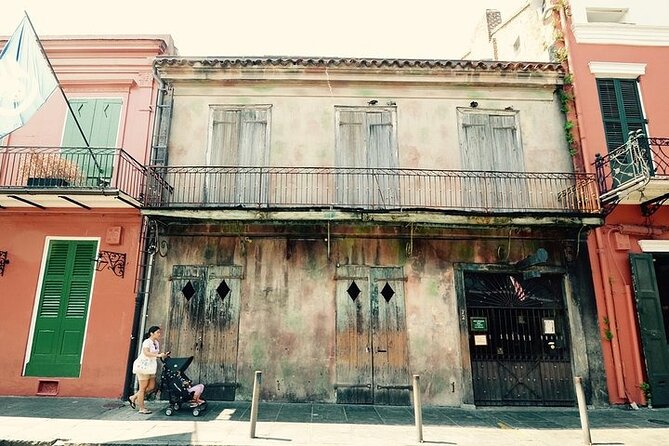
Your next major moment is St. Louis Cathedral, where you’ll go inside. This is especially valuable because the guide connects the 1788 fire story to the rebuilding that produced the architectural style many people associate with the Quarter.
It’s a practical kind of “inside” visit, too. Instead of sending you through a maze of rooms, the guide shows you key areas and ties what you’re seeing to why it looks that way. When you’re outside again, Jackson Square feels less like a random postcard spot and more like a deliberate design.
Literary and film stops: Tennessee Williams, Faulkner, and the streets in between

A big reason this tour works for first-timers is that it gives you multiple ways to connect to New Orleans at once. You’ll get more than dates. You’ll get story hooks.
The guide points out places connected to Tennessee Williams, including the building where he wrote A Streetcar Named Desire. You’ll also visit the area tied to William Faulkner’s home, which gives a grounded sense of where creative life took root in the city.
And between the big sites, you’ll get “literary landmark spotting.” That means you’re constantly looking at buildings with a new set of questions: Who lived here? What changed here? What did people make or write here?
One extra perk: you may catch street musicians along the way. The tour doesn’t treat the music as background noise. It treats it as part of the Quarter’s everyday stage.
Pirate’s Alley and the Quadroon Ballroom balcony: Creole society with context
Pirate’s Alley is a famous corridor, but the tour treats it as more than a pretty street. You step into a lush Creole courtyard area and learn about the complexities of Creole society and slavery in South Louisiana.
The guide talks about the system known as placage, and you’ll walk to the balcony of the former Quadroon Ballroom. That balcony stop matters because it forces the stories to become spatial. You’re not just hearing about relationships, power, and social rules. You’re standing where those social dynamics played out.
The guide also shares local legends, including prison escape stories and dueling lore. Those legends can sound dramatic, but they help you understand how oral storytelling worked in a city where people passed information through networks, not just archives.
The Old Ursuline Convent Museum: early colonization through a single building
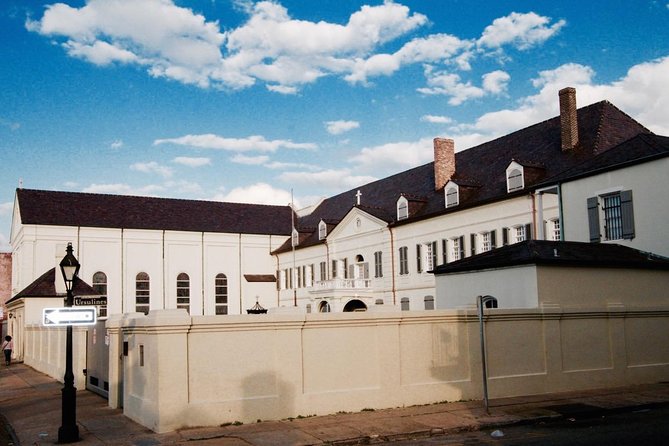
You finish with a look at the Ursuline Convent, the oldest building in the Mississippi River valley. This is a very different kind of stop from the square and cathedral. It’s smaller, quieter, and it anchors the tour in early colonization efforts in Louisiana.
Since the convent is older and more fixed in place than some of the surrounding structures, it helps you feel the long arc of how the Quarter became what it is. It also gives you a strong “last image” for the walk—something solid enough that the rest of the city’s chaos feels like layers rather than randomness.
How the walking pace feels in real life (and how to prep)
This is about a 2-mile route at a leisurely pace, with short timed stops along the way. The guide keeps it manageable, and the small group size (max 9) helps you avoid that long line feeling you get on bigger tours.
Still, prep matters:
- Wear comfortable shoes. French Quarter streets are not made for stiff-soled comfort.
- Plan for weather. The experience runs in good conditions, and rain can change plans.
- If you start in the morning or evening, use that timing to match your energy level. The tour offers both options, so you can pick the part of the day that fits your visit.
A detail I like for planning: admissions for key stops on the route are marked as free, so you’re not doing constant add-on payments while walking.
Price and value: is $29 worth it?
At $29 per person, this tour is priced like a “smart first day” choice rather than a full-day commitment. You get a local guide, multiple major landmarks, and a route that covers the river-to-square-to-courtyards logic of the French Quarter.
The value angle is simple:
- You’re paying for interpretation, not just sight-seeing.
- You’re walking a defined route that would take time to piece together on your own.
- Several stops are admission-free for the sites listed, so you’re not paying extra to enter the places the guide is showing you.
If your goal is a first-time orientation, this tour usually makes the rest of your stay easier. After two hours, you tend to know where you are, what you’re looking at, and why it matters.
Who should book this tour (and who might skip it)
This tour is a great fit if you:
- Are visiting the French Quarter for the first time and want a structured route
- Like history that ties to architecture, streets, and story connections
- Want a small-group experience where you can ask questions without shouting
You might consider skipping or swapping to something else if you:
- Hate walking outdoors for any stretch (it’s about 2 miles)
- Prefer a deep museum-only schedule instead of a landmark walk
One more note from guide variety in the field: you might meet a guide like Dave or Davi Higgins, and in some cases you may hear about guides such as Dave Roberts. The common thread is clear storytelling and an engaging style that keeps the tour from turning into a lecture.
Should you book the New Orleans French Quarter Walking and History Tour?
Yes, I’d book it if you want a fast, meaningful introduction to the French Quarter. The route starts where the city story begins, moves through the iconic square and cathedral, and then gets into the darker, more human layers of Creole society at Pirate’s Alley. For the money, you’re buying clarity.
If you’re the kind of traveler who likes to return to places later and feel like you “know” them, this tour helps you do that. Walk it early in your trip and you’ll navigate the Quarter with confidence for days.
FAQ
FAQ
What is the tour price?
The tour costs $29.00 per person.
How long is the tour?
It runs about 2 hours (approx.).
How far do I walk?
You’ll walk about 2 miles (3.2 km) at a leisurely pace.
How big is the group?
This is a small-group tour with a maximum of 9 travelers.
Where do I meet the guide?
You meet at Cafe Beignet, Royal Street, 334 Royal St, New Orleans, LA 70130.
Where does the tour end?
The tour ends in and around Jackson Square in the middle of the French Quarter.
What’s included in the price?
A local guide is included.
Is the tour offered in English?
Yes, the tour is offered in English.
Is the tour dependent on weather?
Yes. It requires good weather, and if it’s canceled due to poor weather you’ll be offered a different date or a full refund.
What is the cancellation window?
You can cancel for free up to 24 hours in advance for a full refund. After that window, refunds aren’t available.