REVIEW · TBILISI
Sacred Sites and Ancient Wonders: Jvari, Mtskheta and Uplistsikhe
Book on Viator →Operated by BB Georgia Travel · Bookable on Viator
Jvari’s hilltop views set the tone fast. This day trip strings together ancient Christian Georgia with two very different kinds of history in nearby towns, all within an easy reach of Tbilisi. You start with a monastery perched above the meeting of the Aragvi and Mtkvari rivers, then move into UNESCO-protected Mtskheta before heading toward Gori and its Stalin-era museum, and finally finishing at the rock-hewn Uplistsikhe Cave City.
What I like most is how the route gives you big “wow” moments without feeling rushed. The Jvari Monastery viewpoint is the kind of stop where the scenery does half the work, and the timing (about 30 minutes) makes it easy to enjoy rather than just sprint. I also love the UNESCO anchor in Svetitskhoveli Cathedral, where you’re not only looking at architecture from Georgia’s early medieval period, you’re also stepping into a place tied to royal coronations and burials for many kings.
One drawback to consider: two of the main paid stops (the Stalin Museum in Gori and Uplistsikhe) require extra tickets, so the all-in cost can be higher than the base price once you add those 15 GEL entries. It’s still good value, but it’s smart to budget ahead.
In This Review
- Key highlights to know before you go
- A satisfying 7-hour route from Tbilisi
- Jvari Monastery: the sixth-century viewpoint over river junction
- Mtskheta and Svetitskhoveli Cathedral: UNESCO and royal memory
- Gori’s Stalin Museum: a strange but useful historical contrast
- Uplistsikhe Cave City: rock-hewn streets on an old trade route
- Price and value: what $100 buys on a full day circuit
- Guide quality: why stories matter on history-heavy days
- Who this tour suits best (and who should think twice)
- Should you book Sacred Sites and Ancient Wonders?
- FAQ
- How long is the Sacred Sites and Ancient Wonders tour?
- What time does the tour start?
- Where does the tour start and end?
- Is hotel pick-up and drop-off included?
- Is the tour private?
- Are admission tickets included for all stops?
- How much are the tickets that are not included?
- Are food and drinks included?
- Is there mobile ticketing?
- What is the cancellation policy?
Key highlights to know before you go
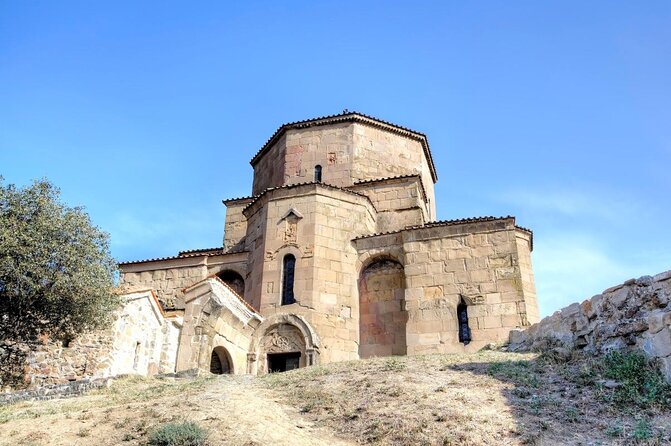
- Jvari Monastery: a sixth-century church site with a classic view over Mtskheta and the Aragvi–Mtkvari meeting point.
- Svetitskhoveli Cathedral in Mtskheta: UNESCO World Heritage status and a tradition that Christ’s robe lies beneath.
- A strong contrast day: Georgian Orthodox sacred sites, then Gori’s Stalin Museum, then a Silk Road-era cave city.
- Extra tickets only at the end: cathedral and Jvari are free; Stalin Museum and Uplistsikhe cost 15 GEL each.
- Private-group feel: you travel with your own group in a private vehicle, led by a driver/guide.
- Guides who keep it human: guides such as Irakli and Davit are noted for clear communication and story-based explanations.
A satisfying 7-hour route from Tbilisi
This is the kind of day trip I like for first-timers in Georgia: it’s short enough to feel manageable, yet the mix is strong. You get four major sites, spaced in a way that lets you absorb each place instead of just passing through.
The day starts at 10:00 am in Tbilisi, and you’re back at the meeting point at the end. Hotel pick-up and drop-off are included, and you travel in a private vehicle with a driver/guide. That matters because it keeps the day simple—no navigating transit, no hunting for cabs between remote-feeling stops.
Also, there’s a mobile ticket option, and the tour pricing is listed as $100 per person with group discounts. When I think about value in a day trip like this, I’m looking at two things: (1) do you cover the main “must-see” zones near Tbilisi, and (2) does the guide make the stops make sense. This route is built for both.
You can also read our reviews of more tours and experiences in Tbilisi.
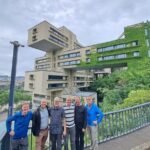
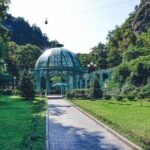
Jvari Monastery: the sixth-century viewpoint over river junction
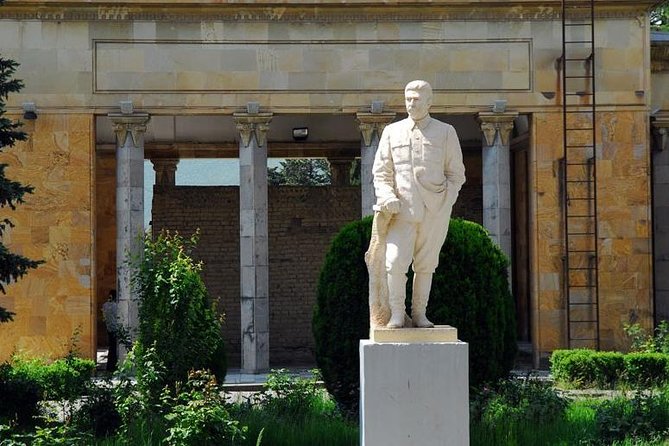
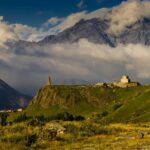
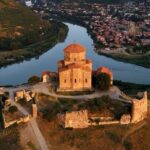
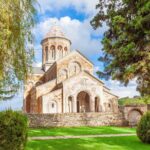
Your first stop is Jvari Monastery, a Georgian Orthodox site dating to the sixth century. It’s near Mtskheta, and the real headline is the view: you can look out over the city and see the Aragvi and Mtkvari rivers meet.
Jvari works because it doesn’t ask you to do much to enjoy it. With about 30 minutes on site and admission listed as free, you can take your time at the viewpoint without worrying you’ll be late for the next leg. It’s also a spiritual start: Orthodox monasteries in Georgia are often set on purposeful spots, and Jvari’s hill position makes the geography feel intentional.
Practical tip: plan for a photo-heavy stop. Even if you think you’ll take a quick picture, you’ll probably keep looking—this is one of those views where you want to reframe it from a slightly different angle. Comfortable shoes help, since you’ll be moving on and around historic grounds.
Mtskheta and Svetitskhoveli Cathedral: UNESCO and royal memory
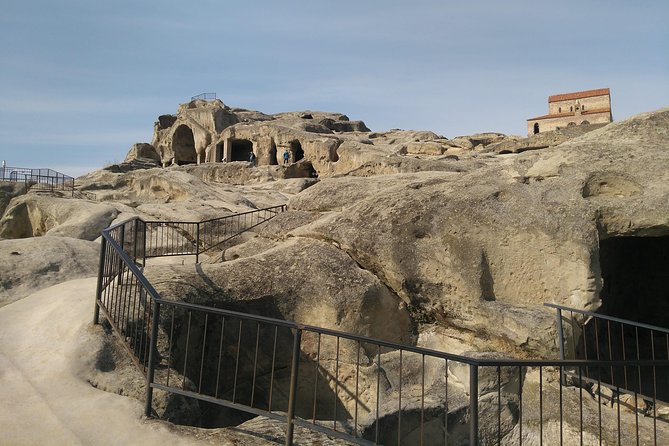
Next comes Mtskheta, the ancient town that served as a major capital in Georgia’s early political era. The timing of the story is impressive: it’s described as founded in the 5th century BC, and it functioned as the capital of the early Georgian Kingdom of Iberia from the 3rd century BC to the 5th century AD. Later, the capital moved to Tbilisi—but Mtskheta remained the coronation and burial place for most Georgian kings.
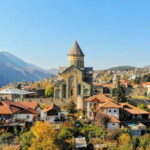
Then you reach Svetitskhoveli Cathedral, recognized by UNESCO as a World Heritage Site. It’s a masterpiece of the Early Middle Ages, and you also get one of Georgia’s famous spiritual traditions: Christ’s robe is believed to lie beneath the cathedral.
What you’ll notice here is how the site carries layers at once. It’s not just a building you pass by; it’s a landmark tied to monarchy, religion, and legend. If you enjoy places where architecture and storytelling overlap, this stop will feel like the anchor of the whole day.
The cathedral stop runs about 1 hour, and admission is listed as free. That’s a good setup: you have enough time to take in the space and read the context at a comfortable pace, without feeling trapped inside a strict schedule.
Possible consideration: churches can mean changing light inside, and stone surfaces can feel cool even in warm weather. If you tend to get cold easily while standing still to take photos, bring a light layer.
Gori’s Stalin Museum: a strange but useful historical contrast
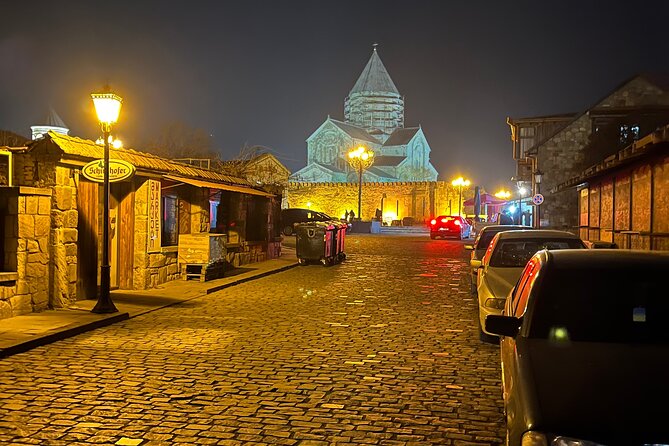
After the sacred sites, the day shifts hard into 20th-century political history with the Stalin Museum in Gori. This is where the itinerary turns into something more than sightseeing—it becomes a lesson in how a place can hold competing narratives.
The museum is described as the house where Joseph Stalin was born and grew up. In addition to that background, you can also see his armored train. The presence of that train is a very visible reminder that this museum isn’t only about biography; it also gestures at power, movement, and the machinery of the era.
The museum stop is about 1 hour, but the ticket isn’t included. The entry price is listed as 15 GEL per person.
I’ll be honest: this stop isn’t for everyone. Some people just want older Georgia, period. But if you can handle history that’s uncomfortable or polarizing, it gives you a sharper understanding of the region’s modern past. And it’s set in the middle of a day that already includes UNESCO heritage and ancient cave city ruins—so your brain stays busy in a good way.
Practical tip: go in with a flexible mindset. This is history presented through artifacts and a specific storyline. You don’t have to agree with it. You just need to be ready to look at how the museum frames the man and the time.
Uplistsikhe Cave City: rock-hewn streets on an old trade route
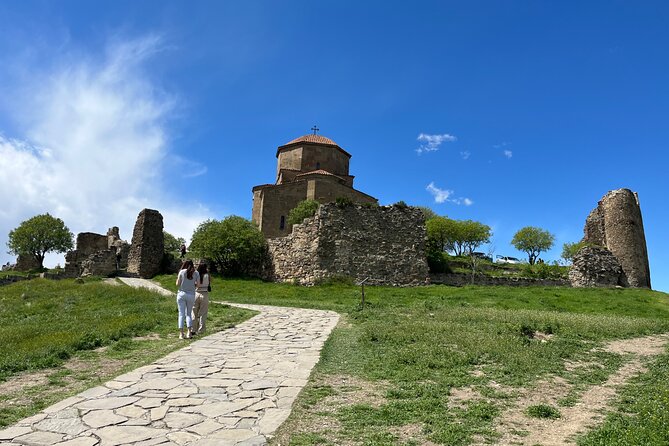
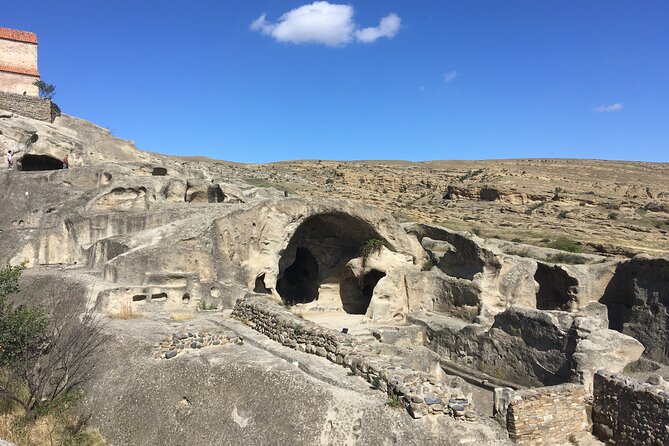
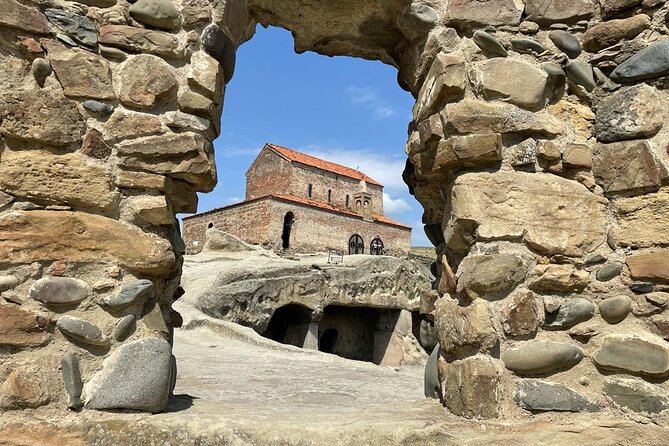
The final major stop is Uplistsikhe Cave Town, an ancient rock-hewn complex often described with the name Fortress of the Lord. It sits directly on the path of the old Silk Road, and it functioned as a strategic and commercial center.
Here’s what makes Uplistsikhe especially memorable: it wasn’t a tiny curiosity site. At its peak of prosperity, the city had a population of about 20,000. That scale changes how you picture the caves—not as isolated rooms, but as a working town.
The tour time here is about 1 hour, and again, the ticket isn’t included. Uplistsikhe entry is listed at 15 GEL per person.
What you’ll likely enjoy is the way the site mixes practicality and spectacle. Rock-hewn locations can feel like archaeology and daily-life planning at the same time. Even without reading a ton, you can sense why trade routes matter: if people moved goods through the area, towns like this grew around that reality.
Possible consideration: this is the end of the day, after driving and earlier walking. If you’re sensitive to fatigue, save your best energy for this stop. Also, bring water if you’re prone to getting thirsty, since food and drinks aren’t included.

Price and value: what $100 buys on a full day circuit
The base price is listed at $100 per person, and the tour runs about 7 hours. For a day trip that includes hotel pick-up/drop-off, a private vehicle, a driver/guide, and fuel surcharge, that’s the core of the value story.
The “extra” part is straightforward: Jvari and Svetitskhoveli have free admission (based on the details provided), while the Stalin Museum and Uplistsikhe each cost 15 GEL. So you’re not paying entrance fees at every stop—you’re adding costs mainly at two heavier attractions that likely require staff and on-site management.
Group discounts are mentioned, which can be a real advantage if you’re traveling with friends. This is also a private tour/activity, meaning only your group participates. That tends to matter for comfort. You’re not competing with a swarm of strangers for the guide’s attention, and you’re less likely to feel like you’re on a conveyor belt.
What you should budget for beyond the listed price:
- Stalin Museum: 15 GEL
- Uplistsikhe: 15 GEL
- Food and drinks (not included)
- Any extra tickets or entrance fees (not included)
If you’re comparing tours, a good check is to ask yourself whether you’d otherwise pay for the same transport and guide time. When you add the driving and the “explain-it” factor, this kind of set route starts to look like efficient value.
Guide quality: why stories matter on history-heavy days
One theme that shows up strongly with this kind of tour is how much smoother it feels when the guide gives context. In this case, guides such as Irakli and Davit are singled out for communication and the ability to tell stories that connect the stops.
That matters because the itinerary covers very different subject matter:
- a hilltop monastery and river-junction symbolism,
- an UNESCO cathedral tied to monarchy and a powerful legend,
- a museum built around Stalin’s birthplace and an armored train,
- and a cave town shaped by trade and city-scale life.
A good guide helps you avoid the common problem with day trips: seeing four places, but remembering none. When the guide ties details together, the day becomes coherent instead of fragmented.
So if you’re the type who likes to understand what you’re looking at—why a site is where it is, what a tradition means, and what an artifact represents—this tour design fits.
Who this tour suits best (and who should think twice)
This tour is a strong match if you want:
- major historic stops near Tbilisi without a complicated plan,
- UNESCO heritage plus older Georgian sites,
- a modern-history contrast with the Stalin Museum,
- and a final finish at Uplistsikhe that feels like stepping into an older world.
You might think twice if you:
- strongly prefer only ancient sites and would rather skip 20th-century political history,
- want a long, relaxed lunch and downtime (food isn’t included, and the day is structured),
- or dislike paying add-on tickets mid-route.
On the bright side, the pacing includes listed stop times that feel realistic: 30 minutes for Jvari, about 1 hour for Svetitskhoveli, and about 1 hour each for the Stalin Museum and Uplistsikhe.
Should you book Sacred Sites and Ancient Wonders?
I’d book this day trip if you’re in Tbilisi and you want one outing that covers a big range of Georgia’s story—without requiring you to rent a car or figure out logistics between distant spots.
It’s also a good choice if you enjoy contrast. The day moves from sacred medieval Georgia to the modern political past in Gori, then ends with a Silk Road cave city where you can picture thousands of people living their daily lives. If that mix sounds like your kind of trip, the route is hard to beat for one day.
If you’re budget-sensitive, do the math on the add-on tickets (15 GEL each for the Stalin Museum and Uplistsikhe) and plan for lunch on your own. After that, you get a full, well-structured heritage day with the comfort of pick-up/drop-off and a private vehicle.
FAQ
How long is the Sacred Sites and Ancient Wonders tour?
It’s listed as about 7 hours.
What time does the tour start?
The start time is 10:00 am.
Where does the tour start and end?
It starts in Tbilisi, Georgia and ends back at the meeting point in Tbilisi.
Is hotel pick-up and drop-off included?
Yes, hotel pick-up and hotel drop-off are included.
Is the tour private?
Yes. It’s a private tour/activity, so only your group participates.
Are admission tickets included for all stops?
No. Jvari Monastery and Svetitskhoveli Cathedral are listed as free, but the Stalin Museum and Uplistsikhe require separate tickets.
How much are the tickets that are not included?
Stalin Museum is listed at 15 GEL and Uplistsikhe is listed at 15 GEL.
Are food and drinks included?
No. Food and drinks are not included.
Is there mobile ticketing?
Mobile tickets are mentioned as part of the experience.
What is the cancellation policy?
Free cancellation is available, with a full refund if you cancel at least 24 hours before the experience’s start time.