REVIEW · SAN ANTONIO
San Antonio Missions UNESCO World Heritage Sites Tour
Book on Viator →Operated by Gray Line San Antonio · Bookable on Viator
San Antonio’s missions are history you can walk through. I like how this tour links the UNESCO story across four mission sites in one smooth route, then adds practical context you can use while you’re there. You’ll also get a guide-led narrative (live and recorded) that turns old stones into clear, connected chapters of the city.
Hotel pickup and drop-off at select downtown hotels makes the day feel easy, and the small group cap (12 people) keeps the pace relaxed enough to ask questions. One thing to consider: time is limited at each stop, so if you want a slow, deep museum-style visit inside every building, you may feel slightly rushed.
Key things I’d circle before you book
- UNESCO Mission focus: you visit four of the five missions at the San Antonio Missions World Heritage Site
- Guided storytelling: a knowledgeable guide explains the religious and local history, with added recorded narration
- Smart time splits: enough time to see highlights at each site without losing the whole morning to buses
- Hotel pickup in select downtown: fewer hassles once you’re already in town
- Good pacing for photos: short built-in stretches help you catch views without sprinting
- Heat awareness: plan for outdoor walking and bring water and sunscreen
In This Review
- San Antonio Missions in 3.5 Hours: What You Actually See
- Price and Value: Why $75 Makes Sense for a Guided Route
- Hotel Pickup, Small Groups, and the On-Time Start
- Mission Concepcion: Frescoes and Quiet Courtyards
- Mission San Jose: The Baroque Church Moment
- Mission San Juan and the Irrigation Story You Can Follow
- Espada Aqueduct: How Water Makes the Whole System Work
- Mission Espada: Another Sacred Space With Practical Context
- La Villita, Alamo Plaza, and Your Final Choice: Hotel or Alamo
- When to Go and What to Bring (Mild Walking, Real Sun)
- Should You Book This San Antonio Missions Tour?
- FAQ
- How long is the San Antonio Missions UNESCO World Heritage Sites Tour?
- What is the price per person?
- Are hotel pickup and drop-off included?
- Which missions are included on the tour?
- Is admission included for the mission stops?
- Is the Alamo tour included?
- What ticket type does the tour use?
- What is the group size limit?
- Are service animals allowed?
- What happens if the weather is bad?
- Can I cancel for a refund?
San Antonio Missions in 3.5 Hours: What You Actually See
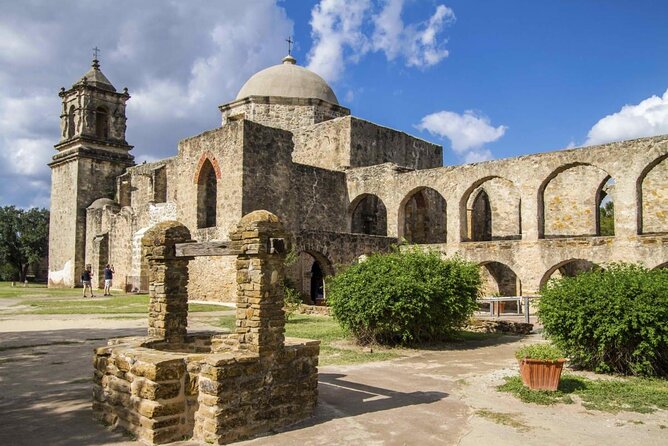
This is a 3 hours 30 minutes tour designed to do one thing really well: connect San Antonio’s mission complex into a single, understandable route. In practice, that means you’re not bouncing across town for hours. You’re moving along the mission corridor, stopping often enough to absorb what each site contributes to the larger UNESCO story.
You’ll visit Mission Concepcion, Mission San Jose, Mission San Juan, and Mission Espada, plus a key stop at the Espada Aqueduct. You get that “this all belongs together” feeling fast, especially because the stops are close, and the guide’s commentary ties the themes together: architecture, daily mission life, agriculture, and the irrigation system that supported it.
The tour also gives you a downtown handoff at the end. Your final drop is either your hotel or the Alamo, depending on your choice—just know that the Alamo part is separate from this tour’s guiding.
Price and Value: Why $75 Makes Sense for a Guided Route
At $75 per person, the headline price feels reasonable for a guided, all-in-one morning—especially because mission admissions for the stops listed are free. The value here isn’t just the sites; it’s the order you see them in and the explanations that keep the facts from turning into a pile of random stops.
You’re also paying for two kinds of narration: live guide commentary and recorded narration. That matters because missions can be visually impressive but historically dense. A good guide helps you know where to look and what details actually matter—like what you’re seeing in church design or what irrigation systems were doing on the ground.
One more value point: reviews consistently praise guides who bring a local, day-to-day way of explaining San Antonio, not just dates. Names that come up include Domingo and Alex, and both are described as friendly, prepared, and full of extra context. You’re not only buying access; you’re buying interpretation.
You can also read our reviews of more historical tours in San Antonio

Hotel Pickup, Small Groups, and the On-Time Start
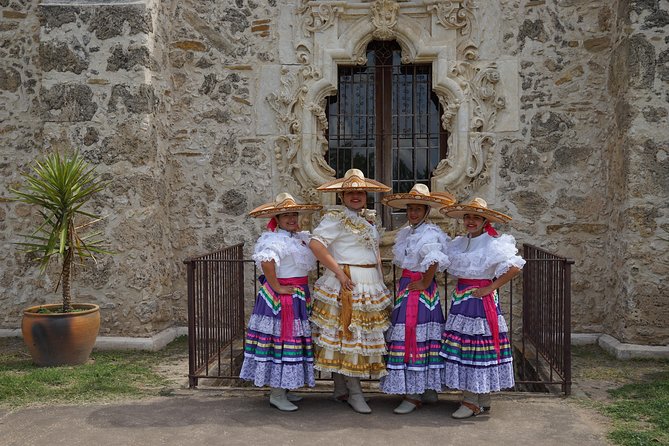
This is the kind of tour that starts with fewer headaches. Hotel pickup and drop-off are included at select downtown hotels, and it uses a mobile ticket. That means you can focus on the morning instead of hunting for the meeting point.
Expect a maximum of 12 travelers, which is a big deal on mission tours. With small groups, you’re less likely to get swallowed by a crowd at the most photo-friendly angles, and your guide can actually answer questions. Reviews highlight comfortable pacing and guides who keep things moving without turning it into a sprint.
Also worth noting: the tour runs with reliable transportation. One review calls out a guide-driver as a very safe driver, and another mentions on-time pickup. That safety and punctuality aren’t “extra”; they help you enjoy the sights instead of worrying about delays.
Mission Concepcion: Frescoes and Quiet Courtyards
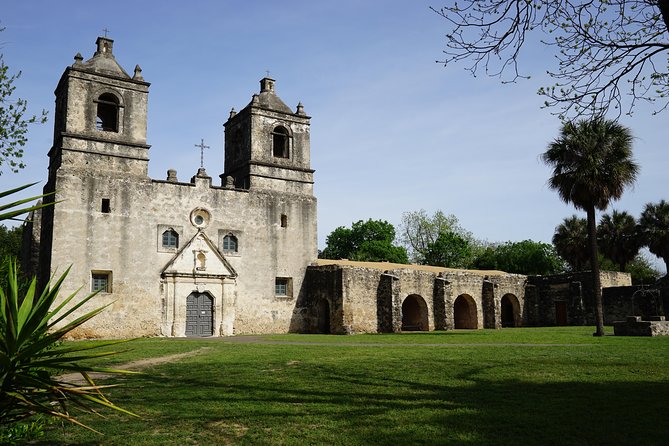
Stop 1: Mission Concepcion gives you a strong opening. You’ll spend about 25 minutes here, with no admission ticket cost. The key experience is seeing the original frescos, then exploring the grounds with the guide’s historical context.
If you like religious art details, this is a great first stop. Frescos are the kind of feature that can look like “pretty wall art” until someone explains what’s significant. The guide’s commentary helps you connect the visuals to the mission’s story and purpose.
Time is short but not too short. Twenty-five minutes works well because you get a chance to walk the property and settle in for the atmosphere. The only drawback? If it’s blazing hot, you’ll want to manage your outdoor time. The tour is outdoors-based, and mission grounds don’t have the same indoor cooling as a museum.
Mission San Jose: The Baroque Church Moment
Stop 2: Mission San Jose is the big one, and the tour treats it that way. You’ll have about 1 hour, and it’s where the experience turns more architectural and more story-driven.
You’ll learn about mission life, including the mention of nomadic hunters and gatherers, then explore the church and grounds. This is also where the tour highlights one of the strongest visual draws: one of the finest examples of baroque architecture.
You’ll also see an award-winning film. That’s a smart add-on because it resets your perspective. Before you walk around, you get a clearer mental picture of how the mission complex functioned and why these spaces mattered.
If you’re the kind of traveler who loves a “main stop” where you can actually take your time, this is that moment. Reviews repeatedly call out guides who lead with knowledge and keep the pacing comfortable. With an hour here, you’re not stuck doing a quick pass.
Mission San Juan and the Irrigation Story You Can Follow
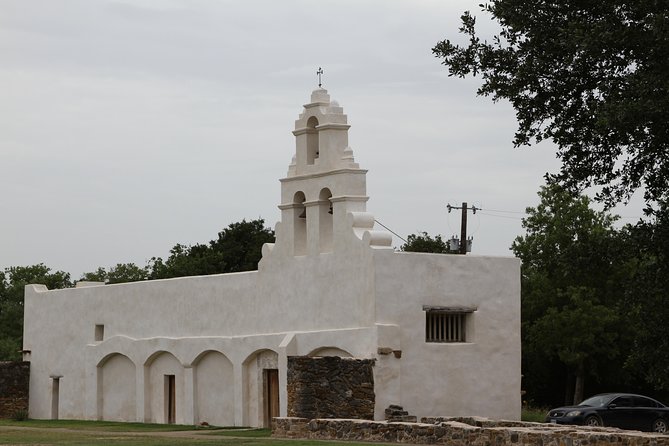
Stop 3: Mission San Juan is shorter, about 10 minutes. The focus is agriculture and irrigation—specifically, how the mission’s water systems supported farming and daily life.
A short stop can feel limiting, but irrigation is one of those topics that makes a mission complex click. Even in ten minutes, you’ll come away with the sense that the missions weren’t only religious centers. They were operating communities tied to how land was watered and worked.
If you’re trying to “read” the mission landscape like a system, this is the stop that gives you that lens.
Espada Aqueduct: How Water Makes the Whole System Work
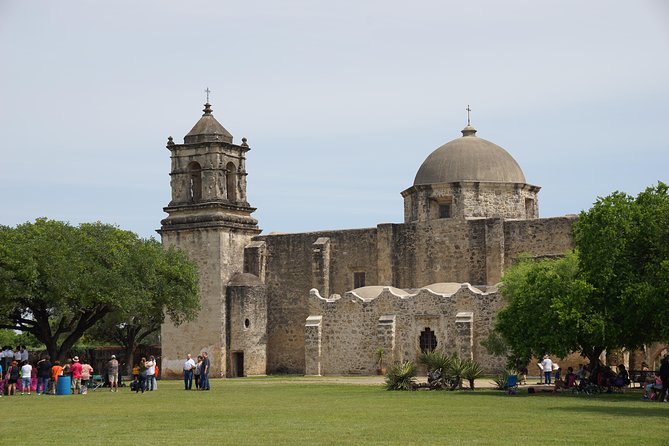
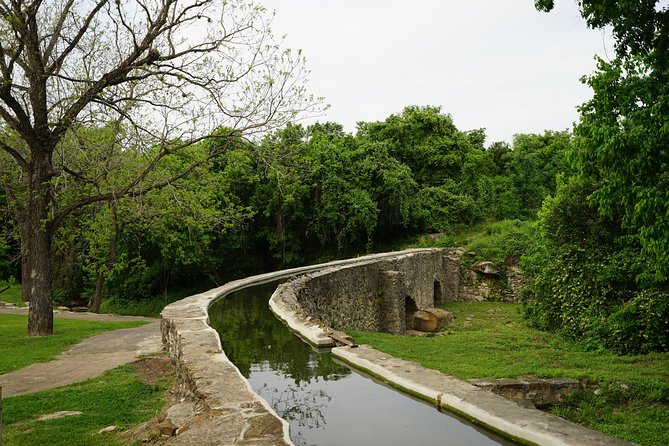
Stop 4: The Espada Aqueduct is brief—around 5 minutes—but it’s the kind of stop that changes how you see everything that comes after or before it. You’ll view the irrigation system used to water the mission lands.
Think of this as the engineering bridge between the churches and the fields. You’re not lingering in a building; you’re seeing the logic of the operation. The guide’s explanation is what turns “stone channel” into a working part of the larger mission economy.
In a tour like this, short doesn’t mean insignificant. This stop is essential glue for understanding the UNESCO story.
Mission Espada: Another Sacred Space With Practical Context
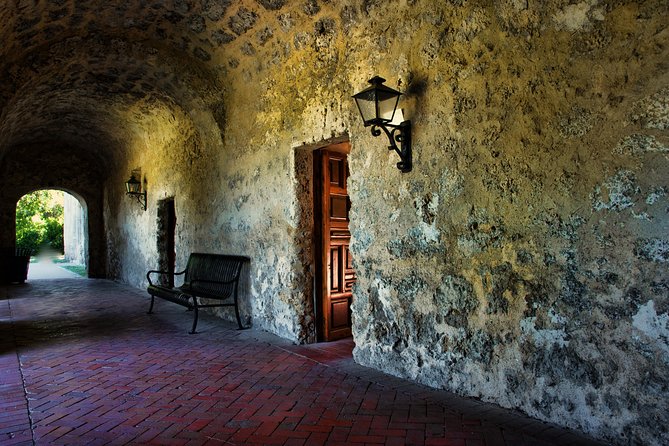
Stop 5: Mission Espada gives you about 10 minutes to explore the church and grounds. Compared with Mission San Jose, it’s lighter on time and heavier on atmosphere. You’ll get the chance to notice how each mission space feels related, yet distinct.
Because the earlier stops cover architecture (San Jose), artwork (Concepcion), and agriculture/irrigation (San Juan and Espada Aqueduct), Mission Espada lands well as the final “experience site” before the tour concludes.
This is also the point where you’ll likely feel the day’s temperature and walking. Reviews include a reminder to bring water and sunscreen, and that’s honestly good advice here. Even if the walking is mild, the sun can be a real factor.
La Villita, Alamo Plaza, and Your Final Choice: Hotel or Alamo
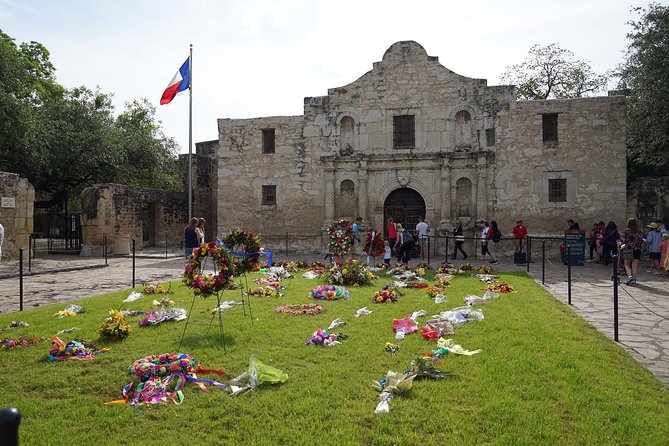
This tour puts you in the broader mission-to-downtown flow. The route includes La Villita Historic Arts Village and Alamo Plaza, so the experience doesn’t feel like it ends the second you finish at the last mission stop.
Then comes the final decision: the last stop is either your downtown hotel or the Alamo. You get to choose, but here’s the key rule: a tour of the Alamo is not included in this missions tour. The Alamo runs its own guides or you can do a self-guided visit.
So if your goal is specifically to hear a guided Alamo story, you’ll need to plan that separate add-on. If your goal is just to see the area and use the time to roam at your own pace, the Alamo drop can still work well.
When to Go and What to Bring (Mild Walking, Real Sun)
The tour asks for moderate physical fitness, and the reality is simple: you’re outdoors on uneven mission grounds. Even with “only” a few stops, you’ll want to plan like it’s a walking day, not a sit-and-stare day.
Use this as your packing checklist:
- Water (reviews call this out directly)
- Sunscreen
- Sun-protection basics if you run hot (hat/eyewear help)
- Comfortable shoes for short walks between sites
Also, the experience depends on the weather. The tour requires good weather, and if conditions are poor, you’ll be offered a different date or a full refund.
Should You Book This San Antonio Missions Tour?
I’d book this if you want an efficient, guided way to understand why San Antonio’s missions became a UNESCO World Heritage Site and how each mission contributes something different. The mix of Mission Concepcion, Mission San Jose, Mission San Juan, and Mission Espada, tied together by an explanation of irrigation and architecture, is exactly the kind of structure that helps the day make sense.
I’d skip or rethink if you’re expecting a slow, ultra-detailed tour inside every building with lots of time for wandering. The stops include set time windows, and the most substantial chunk is Mission San Jose. If you want to linger far longer at Concepcion or Espada, you may want extra independent time after the guided portion.
If you’re visiting soon: it’s commonly booked about 16 days in advance, so I’d reserve early if your dates are fixed. This is one of those experiences that sells out when people want a straightforward, guided hit of San Antonio history without doing research all morning.
FAQ
How long is the San Antonio Missions UNESCO World Heritage Sites Tour?
It runs for about 3 hours 30 minutes.
What is the price per person?
The price is $75.00 per person.
Are hotel pickup and drop-off included?
Yes. Pickup and drop-off are included at select downtown hotels.
Which missions are included on the tour?
You’ll visit Mission Concepcion, Mission San Jose, Mission San Juan, and Mission Espada, plus a stop at the Espada Aqueduct. This tour includes four out of the five missions.
Is admission included for the mission stops?
Admission tickets for the listed stops are free.
Is the Alamo tour included?
No. The Alamo uses its own tour guides or you can visit it self-guided. You can be dropped off there, but the Alamo tour itself is not included.
What ticket type does the tour use?
You get a mobile ticket.
What is the group size limit?
The maximum group size is 12 travelers.
Are service animals allowed?
Yes, service animals are allowed.
What happens if the weather is bad?
The experience requires good weather. If it’s canceled due to poor weather, you’ll be offered a different date or a full refund.
Can I cancel for a refund?
Yes. Free cancellation is available up to 24 hours in advance for a full refund.