REVIEW · SAN ANTONIO
San Antonio UNESCO Premium Missions Tour
Book on Viator →Operated by See Sight Tours USA · Bookable on Viator
Five missions, one easy afternoon plan. This San Antonio UNESCO Missions tour strings together the San Antonio Missions with short, focused stops, so you get the big story fast instead of bouncing around town with a parking plan. I especially like that admission tickets are included for the missions and the World Heritage Center, and I really like the fully narrated driving route that explains what you’re seeing as you go.
The main thing to watch is the time pressure: each mission is allotted about 30 minutes (San José gets about an hour), so you’ll need to accept “just enough time to savor the highlights” rather than a slow museum-style visit.
In This Review
- Key reasons this tour works (and where it might not)
- San Antonio Missions, in 3 Hours Without the Parking Headache
- Mission Espada: Oldest mission + working irrigation story
- Mission San Juan: A self-sustaining plan in a quiet park-like setting
- Mission San José: The Rose Window stop you’ll remember
- UNESCO World Heritage Center: Understand the missions before you wrap up
- Mission Concepción: The best-preserved church stop (with frescoes)
- Alamo Plaza: A quick orientation near the Alamo
- Price and logistics: What $107 buys you in real time
- How the guide style changes the day
- Who should book this tour (and who should skip it)
- Should you book the San Antonio UNESCO Premium Missions Tour?
- FAQ
- How long is the San Antonio UNESCO Premium Missions Tour?
- What does the tour cost?
- What missions and stops are included?
- Are admission tickets included?
- Does the tour include hotel pickup and drop-off?
- What time does the tour start?
- How many people are in the group?
- Is free cancellation available?
Key reasons this tour works (and where it might not)
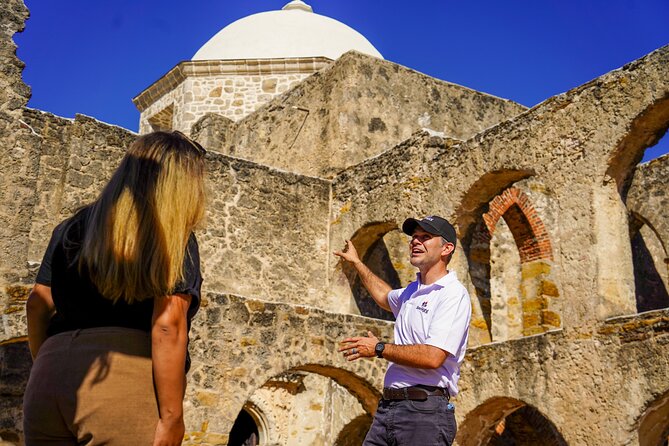
- Small group (up to 7 people) keeps the experience calm and makes questions feel doable
- Hotel pickup and drop-off saves you from the awkward downtown parking shuffle
- Admission included means you spend less time at ticket counters and more time in the chapels and courtyards
- A narrated drive connects the dots between irrigation, agriculture, and mission life
- Stops are paced: quick hits at Espada, San Juan, Concepción; more time at San José
- Guides bring details to life (names you may hear include Nancy, Victor, and Dylan, with on-the-fly adjustments)
San Antonio Missions, in 3 Hours Without the Parking Headache
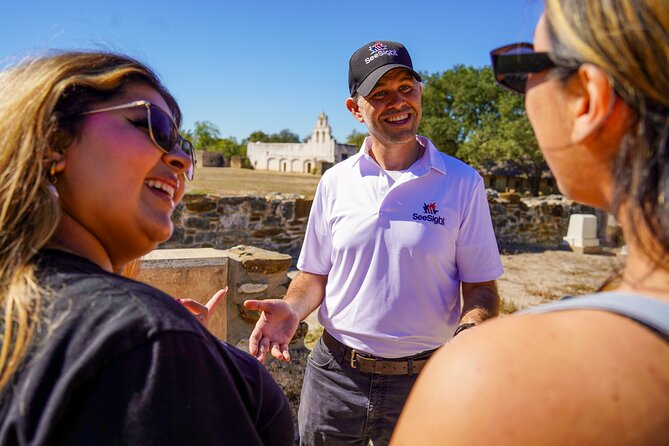
San Antonio Missions can feel confusing at first. The sites are close enough to visit in a day, but far enough apart that you’ll lose time if you drive yourself and constantly re-check where you are. This tour solves that with complimentary hotel pickup and drop-off plus transportation between each stop, along with a fully narrated driving tour so you understand what’s on your left and right windows.
The price is $107 per person for a 3-hour loop that covers multiple mission sites, the World Heritage Center, and admissions. I like this kind of deal because it’s not just “get on a bus.” It’s built around practical time-saving: you don’t have to coordinate separate tickets, and you’re not stuck asking, Where’s the entrance again?
One more plus: the group size tops out at 7 people. That tends to make the pace reasonable and keeps the guide’s attention from getting spread thin. If you enjoy asking a question or hearing one explanation twice, this format usually fits.
You can also read our reviews of more tours and experiences in San Antonio.
Mission Espada: Oldest mission + working irrigation story
Mission Espada is the kind of place that feels calm right away. It’s the oldest of San Antonio’s five Spanish colonial missions, founded in 1690 and moved to its current location in 1731. The architecture has a charming, rustic feel, and the setting is peaceful in a way that helps you slow down even when the stop is only about 30 minutes.
What I’d focus on here is the mission’s role in practical skills. Espada was a hub for teaching trades like blacksmithing and weaving to Indigenous converts. In other words, this wasn’t just a church stop on your photo route—it was also a place where work, learning, and daily routines mattered.
Then there’s the water story. Espada’s original aqueduct system ties into a larger irrigation network. Even if you’re not a history buff, you’ll understand why it mattered: missions needed reliable water to support life and farming. When the guide connects that irrigation to what you see around the grounds, the site clicks into place.
Possible drawback: the 30-minute slot is just enough for the highlights. If you like to linger inside every building and read every interpretive panel, Espada may leave you wanting more time.
Mission San Juan: A self-sustaining plan in a quiet park-like setting
Mission San Juan is the serenity stop. It was established in 1731, and it’s known for a park-like setting and a simple white chapel. The design makes the mission feel like a contained world—one where you can imagine routines without constant city noise breaking the spell.
This is also where the mission’s day-to-day purpose becomes clearer. San Juan was intended as a self-sustaining community, which meant it included farmland, living quarters, and workshops. The agriculture wasn’t just background decoration; it produced crops and goods that supported the region.
If you’ve ever wondered how a mission could function beyond ceremonies, San Juan gives you that answer. With about 30 minutes, you’ll be able to walk the grounds, get the big layout in your head, and learn what daily life likely looked like for both Indigenous residents and missionaries.
Tip for getting more out of the short stop: take one slow loop around the grounds first, then go back for the details the guide highlights (like features tied to work and farming). That way you’re not hunting for context while the clock runs.
Mission San José: The Rose Window stop you’ll remember
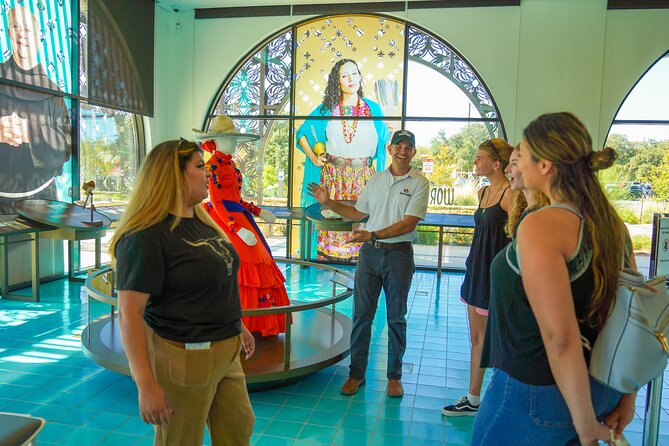
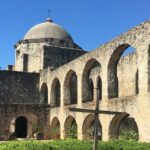
Mission San José is often the anchor of the tour, and it earns that spot. It’s the largest and often described as the Queen of the Missions, founded in 1720. Expect to feel the scale immediately.
Here, you get about 1 hour, which is exactly what you want at the main site. The stone church has impressive carving, and one of the star features is the Rose Window. You’ll also notice original walls that once sheltered hundreds of Indigenous residents—details that turn the mission from a pretty sight into a place where real people lived their lives.
A key part of why this stop hits: restoration work and preserved structures help you picture the layout and function of the community. Even if you only catch the essentials, your brain starts building a map—church, courtyard space, and the surrounding walls that defined daily movement.
Possible drawback: one hour sounds long, but it passes faster than you expect once you start taking photos and listening to explanations. If you’re traveling with a camera setup or need lots of restroom breaks, plan a little buffer before you get here.
UNESCO World Heritage Center: Understand the missions before you wrap up
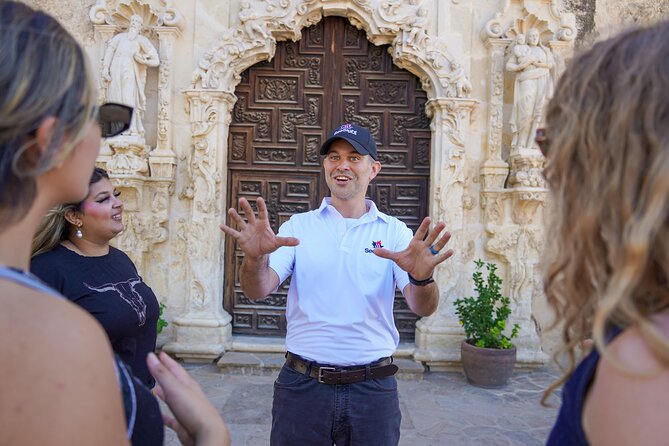
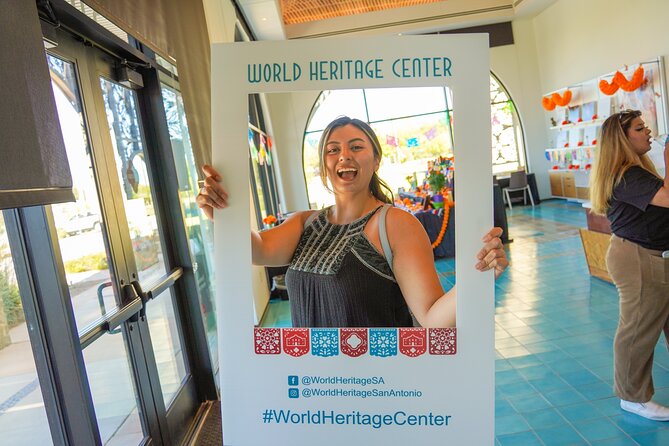
Between mission sites, you don’t want to feel like you’re just hopping between buildings. That’s where the World Heritage Center helps. It’s a community space focused on the UNESCO-listed San Antonio Missions, with exhibits and stories connecting the missions to the surrounding neighborhoods and culture.
Think of this as the “put it all together” stop. After you’ve seen Espada and San Juan, you’ll have the names and the visuals—but you might still be missing how they relate as a system. The World Heritage Center gives you that bridge, helping you interpret the missions as part of a broader story rather than five separate sites.
You’ll have about 30 minutes here. That’s enough time to orient yourself, learn what UNESCO recognizes, and connect what you saw with why it matters.
Practical note: if you’re the type who reads every sign, you may want to pick just a few exhibit areas to focus on so you don’t run out of time.


Mission Concepción: The best-preserved church stop (with frescoes)
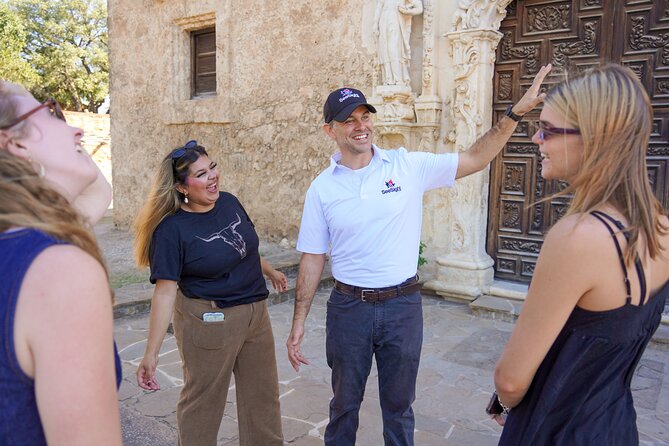
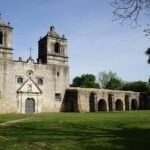
Mission Concepción is the “church first” stop, and it has a standout reputation. It’s known as the best-preserved Spanish colonial church in the U.S., and the site still shows original frescoes after nearly 300 years. That alone is worth the trip: frescoes don’t usually survive intact for that long, so when they’re visible, it changes how you experience the space.
The church was completed in 1755, and its twin towers make it easy to spot and hard to forget once you’re there. You’ll also notice it’s not just a museum artifact. It’s an active parish, so you get a glimpse of how faith and community life continue alongside the historic structures.
This stop is about 30 minutes, which is a good pace for a church visit. You’ll have enough time to take in the exterior and then slow down inside when you’re guided to the features that matter most—especially the fresco locations the guide points out.
Possible drawback: if there’s service activity, you may have less time in specific areas. The good news is the tour format allows the guide to adapt timing as needed.
Alamo Plaza: A quick orientation near the Alamo
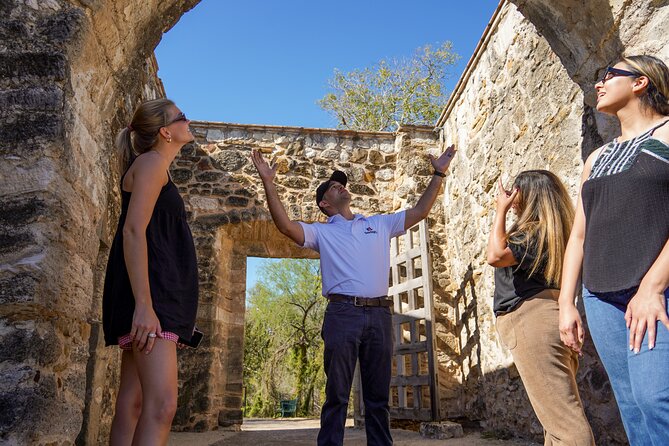
Most days, you’ll want the missions, but you also don’t want to miss the fact that San Antonio’s identity also runs through the Alamo. This tour includes a stop at Alamo Plaza, where the historic Alamo is located (site of the 1836 Battle of the Alamo) and where the surrounding public square offers plenty of culture and history.
The tour data doesn’t give a specific time allotment for Alamo Plaza, so treat it as a “see and orient” moment rather than an in-depth, full Alamo museum experience. Still, it’s a great way to end with a bigger-picture anchor after you’ve spent the morning learning mission life.
Price and logistics: What $107 buys you in real time
This tour is priced at $107 per person, and the value comes from what’s bundled.
You’re getting:
- Hotel pickup and drop-off in the downtown area
- Transport between stops (so you’re not coordinating multiple drives)
- A fully narrated driving tour
- Admission tickets included for the missions and the UNESCO World Heritage Center
If you tried to do this on your own, you’d spend time juggling directions, finding parking, and buying multiple admissions. Here, the structure saves you the effort and keeps the day moving.
The tour also runs with a start time of 9:30 am, which is helpful. Morning light tends to make the mission exteriors nicer, and you’ll avoid the worst of the later crowds that often build around major attractions.
One logistics detail I’d pay attention to: pickup is offered from any hotel or accommodation in downtown San Antonio. If you’re staying outside that area, the tour notes that you should contact guest services to arrange a meeting location. If you’re not downtown, don’t assume pickup still works the same way.
Finally, the tour lists a moderate physical fitness level. Missions have walkways, courtyards, and uneven ground, so comfortable shoes matter.
How the guide style changes the day
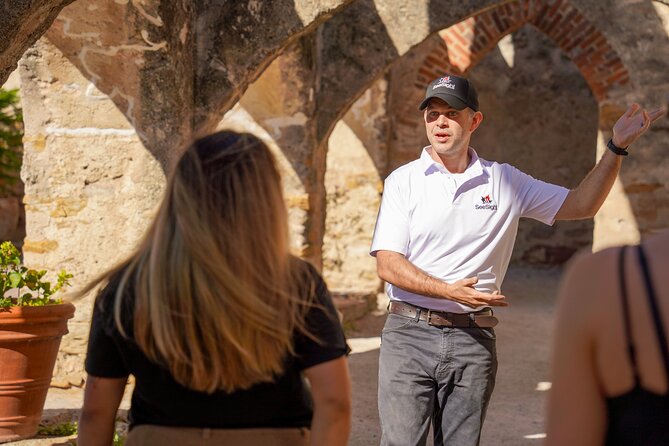
The guide can make or break mission tours. This one tends to deliver strong interpretive storytelling, and the names Nancy, Victor, and Dylan show up as guides for this experience. What stands out is not just facts, but how the guide ties mission life to what you’re standing next to.
Victor, for example, is highlighted for additional context tied to the region (including references like Comanches). Dylan is noted for having extensive mission-site knowledge and for adding interesting context beyond the basics. Nancy is described as especially kind and well-prepared.
There’s also a real-world flexibility angle: one experience mentions that on a Sunday, a guide adapted when mass affected access at some locations and added extra things along the way. That’s the kind of improvisation you want to see in a tour, because history sites don’t always behave like static attractions.
What you should do: keep your questions simple and specific. Try: What’s the purpose of this feature? or What would a day here have felt like? You’ll get better answers when you steer the conversation.
Who should book this tour (and who should skip it)
This is a strong fit if you want:
- A fast, organized way to see multiple UNESCO missions
- A tour that includes transportation and admissions
- A small group pace where the guide can respond to your interests
You might prefer something else if you’re the type who needs long, uninterrupted time in every building, or if you’re planning to spend a half-day inside the Alamo itself. This itinerary is built for the missions first, with Alamo Plaza as a helpful add-on.
If you’re traveling with kids, this can work well for the right age range, but mission sites are still mostly walking plus listening plus looking. If your group gets restless easily, bring snacks and choose one or two “must-see” moments per stop.
Should you book the San Antonio UNESCO Premium Missions Tour?
Yes—if your priority is a smooth, guided run through the mission trail with included admission and minimal logistics headaches. At $107 for a 3-hour tour that covers Espada, San Juan, San José, Concepción, plus the World Heritage Center and a stop at Alamo Plaza, it’s a practical value play for most visitors.
Book it if you like learning while you walk, and you’re okay with each mission being a focused highlight rather than a full-day deep study.
I’d hesitate only if you need lots of free time at any one site, or if you’re staying outside downtown and don’t want to manage meeting-point coordination. If that’s you, confirm pickup details early.
FAQ
How long is the San Antonio UNESCO Premium Missions Tour?
It runs for about 3 hours.
What does the tour cost?
The price is $107.00 per person.
What missions and stops are included?
You’ll visit Mission Concepción, Mission San José, Mission San Juan, Mission Espada, and the UNESCO World Heritage Center. There’s also a stop at Alamo Plaza.
Are admission tickets included?
Yes. Admission tickets are included for each mission stop listed and for the World Heritage Center.
Does the tour include hotel pickup and drop-off?
Yes. Pickup and drop-off are included, and pickup is offered from hotels or accommodations in downtown San Antonio.
What time does the tour start?
The start time is 9:30 am.
How many people are in the group?
The tour has a maximum of 7 travelers.
Is free cancellation available?
Yes. You can cancel up to 24 hours in advance for a full refund. Changes within 24 hours aren’t accepted and refunds aren’t available inside that window.