REVIEW · SAN FRANCISCO
San Francisco Technology and History Tour: South of Market
Book on GetYourGuide →Operated by Heck Wes Tours · Bookable on GetYourGuide
SoMa turns tech gossip into street history. What I like most is how the tour links today’s startup world to the older layers of money, industry, and housing—and how the guide makes the block-by-block story feel personal. You’ll also get a payoff at the end with the rooftop Salesforce Park views. One drawback to consider: it’s a walking tour, so even though South of Market is flat, you still need comfortable shoes for a steady 70 minutes.
I particularly appreciate the way the route stays grounded in places you can actually see: South Park, 2nd Street, and Yerba Buena Gardens are all described as living neighborhoods with changing jobs, residents, and priorities. The guide, Wes (who lives and works in the area), brings humor and energy, and you’ll hear how the startup ecosystem grew where earlier communities were pushed out. If you’re only looking for generic landmarks, you might find the conversation about redevelopment and displacement heavy at times.
At $30 for about an hour-plus, this feels like strong value because you’re not just looking at buildings—you’re getting context for why the city looks the way it does now. It’s wheelchair accessible, and the neighborhood is one of the flattest in San Francisco, which makes it easier to enjoy the walk instead of counting steps. You’ll finish downtown with simple transit options nearby.
In This Review
- Key highlights worth your attention
- Starting in South Park: venture capital with roots going back to the 1850s
- Walking 2nd Street: the shipping corridor and the hill that got flattened
- Folsom Street context: modern culture on a street with layers
- Yerba Buena Gardens: seeing urban renewal and understanding who paid
- Salesforce Park rooftop: Tar Flat to tech skyline views
- Price and walking logistics: $30 for 70 minutes, and what you get for it
- Who should book this SoMa tour (and who might skip it)
- Getting around after: easy transit and a simple end point
- Should you book this South of Market history and tech tour?
- FAQ
- How long is the South of Market technology and history tour?
- Where does the tour start and where does it end?
- Is the tour wheelchair accessible?
- What will I see during the tour?
- Is there any extra charge once the tour starts?
- What should I wear or bring?
- What is the cancellation window?
Key highlights worth your attention
- South Park’s changing identity: British garden-square design, then gold rush tents, then luxury, then refugees, then tech offices.
- 2nd Street’s shipping and land-reclamation story tied to docks and a flattened hill.
- Folsom Street context alongside other SoMa streets where modern culture has deep roots.
- Yerba Buena Gardens and urban renewal impacts, including how eviction shaped local politics.
- A rooftop garden end point at Salesforce Terminal with skyline and Bay views.
- Klockar’s blacksmith as a small, physical reminder of early metalworking work.
Starting in South Park: venture capital with roots going back to the 1850s
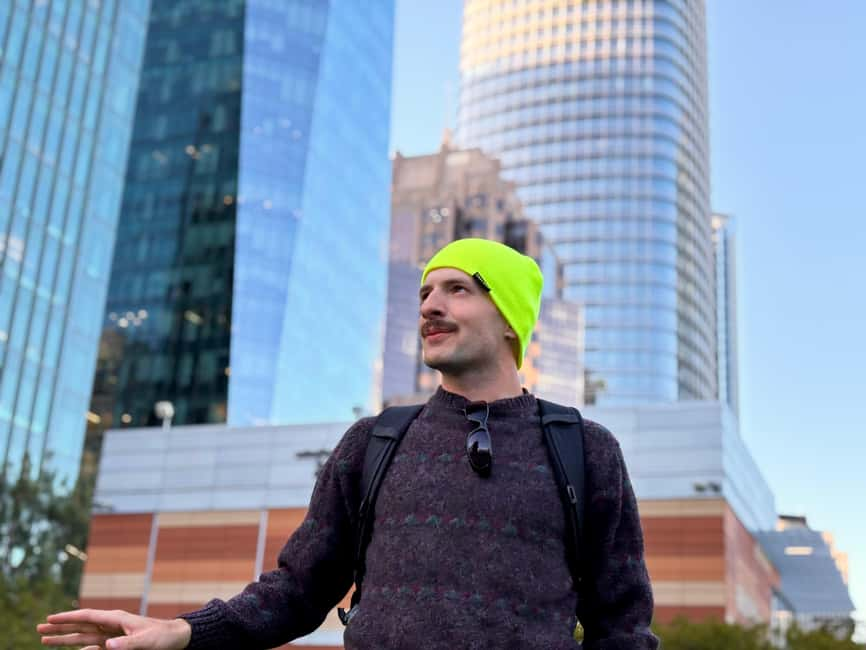
The tour begins in South Park, an area that’s old by San Francisco standards and oddly modern at the same time. The neighborhood was laid out in the 1850s after a British garden square model, so even before tech shows up on the scene, you’re standing in a place designed for civic life, not just commerce.
This is also where the guide sets the theme for the whole walk: SoMa is not one story. It’s a stack. In the 2010s, South Park became home to some of the first offices for major tech names. But the tour also zooms out to the gold rush era (encampments), the Gilded Age (luxury development), the period after the 1906 earthquake (refugee housing), the city’s Japanese community, and a long industrial stretch. Now you’re seeing the financial side of tech shaping the neighborhood again.
Two practical perks make this opening stop especially workable. South Park has seating and shade, which matters because the tour then moves north on 2nd Street afterward. And it’s a calm way to get your bearings for what comes next.
If you’re sensitive to political talk, it’s worth knowing this tour doesn’t pretend redevelopment came without consequences. That becomes clearer later at Yerba Buena Gardens.
You can also read our reviews of more historical tours in San Francisco

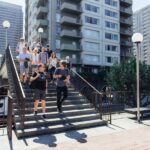
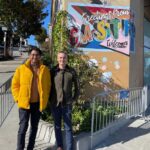
Walking 2nd Street: the shipping corridor and the hill that got flattened
Next comes 2nd Street, one of the most historically significant streets in the city for a simple reason: it connected downtown to the docks used by the Pacific Mail Steamship Company. In other words, this wasn’t just a road. It was a supply line, a jobs corridor, and a way for the city to grow with global shipping.
Then the tour adds a second layer that I found especially useful: land reclamation. You’ll hear how this street was tied to one of the city’s earliest large projects that flattened a major hill to make room for the commercial thoroughfare. That detail matters because it explains why SoMa feels like a “different planet” from other parts of San Francisco. The topography got changed, and the change still shapes what’s buildable and where movement concentrates today.
Along the walk, you’ll also notice a few “present-day anchors” from tech and startup culture—LinkedIn, DoorDash, and Anthropic are mentioned as stops or points of reference. The value here isn’t the logos. It’s the contrast: the same street that once ran toward steamship docks is now where modern companies sit, hire, and brand themselves.
This section is also where the “mostly flat” point becomes real. SoMa is one of the flattest neighborhoods in San Francisco, and the route reflects that. It’s a big deal if you want city history without turning your day into a leg workout.
Folsom Street context: modern culture on a street with layers
The walk includes Folsom Street, described as famous for its gay history. Even if you already know the broad reputation of the street, the tour’s approach is to place that cultural story inside the larger SoMa timeline.
This matters for two reasons. First, it helps you avoid treating LGBTQ history as separate from “real city planning.” Second, it shows how different communities—workers, refugees, residents displaced by renewal, and later creative and tech crowds—have all shaped SoMa’s identity over time.
I like that this isn’t taught as a single highlight reel. It’s framed as part of the neighborhood’s changing population and economic role. That’s the kind of context that makes you look at a street differently even after the tour ends.
Yerba Buena Gardens: seeing urban renewal and understanding who paid
When you reach Yerba Buena Gardens, you’re stepping into a space that the tour frames as the site of San Francisco’s largest urban renewal projects. Urban renewal is a term people throw around, but this stop makes it concrete: you’ll learn about the people who lived there and how eviction affected San Francisco’s political climate.
This is the emotional middle of the walk. The historical facts are important, but the human impact is the point. The guide connects policy decisions to real lives, then links those outcomes to how politics shifted afterward. It’s a reminder that city design is not just architecture. It’s power, budgets, and who gets protected when plans change.
The gardens also give you a breather. They’re a good moment to regroup, especially after walking and before the final downtown payoff. You’ll come out with a clearer answer to a question that pops up in SoMa all the time: Why does the city’s geography and housing look like this?
The drawback here is mostly personal. If you prefer light, purely “growth story” narratives, this stop may feel heavy. But if you want an honest sense of why SoMa became what it is, it’s exactly the kind of stop that makes the tour worth doing.
Salesforce Park rooftop: Tar Flat to tech skyline views
The finish is near Market Street, at the rooftop garden of Salesforce Terminal, ending with views of the city skyline and the Bay. The rooftop is a strong closing move because it rewards you visually while reinforcing the theme: SoMa’s present is built on complicated ground.
The tour doesn’t let you treat the tech skyline as neutral scenery. You’ll learn that the Salesforce project was built over a beachfront natural gas refinery, and you’ll hear about the neighborhood that used to sit there—Tar Flat, described as the city’s poorest area. That’s a major shift: from industrial fuel work and extreme hardship to a highly visible symbol of modern tech investment.
You’ll also get one of those small-but-satisfying historical details at the end: Klockar’s blacksmith. It’s presented as a reminder of early metalworking, and that matters because SoMa’s identity didn’t start with startups. The city’s working trades, repairs, and manufacturing built the base layer long before the current era.
And since the rooftop is a viewing point, it helps you connect the route you just walked to the bigger geography of downtown. You’ll finish with the kind of perspective that makes the earlier stops feel linked, not random.
Price and walking logistics: $30 for 70 minutes, and what you get for it
At $30 per person for about 70 minutes, the value comes from structure. You get a guided sequence through multiple eras, not just a single neighborhood photo-op. The guide also works in the area and is able to speak from inside the local story, including how startups and the startup ecosystem fit into SoMa’s evolution.
A typical itinerary rhythm is part of why this feels manageable: you spend time in South Park to set context, then you move along the streets in readable chunks—walk, stop, explanation—until you reach Yerba Buena Gardens and finally the rooftop.
You’ll want to plan around the basics:
- Bring comfortable shoes and clothes.
- Expect a steady walking pace even though the route is mostly flat.
- If you want shade, use the early South Park seating break, because the later stops are more about walking through downtown streets.
If you’re looking for a sit-down museum-style experience, this isn’t it. But if you want the city teaching you as you move, it’s a good fit.
Who should book this SoMa tour (and who might skip it)
This tour is a good match if you like city history that explains why today’s buildings and companies exist where they do. It’s also ideal if you enjoy neighborhood-level stories: not just “San Francisco had famous people,” but how residents, industries, and policies shaped specific blocks.
You’ll likely enjoy it if you’re:
- A first-time visitor who wants more than the usual downtown sights
- A local who thinks you “know SoMa” but wants sharper context
- Someone curious about how venture capital grew in a place with such varied earlier uses
You might skip it if you want a purely upbeat, entertainment-first walk. This route includes urban renewal and eviction impacts, so it’s honest about the downsides of redevelopment. Also, it’s a walking tour, so you need to be comfortable on your feet for the full hour-plus.
Getting around after: easy transit and a simple end point
Finishing near Salesforce Tower means you end in a part of downtown with strong public-transit reach. The tour notes easy access to both BART and MUNI lines, and the Powell Street cable car is about a 15-minute walk away.
That’s a practical advantage. You can book this earlier in the day, then keep exploring without feeling stuck at the far edge of the city. And because the tour route stays in SoMa, it connects well with other nearby stops you might already have on your list.
Should you book this South of Market history and tech tour?
If you want San Francisco through the lens of why it became the world startup capital, this tour is a smart choice. I’d book it when you’re ready to trade surface-level tech talk for street-level explanation. You’ll come away knowing how South Park’s eras—from British garden-square design to early tech offices—connect to shipping corridors, land reclamation, urban renewal outcomes, and today’s skyline.
The biggest reason to book is the guide’s style. Wes is described as passionate, entertaining, and actively working in the neighborhood. That shows in the way the walk ties together photos, development, and personal context so the neighborhood feels like a living argument, not a static exhibit.
If you’re short on time, the 70-minute length is also a real advantage. You get a lot of story without needing a half-day commitment.
FAQ
How long is the South of Market technology and history tour?
The tour lasts about 70 minutes.
Where does the tour start and where does it end?
It starts in South Park (meeting near 162 S Park St, based on the option booked) and ends near Market Street at the rooftop garden of Salesforce Terminal.
Is the tour wheelchair accessible?
Yes, the tour is wheelchair accessible.
What will I see during the tour?
You’ll visit key areas in SoMa, including South Park, 2nd Street, Yerba Buena Gardens, and the Salesforce Park rooftop garden. The walk also references areas tied to shipping history and urban renewal, plus Klockar’s blacksmith near the end.
Is there any extra charge once the tour starts?
No obligatory additional fees are listed.
What should I wear or bring?
Wear comfortable shoes and comfortable clothes.
What is the cancellation window?
Free cancellation is available up to 24 hours in advance for a full refund.