REVIEW · ACCRA
Kumasi Heritage Tours And Naming Ceremony In A Day
Book on Viator →Operated by Bigbentours1gh · Bookable on Viator
A day of names and cloth-making feels personal. This private, all-day Ashanti trip pairs kente weaving practice with an on-the-spot naming ceremony tied to your birth day, then adds a working cocoa farm and hands-on Adinkra craft time.
What I like most is the hands-on format: you don’t just watch. You get time at a kente weaving village, then you make Adinkra cloth yourself at Ntonso, which turns culture into something you can understand with your hands.
One thing to plan for: lunch isn’t included, and with a 7:00 am start and about 10 hours total, you’ll want to handle food smartly.
In This Review
- Key things that make this tour worth your time
- How this Ashanti day stays personal from start to finish
- Price and logistics: what you’re really paying for
- 7:00 am pickup and pacing a 10-hour craft day
- Adanwomase: kente weaving practice plus a naming ceremony
- The cocoa farm stop: why it improves the whole day
- Ntonso Adinkra Craftsmen: learning symbol history and making your own cloth
- Your private guide: the real value isn’t the route, it’s the explanations
- What to bring so the day feels easy, not stressful
- Who this tour fits best (and who might want to rethink it)
- Should you book Kumasi Heritage Tours and this naming ceremony day?
- FAQ
- How long is the tour?
- What time does the tour start?
- Is pickup included?
- Is this a private tour?
- Is lunch included?
- Is free cancellation available?
Key things that make this tour worth your time
- A naming ceremony tied to your birth day so it feels like more than a photo stop
- Kente weaving at Adanwomase focused on how the cloth is actually made
- A stop at a working cocoa farm that adds real context for what you’ll see in the villages
- Adinkra symbolism and craft at Ntonso plus time to make your own cloth
- Private guide attention so you can ask questions and move at your group’s pace
How this Ashanti day stays personal from start to finish
This is the kind of Ghana day trip that doesn’t treat culture like a museum display. You’re spending real time in craft settings where people still do the work, day after day, and you’re doing part of it too. That changes how you experience things. Instead of passive viewing, you’re building a small understanding of process, meaning, and materials.
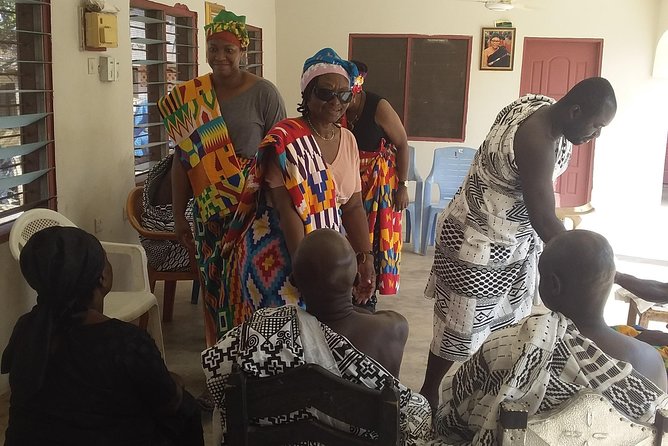
The naming ceremony is the emotional anchor. Getting a local name based on the day you were born isn’t just a novelty; it connects you to the community’s way of naming and identity. If you enjoy respectful cultural participation, this is the moment that tends to land hardest.
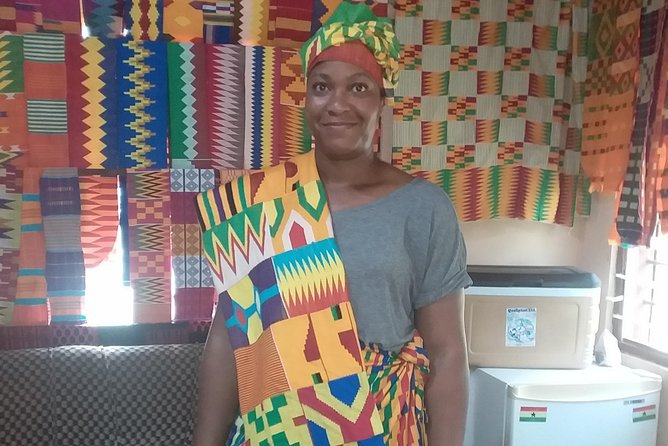
And then there are the crafts. Kente and Adinkra aren’t random souvenirs. They’re visual languages with rules behind them—symbols, methods, and traditions that people can explain if you give them the chance. I like that this tour builds those “why” moments into the day instead of rushing straight to shopping.
You can also read our reviews of more historical tours in Accra


Price and logistics: what you’re really paying for
At $256.42 per person for about 10 hours, this isn’t the cheapest option on the board. But the value mostly comes from what’s included and how the day is structured.
You’re paying for:
- round-trip transportation in an air-conditioned vehicle
- time with a private guide
- all fees and taxes for the activities included on the route
- admission coverage noted for the Adinkra stop, while the kente village/naming ceremony stop lists admission as free
Your main out-of-pocket planning item is simple: lunch isn’t included. That’s the one predictable gap in the day, and it matters because your schedule starts early and runs long.
Also, the tour uses a mobile ticket, and you’ll get confirmation at booking. That reduces uncertainty, especially if you’re juggling other stops in Ghana.
7:00 am pickup and pacing a 10-hour craft day
The day begins at 7:00 am, and the total time runs about 10 hours. That long block is the trade-off for getting two craft villages plus the cocoa farm plus the naming ceremony, all without you coordinating transport between places.
Because it’s a private tour for only your group, you’re less likely to feel rushed by strangers. You can ask follow-up questions, slow down if you want to focus on weaving steps, and keep things comfortable. It also means the guide can tailor explanations to your questions—useful when you’re trying to understand what specific patterns and symbols mean.
If you’re sensitive to early starts, plan around it. Build in an earlier night before you leave, and keep water handy. When a day is hands-on, even small delays can snowball, and you’ll enjoy it more if you arrive ready.
Adanwomase: kente weaving practice plus a naming ceremony
Your first major stop is Adanwomase, known for its kente weaving traditions. This is where you’ll visit the kente weaving village and spend time at a community kente weaving centre. The point here isn’t just to see cloth. It’s to learn how it’s made—so you can understand why kente looks the way it does and what the process involves.
You’ll also add a traditional cocoa farm visit here. That matters more than it might sound at first. Cocoa is part of Ghana’s economic and everyday life, and seeing the farm context makes the trip feel more grounded than a pure craft-only outing.
Then comes one of the most memorable parts of the morning: the traditional naming ceremony. You’ll be given a local name based on the day of your birth. If you like traditions with a personal connection, this is the moment to pay close attention. The ceremony isn’t about learning one random fact; it’s about being included in a practice that carries meaning for the community.
A practical consideration: because this is hands-on and ceremony-based, you’ll likely want to dress in a way that lets you comfortably sit, move, and participate without worrying about damaging clothing. If you’re planning to take photos, keep an eye on how the ceremony is conducted and follow the guide’s lead on when and how to photograph respectfully.
The cocoa farm stop: why it improves the whole day
A lot of culture tours skip the “materials and source” part and jump straight to the finished product. This one gives you a farm stop for a reason: it helps you connect craft to real life.
You’ll visit a local cocoa farm, and that gives you context for Ghana’s agricultural foundations. Even if you’re not leaving with a new “farm skill,” you’re picking up perspective on why certain goods and traditions matter locally. It also breaks up the schedule so your craft time doesn’t feel like one long workshop straight through.
For me, the farm visit is also a mood reset. After time in village settings, seeing crops and working land can help you slow down and observe more calmly.


Ntonso Adinkra Craftsmen: learning symbol history and making your own cloth
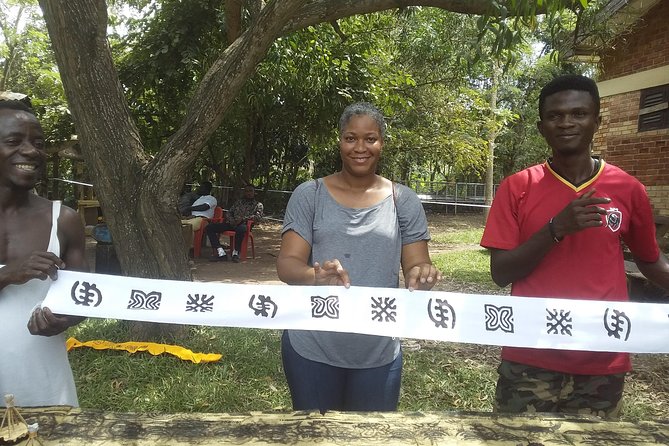
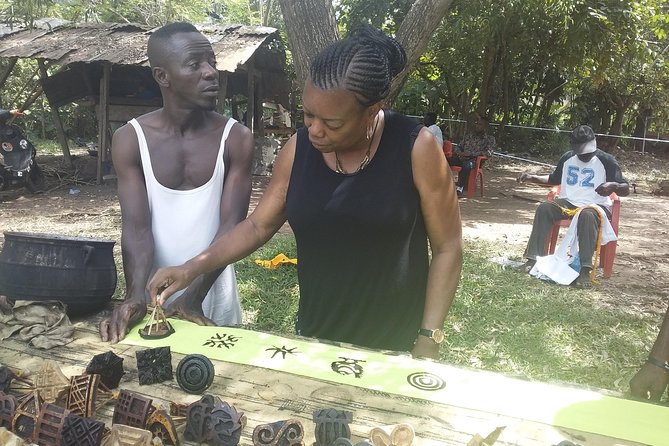
Next, you head to Ntonso Adinkra Craftsmen, where the focus shifts from kente to Adinkra. Here, the emphasis is on learning about the history of Adinkra symbols—an ancient traditional symbol system—and then applying that knowledge by making your own Adinkra cloth.
This is the stop where “hands-on” becomes the main event. You’ll learn the history behind the symbols, but you’ll also get a practical session where you make your own cloth. That’s a huge difference from watching someone else work. You start noticing how patterns are planned, repeated, and applied, and you get a feeling for what makes a symbol readable as a symbol.
Another nice detail: admission for this stop is listed as included, so you’re not juggling extra ticket questions mid-day.
One consideration for your expectations: because you’re learning symbols and producing cloth in a workshop setting, expect time to be guided and structured. If you want total freedom and lots of “look around on your own,” this is more guided craft practice than open roaming. The trade-off is that you’ll leave with something you made, and you’ll understand how it connects to meaning.
Your private guide: the real value isn’t the route, it’s the explanations
The tour is built around a private guide, and that matters. The crafts can look similar at a glance if you’re new to the subject. A good guide turns those impressions into understanding.
In particular, ask questions as you go:
- What makes this kente style different here than in other places?
- Which Adinkra symbols are most common, and what meanings do they carry?
- In the naming ceremony, how does the day of birth shape the name you receive?
You’ll get more from the day if you treat the guide like a translator, not just a driver. And in a craft setting, questions also help you slow down in the right moments—so you can watch how decisions get made.
Based on what people consistently highlight from this type of experience, the strongest moments often come from the warmth and attentiveness of the people running the weaving and craft work. You’ll likely feel that dedication when you see apprentices focused on their tasks and ready to explain what they’re doing.
What to bring so the day feels easy, not stressful
You don’t need anything fancy to enjoy this day, but the best visits happen when you show up prepared for hands-on craft and early travel.
Consider bringing:
- comfortable clothing for sitting and working around textiles
- closed-toe shoes you can walk in
- water, since your schedule starts early and stretches long
- a small bag for anything you purchase or create during the workshops
Since lunch isn’t included, think about what you’ll do about food before you go. If you prefer predictable meals, plan ahead for where you’ll eat during the day window. If you’re the type who brings snacks, keep it simple and respectful around workshop settings.
Who this tour fits best (and who might want to rethink it)
This experience is especially good for you if you want a day that’s not just sightseeing. If you enjoy crafts, symbolism, and local traditions—and you’re excited to participate—you’ll probably love the structure.
It’s also a strong choice if you hate logistics. With round-trip transportation in an air-conditioned vehicle and a guided route between communities, you don’t have to figure out timing and travel between stops.
You might consider another option if you’re only interested in passive viewing. The craft time and the naming ceremony participation mean you’ll be more engaged than on a photo-only tour. And if you absolutely need lunch included, you’ll want to plan that yourself since it’s not part of the package.
Should you book Kumasi Heritage Tours and this naming ceremony day?
I’d book it if your ideal day in Ghana includes hands-on cultural participation. The combination of kente weaving practice, a cocoa farm context, a day-of-birth naming ceremony, and Adinkra symbol learning plus making your own cloth is a rare mix. It’s not just seeing; it’s doing.
Book it especially if you value a structured, guided experience where you can ask questions and spend time in the work itself. The private setup and inclusion of fees and taxes reduce the guesswork, leaving you to focus on the experience.
Skip it or choose carefully if you’re looking for a short, easy day with lunch provided. This is an early start, long hours, and you’ll need to handle food separately.
FAQ
How long is the tour?
The tour lasts about 10 hours.
What time does the tour start?
The start time is 7:00 am.
Is pickup included?
Yes. Pickup is offered, and the tour includes round-trip transportation in an air-conditioned vehicle.
Is this a private tour?
Yes. It’s a private tour/activity, and only your group will participate.
Is lunch included?
No. Lunch is not included.
Is free cancellation available?
Yes. You can cancel for free up to 24 hours in advance for a full refund.
If you want, tell me your travel dates and whether you’re hoping to do photo-heavy documenting or hands-on crafting, and I’ll suggest how to plan your morning and what to prioritize during each stop.