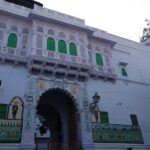
Blue walls tell stories when someone reads them for you. This walking tour with Rishi gives you a small group of four and easy-to-follow guidance in English, so the Blue City feels organized instead of random. I also like how the route includes landmark stops like Toorji ka Jhalra and the viewpoint from Pachetia Hill. One thing to consider: it’s still a 2.5-hour walk, and the experience runs best in good weather.
You start near the Toorji ka jhalra area (the Arch Boutique Home stay), then head toward Clock Tower Market for the morning vibe before moving into step-well, hill, and old-colony streets. The format is simple and practical, with a mobile ticket and a clear start-to-finish plan, ending back at your meeting point.
In This Review
- Key things to know before you go
- Why a Blue City walking tour is worth your time
- Meeting point and how the walk gets rolling in Jodhpur
- Clock Tower Market: the morning hub (and why you start here twice)
- Toorji Ka Jhalra: step well details you’ll actually notice
- Pachetia Hill: 360 degrees over Blue City and Mehrangarh Fort
- Navchowkiya near Fateh Pol: the neighborhood with a date
- Clock Tower Market again: shopping time with a purpose
- Rishi’s style: prompt, patient, and clear enough for real questions
- Price and value: what $13.42 covers on this 2.5-hour route
- Who this tour fits best
- Should you book this Blue City heritage walk?
- FAQ
- How long is the Blue City heritage walking tour?
- How much does the tour cost?
- Is this a private tour?
- What time does the tour start, and where do we meet?
- What stops are included during the walk?
- Are any admission fees included?
- Is a mobile ticket used?
- What if the weather is bad?
- Is free cancellation available?
Key things to know before you go
- Private for just your group of four with Rishi guiding you morning to finish
- Toorji ka Jhalra step well with admission included, plus close-up time on the sandstone steps
- Pachetia Hill’s 360-degree viewpoint over the Blue City and Mehrangarh Fort
- Navchowkiya near Fateh Pol, tied to the Brahmpuri colony and the 1459 fort-foundation era
- Clock Tower Market revisited for shopping and spices, with entry included on the tour segment
Why a Blue City walking tour is worth your time
Jodhpur’s Blue City can look like a sea of blue from a distance. Up close, it stops being just a color and becomes a map—of old neighborhoods, water places, and the city’s walls and forts shaping where people built. That is where this tour helps you most: it turns the streets into meaning.
I like the pacing because the group is small. With only four people, you can ask questions without feeling rushed, and you can actually pause for photos instead of constantly moving. Rishi is also prompt and patient, and his English is easy to understand, which matters more than you’d think on a walking tour where you don’t have long breaks.
The only real downside is the obvious one: you’ll be outside for about 2 hours 30 minutes. If you’re heat-sensitive, wear light clothes, carry water, and plan for the morning conditions.
You can also read our reviews of more walking tours in Jodhpur



Meeting point and how the walk gets rolling in Jodhpur
Your starting point is the Arch Boutique Home stay area near Toorji ka jhalra (Toowar Ji ka jhalra, Near Markara Mohalla, Gulab Sagar, Jodhpur). From there, you work your way toward Clock Tower Market as part of the early neighborhood experience.
Clock Tower Market is both a landmark and a practical hub. It’s where the tour starts in the working sense, and it’s also where you circle back at the end. You’ll also see morning street life along the way, so you’re not just teleporting between sights.
You should come ready for a walking route through local streets: comfortable shoes help, and a hat/sunscreen are smart. If you’re bringing a service animal, the tour allows service animals.
Clock Tower Market: the morning hub (and why you start here twice)
Clock Tower Market shows you two sides of Jodhpur in one go. First, it acts as a reference point to get oriented, with a shorter stop time that still lets you catch morning culture on the streets nearby. Later, you return with more time to slow down and take in the shopping scene.
The Clock Tower Market itself is associated with the reign of Maharaja Sardar Singh, spanning the late 19th century to the early 20th century. That gives the place a timeline feel: it is not just a modern shopping area; it’s tied to how the city developed through the rule of specific leaders.
It’s also where spices come into focus. If you enjoy markets, you’ll like the chance to browse, compare smells, and see everyday commerce that’s still part of the local routine. Consider this your practical break before or after the higher-energy viewpoint segment.
If you’re sensitive to crowds, keep this in mind: markets attract people. Early hours tend to help, but Clock Tower Market is still a lively destination.
Toorji Ka Jhalra: step well details you’ll actually notice
Toorji ka jhalra is one of the most satisfying stops on this route because it’s both historic and visually specific. The step well was built in the 1740s by a queen, and it is known for its stone steps. You’ll get about 30 minutes here, with admission included.
What makes this stop valuable is how it changes your understanding of daily life. Step wells were about water access, but they also influenced how space was built and used. Looking at the sandstone steps up close helps you see why this kind of structure became a social and practical center, not just an engineering feature.
Also, it’s a great photo stop. With a step well, you can photograph patterns and angles, and you don’t need fancy equipment—your framing is the main trick. I’d bring your phone charger or a power bank if you’re the type who takes lots of pictures.
A small consideration: step wells can feel cooler than the sun on the streets, but the walking to and from the stop still counts. Wear shoes you trust on uneven ground.
Pachetia Hill: 360 degrees over Blue City and Mehrangarh Fort
After the step well, the walk shifts into viewpoint mode at Pachetia Hill. You’ll have about 25 minutes here, and the reason people come is simple: the view is described as 360 degrees over the Blue City and Mehrangarh Fort.
This is the stop where the whole route starts to click. From up high, you can connect the blue-painted neighborhoods to the larger landmarks around them. You also get a clearer sense of how Mehrangarh Fort dominates the city’s skyline, so the fort stops being a distant icon and becomes a key part of Jodhpur’s layout.
If you like photos, this is your big moment. Stand in a few spots, compare what the fort looks like from different angles, and don’t rush the first frame—views change as you move.
Practical tip: bring something to shield your eyes from glare if the sun is strong, and keep an eye on footing on hill paths. Even when the tour time is short, the view is the point.
You can also read our reviews of more historical tours in Jodhpur



Navchowkiya near Fateh Pol: the neighborhood with a date
Navchowkiya (also connected to the Brahmpuri colony) is a quieter, more story-driven stop. It sits near Fateh Pol, and it dates back to the 15th century. The foundation of Mehrangarh Fort is linked to the year 1459, which adds a specific historical anchor for this area.
You’ll get about 30 minutes here, with admission marked as free for this segment. What you’re really buying with this stop is context. Instead of treating Jodhpur’s Blue City as only a set of photo spots, you see it as a set of living districts that connect to the fort era and the neighborhood patterns that grew around it.
Navchowkiya also helps you understand why you might see different architectural vibes block by block. Even within the same overall city identity, streets reflect time periods and purpose.
Because this is a street-based segment, don’t expect a museum-style explanation only. The value comes from walking, looking, and asking questions—exactly the sort of pace Rishi’s tour is built for.
Clock Tower Market again: shopping time with a purpose
Ending at Clock Tower Market makes sense because it ties the walk back into real-life Jodhpur. You return for a longer segment—about 50 minutes—with admission included for this part.
This second visit is your chance to linger over what you care about: spices, small market goods, and the feel of a busy commercial center. If you’re thinking about souvenirs, this is where it’s easiest to browse while you’re still in the same area with the guide available for simple questions.
It’s also a good time to regroup. If you’ve been taking lots of photos on the hill, shopping here gives your eyes something different to focus on. Also, you end in a familiar place, which helps you feel confident about finding your way back.
One practical note: if you’re sensitive to bargaining or crowd energy, set a calm goal before you enter—like buy one spice mix or just browse. It keeps the time enjoyable rather than stressful.
Rishi’s style: prompt, patient, and clear enough for real questions
The best part of this tour isn’t any single landmark. It’s how Rishi runs the walk. People highlight that he’s prompt, friendly, and patient, and his English is easy to understand. That matters because a walking tour lives or dies by the flow—everyone needs to stay together, and explanations need to be clear without being too long.
There’s also a food angle that can make the morning feel complete. In addition to the sights, Rishi is known for taking people toward classic Jodhpur bites like kachori and jilebi. This is useful if you want to plan your day around local food rather than trying to hunt for it after you’re already tired.
If you have dietary limits, you’ll still need to check with the place you choose, but having someone point you in a solid direction can save time.
Price and value: what $13.42 covers on this 2.5-hour route
At $13.42 per person, the price sits in the “good value” category because you’re getting more than a random stroll. First, the group is small (private for your group of four), so the guide-to-person ratio is strong. You also get entry coverage for specific segments: Toorji ka jhalra has admission included, and the later Clock Tower Market segment is also marked as admission included.
Then there’s the route design. This is not just viewpoint tourism. You get water-history architecture (step well), a big-sky panorama (Pachetia Hill), and neighborhood context (Navchowkiya near Fateh Pol). That mix gives your time weight.
One caution on value: it’s still a guided walking tour, so your comfort depends on your willingness to walk. If you want a car-based tour with fewer steps, this may not fit your style.
Who this tour fits best
This is a great choice if you want:
- A morning plan that helps you understand Jodhpur quickly
- A small-group experience where you can ask questions
- A route that mixes architecture, views, and old neighborhood streets
- Time for photos at recognizable points
It may be less ideal if you:
- Want a fully indoor experience
- Need long rest breaks at each stop
- Have very limited mobility (the tour is walk-focused, though most people can participate)
If you’re traveling as a couple or with a small circle, the private setup is especially comfortable.
Should you book this Blue City heritage walk?
Yes, if you like structured walking with clear explanations and you want the Blue City to feel organized in your head by the end. Rishi’s prompt, patient approach—and his easy English—makes it easier to get meaning from what you’re seeing, not just images. The route also pays off because it combines Toorji ka jhalra, Pachetia Hill’s 360-degree views, and the older neighborhood streets near Fateh Pol.
I’d pass or reconsider only if you’re not comfortable walking for about 2.5 hours or if the weather is a frequent problem for you. The tour is marked as weather-dependent, so if rain or poor conditions hit, you’ll want a plan for rescheduling.
FAQ
How long is the Blue City heritage walking tour?
It runs for about 2 hours 30 minutes.
How much does the tour cost?
The price is listed as $13.42 per person.
Is this a private tour?
Yes. Only your group participates.
What time does the tour start, and where do we meet?
It starts at the Arch Boutique Home stay near Toowar Ji ka jhalra (Near Markara Mohalla, Gulab Sagar, Jodhpur). The tour ends back at the meeting point.
What stops are included during the walk?
You’ll visit Clock Tower Market, Toorji ka Jhalra (step well), Pachetia Hill, and Navchowkiya, and you finish back at the Clock Tower Market area.
Are any admission fees included?
Admission is included for Toorji ka Jhalra, and the Clock Tower Market segment has admission marked as included.
Is a mobile ticket used?
Yes, the tour uses a mobile ticket.
What if the weather is bad?
The experience requires good weather. If it’s canceled due to poor weather, you’ll be offered a different date or a full refund.
Is free cancellation available?
Yes. You can cancel up to 24 hours in advance for a full refund.