REVIEW · ATHENS
Ancient Olympia full day private tour from Athens
Book on Viator →Operated by My Athens Transfers · Bookable on Viator
Ancient Olympia and the drive back feel like two separate worlds. I like this setup because you get private door-to-door transfers that cut the stress of long-day logistics, and you can stay connected with onboard Wi‑Fi instead of worrying about roaming while you ride. You spend the day on the ground at Olympia’s ruins and then use independent time to see the on-site museums at your own pace.
The main thing to consider is that this is not a fully guided, licensed interpretation tour inside the sites. Your driver can explain what you’re seeing, but entrance tickets for Ancient Olympia and the museums are extra, and if you want a true guide walking beside you, you may need to add that service.
In This Review
- Key highlights to know before you go
- Corinth Canal first: a quick stop that breaks up the Athens drive
- Olympia’s sacred setting: why the site mattered long before the museums
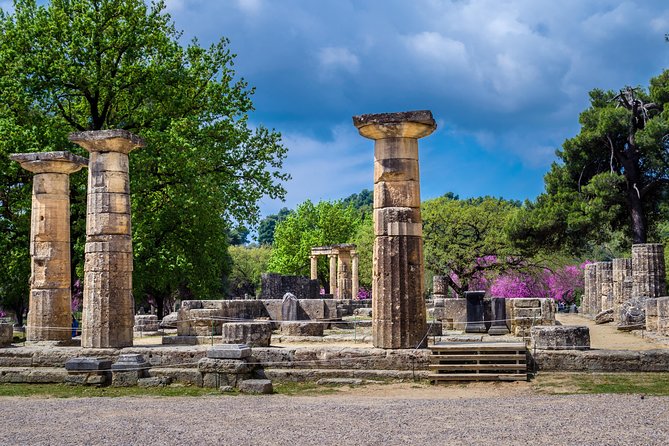
- The ruins walk: Zeus, Hera, the stadium, and the training grounds
- Temple of Zeus and the classical Doric ideal
- Stadium vibes: where Olympic competition ran
- Temple of Hera: oldest, iconic, and tied to the Olympic flame
- The Pelopion area: myth-meets-history at the site
- Nymphaeum and the water system: the practical side of mass gatherings
- Palaestra: training for wrestling, boxing, and pancration
- Philippeion: a memorial with human focus
- Museum time: what you’ll gain at the Archaeological Museum of Olympia
- The Museum of the Olympic Games: the rules, the dates, and the myth origin
- Comfort and timing: Wi‑Fi, lunch, and how drivers make the day feel shorter
- Price and logistics: where the value really comes from
- Should you book this private Olympia day trip?
- FAQ
- FAQ
- Do I get pickup and drop-off from Athens?
- Is this a guided tour with a licensed guide inside the sites?
- How long is the day trip?
- What are the paid entrance costs?
- Is lunch included?
- Is there Wi-Fi during the drive?
- How much time do I get at Ancient Olympia and the museums?
Key highlights to know before you go
- Corinth Canal photo stop with real ship drama: quick but scenic, with views from above and a chance to reset during the long drive
- Door-to-door privacy from Athens: hotel, apartment, airport, or port pickup with the same driver taking you back
- Wi‑Fi on board: handy for maps, messaging, and saving your phone plan for later
- Olympia ruins plus museum time: you get time to explore the stadium, Zeus and Hera areas, and key structures at your own pace
- Lunch included with a Greek traditional option: a real break during a 12-hour day
Corinth Canal first: a quick stop that breaks up the Athens drive
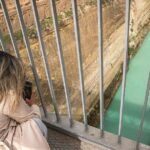
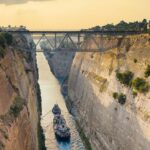
The day starts with a smart early momentum: you stop at the Corinth Canal for about 20 minutes, then keep rolling toward Olympia. Even in a short window, it’s worth it. This narrow canal slices through the Isthmus of Corinth, linking the Gulf of Corinth with the Saronic Gulf—basically, the kind of place where geography looks like it was edited by a careful hand.
From higher ground, you get an easier view of the steep limestone sides while you watch vessels squeeze through below. The canal itself is only about 6.4 km long and quite narrow at the base, which means most modern ships can’t pass it. So when you do see a boat in motion, it feels like a rare moment of real-world action in a very human-scale space.
Tip for your timing: use this stop as a stretch-and-snap stop. Don’t spend 20 minutes trying to read every sign. Your real payoff is still ahead.
You can also read our reviews of more private tours in Athens
Olympia’s sacred setting: why the site mattered long before the museums
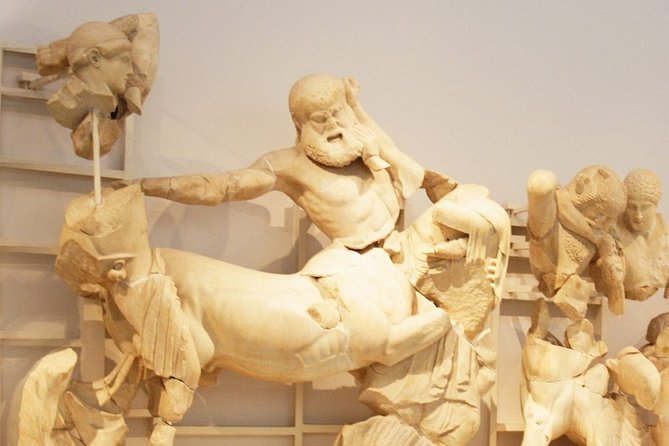
When you reach Olympia, you’re stepping into a sacred zone that pulled people from across the ancient Greek world. Olympia wasn’t just for sports. Starting around the 8th century BC, it became tied to the Sacred Olympic Truce, a promise meant to protect participants and allow travel for the games.
It’s also the kind of place where you can feel the shift from religion to public life. By the 5th century BC, Olympia wasn’t only worship; it had thinkers and influential people coming to exchange ideas. That’s why, even today, the ruins don’t read like a single monument. They read like a whole system built for gatherings—ritual, competition, and conversation.
On the day, you’ll have time near the start to orient and then settle into the bigger walking portion at the archaeological site. If you like to go slow and take photos, plan to start strong and then pace yourself—Olympia is larger than it looks when you’re just seeing it in brochures.
The ruins walk: Zeus, Hera, the stadium, and the training grounds
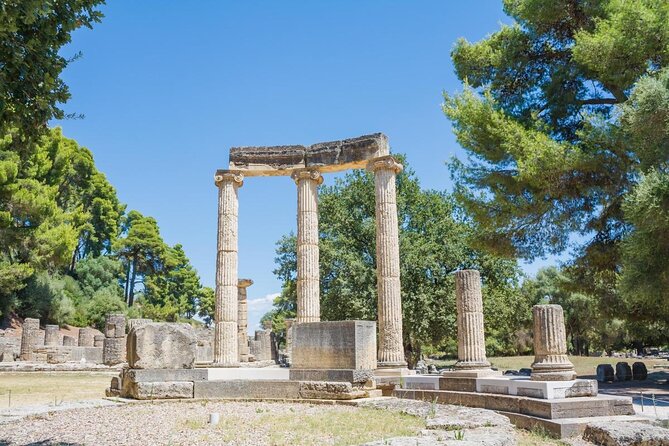
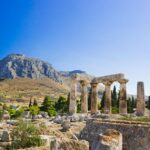
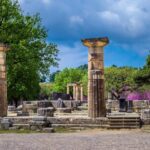
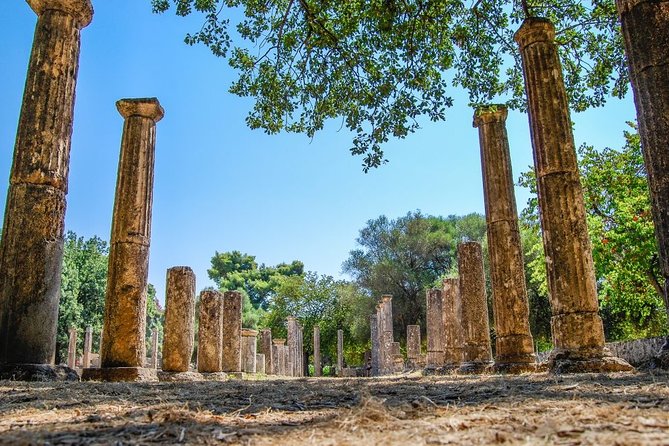
This part is the heart of the trip, and you’ll spend a solid block of time exploring the archaeological site of Olympia. The area once held over 70 important buildings, though many are now ruins. What’s great is that the site doesn’t force you to stick to one “must-see.” You can build your own mini-route.
Here are the highlights that typically anchor the walk:
Temple of Zeus and the classical Doric ideal
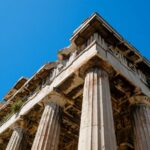
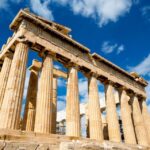
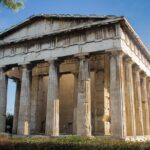
The Temple of Zeus is short on standing walls but long on meaning. It was built in the early classical period and designed as the model Doric Greek temple—so you can read it as a lesson in architecture, not just a relic.
If you’re an architecture fan, this is one of the places where the reduced remains still communicate structure and scale. If you’re not, just remember: the sheer ambition is the point.
Stadium vibes: where Olympic competition ran
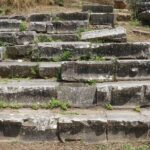
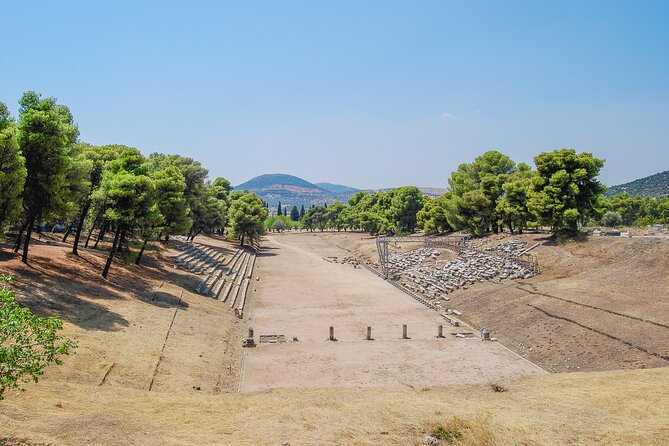
A little further along is the Stadium at Olympia, located east of the sanctuary of Zeus. It hosted sporting events during the ancient Olympic Games, so even from a distance, it helps you picture what the crowd energy would have felt like.
In practical terms, the stadium stop is quick—about 10 minutes on the schedule—but it acts like a reset. It’s a place where you can mentally switch from worshipy sacred space to competition space.
A few more Athens tours and experiences worth a look
Temple of Hera: oldest, iconic, and tied to the Olympic flame
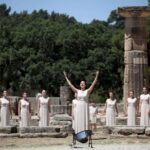
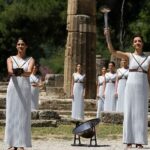
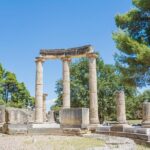
The Temple of Hera (the Heraion) is often the emotional anchor for many visitors. It’s Archaic, dedicated to Hera, and built around 590 BC—making it the oldest temple at Olympia. You’ll also learn that this was originally a joint temple space for Hera and Zeus, until the Zeus temple was set separately.
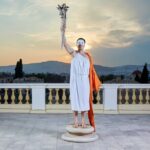
This is also the spot connected to the Olympic flame story. The Olympic torch is lit there in the ruins’ tradition, and the flame is carried to different parts of the world. Even if you’ve heard the idea before, seeing the original shrine setting gives the modern ritual a stronger sense of place.
The Pelopion area: myth-meets-history at the site
Near the main archaeological area is the Pelopion, tied to Pelops, the quasi-mythical ancestor linked with the Atreids—so the Pelopion is where family myth turns into a real physical anchor. The Pelops story matters because the Peloponnesus itself takes its name from Pelops, meaning this site stretches from myth into geography.
The useful takeaway for your visit: don’t expect everything to be labeled in a museum-perfect way. Olympia is best when you accept that you’ll piece it together—then suddenly a scene clicks.
Nymphaeum and the water system: the practical side of mass gatherings
A less famous but fascinating stop is the Nymphaeum, a mid-2nd century water distribution structure that helped supply water for the crowds attending the games in July and August. It’s the kind of site that reminds you the Olympics weren’t only glory and speeches—they were logistics.
From the aqueduct, water moved into a cistern and then out through channels around the site. There’s also a strong “crowd realism” angle: troughs, stages of distribution, and drinking vessels suggested by the statues of people holding small bowls.
If you like human-scale details, this is one of your best surprises.
Palaestra: training for wrestling, boxing, and pancration
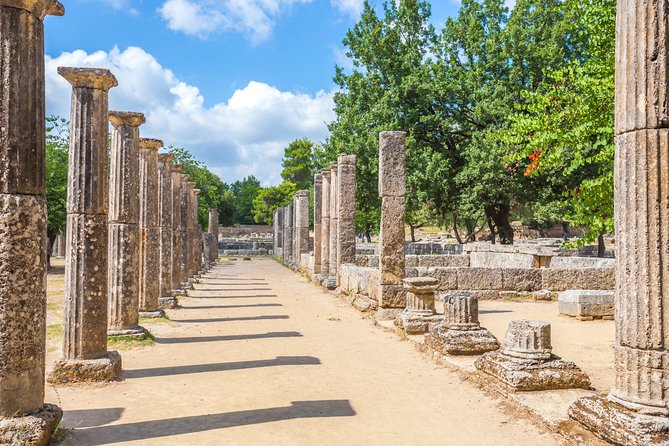
Another spot you’ll pass is the palaestra, a training area for wrestling and martial skills. It taught fighting methods like pygme and pancration. Pancration in particular was free-style hand-to-hand fighting, including grappling and striking—sometimes with brutal consequences.
What’s important for your imagination is that these competitions didn’t happen without structure. There were rules, umpires, and judges, and violations could lead to stopping contests or penalties.
So the palaestra adds depth to the Olympics story: it was athletic training in a real discipline system, not just a crowd watching spectacle.
Philippeion: a memorial with human focus
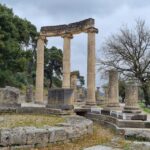
The Philippeion is a circular memorial (a tholos) that celebrates Philip’s family, including Philip himself and Alexander the Great. Architecturally, it’s Ionic in an outer colonnade with a more layered interior column arrangement. It’s also noted as the only structure inside the Altis dedicated to a human—one of those details that makes you feel the site’s layers of priorities.
Even if you can’t “see the statue” the way ancient visitors would have, the structure helps you understand how memorial culture fit into the Olympic landscape.
Museum time: what you’ll gain at the Archaeological Museum of Olympia
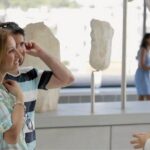
After the outdoor walking, you’ll shift indoors to the Archaeological Museum of Olympia for roughly 1.5 hours. This museum is one of Greece’s principal collections, and it matters because it turns the ruins into context. Instead of guessing what you’re looking at, you get objects tied to the same region and traditions.
The strongest “why this museum works” angle is that it’s not only sculptures. It includes everyday and ceremonial items connected to the site’s long timeline—prehistory through Roman rule.
Key pieces you can look out for:
- Hermes and the Infant Dionysus, attributed to Praxiteles
- The Nike of Paionios
- Objects connected to the Temple of Zeus
- A bronze collection that’s considered one of the most important in the world
- An oenochoe attributed to work by Phidias
If you like seeing small objects that carry big meaning, take time here. It’s the part that makes the day feel more than a walking tour.
The Museum of the Olympic Games: the rules, the dates, and the myth origin
Next comes the Museum of the Olympic Games, typically about 45 minutes. This is where your trip shifts from objects to story: what the games were, how often they happened, and why they mattered beyond sports.
The games were athletic competitions among city-state representatives, held in honor of Zeus. The Greeks gave the games a mythological beginning, with the first games traditionally dated to 776 BC. They ran every four years (an Olympiad became a time unit in historical chronologies), and they continued even after Greece came under Roman rule.
There’s also a strong “ending era” narrative. The last recorded celebration was in AD 393 under Emperor Theodosius I. Archaeological evidence suggests some games may have continued after that date, with a possible end tied to Theodosius II and an event that burned down the temple of Olympian Zeus during his reign.
Practical tip: don’t feel like you must read every panel. Use this museum to get the timeline sorted, so the ruins outside make more sense when you walk.
One more note to protect your day: museum hours can change. If a museum option is advertised as part of your experience, I recommend you confirm opening times close to departure so you’re not left staring at a closed door.
Comfort and timing: Wi‑Fi, lunch, and how drivers make the day feel shorter
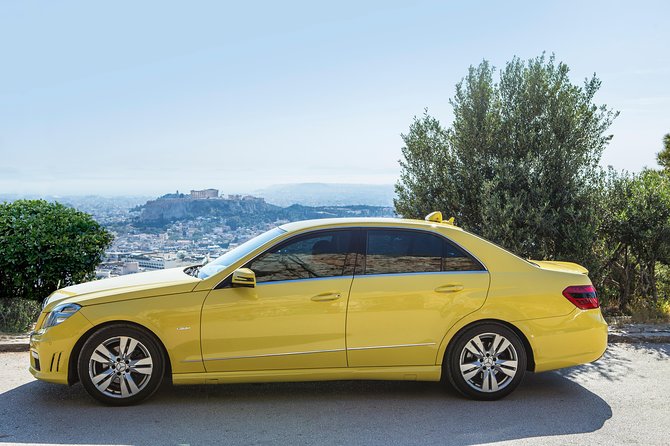
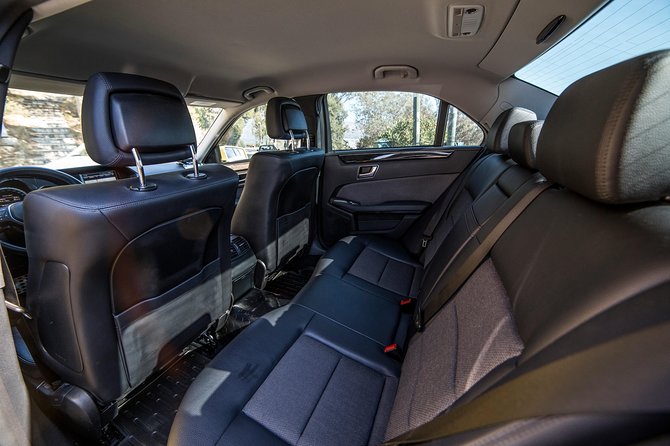
This tour is built around long-distance comfort. You’re in an air-conditioned vehicle, you get bottled water, and there’s Wi‑Fi on board, which is genuinely useful on a day like this. You’ll use your phone for maps and messaging, and you won’t feel like you’re eating your data plan alive.
Lunch is included, with a Greek traditional food option. Some people have reported that they were served lunch at a family-run taverna called Ambrosia, which gives you a real taste of what “included” can look like rather than a random stop.
Also, a few guides stood out for going the extra step on comfort. One driver even offered ponchos when rain looked possible, which is the kind of small detail that saves your photos and your sanity.
The big timing reality is that this is a long day. From Athens, the drive is often about 3.5 hours each way, so the value of the private setup is in reducing decision fatigue. You’re not wrestling schedules, parking, or multiple transit hops. You just go, see, and return.
If you’re lucky enough to get a driver like Panos, people praise the way he keeps the drive from feeling heavy by sharing context and using early timing to avoid traffic. If you get Nick, Greg, George, Antony, Nikos, or Notis, the pattern you’ll notice in feedback is similar: safe, friendly driving plus explanation that helps the ruins land better.
One key consideration: these drivers are knowledgeable, but they are not licensed tour guides who enter the archaeological spaces with you. That’s fine if you’re happy using your own eyes and museum labels. If you want a strict, guiding commentary through every stop, you’ll want to arrange a licensed guide add-on.
Price and logistics: where the value really comes from
At $342.73 per person for a private day, you’re paying for time, privacy, and direct transportation. This isn’t a bargain-style day trip. But for a long-distance, door-to-door experience, it can feel reasonable—especially if your group is small and you’d otherwise spend money on taxis, separate transport, or a rental car.
Here’s how the value math usually plays out:
- You’re paying to avoid the hassle and stress of public transport and parking for a 12-hour commitment.
- You get the convenience of pickup and return from your chosen location in Athens.
- You get comfort on the ride with air-conditioning, water, and Wi‑Fi.
- Your main extra spend is entrances: Ancient Olympia and the museum tickets cost €20 per person, purchased on-site.
So you’re not paying for a full licensed guide walkthrough of every ruin. You’re paying for the day to run cleanly, with a knowledgeable driver providing helpful commentary along the way.
Who this tour fits best:
- Couples and small groups who want a relaxed day with fewer moving parts
- First-timers who want to see Olympia but don’t want to spend the day figuring out how to get there and back
- People who enjoy self-guided museums and like reading on-site
Who might want something else:
- People who want deep guided interpretation inside the sites every step of the way
- People who prefer to keep travel ultra-short and don’t want a very long Athens-to-Olympia day
Should you book this private Olympia day trip?
I’d book it if your priorities are one clean, private plan for a long day, plus comfort and dependable transportation, and you’re happy to explore the ruins and museums with independent time. Olympia is big, and museums help you connect what’s outside to what’s inside. This tour structure supports that.
I’d skip it or add a licensed guide if you know you want a guide walking with you inside the archaeological sites explaining details as you go. Since the driver doesn’t function as a licensed guide on-site, your experience will depend more on your own interest and the museum time you give yourself.
If you do book, do two practical things: wear good walking shoes (the site is substantial), and plan your museum pacing so you actually absorb the exhibits rather than rushing for the next photo. Get your questions ready for the driver during the ride too—those answers can turn the day from impressive to genuinely memorable.
FAQ
FAQ
Do I get pickup and drop-off from Athens?
Yes. Your driver meets you at your hotel, apartment entrance, airport arrival hall, or the port gate, and returns you to the same place or to where you prefer.
Is this a guided tour with a licensed guide inside the sites?
Not included. The drivers provide fluent English commentary and history, but they are not licensed tour guides and do not enter the archaeological sites with you. A licensed tour guide option can be booked for an additional cost.
How long is the day trip?
It runs about 12 hours (approx.), including driving time from Athens and time spent at Olympia and museums.
What are the paid entrance costs?
Entrance fees are not included. Ancient Olympia and the relevant museums have an entrance fee of €20 per person, available to purchase on-site.
Is lunch included?
Yes. Lunch is included, with a Greek traditional food option available.
Is there Wi-Fi during the drive?
Yes. Wi-Fi is provided on board the vehicle.
How much time do I get at Ancient Olympia and the museums?
You get roughly 1 hour 30 minutes for the archaeological site, about 1 hour 30 minutes for the Archaeological Museum of Olympia, and about 45 minutes for the Museum of the Olympic Games.