REVIEW · VANCOUVER
Ancient Trees of Vancouver Walking Tour
Book on Viator →Operated by Ancient Trees of Vancouver · Bookable on Viator
A walk in Stanley Park, but time slows down. This Ancient Trees of Vancouver tour is built around old-growth giants, guided stories, and real historic visuals that help you understand what you’re looking at.
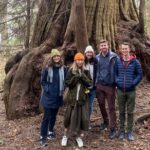
I like the tight group size (max 10), because you can actually hear the details and ask questions. I also like that the tour pairs what’s on the ground with what the forest looked like in the past, using old maps and archive images.
One possible drawback: it’s a walking tour only. If you want a lot of sitting down or scenic stops by car, you’ll need to plan for a steady 3 hours on park trails.
In This Review
- Key highlights worth your attention
- Stanley Park’s ancient giants: what you’re really seeing
- Colin Spratt and the small-group walking format
- The 3-hour route: Douglas firs, western red cedar, and the big maple
- Walking pace and what to bring
- Old maps and 120-year postcards: turning trees into a timeline
- Coast Salish connections on the trails
- A respectful way to see Indigenous history
- Old-growth ecology in plain language: nurse logs and regeneration
- What makes the tour feel worth it at $56.33
- Who should book this ancient trees walking tour
- Who might not love it
- Practical details that help you plan
- Should you book Ancient Trees of Vancouver?
- FAQ
- How long is the Ancient Trees of Vancouver walking tour?
- Where does the tour start and end?
- What is included in the tour price?
- What ancient trees will we see in Stanley Park?
- Is admission included?
- How many people are in a group?
- Is the tour offered in English, and are mobile tickets used?
Key highlights worth your attention
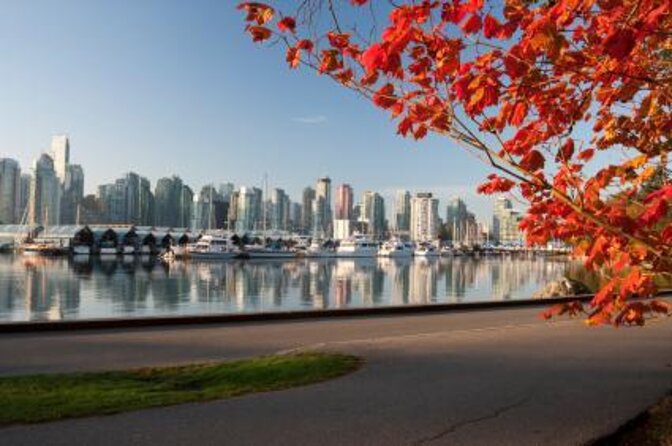
- Max 10 participants keeps the walk calm, so Colin can point out smaller details without rushing you
- Colin Spratt (BC Big Tree Committee member) brings big-tree expertise and story-telling into one route
- Ancient giants on easy trails in Stanley Park, including Douglas firs, towering cedars, and a famous maple
- Old maps, 120-year postcards, and photos turn the forest into a history lesson you can see
- Old-growth ecology in plain language, including how nurse logs help new life start
- Coast Salish connections explain why cedar mattered long before this was an urban park
Stanley Park’s ancient giants: what you’re really seeing
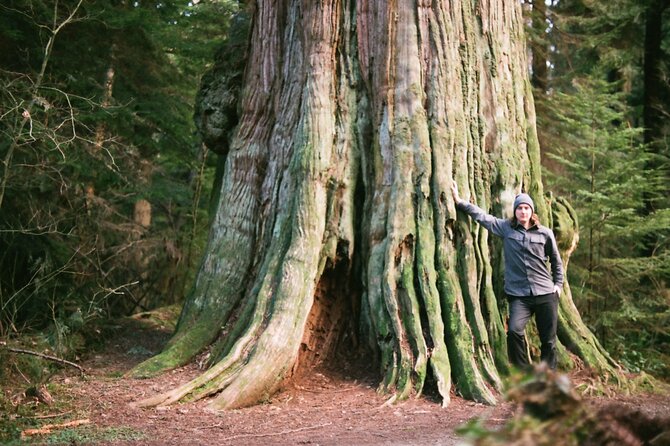
Stanley Park can feel like Vancouver’s “sure thing” attraction. This tour changes the focus fast. Instead of treating the park as a famous backdrop, you move through it as a living archive, where old-growth trees are the main characters.
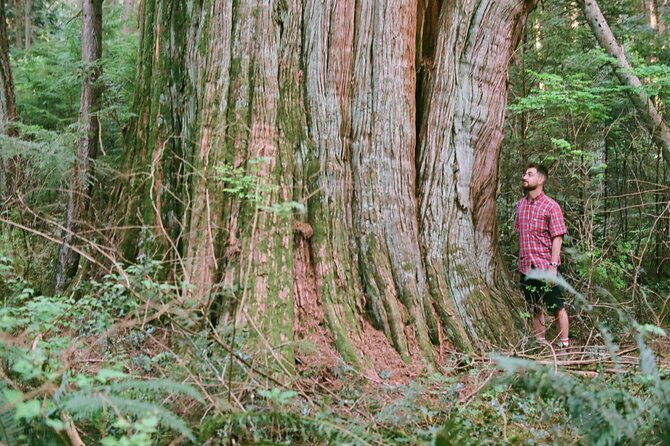
What makes this experience different is that the tour is designed around scale and age. You’re guided toward impressive specimens such as 600-year-old towering Douglas firs and 800-year-old cedar trees (with other ancient stands described along the route). You’ll also hear about a tree that’s held a special national reputation: the largest known maple tree in all of Canada. When you see those ages tied to specific trees you’re standing near, the place stops being generic.
The feeling you get is simple: you’re not just passing through nature. You’re reading it. And because the guide uses both science and local history, you’ll come away knowing what you’re looking at and why it still matters today.
You can also read our reviews of more tours and experiences in Vancouver.


Colin Spratt and the small-group walking format
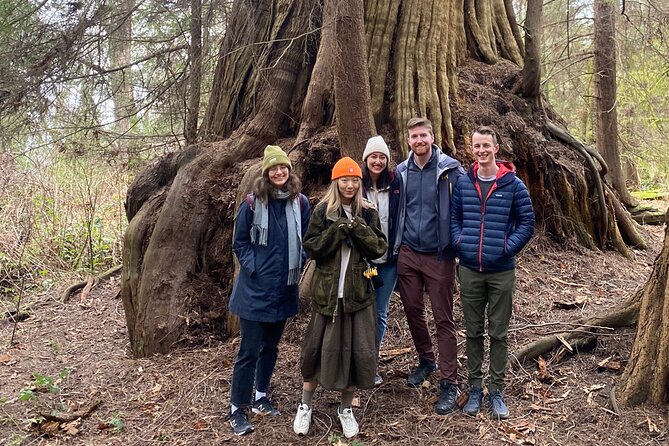
This tour runs with a maximum of 10 travelers, and that matters more than it sounds. With a small group, you don’t spend the whole walk playing the game of “try to keep up.” You get a steadier pace, more personal attention, and clearer explanations.
Your guide is Colin Spratt, a well-known big-tree seeker and a member of the BC Big Tree Committee. That background shows in the way he points out things that typical sightseeing ignores. Instead of just saying a tree is old, you hear how age estimates work, what makes a tree special, and what features help it survive long enough to become legendary.
If you enjoy asking questions, this is a strong match. People often think tree tours will be mostly lecture-style. Here, the stories stay grounded in what’s right in front of you, so your curiosity has somewhere to land.
The 3-hour route: Douglas firs, western red cedar, and the big maple
The tour is about 3 hours total, and it’s centered on one main setting: Stanley Park. Practically, that means you’re not zig-zagging around the city. You’re getting a curated route where the guide can bring you from one major “anchor” tree to the next, along walking trails.
Here’s what you can expect to learn and see as you move through the park:
- Western red cedar giants: The tour focuses on ancient cedar trees, including cedars that can be around 1,000 years old in the wider big-tree Stanley Park story you’re guided through. In reviews, people highlight how Colin explains the cedar’s role not just as a living organism, but as a resource used by Coast Salish communities.
- Massive Douglas firs: You’ll also hear about 800-year-old Douglas fir trees and other towering firs. Colin’s approach makes these trees feel less like “photo opportunities” and more like ecosystem engines.
- A celebrated maple: The route also includes the story of the largest known maple tree in all of Canada, which adds a fun curveball to a tour that might otherwise feel cedar-and-fir focused.
You’ll learn the forest’s history with help from old maps, 120-year-old postcards, and photographs. That part matters because it prevents the tour from turning into only a “look at the big trees” loop. Instead, you start connecting the physical evidence in the trees with the human changes around them.
Walking pace and what to bring
Because this is a walking tour on park trails, plan for comfort first: shoes that handle uneven ground, and a layer for foggy or breezy Stanley Park weather. Also, if you like photos, you’ll want a phone/camera ready because the guide points out details most people miss, including bark texture, growth patterns, and features tied to age.
Old maps and 120-year postcards: turning trees into a timeline
One of the most “wow, I didn’t expect that” parts of the tour is how much the guide leans on visuals from archives. You’re not just hearing that Stanley Park changed over time. You’re seeing evidence of what people noticed before you were there.
The tour uses:
- old maps
- 120-year-old postcards
- photographs from archive-style materials
Why does that help? Because old-growth forests aren’t only about the present. They’re about time depth. When you combine a tree’s age with historical images of the area, you start to understand why certain trees still remain while other features around them changed.
A bonus: the historic material gives structure to your walk. It keeps the tour from becoming a continuous stream of tree facts. You get periodic “time jumps,” which makes it easier to remember what you learned and why it connects.
Coast Salish connections on the trails
Stanley Park isn’t just a municipal park with old trees. It’s an area with deep Indigenous ties going back thousands of years before it became an urban park.
The tour includes stories about the Coast Salish inhabitants who called this region home. You’ll also hear why cedar was so important, including the idea of cedar as a tree of life. In reviews, people specifically mention learning how cedar fibers were woven into everyday life and textiles, and how cedar wood and bark were used for things like longhouses and canoes (and practical materials such as clothing or rope made from bark resources).
You’ll also hear how cedar’s properties made it valuable: how it’s resilient, how it resists some natural pressures, and how communities understood trees in a hands-on way. One review even notes that Indigenous communities tested trees with antlers before carving canoes, which is the kind of detail that makes history feel real rather than generic.
A respectful way to see Indigenous history
This isn’t the kind of tour that only mentions Indigenous peoples in passing. The guide ties Indigenous knowledge to the tree you’re standing near and to the everyday uses that came from that knowledge. That’s exactly how you get a more accurate feel for the place.
Old-growth ecology in plain language: nurse logs and regeneration
The tour doesn’t treat ancient trees like museum pieces. It frames them as living parts of a system. And it explains the logic of old-growth forests in a way that clicks quickly, even if you’re not a science person.
One concept you’ll hear about is nurse logs. These are fallen or decaying tree trunks that provide a seedbed and moisture for new life. In other words, an old tree’s story isn’t over when it falls. The cycle continues, and the forest keeps moving.
You’ll also learn that old-growth forests store life in layers: in bark and hollows, in the ground, and in what’s growing around the giants. Reviews describe the tour highlighting how older trees can be hollow and how that can create shelter for animals. You’ll also hear about how old cedars can show crown-like features described as tree spikes on the oldest trees, which adds a memorable visual to the story.
And yes, there’s a helpful reality check that comes up in the guide’s storytelling: much of what seems dead or decaying in forests is still part of protection and growth. In reviews, people mention the idea that most of a tree is effectively dead material, yet that “dead” matter supports new life. Once you understand that, you’ll start spotting life where you might have assumed only decay lived.
What makes the tour feel worth it at $56.33
Let’s talk money without the hand-waving. The price is $56.33 per person, and you’re getting a 3-hour guided walk in Stanley Park with:
- a small group (max 10)
- a specialized guide (Colin Spratt, big-tree and BC Big Tree Committee member)
- access to archival visuals like maps and old postcards
- a route designed around specific ancient trees (not random wandering)
There’s also a practical note: the tour describes admission ticket free for the experience element listed, and the overall tour includes the guiding and walking format rather than separate paid add-ons.
So the value isn’t just “you paid for nature.” You’re paying for interpretation: the ability to identify, contextualize, and connect what you see to history and ecology. That’s where many tree tours fall short. Here, the guide’s focus keeps you from leaving with only a few photos and a vague sense that trees are big.
If you like city attractions but want something that feels human-scale and thoughtful, this price tends to make sense.
Who should book this ancient trees walking tour
This tour fits well if you:
- love parks but want a deeper read on what you’re seeing
- enjoy history that connects to physical places
- want a calm alternative to busier Vancouver sights
- travel with kids who can handle a guided walk (reviews include families with kids around ages 7 to 11, and note the guide being patient with questions)
It’s also great for solo travelers who want a structured way to enjoy Stanley Park beyond the “walk and hope” approach. When the guide is strong, solo time often turns into real conversation.
Who might not love it
If you’re the type who needs lots of stops for restrooms, long pauses, or a tour that’s mostly sitting in a scenic spot, you may find a walking format a bit demanding. This is best when you’re ready to keep moving and looking closely.
Practical details that help you plan
The tour starts at Ferguson Point, 7501 Stanley Park Dr, Vancouver, BC V6G 3E2 and ends back at the meeting point.
A few other points to keep in mind:
- You’ll receive confirmation at booking time.
- Service animals are allowed.
- The tour is offered in English.
- It uses a mobile ticket.
- No pick-up or drop-off at your hotel is listed, so you’ll want to get yourself to Ferguson Point.
On the day, give yourself a few minutes to find the group. Stanley Park is easy to get to, but timing helps when you’re trying to start the tour with a calm head.
Should you book Ancient Trees of Vancouver?
If you’re coming to Vancouver for one “thinking person” experience that still feels like a nature escape, I’d book this. The combination of ancient trees, small-group attention, and Colin Spratt’s tree-focused storytelling makes this one of those tours that changes how you look at a place after you leave.
Choose it when:
- you want something different from standard sightseeing
- you care about ecology and history woven together
- you’ll enjoy walking trails long enough to notice the small details
Skip it only if you know you want a mostly relaxed, seated, low-effort outing. Otherwise, this is the kind of tour that rewards your attention, and it gives you a real reason to remember Stanley Park long after the photos are packed away.
FAQ
How long is the Ancient Trees of Vancouver walking tour?
It runs for about 3 hours.
Where does the tour start and end?
It starts at Ferguson Point, 7501 Stanley Park Dr, Vancouver, BC V6G 3E2, Canada, and ends back at the meeting point.
What is included in the tour price?
The tour includes the walking tour with an expert guide, plus old maps and archive visuals (including 120-year-old postcards and photographs) as part of the experience.
What ancient trees will we see in Stanley Park?
The tour description highlights ancient western red cedar trees, towering Douglas fir trees, and the largest known maple tree in Canada.
Is admission included?
The tour summary indicates an admission ticket is free for the experience.
How many people are in a group?
There is a maximum of 10 travelers.
Is the tour offered in English, and are mobile tickets used?
Yes, it’s offered in English, and it uses a mobile ticket.