REVIEW · VIENNA
Vienna: Time Travel and Magic Vienna History Tour
Book on GetYourGuide →Operated by Time Travel in Vienna · Bookable on GetYourGuide
Vienna history turns into a time-jumping show. In one hour, interactive multimedia and 4D/5D cinema carry you from ancient Vindobona to present-day Vienna. It’s a fast hit of place-based storytelling in the historic center, with special effects that keep the pace going.
I like how the experience puts real people into the story, from the royal court to Chancellor Figl, and then lets you hear them through a portrait gallery setup. The VR glasses segment on Viennese music history is also a smart way to make arts history feel less like homework.
One key consideration: there’s no elevator, and you’ll face two levels with about 50 steps. That makes it a tough fit for anyone with mobility limits (and not allowed for wheelchair users).
In This Review
- Key Highlights at a Glance
- Finding Vienna Time Travel Near the Hofburg (and Why It Matters)
- What 1 Hour of History Feels Like Here
- The Start: St. Michael’s Cellars to Roman Vindobona
- Portrait Gallery Moments: Learning the Names Behind the Sights
- Imperial Vienna and the Royal Court: Seeing Power Close Up
- 5D Cinema: When Vienna Becomes Physical
- VR Glasses and Viennese Music History
- World War II Stop: Enemy Aircraft and the Bomb Shelter Feel
- Chancellor Figl’s Speech: The Emotional Reset
- The Rooftop Flyover and the Virtual Horse-Drawn Finale
- Is It Worth $27? The Value Math
- Best Times to Go and How to Plan Your Day
- Who Should Book This (and Who Might Skip It)
- Quick Logistics to Know Before You Arrive
- Should You Book Time Travel Vienna?
- FAQ
- How long is the Vienna Time Travel and Magic Vienna History Tour?
- What does it cost?
- Where is the meeting point?
- Which metro lines can I use to get there?
- What’s included with the ticket?
- Can I cancel for a full refund?
- Is it wheelchair accessible or suitable for mobility impairments?
- Are pets or video recording allowed?
- Is there a last admission time?
Key Highlights at a Glance
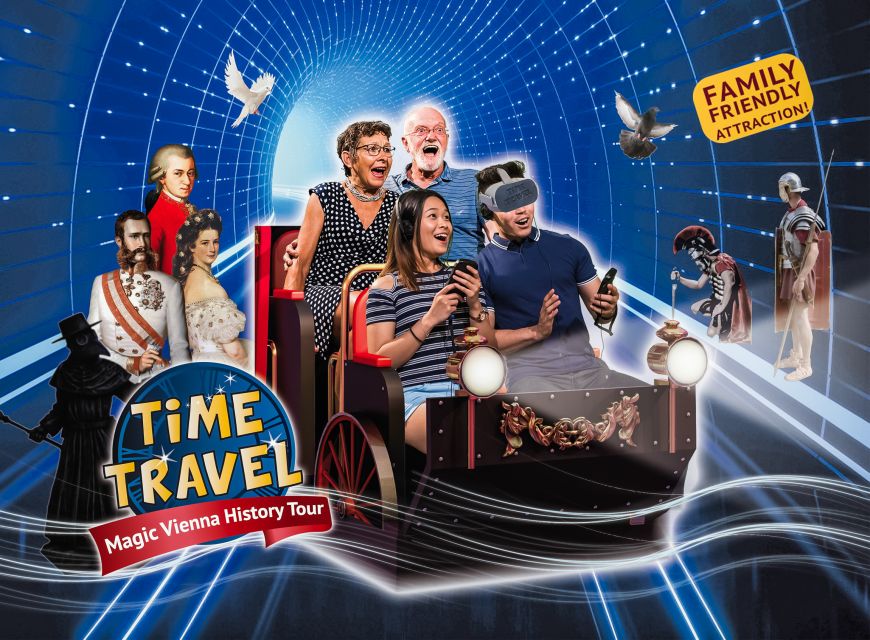
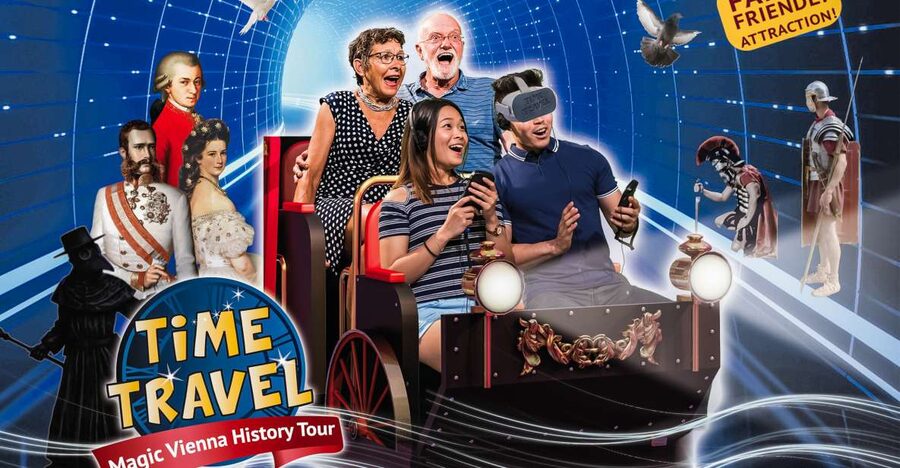
- Time travel across 2000 years of Vienna, from the Roman camp of Vindobona to today
- 4D/5D cinema effects that put you in the action more than a standard film would
- VR glasses for Viennese music history, using a simulated world format
- World War II scenes featuring Enemy Aircraft and a bomb shelter moment
- Chancellor Figl’s speech stop in the battered remnants of Vienna, with an emotional tone
- A rooftop flyover and virtual horse-drawn carriage finale to end on a big visual note
Finding Vienna Time Travel Near the Hofburg (and Why It Matters)
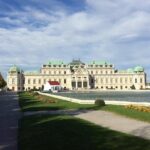
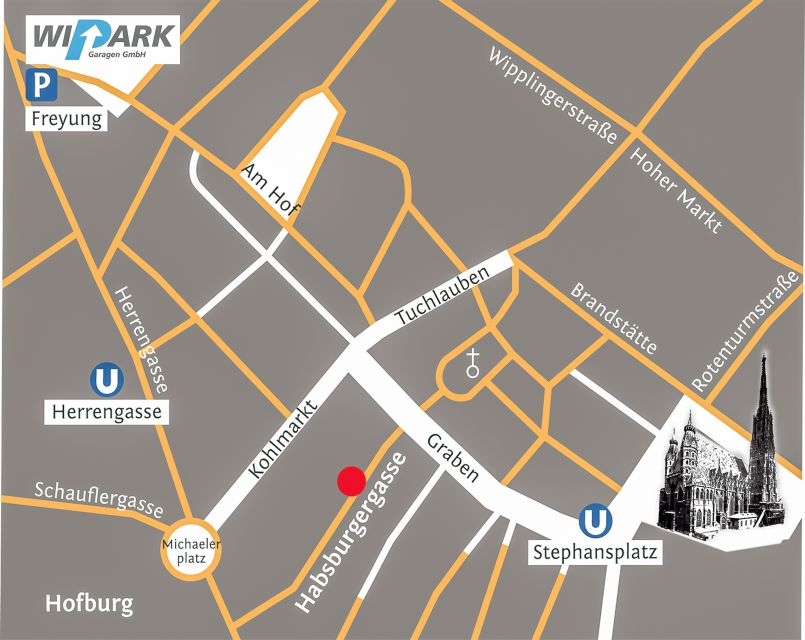
Vienna Time Travel is right where you want to be if you’re doing the classic sights: Altstadt, near the Hofburg and close to Graben, Kohlmarkt, and Stephansplatz. The meeting point is Habsburgergasse 10A, 1010 Vienna, and it’s an easy walk once you’ve started exploring the inner city.
If you’re using public transit, the U1 (Stephansplatz) or U3 (Herrengasse) lines are your simplest options. And if you’re driving, there’s reduced-price parking at the Freyung garage. This location matters because the experience is only one hour. You don’t want a long trip just to fit it in between other stops.
One more practical note: the attraction has a last admission at 19:00, so don’t treat it as a late-night maybe. If you want a stress-free day, build this earlier—especially if it’s one of your first activities in Vienna.
You can also read our reviews of more historical tours in Vienna

What 1 Hour of History Feels Like Here
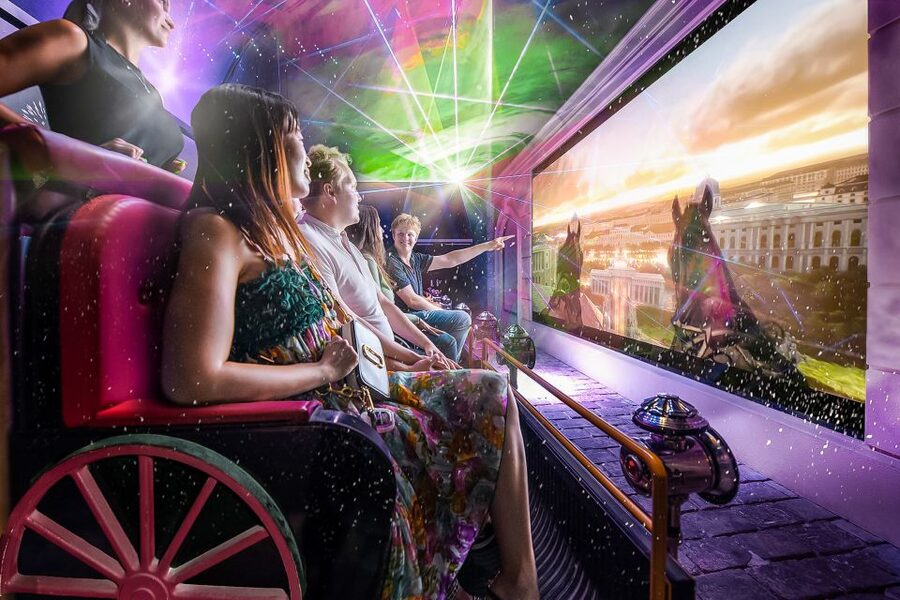
This is not a “stand and listen” museum. It’s a sequence of rooms and show elements built for movement and quick transitions. In total, you’re taking in a timeline that spans around 2000 years, starting with the Roman camp of Vindobona and moving forward through major chapters of Viennese life.
The pacing is the point. Instead of trying to remember dates, you’re meant to connect themes: power and court life, big cultural shifts like music, and the brutal disruptions of modern history. The structure also helps families. Even if someone is picky, there’s usually a new effect or scene coming soon—like the 5D cinema segment and the VR moment.
You’ll also get a multilingual audio guide as part of your ticket. That’s helpful in a mixed-language environment because you’re not forced to rely on whoever is closest to the presenter. You can follow along while you watch the visuals change around you.
The Start: St. Michael’s Cellars to Roman Vindobona
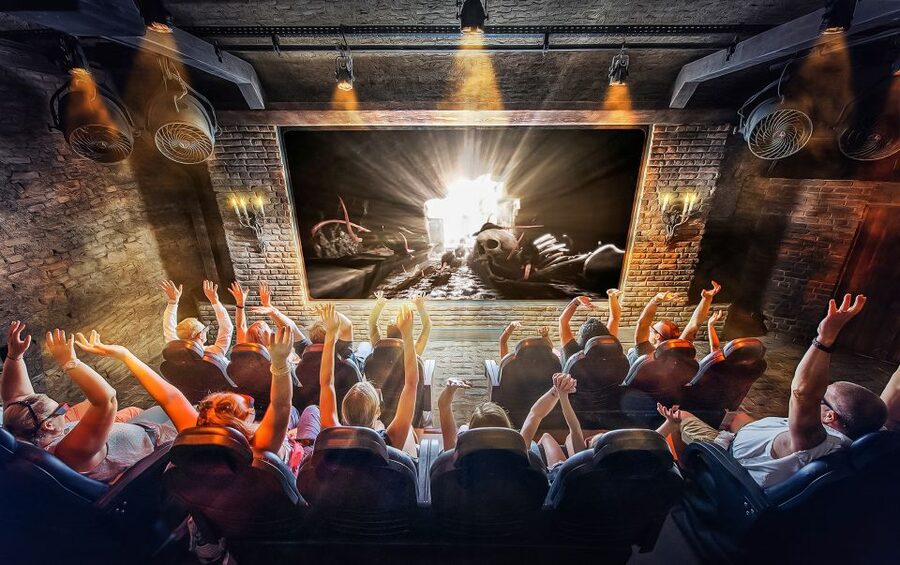
Your time travel begins underground, in the cellars of St. Michael’s monastery. That setting does more than look cool. Being below street level makes the story feel older and more grounded, like you’ve stepped into a physical layer of the city.
From there, the experience sends you back to the days of the Roman camp of Vindobona. For people who only know Vienna through palaces and opera posters, that Roman start is a useful correction. It reminds you that this place grew over centuries, and the present city sits on earlier foundations.
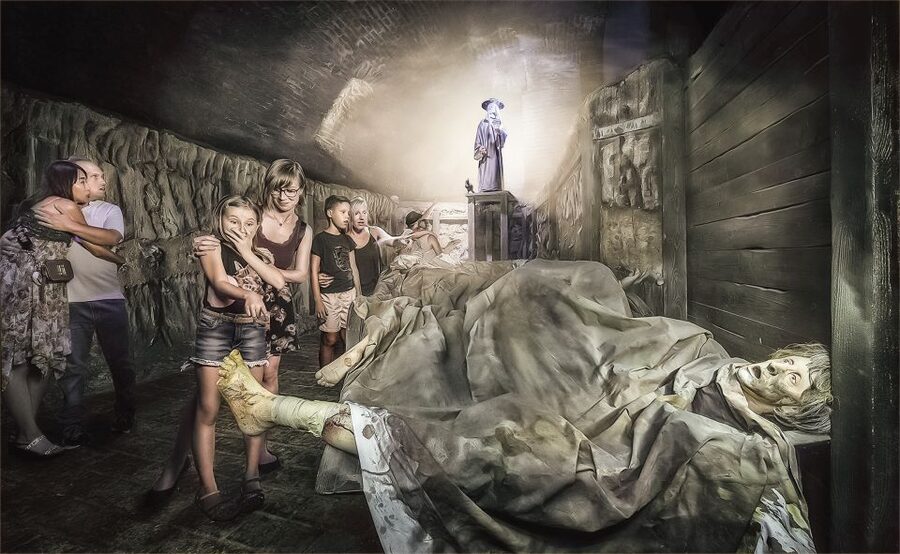
One detail that sticks with many people: the early parts are dramatic. You might even encounter a scene tied to the plague in Vienna, which adds a darker, human side to the timeline. It’s not just costumes and uniforms—it’s about what life felt like during fear and uncertainty.
Portrait Gallery Moments: Learning the Names Behind the Sights
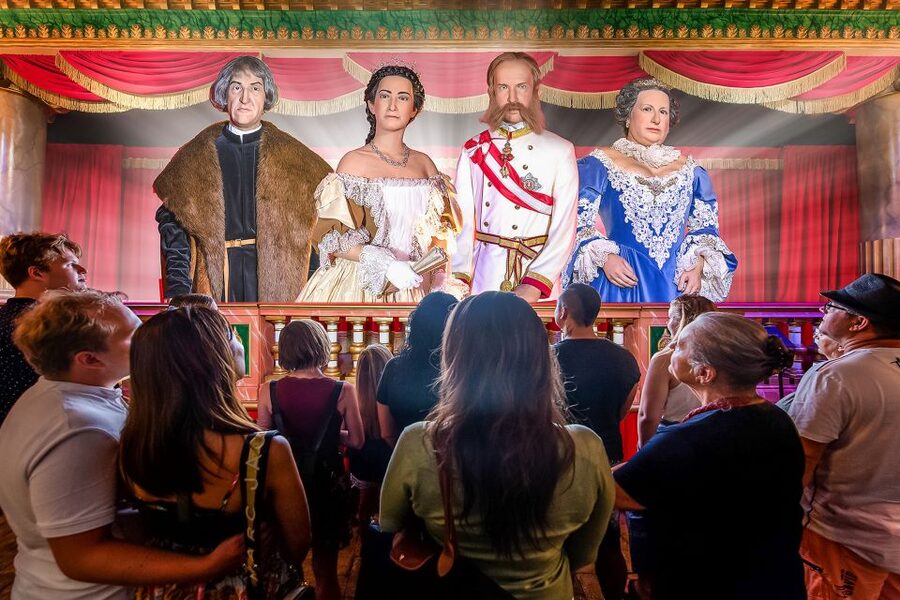
After the early timeline, the experience shifts into character and storytelling. You’ll meet important figures of Viennese history in a portrait gallery style setup, where you hear what they have to say.
This is where the attraction helps your sightseeing later. When you walk past something impressive in Vienna, you start recognizing it as a stage for real people and decisions—not just architecture. The royal family comes into focus here, along with the broader court and noble culture.
Chancellor Figl appears later in the experience, but the portrait gallery groundwork matters. It trains you to listen for key themes: who held authority, how the court worked, and how public life changed when the world changed.
Imperial Vienna and the Royal Court: Seeing Power Close Up
The show doesn’t treat imperial Vienna as a distant postcard. You’re guided through the world of nobility and the Viennese court, including the imperial family. You’re not expected to already know the names or the details. The format gives you enough context to understand why those figures mattered.
If you like “people-first” history, this part lands. Palace Vienna can feel untouchable when you only read plaques. Here, you’re getting a more direct sense of personalities and priorities—without spending your entire day on a research project.
The downside of this style is also clear: it’s a highlight reel. If your goal is deep political analysis, you may want to pair it with a more academic stop afterward. But for learning the basics quickly, it’s a strong approach.

5D Cinema: When Vienna Becomes Physical
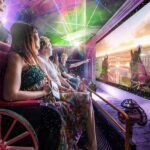
The attraction includes a 5D cinema moment. This is one of the elements that people tend to praise most because it turns “watching” into “feeling.” The effects are built so you feel like you’re living inside the scene rather than observing it from a seat.
It’s also a smart strategy for families. Kids who lose patience with long explanations often stay engaged during this section because it’s sensory and action-driven. Adults benefit too, because it’s easier to remember a storyline when your body reacts to it.
If you’re sensitive to strong effects (fast motion, loud sounds, or strong special-effects stimulation), consider taking it slow when you enter the cinema area and choose where you sit wisely. The show is designed for impact, and that’s part of what makes it effective.
VR Glasses and Viennese Music History
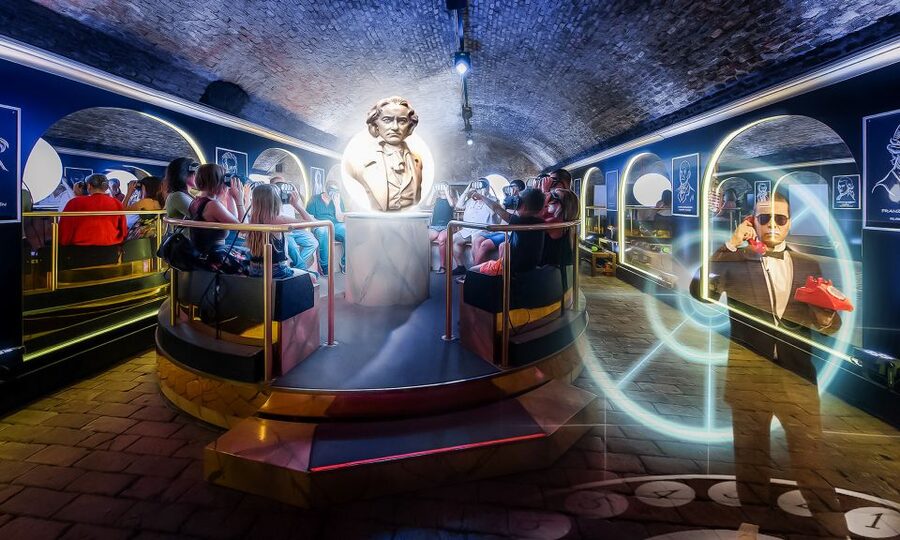
Then comes the VR glasses experience, focused on the course of Viennese music history. Instead of treating music as a timeline you memorize, the attraction uses a simulated world approach so you can experience the story more visually.
This is a highlight if you already like classical music, or if you want a quick way to understand why Vienna became such a major cultural hub. You don’t need specialized background to follow what’s happening. The attraction’s goal is connection, not technical instruction.
For travelers who normally skip anything “techy,” I’d still give this a try. The VR segment isn’t the whole show, and it supports the larger theme: Vienna wasn’t just politics and palaces. It was also art, sound, and identity.
World War II Stop: Enemy Aircraft and the Bomb Shelter Feel
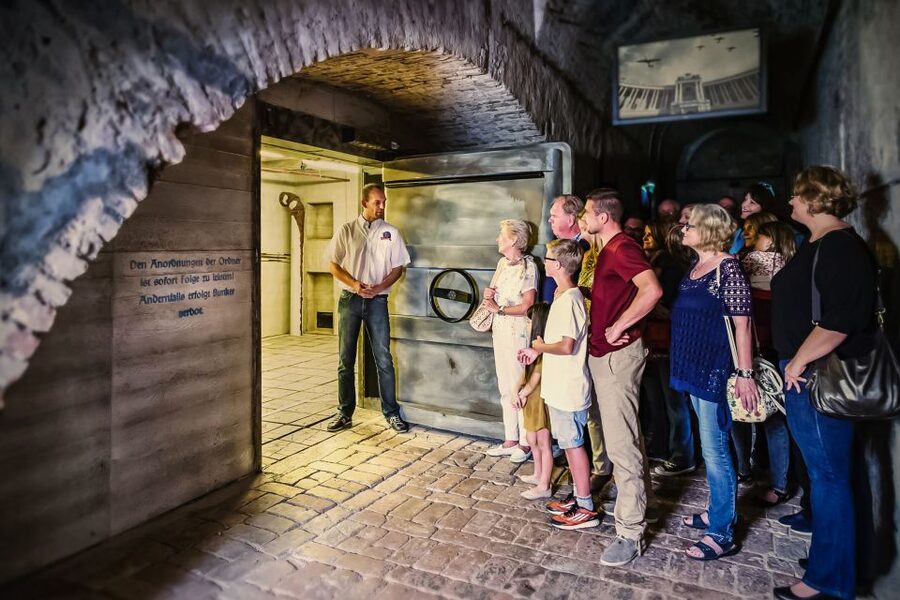
One of the most memorable parts is the section labeled Enemy Aircraft!. The atmosphere shifts into something tense: you feel as though World War II is raging and you’re inside a bomb shelter.
That scene matters because it’s not just “Vienna was affected.” It’s aimed at emotional understanding. It helps explain why later parts of the story sound relieved, not celebratory.
This is also where the attraction reminds you that history is personal. People in Vienna didn’t experience the timeline as a chapter label. They experienced it as fear, noise, and waiting. The show leans into that tone.
Chancellor Figl’s Speech: The Emotional Reset
After the wartime pressure, you get a powerful contrast: In Austria is free! and a moving speech by Chancellor Figl within the battered remnants of Vienna.
This part is valuable because it changes the mood from chaotic survival to civic relief. Even if you’re not Austrian, you can feel the meaning of the moment: the city and its people are trying to breathe again after destruction.
This is the section that can surprise people who thought the attraction was only about spectacle. The tech still matters, but the intent shifts toward reflection.
The Rooftop Flyover and the Virtual Horse-Drawn Finale
To end, you don’t get a quiet exit back into the gift-shop world. You get the finale: simulated flying over the roofs of Vienna, then a virtual horse-drawn carriage flight over present-day Vienna.
This ending works for first-time visitors because it ties the past back to the city you’re actually standing in. It’s a “connect-the-dots” moment: you see how the look of Vienna changes while the city’s identity carries forward.
It’s also a good way to close for families. The ending is visual and upbeat compared to the WWII stop, and it gives everyone a clean final memory to leave with.
Is It Worth $27? The Value Math
At $27 per person for a one-hour experience, you’re paying for a concentrated mix: multimedia time travel, 4D/5D cinema, VR, multiple themed rooms, and a multilingual audio guide included.
So the question isn’t just whether you like history. It’s whether you like learning history through high-production entertainment. If you do, the value is strong because you get several major set-pieces in one ticket. You’re not paying separate prices for different tech activities.
If you mainly want classic, quiet sights—palaces, cathedrals, and museums—this may feel like a detour. And if you’re looking for academic depth, it’s still a short show. Think of it as a fast “orientation layer” for your trip.
A smart strategy: do this early, then build your longer sightseeing around what you learned. One of the best uses of this kind of attraction is helping you connect names you’ll see later to stories you already understand.
Best Times to Go and How to Plan Your Day
Because the experience is only one hour and you’re moving between rooms, the biggest planning need is timing. Aim to go when you’re not exhausted or rushed.
Also, put it earlier in your itinerary if you’re using it as background for the rest of your Vienna days. Learning how Vienna changed over centuries helps you read the city better when you’re walking around later.
If you like pairing attractions, there’s a natural follow-up: Sisi’s Amazing Journey is across from Time Travel. That makes it easy to stack two short, tech-forward experiences without losing time to transportation or long walks.
Who Should Book This (and Who Might Skip It)
This is a great match if you want:
- A family-friendly Vienna activity that works across ages
- A rainy-day option (it’s indoors and set in controlled environments)
- A quick way to learn who mattered, not just what buildings look like
- Tech effects without needing to spend all day in one museum
You might skip it if:
- You need wheelchair access or barrier-free movement. There’s no elevator, and there are about 50 steps across two levels.
- You dislike loud effects or strong cinematic stimulation.
- You want deep, document-based history rather than a guided show format.
Quick Logistics to Know Before You Arrive
You can’t take pets, and video recording isn’t allowed. That’s one of those policies that keeps the show experience consistent, especially with all the tech components.
You’ll want to arrive with enough time to find the entrance at Habsburgergasse 10A. The area is busy and central, so it’s easy to lose a few minutes just walking from the nearest landmarks.
Also watch for any discount requirements that may need identification, since discounts are valid only with appropriate proof. And remember: last admission is 19:00.
Should You Book Time Travel Vienna?
Book it if you want a short, high-energy way to understand Vienna. The combination of time travel across centuries, 5D cinema, VR music history, and the WWII-plus-chancellor storyline is a strong mix of entertainment and context. It’s especially useful for first-timers who want their bearings fast and for families who need a stop that keeps everyone engaged.
Skip it if mobility access is an issue or if you’re looking for quiet museum-style depth. With about 50 steps and no elevator, this is not a friendly layout for wheelchair users or most mobility impairments.
If you fall in the first category, this one-hour ticket is often the best “get perspective” move you can make in central Vienna.
FAQ
How long is the Vienna Time Travel and Magic Vienna History Tour?
The experience lasts 1 hour.
What does it cost?
The price is $27 per person.
Where is the meeting point?
The meeting point is Habsburgergasse 10A, 1010 Vienna.
Which metro lines can I use to get there?
You can reach Vienna Time Travel via the underground U1 (Stephansplatz) or U3 (Herrengasse).
What’s included with the ticket?
Your ticket includes entry to the attraction and a multilingual audio guide.
Can I cancel for a full refund?
Yes. You can cancel up to 24 hours in advance for a full refund.
Is it wheelchair accessible or suitable for mobility impairments?
No. There is no elevator, and the exhibition has two levels with about 50 steps. Wheelchair users are unfortunately not allowed.
Are pets or video recording allowed?
No. Pets are not allowed, and video recording is not allowed.
Is there a last admission time?
Yes. The last admission is at 19:00, so be on time.