REVIEW · BANGALORE
World Heritage Hampi & Chitradurga in 2 days from Bangalore+Lunch
Book on Viator →Operated by Bangalore and Beyond · Bookable on Viator
Hampi packs centuries into two days. You’ll see why UNESCO put this place on the World Heritage list, with major Vijayanagara-era temples and carved structures laid out across a huge area of ruins and boulders. I especially like how Virupaksha Temple still works as a living worship site while the Hemakuta hill and Tungabhadra river frame the views.
The pace is also a big win. You don’t just tick off Hampi names; the route builds toward the classic highlights, then adds Chitradurga Fort so you get two legendary sites without doing it in separate trips. One real consideration: expect plenty of walking on rocky terrain under hot sun, so plan for sun protection and comfortable shoes.
In This Review
- Key highlights worth planning around
- Price and value: what $215.32 buys you (and what it doesn’t)
- The 2-day game plan from Bengaluru: start early, walk smart
- What to wear: heat, temples, and not getting cranky
- Day 1 in Hampi: temples that still feel like rituals
- Virupaksha Temple: the biggest living temple in Hampi
- Badavi Linga: a top Shiva linga stop
- Hazara Rama Temple: read with your eyes
- Sasivekalu Ganesha: monolithic and enormous
- Malyavanta Raghunathaswamy Temple (Fatik Shilla): sunset from the top
- Day 2 in Hampi: the famous architecture hits, then Chitradurga Fort
- Vijaya Vittala Temple: Stone Chariot energy
- Lotus Mahal and the Zenana enclosure: power in pastel form
- Dasara Dibba: where a procession story starts
- Queen’s Bath: royal ladies and an ornate design
- Chitradurga Fort: Elusuttina Kote and the feel of fortification
- Who this tour is best for (and who should look elsewhere)
- A note on the guide experience: questions matter here
- FAQ
- FAQ
- What time does the tour start?
- Where does the pickup happen?
- How long is the tour?
- What’s included in the price?
- Is there a mobile ticket?
- How big is the group?
- Is this tour physically demanding?
- Can I cancel for free?
- Should you book this 2-day Hampi and Chitradurga tour?
Key highlights worth planning around
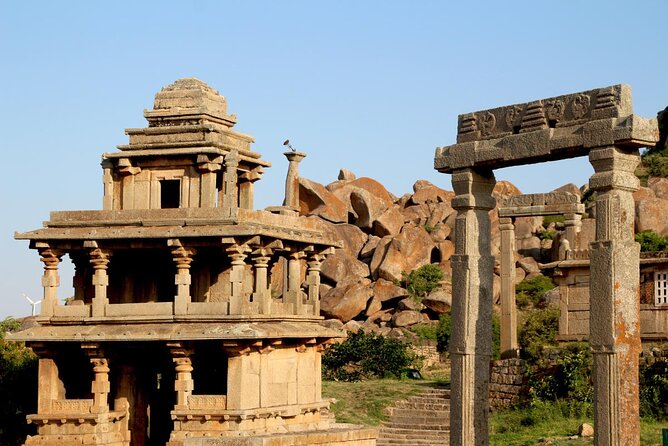
- Virupaksha Temple plus Hemakuta and the Tungabhadra river setting makes the start feel cinematic
- Hazara Rama Temple carvings give you something to pause and read, not just photograph
- Sasivekalu Ganesha delivers a big monolithic statue moment right at Hemakuta’s foothills
- Vittala Temple and the Stone Chariot are the iconic Vijayanagara architecture stops
- Chitradurga Fort (Elusuttina Kote) adds a different kind of scale: fortifications, legends, and viewpoints
- Small group up to 10 with a government-licensed local guide keeps things guided and efficient
Price and value: what $215.32 buys you (and what it doesn’t)
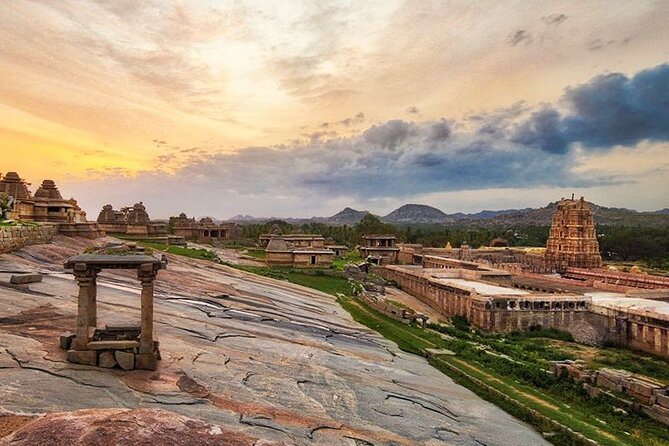
At about $215.32 per person for roughly two days, this tour can feel like a bargain if you care about temples and don’t want to figure out transport between scattered sites. The value comes from three practical things you get bundled in:
- Hotel pickup and drop-off from Central Bengaluru
- An air-conditioned vehicle for the drive and day-to-day moving
- All fees and taxes, plus admission tickets included at each stop
You also get lunch (2), which matters on a tight schedule when the hottest hours are when you’re typically sightseeing. What’s not included is breakfast and dinner, and tips for the driver/guide/other personnel.
If you’re comparing to “DIY plus taxi,” the cost makes more sense when you factor in time. Hampi and Chitradurga are not close together by city standards, and a planned route cuts out a lot of waiting around.
You can also read our reviews of more historical tours in Bangalore

The 2-day game plan from Bengaluru: start early, walk smart
The day starts at 8:00 am, with pickup from Central Bengaluru (near public transportation). You’ll be in an AC vehicle for the transfers, and you should expect that some hours are simply travel time between the major stops.
This is a guided experience. You’ll have a government-licensed local guide, and the order of visits is at the guide’s discretion. That’s not a small detail. In temple country, timing affects how much you enjoy the light, the heat, and the calmer moments for photos and slow looking.
The tour caps at 10 travelers, which usually makes it easier to move as a group and ask questions. It also has a mobile ticket, so you’re not stuck with paper.
Most important: this is not a “sit and drive” itinerary. It’s a walking tour, and the terrain can be rocky. The tour notes you should have moderate physical fitness. Plan for heat, and plan for temples that still expect basic visitor etiquette.
What to wear: heat, temples, and not getting cranky
This itinerary spends time on living temples, plus hills and stone paths. The guidance is clear: cover legs and shoulders when visiting temples. Also expect sun exposure on rocky areas, especially on the hill viewpoints.
My practical advice:
- Wear comfortable, grippy shoes. If your footing slips on uneven stone, you’ll stop enjoying the place and start managing your balance.
- Bring hat/cap + sunscreen. You’ll be under the sun at multiple points across both days.
- Carry water. Lunch is included, but the walk-and-look rhythm takes more than a snack between stops.
If you’re traveling with kids, it’s not advisable for children below 5 years. For older kids, the main limiter is walking time and heat tolerance.
Day 1 in Hampi: temples that still feel like rituals
Day 1 is your Hampi foundation day, with a sequence that starts at a major living temple and ends with a sunset-style hill viewpoint. Each stop is kept to about 10–30 minutes, which sounds short until you realize Hampi rewards breaks, because heat and stone both wear you down.
Virupaksha Temple: the biggest living temple in Hampi
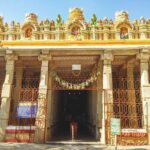
Your first major stop is Virupaksha Temple, described as the biggest living temple in Hampi. What makes this start special is the setting: Hemakuta hill on one side and the Tungabhadra river on the other. It’s one of those “wide view” openings where you quickly get the geography of the place.
Since it’s a living temple, you’ll feel the difference compared to purely ruined sites. You’ll likely notice more movement, more worship energy, and a stronger sense that people still come here for reasons beyond tourism.
Time on-site is around 30 minutes, and admission is included.
A few more Bangalore tours and experiences worth a look

Badavi Linga: a top Shiva linga stop
Next is Badavi Linga, framed as one of the top 10 Shiva lingas in India. This is the kind of stop that works well with a guide, because it’s not just about the statue—it’s about what the linga signifies in Hindu devotion.
You also get a nearby context boost with Lakshmi Narasimha being called out as jaw-dropping and awe-inspiring. In Hampi, you’ll see the Vijayanagara world thinking in stone—big forms, big messages, and clear symbolism.
This stop is about 15 minutes, with admission included.
Hazara Rama Temple: read with your eyes
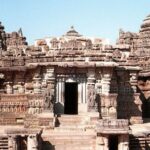
Hazara Rama Temple is built around storytelling. Its walls carry hundreds of Ramayana stories carved into the temple structure. This is one of the stops where your enjoyment depends on how you look: slow down and let the carvings lead you.
The carvings are detailed enough that you can spend your whole time mentally “reading” the stone. With a guide, you can connect the scenes without feeling lost.
You get about 15 minutes here.
Sasivekalu Ganesha: monolithic and enormous
Then comes Sasivekalu Ganesha Temple, anchored by a huge monolithic statue of Lord Ganesh at the foothills of Hemakuta. Monolithic can sound like a label, but in person it usually hits as scale. The shape is simple, yet the presence is hard to ignore.
This stop is short—around 10 minutes—but it’s the kind of photo moment that also works for quiet looking.
Malyavanta Raghunathaswamy Temple (Fatik Shilla): sunset from the top
Day 1 ends with Malyavanta Raghunathaswamy Temple – Fatik Shilla, positioned for a memorable sunset view from the top. This is where the warning about walking on rocky terrain becomes real. You’re not touring flat museum floors here.
Plan to move slowly and protect your legs. If you rush to “beat the crowd,” you’ll feel it later in your calves.
Time here is listed at 30 minutes, and admission is included.
Day 2 in Hampi: the famous architecture hits, then Chitradurga Fort
Day 2 focuses more on the major Vijayanagara architecture icons—then you jump to Chitradurga Fort to finish strong.
Vijaya Vittala Temple: Stone Chariot energy
Your first stop on Day 2 is Vijaya Vittala Temple, known for top features of Vijayanagara architecture, including the iconic Stone Chariot. This is one of the big “I get it now” moments for many visitors. It’s not just one structure; it’s a set-piece of design, scale, and the way artisans carved details into a stone setting.
Time here is about 30 minutes, admission included.
Lotus Mahal and the Zenana enclosure: power in pastel form
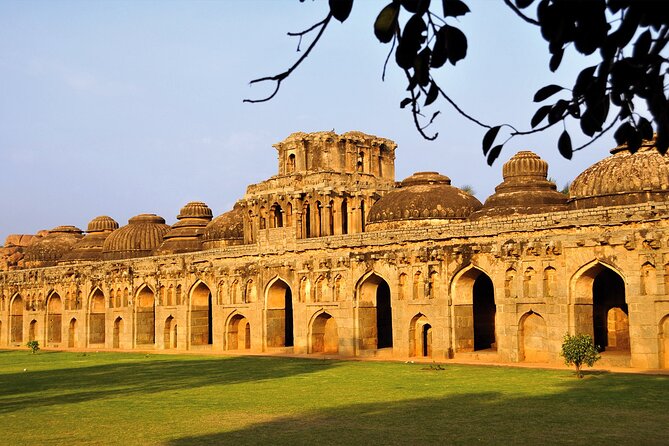
Next is Lotus Mahal, described as part of the Zenana Enclosure, with the Lotus Mahal and Elephant Stables highlighted as principal structures. Even though your time is around 20 minutes, this stop gives you a view of palace planning—where function and symbolism sit side by side.
If you like architecture, this is the kind of stop where you start noticing patterns. You’re seeing how royal spaces were built for status, movement, and spectacle.
Admission is included.
Dasara Dibba: where a procession story starts
You then visit Dasara Dibba, part of the king’s enclosure, in total ruins. The key detail here is that it’s the location tied to the origin of the world-famous Dasara procession.
Even in ruins, it helps to have a guide here. The “what you’re seeing” becomes “why it mattered,” and that makes the ruins feel less like rubble and more like a stage.
Time on this stop is about 20 minutes.
Queen’s Bath: royal ladies and an ornate design
Queen’s Bath is an ornate bathing structure built for royal women during the Vijayanagar regime. It’s one of those spots where you’ll likely pause longer than you planned, because the design is detailed and the purpose is specific.
This stop lasts about 15 minutes, admission included.
Chitradurga Fort: Elusuttina Kote and the feel of fortification
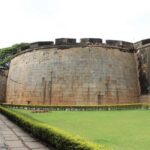
The final stop is Chitradurga Fort, locally known as Elusuttina Kote. The tour describes it as impregnable, photogenic, historic, legendary, and formidable.
The value of ending with Chitradurga is that it changes the vibe. Hampi is about temples and city ruins. Chitradurga shifts you into a different mindset: defensive planning, scale, and how people controlled space. The fort is the kind of place where you’ll want time to look at lines of stone and imagine movement and strategy.
This stop is about 30 minutes, admission included.
Who this tour is best for (and who should look elsewhere)
I think this works best if you:
- Want a tight, efficient way to see UNESCO Hampi plus Chitradurga Fort in one package
- Enjoy temples and carved architecture, and don’t mind walking
- Like having a local guide who can explain what you’re seeing in plain terms
It may not be the best fit if you:
- Struggle with walking on rocky terrain in hot sun
- Need a very low-activity day (this is not that)
- Are traveling with young kids below 5 years
A note on the guide experience: questions matter here

This kind of itinerary lives or dies by the guide’s storytelling. The provided information highlights that the tour guide can bring warm conversation and deep knowledge, and that connection can make the difference between looking at temples and actually understanding what you’re seeing.
Also, the tour can arrange guides in French, German, and Italian depending on availability. If you have a language preference, it’s worth confirming during booking.
FAQ
FAQ
What time does the tour start?
The start time is 8:00 am.
Where does the pickup happen?
Pickup and drop-off are included from Central Bengaluru.
How long is the tour?
It runs for 2 days (approx.).
What’s included in the price?
Included are hotel pickup and drop-off, a government-licensed local guide, an air-conditioned vehicle, all fees and taxes, lunch (2), and admission tickets for the listed stops.
Is there a mobile ticket?
Yes, the tour includes a mobile ticket.
How big is the group?
The maximum group size is 10 travelers.
Is this tour physically demanding?
It requires moderate physical fitness because there is plenty of walking on rocky terrain under hot sun. Legs and shoulders should be covered for living temples.
Can I cancel for free?
Yes. You can cancel for a full refund with free cancellation, as long as you cancel at least 24 hours before the experience start time.
Should you book this 2-day Hampi and Chitradurga tour?
If Hampi is on your bucket list, this is a strong way to go because it gives you a guided route through the major temple stops and then adds Chitradurga Fort without splitting the trip. The included admission tickets and lunches reduce everyday hassle, and the small group size helps keep the experience focused.
My only pushback is the heat and walking. If you handle hot sun, rocky paths, and temple-style dress expectations, you’ll likely love how much you get done. If you don’t, consider a slower option or a plan that reduces hill time—because here, the views are worth it, but your legs need to cooperate.