REVIEW · BANGALORE
Cubbon Park Walking Tour and Explore Bangalore’s Heritage
Book on Viator →Operated by 5 Senses Walks · Bookable on Viator
Two hours, and Bangalore history clicks into place. This Cubbon Park walk mixes green space with big political architecture, with a guide who turns statues and buildings into stories you can actually remember.
I particularly love the way the tour connects nature and monuments in one tight route. You’ll get hands-on context for landmarks like the State Central Library and the lawmakers’ home at Vidhan Soudha, not just a photo stop.
One thing to plan for: it’s still a steady walking loop for around 2 hours, and the tour ends at Vidhan Soudha rather than back at the starting gate.
In This Review
- Key highlights you’ll care about
- Cubbon Park’s 2-hour flow: parkside calm, courthouse drama
- Where to meet, where to finish, and how to plan the rest of your day
- Stop 1: Cubbon Park’s park loop with colonial-to-local connections
- Stop 2: Seshadari Iyer Memorial and the State Central Library
- Stop 3: Karnataka High Court at Attara Kacheri (Eighteen Offices)
- Stop 4: Vidhan Soudha and the look of post-independence India
- Price and ticket value: why $55 can make sense here
- The guide factor: storytelling that makes buildings personal
- Who this tour suits best (and who might not love it)
- Should you book the Cubbon Park heritage walk?
- FAQ
- How long is the Cubbon Park Walking Tour?
- What does the tour cost?
- Where does the tour start and where does it end?
- What stops will we visit?
- Are tickets included?
- How big is the group?
- What is the cancellation policy?
Key highlights you’ll care about
- A 2-hour heritage route through the park and surrounding civic buildings
- State Central Library’s scale: over 300,000 books plus rare manuscripts
- Attara Kacheri (Eighteen Offices), built in 1868 and tied to today’s High Court
- Vidhan Soudha’s Neo-Dravidian look, completed in 1956 and linked to post-independence confidence
- Small group size (max 15) for questions and close-up explanations
- Tickets make it easy: Cubbon Park is admission-free on the walk, and admissions are included for later stops
Cubbon Park’s 2-hour flow: parkside calm, courthouse drama
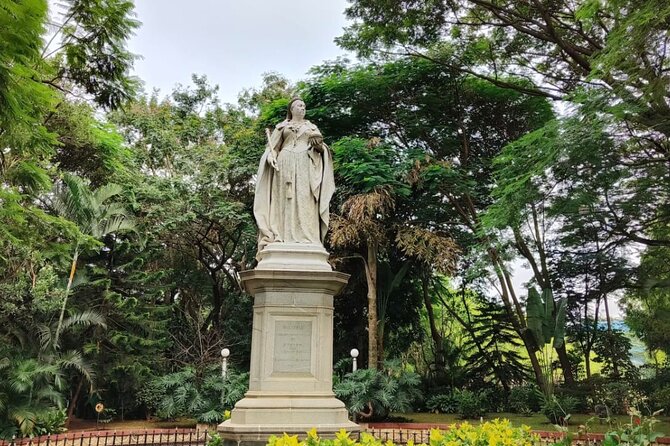
If you want one good sampler of Bangalore, this is it. You spend your time in and around Cubbon Park, where the city slows down just enough to make the architecture feel readable. The walk is short on paper—about 2 hours—but it’s paced so you’re not sprinting from one landmark to the next.
What makes this tour work is the mix of what you see and what you’re told to notice. The guide’s job isn’t to recite dates. It’s to point out details: how British administration shows up in the civic buildings, how Mysore Kingdom threads into the park, and how post-independence India shaped its own statement at Vidhan Soudha. That combo is why people come away feeling like they learned something, not just walked through it.
You’ll also like the practical rhythm. The stops are grouped, so each one adds to the last. Green first. Then library and law. Then the main legislative stage. By the end, the route feels like a story arc, not a checklist.
You can also read our reviews of more walking tours in Bangalore

Where to meet, where to finish, and how to plan the rest of your day
The start is at the main gate, 27 Cubbon Rd, near St. Andrew’s Church in Tasker Town/Shivaji Nagar. That’s a helpful anchor if you’re already exploring central Bangalore. The end is at Vidhana Soudha on Ambedkar Veedhi, in the Sampangi Rama Nagar area.
That one-way finish matters. If you’re trying to squeeze in other sights afterward, place them near Vidhana Soudha. Otherwise, you’ll spend extra time crossing the city to get back to wherever you’re staying.
Good news: it’s said to be near public transportation, so you’re not locked into one travel mode. Also, the tour runs with a mobile ticket, which keeps it simple—no hunting for printouts.
Stop 1: Cubbon Park’s park loop with colonial-to-local connections
You start inside Cubbon Park, which you’ll likely think of as a green pause from Bangalore’s pace. During the tour, it becomes something else: a framework for understanding how the city organized power and public life around this space.
The time here is about 45 minutes, and it’s not just free-roaming. You’re walking with guidance, so you get the “why” behind what you’re seeing. This is where the guide’s storytelling style really shows up. In particular, you’ll hear connections involving the British as well as the Mysore Kingdom—the kind of links that make a park feel like it has chapters, not just trees.
Practical tip: wear comfortable shoes. Even though the walking amount isn’t huge, park paths can vary—some parts feel easy, others feel a bit uneven. Plan for shade but also for sun breaks.
One possible drawback is that Cubbon Park is popular. If you’re hoping for total quiet, you won’t get it. Instead, you’ll get a lively-but-manageable walk where your guide pulls you through the busy bits efficiently.
Stop 2: Seshadari Iyer Memorial and the State Central Library
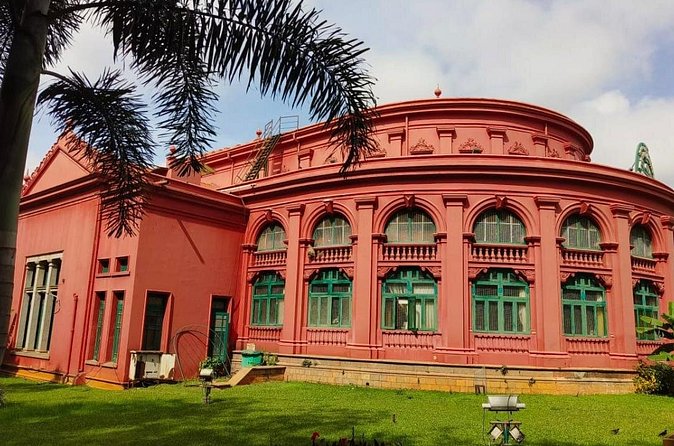
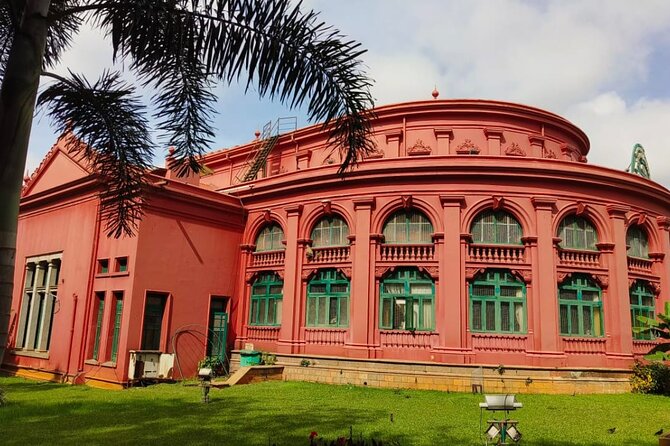
Next up is the Seshadari Iyer Memorial, where you’ll see the red Gothic building that houses the State Central Library. This is a great stop because it changes the pace from outdoor stroll to something more focused.
You spend about 15 minutes here. The big payoff is what the library represents, and the tour frames it well. You’ll learn that the library holds over 300,000 books and includes rare manuscripts. That scale matters. It’s not a small-town library vibe; it’s a major knowledge center, and the building’s look reflects that importance.
This stop is also valuable because it gives you a cultural anchor. Bangalore isn’t only courts and government. It’s also institutions of reading and learning—quiet places that still shape the city.
If you’re the type who likes architecture details, this is a good moment to slow down. The red Gothic look tends to draw the eye fast, but your guide will point out aspects you might otherwise miss—so you come away with more than a quick glance.
Stop 3: Karnataka High Court at Attara Kacheri (Eighteen Offices)
After the library, you head toward legal power: Karnataka High Court, inside what’s known historically as Attara Kacheri—literally Eighteen Offices.
This stop runs about 30 minutes, and it’s designed to connect past to present. You’ll learn that the building was built in 1868, when it housed state administrative departments. Today, it functions as the High Court of Karnataka, which turns a historical administrative structure into an active law institution.
That continuity is a big part of why this stop lands. You’re not looking at ruins. You’re looking at something that keeps operating. Even if you don’t follow Indian law day-to-day, the meaning is easy to grasp: buildings outlive systems, but they also keep carrying their intentions forward.
One caution: a legal building can feel formal, and the setting may come with security rules or rules of how you move. The tour includes admissions for this stop, so you’ll be guided appropriately—but still, keep your pace respectful and follow instructions quickly.
You can also read our reviews of more historical tours in Bangalore





Stop 4: Vidhan Soudha and the look of post-independence India
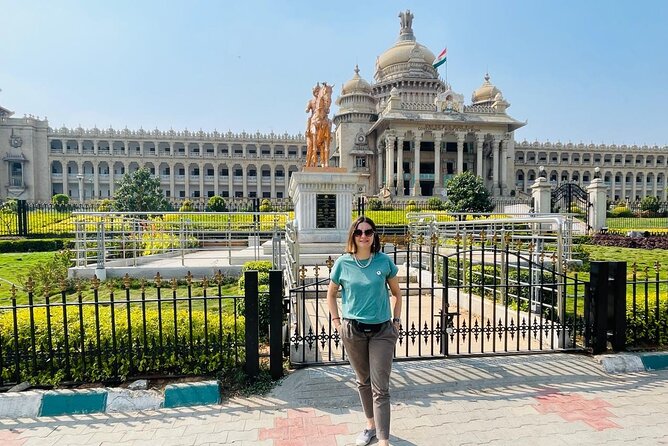
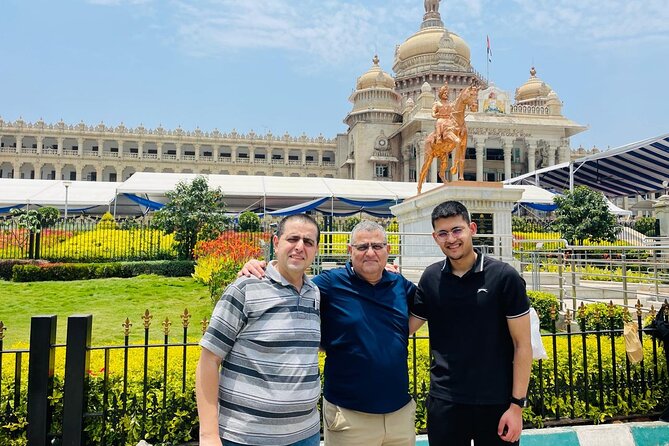
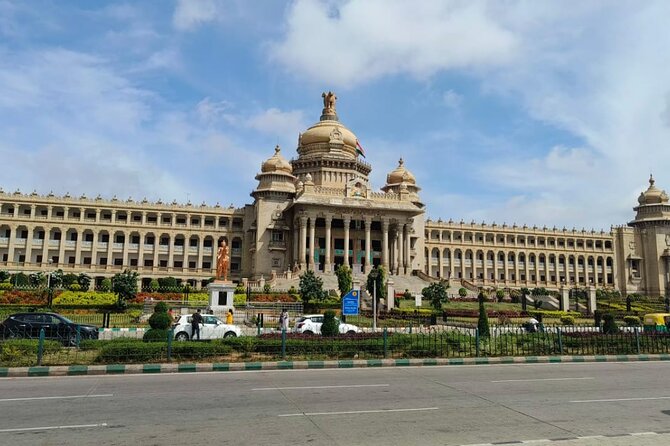
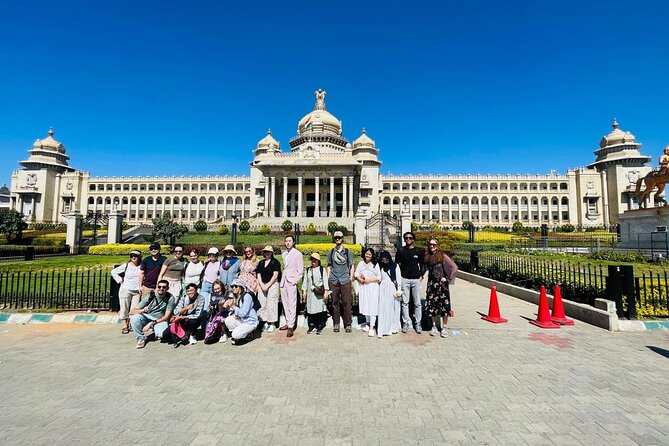
Across the avenue, you reach Vidhana Soudha, India’s largest legislative building. This is the moment where everything feels more monumental.
You’ll spend about 30 minutes here, and the guide frames it as a statement of a young India after independence. The building was completed in 1956 and built in a Neo-Dravidian style. That phrase might sound like architecture class, but you don’t need extra background to appreciate it. It’s about visual language: how power wanted to look, not just how it wanted to operate.
What I like about finishing here is the contrast. You’ve already seen colonial-era administration through the Attara Kacheri lens and learned how a library stores knowledge. Then Vidhan Soudha takes that civic theme and turns it into something almost theatrical in stone.
Also, the way the route is arranged matters. You’re not seeing the building randomly on your own schedule—you’re arriving with context. That makes the explanations stick.
If you’re photographing, give yourself a few minutes at natural breaks so you’re not rushed. The building is the kind of place where angles matter, and your guide’s route will help you find good viewpoints.
Price and ticket value: why $55 can make sense here
The price is $55 per person for a walk that lasts about 2 hours. You’re not paying for a full-day city tour. You’re paying for focused time with interpretation, plus guidance that connects multiple landmarks into one coherent story.
Here’s the value breakdown you can feel right away:
- Admissions are covered for the key indoor stops (State Central Library area) and the later civic stops (including High Court/Attara Kacheri and Vidhan Soudha-related access as included).
- Cubbon Park itself is admission-free for the walk segment, so your money isn’t getting swallowed by park entry fees.
- The group is kept to a maximum of 15 travelers, which usually means you get more direct attention than on giant tours.
- You’ll also benefit from the mobile ticket setup, which reduces hassle and speeds up getting started.
Another value angle: this is a high-information route that can save you time. If you tried to DIY this, you’d need to piece together history across several sites. With a guide, you get the connections in a single pass—especially the British and Mysore Kingdom links mentioned in the experience.
Is it a bargain? It depends on how much you care about meaning versus photos. If you just want quick sightseeing, you could spend less on your own. But if you want the “so what” behind the buildings, $55 for a guided interpretation route that includes admissions is a fair deal.
The guide factor: storytelling that makes buildings personal
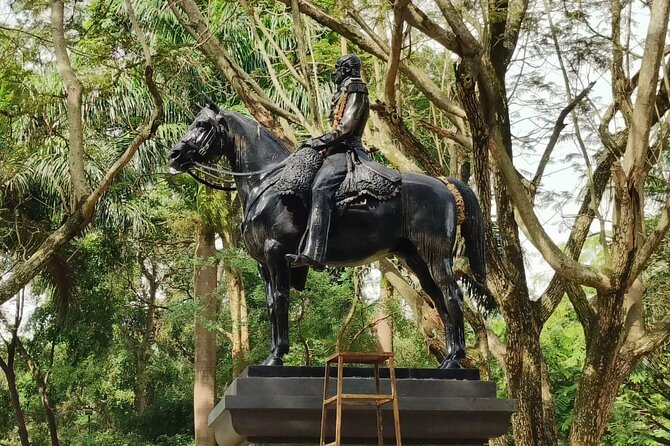
This tour leans heavily on the guide’s style, and that matters. People come away praising guides for being both friendly and story-driven. One named example is Vignesh, who shared connections between the British, the Mysore Kingdom, and how those threads tied into Cubbon Park.
That’s a good sign. You don’t want a script that reads like a textbook. You want someone who can explain why a building matters in human terms. The best parts of the walk are the moments when a statue or façade stops being decoration and becomes a clue.
Also, small group size helps. You’re less likely to get lost in the back row, and it’s easier to ask quick questions when the guide is standing right there.
Who this tour suits best (and who might not love it)
This is a strong fit if you:
- like civic architecture and government buildings
- enjoy history that explains cause-and-effect, not just dates
- want a short outing that still feels substantial
- want a calm, green setting without giving up educational value
You might not love it as much if you:
- hate walking for about 2 hours
- prefer long museum-style stops instead of quick interpretation at multiple sites
- want total silence or a crowd-free experience
Timing-wise, it’s best to choose a time when you can handle outdoor walking comfortably. Your guide will pace the group through the park, but you’ll still be outside for part of the route.
Should you book the Cubbon Park heritage walk?
Yes, you should book it if you want a smart, compact way to understand Bangalore beyond traffic and tech talk. The route is built around three big anchors—State Central Library, Karnataka High Court/Attara Kacheri, and Vidhan Soudha—and the guide’s stories make the connections between them feel natural.
Book it especially if you’re a first-time visitor to central Bangalore and you want an itinerary that gets you oriented fast. The tour also has enough structure that you won’t waste time wandering.
Skip it only if you want a purely self-guided roam or if you’re not into government/architecture explanations. Otherwise, this is the kind of walk that leaves you looking at buildings differently on your next block.
FAQ
How long is the Cubbon Park Walking Tour?
It runs for about 2 hours.
What does the tour cost?
The price is $55.00 per person.
Where does the tour start and where does it end?
It starts at the main gate, 27 Cubbon Rd, near St. Andrew’s Church (Tasker Town, Shivaji Nagar). It ends at Vidhana Soudha, Ambedkar Veedhi, Sampangi Rama Nagar.
What stops will we visit?
The walk includes Cubbon Park, the State Central Library at the Seshadari Iyer Memorial, Karnataka High Court (Attara Kacheri), and Vidhana Soudha.
Are tickets included?
Cubbon Park admission is free for the stop at the park. Admissions are included for the later listed stops.
How big is the group?
The tour has a maximum of 15 travelers.
What is the cancellation policy?
You can cancel for a full refund if you cancel up to 24 hours in advance. If you cancel less than 24 hours before the experience starts, the amount won’t be refunded.