REVIEW · BOSTON
2 Hour Boston Historical and Heritage Walking Tour
Book on Viator →Operated by Boston Free Walking Tours · Bookable on Viator
Boston history can be hard to picture. This 2-hour, one-mile heritage walk turns major landmarks into real scenes, with plenty of question time and a small-group feel that makes it easier to connect the dots as you go. I also like how the guide focuses on the kind of facts that don’t usually fit in a quick guidebook glance. One thing to consider: it’s an information-heavy walk and Boston can be noisy, so you’ll want to dress for the weather and be ready to lean in and ask questions early.
The tour is priced at $5, and for that money you’re getting a live guide plus stops where admission is free—so the value is strong if you enjoy learning on foot. The main drawback to watch for is pace and audio: some people find the talk fast or hard to hear when other tour groups are loud nearby. If you’re the type who likes lots of narration, you’ll probably love it; if you need frequent pauses, plan to ask for a moment when you can.
In This Review
- Key Stops and What Makes Them Worth Your Shoes
- Getting Your Bearings at Boston Common (11:00 AM Start, Photo-Ready Ground)
- Park Street Church and the Fight for Freedom You Can Walk Into
- The 54th Regiment Memorial: Courage, Command, and an Uncomfortable Chapter
- The Massachusetts State House and Statues with Opinions
- The Brahmins’ Private Library Stories and Why Elite Culture Still Matters
- West End and Scollay Square: Entertainment District Energy, With a Darker Edge
- The Old State House and the Declaration Being Read Aloud
- Boston Massacre Site: A Confrontation That Lit the Fuse
- Tea Crisis Meeting to Tea Party March: Milk Street Comes Alive
- Boston Irish Famine Memorial: Immigration, Survival, and a City’s Real Demographic Shift
- Old Corner Bookstore: Where Major Writers Used to Meet
- Boston Latin School Area: Education Roots and a Patient Donkey
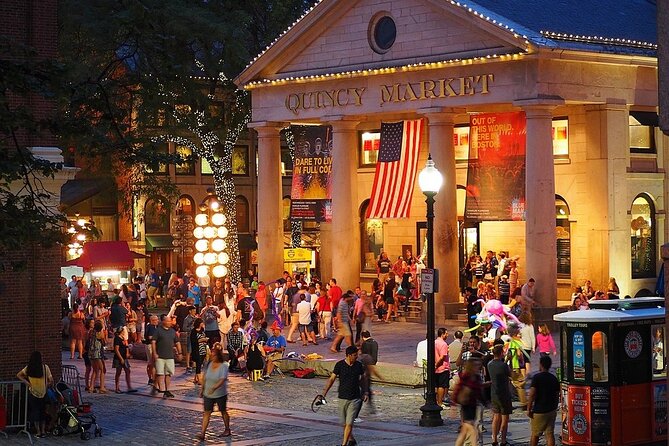
- Faneuil Hall: Revolutionary Meeting Place and Military Headquarters
- Boston City Hall Finish: Curley Statues and Where to Go Next
- Price and Value for a $5 Walk With Free Admission Stops
- Who This Tour Fits Best (and Who Might Want a Different Pace)
- Should You Book This Boston Historical and Heritage Walking Tour?
- FAQ
- How long is the Boston historical and heritage walking tour?
- How much does the tour cost?
- Where does the tour start and end?
- What language is the tour offered in?
- Do the stops require paid admission?
- What happens if the tour is canceled due to poor weather?
Key Stops and What Makes Them Worth Your Shoes
- Boston Common as your starting point: the oldest public park in America, tied to centuries of public life.
- Park Street Church and abolition-era courage: including the debut of My Country, ‘Tis of Thee on July 4, 1831.
- The 54th Massachusetts memorial: a Civil War story you rarely get this clearly on a quick downtown walk.
- State House statues and power: the golden dome plus figures tied to military legend and Quaker resistance.
- Tea Party-era street history: you’ll connect the December 16, 1773 gathering to the march down Milk Street.
- Faneuil Hall’s double identity: revolution meeting place and home base for the Ancient and Honorable Artillery Company.
Getting Your Bearings at Boston Common (11:00 AM Start, Photo-Ready Ground)
Boston Common is where you begin, and that choice matters. It’s the oldest public park in America, but the guide treats it less like a scenic lawn and more like a living stage—colonial military drills, civil rights rallies, and everyday strolling under the elms. You also get a sense of how the space used to function: cattle pastured on its forty-five acres, and in darker chapters, the area was linked to public punishment like hangings and duels.
If you’re the kind of traveler who likes grounding facts, this first stop works. Within a few minutes, you’re not just looking at a landmark—you’re learning how Boston used this shared space to argue, gather, and enforce its values. And yes, it’s also a practical photo stop. The park gives you open sightlines before the route tightens up into city streets.
You can also read our reviews of more tours and experiences in Boston.


Park Street Church and the Fight for Freedom You Can Walk Into
From Boston Common you head to Park Street Church, where abolition and activism show up in the details. This church is known for major contributions to the abolitionist movement and for missionary activity that pushed hard for freedom and justice. The guide’s angle is more story-based than textbook—center stage speeches, influential figures, and what it meant to advocate publicly in that era.
One specific moment you’ll hear: the debut of My Country, ‘Tis of Thee, also known as America, by Samuel Francis Smith on July 4, 1831. That’s a fun link for anyone who thinks of national music as modern trivia. Here, it’s tied to a real public stage and real civic energy.
The 54th Regiment Memorial: Courage, Command, and an Uncomfortable Chapter
Next comes the Robert Gould Shaw and the 54th Regiment Memorial, and the emotional tone shifts. The guide focuses on the bravery of the 54th Massachusetts Infantry Regiment, one of the first African American units in the Civil War, and on their commander, Robert Gould Shaw. The point isn’t just to memorize dates. It’s to understand what it meant for Black soldiers to serve in a conflict that still denied them full rights at home.
I like that the stop is direct and respectful. It keeps the story grounded in real people and real choices, instead of turning it into a vague “important history” moment. If you’re pairing this tour with other parts of the Freedom Trail, this one gives you sharper context for why those fights mattered.
The Massachusetts State House and Statues with Opinions
Then you reach the Massachusetts State House and the golden dome does what domes do: it grabs your eyes before it grabs your mind. You’ll learn why this building has weight—seat of the legislature since 1798—and how architecture signals civic authority.
The guide also points out statues that add friction to the sightseeing. You’ll pause near General Joseph Hooker, tied to an unfortunate legend, and Mary Dyer, hanged for her Quaker beliefs. This is a good place to remember a theme that runs through the whole walk: Boston history isn’t neat. People argued in public, and the consequences were real.
The Brahmins’ Private Library Stories and Why Elite Culture Still Matters
Midway through the walk, you hear stories connected to the Private Library of the Brahmins. The emphasis here is on rare and valuable books and the literary and intellectual history of Boston’s elite—people who played a role in shaping American thought.
Even if you never see the collection itself, this stop can still be useful. It helps you understand how ideas traveled: not only through sermons and pamphlets, but also through networks of publishing, study, and influence. Boston’s public face can be radical and loud, but there’s also a quieter engine behind the scenes—printing, scholarship, and the people who funded and curated those spaces.
You can also read our reviews of more historical tours in Boston

West End and Scollay Square: Entertainment District Energy, With a Darker Edge
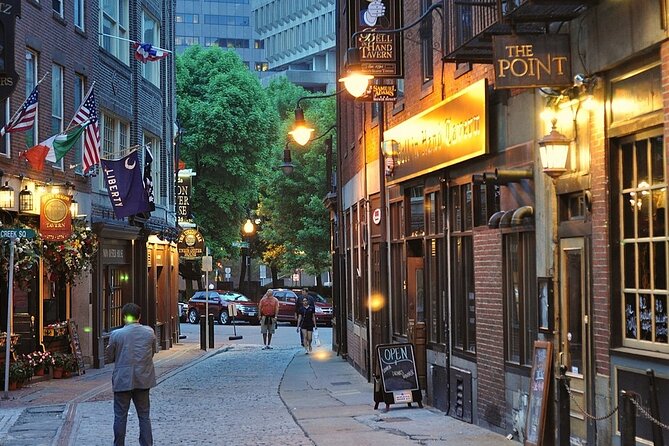
The tour moves toward West End and the history of Scollay Square, once known for theaters and vaudeville shows and a cast of colorful characters. This is where the guide leans into the texture of daily life—what people went to watch, what the streets sounded like, and how entertainment neighborhoods reflect a city’s appetite for attention.
Along the way you also get a glimpse of the Love Nest of the Kennedys. It’s the kind of name that makes you look twice, and the guide uses it to connect famous families to the physical geography of Boston—where celebrity settled, not just where it happened.
The Old State House and the Declaration Being Read Aloud
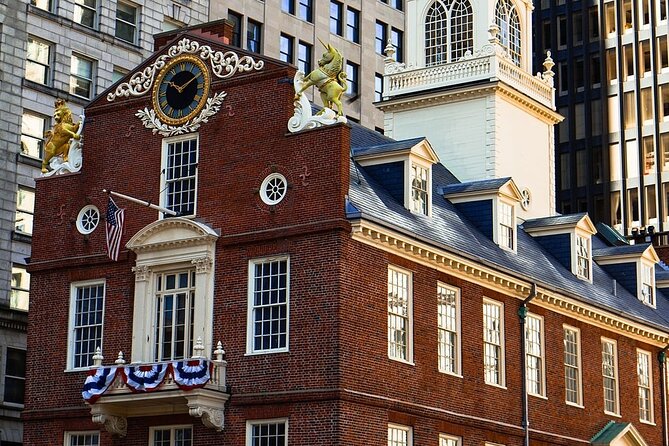
At the Old State House, the mood gets serious again. You’ll learn about key revolutionary events, including the reading of a copy of the Declaration of Independence to the citizens of Boston in 1776. Hearing that detail while standing near the building makes the story feel immediate in a way that scrolling a timeline never does.
Then there’s a restoration story that I think is worth your attention. When the oldest public building in Boston fell into disrepair at the end of the nineteenth century, the city of Chicago offered to buy it. Bostonians stepped in and salvaged the site, and the location was meticulously restored over the years. That turns heritage into an active choice—someone had to fight to keep it.
Boston Massacre Site: A Confrontation That Lit the Fuse
The Boston Massacre site is next, and it’s where the lead-up to the American Revolution becomes personal. The guide describes the confrontation between British soldiers and American colonists and how outrage spread. You’ll hear it not as a single moment in isolation, but as part of a chain reaction: small tensions escalating into something the public could no longer ignore.
A practical tip here: if you want good photos, position yourself early. This stop tends to attract attention, and you’ll be surrounded by other pedestrians. You’ll also want to listen for how the guide frames cause and effect, because that’s the difference between memorizing the event and understanding why it mattered.
Tea Crisis Meeting to Tea Party March: Milk Street Comes Alive
After that, you stand where five thousand citizens gathered on December 16, 1773 during the tea crisis. The guide describes the gathering as plain and unadorned in Puritan style, emphasizing how austere surroundings still held intense civic conflict.
You’ll also hear what happened next: agreement to prevent the landing of British tea ships, and then a group of men disguised as Mohawk Indians who led a mob down Milk Street to Griffiths Wharf for the Tea Party. This is the stop where the tour’s walking format really pays off. Instead of treating the Boston Tea Party like a museum label, you get the geography—the streets and routes that made the plan real.
Boston Irish Famine Memorial: Immigration, Survival, and a City’s Real Demographic Shift
Then you come to the Boston Irish Famine Memorial, and it lands with a different kind of weight. The guide shares that it honors thousands of Irish immigrants who fled the Great Famine of 1845 to 1852 and found refuge in Boston, becoming the largest ethnic group by 1850. The memorial also functions as a tribute to all immigrant groups who came to the city.
I like that the guide doesn’t isolate this story as only Irish history. It connects the experience to broader immigrant patterns—why people moved, what they risked, and how those arrivals reshaped Boston. If you’ve got time to think between stops, this is a good one to slow down.
Old Corner Bookstore: Where Major Writers Used to Meet
Next is Old Corner Bookstore, a place where Boston’s literary culture stops being abstract. The building began as a residence and apothecary in 1718, became a bookstore in 1828, and for three decades was home to the Ticknor and Fields publishers. That alone is a neat evolution, but what really makes it special is the author list the guide ties to the place.
You’ll hear how it became a meeting place for Henry Wadsworth Longfellow, Nathaniel Hawthorne, Oliver Wendell Holmes Sr., and Ralph Waldo Emerson. If you like literature, this stop gives you more than facts. It gives you a sense of what kind of room ideas might have been traded in—conversation as a tool for influence.
Boston Latin School Area: Education Roots and a Patient Donkey
The walk continues near Boston Latin School, with School Street named for the site of the first public school in the United States. That’s a striking detail because it turns a sidewalk name into a civic milestone.
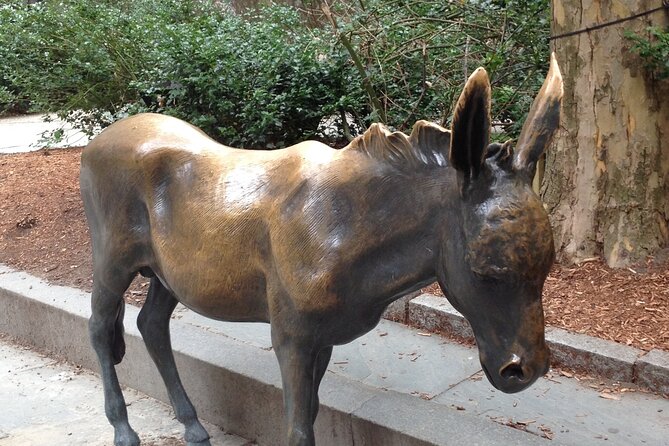
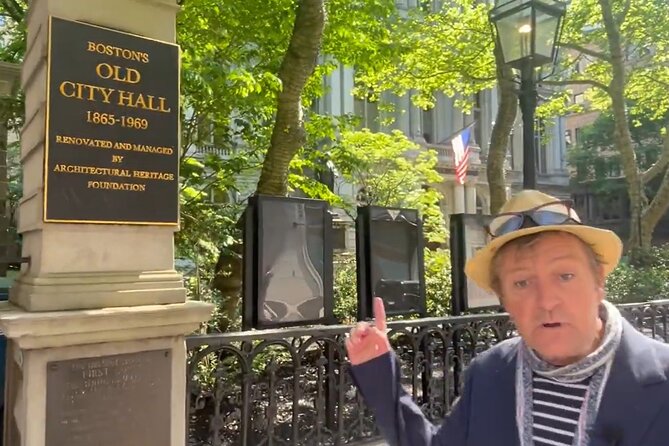
The guide also points out a cluster of landmarks around the school area, including King’s Chapel, Old City Hall, and the Parker House. And yes, you’ll meet Boston’s beloved donkey waiting ever so patiently on School Street. It’s a light moment after heavier stops, and it also serves as a reminder: this is a working city, not a stage set.
Faneuil Hall: Revolutionary Meeting Place and Military Headquarters
You end up at Faneuil Hall Marketplace, a central piece of Boston’s civic mythology. You’ll learn about the grasshopper weathervane overhead, believed to be modeled after the one on London’s Royal Exchange. The site is also linked to the idea of the cradle of liberty, since it became a meeting place for revolutionary leaders and remains a symbol of American democracy.
There’s also a hard truth embedded in the story. Faneuil Hall was gifted to Boston by Peter Faneuil, a slave trader. The guide doesn’t let that float away as background. You’re pushed to hold both facts at once—civic ideal and human harm connected to the same physical place.
Finally, the stop isn’t only political. Faneuil Hall is the headquarters of the Ancient and Honorable Artillery Company of Massachusetts, the oldest military body in the Western Hemisphere with a charter from 1837. That detail gives you another angle on why Boston liked to gather here: debates and defense plans share history.
Boston City Hall Finish: Curley Statues and Where to Go Next
Your tour ends by Boston City Hall, in the shadow of two statues of James Michael Curley, four-time mayor of the city, governor of Massachusetts, and congressman. The guide frames Curley as a flamboyant big-city boss who was a rascal king of politics for fifty years. It’s a fitting way to end a walk that has covered idealism, conflict, and the messy side of public life.
Just a few steps away, you’ll also hear about nearby stops like Union Oyster House and the Bell in Hand tavern, described as the oldest pub in town. Hanover Street is mentioned as the gateway to the North End, so you’re handed an easy next step once your walk ends.
Price and Value for a $5 Walk With Free Admission Stops
$5 is the headline number, but the better question is what that buys you. Here’s the strong value math: you get an in-person guide in English, plus a two-hour structure built around multiple stops where admission is free. In other words, you’re not paying to access buildings—your cost is paying for the stories that connect buildings and streets.
You also get a practical walking length. The route is described as about a one-mile tour, which makes this realistic even if you’re jet-lagged or you’re arriving with limited energy. If you’re a first-time visitor trying to get your bearings, the price feels fair because the tour covers a dense mix of abolition, revolution, immigration, and literature without turning into a bus day.
Who This Tour Fits Best (and Who Might Want a Different Pace)
This is a great match if you like learning while moving and you want your city facts organized into a clear set of themes. It’s especially good for first-timers who want Boston’s major locations, but with extra context like the debut of My Country, ‘Tis of Thee and the Peter Faneuil connection.
I’d also recommend it if you enjoy asking questions. The format gives you chances to stop and talk, and that helps you tailor the story to what you care about—politics, religion, civil rights, or the written word.
If you prefer quiet tours with lots of break time, or if you get overwhelmed by fast talking, you might find it a bit much. Boston street noise can also compete with hearing, so come prepared to focus.
Should You Book This Boston Historical and Heritage Walking Tour?
Yes, if you want a low-cost, high-story Boston introduction that takes you through some of the city’s most important civic locations. The route is tightly packed, the stops are free to access, and the guide’s style is built for questions and details.
I’d book it especially if you’re visiting for the first time and want a useful “spine” for later exploring—Freedom Trail sites, abolition-era landmarks, tea crisis street history, and literary Boston in one clean walking arc.
FAQ
How long is the Boston historical and heritage walking tour?
It’s listed as about 2 hours.
How much does the tour cost?
The price is $5.00 per person.
Where does the tour start and end?
The start is Boston Common at the Boston Common Tablet (1634 Freedom Trail). The tour ends at the James Michael Curley Statues at the Congress St @ North St area, directly across from Faneuil Hall.
What language is the tour offered in?
The tour is offered in English.
Do the stops require paid admission?
The tour information lists admission ticket free for the stops described.
What happens if the tour is canceled due to poor weather?
It requires good weather. If it’s canceled due to poor weather, you’ll be offered a different date or a full refund.