REVIEW · BOSTON
Boston: Underground Railroad History Tour of Beacon Hill
Book on Viator →Operated by Hub Town Tours · Bookable on Viator
Beacon Hill hides a fight for freedom. This 2.5-hour Underground Railroad history walk threads Boston’s abolition story through Beacon Hill landmarks and the Black Heritage Trail. You’ll connect the dots between everyday addresses and the people who helped make slavery’s end real.
I love the small-group feel, which keeps the pace human and your questions welcome. I also love that the tour includes an inside stop at the African Meeting House, so you get more than just building exteriors. The main drawback is practical: it’s mostly on foot on uneven surfaces and Beacon Hill’s hills, so plan for standing and comfortable walking time.
If you want history that feels tied to real streets, this one works. It has the bonus of a very strong sense of place, from Boston Common’s monument to the memorial for the 54th Regiment. And the guides I’ve seen listed for this experience, like Dana, Will, Meghan, Lin, Joe, and Drew, consistently focus on turning names and dates into clear, human stories.
In This Review
- Key things you’ll notice on this Beacon Hill tour
- Beacon Hill’s steep walking: plan for 2.5 hours on real streets
- Value check: why $35 feels fair for a guided Underground Railroad loop
- From Boston Common’s monument to Acorn Street’s narrow lanes
- Phillips School: a school built to exclude, then pulled toward integration
- John J Smith House to Charles Street Meeting House: abolitionist work in plain sight
- 66 Phillips St: what a safe house teaches you
- Otis House and the 1806 church: when politics turned personal
- African Meeting House (included): the oldest extant black church building in the U.S.
- 5 Pinckney St: the Revolutionary-era veteran behind an old facade
- Ending by the Massachusetts State House and the 54th Regiment Memorial
- Guide style: what makes these tours feel different
- Should you book this Boston Underground Railroad history tour?
- FAQ
- How long is the Boston Underground Railroad History Tour of Beacon Hill?
- What is the price per person?
- How many stops will we see?
- Is the tour in English?
- Is this a small-group tour?
- Where does the tour start and end?
- Is there a place where admission is included?
- Does the tour include museum entry at every stop?
- Are guides dressed in period costume?
- What if weather is bad or the minimum number of travelers is not met?
- Is free cancellation available?
Key things you’ll notice on this Beacon Hill tour

- 10 stops on the Black Heritage Trail across Beacon Hill, all on foot
- Small groups (max 16 guests) for questions and a steady pace
- One included interior visit at the African Meeting House (1806)
- A clear link between abolition and the Civil War era in Boston
- Real street-level sites tied to safe houses, schools, meetings, and memorials
- A practical, map-your-walk type route starting near Boston Common and ending by the Massachusetts State House
Beacon Hill’s steep walking: plan for 2.5 hours on real streets
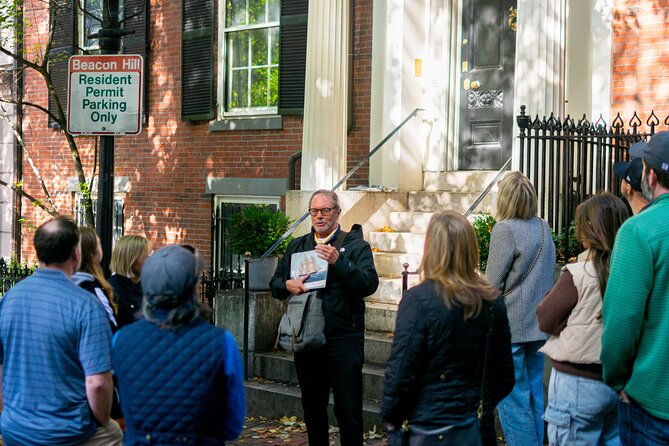
This tour is about 2 hours 30 minutes of guided walking, with frequent stops to catch your breath and reset your brain. Beacon Hill is historic, but it is also old and bumpy: cobblestones, narrow lanes, and up-and-down terrain are part of the deal. You’ll want to wear shoes you trust on uneven pavement.
Bring water if you can. Even if the guide keeps a measured pace, you’ll be standing to hear stories at multiple street corners. The tour is designed for moderate physical fitness, and it is not a great fit if you struggle with extended standing.
One nice planning tip: Beacon Hill is compact. That means you can see a lot without constant transit, but it also means you’ll feel every hill. If you keep your schedule flexible for a little extra time, you’ll enjoy the experience more.
You can also read our reviews of more historical tours in Boston



Value check: why $35 feels fair for a guided Underground Railroad loop
At $35 per person, you’re buying more than narration. You’re getting a guided walk that hits ten specific Black Heritage Trail landmarks, in one tight loop, with a small-group cap of 16. Most stops are outside, but the tour also includes an admission ticket for the African Meeting House, which helps make the price feel more grounded.
Also, you’re not doing this with a generic audio app. The guides behind this tour are repeatedly praised for strong storytelling and for being able to explain complicated topics clearly. In particular, names you may see among the guide lineup include Dana and Will, both described as passionate educators who help connect Boston’s role in abolition and the Civil War era.
If you’re trying to choose between a museum afternoon and a neighborhood-based history walk, this is the one I’d pick when you want context you can actually picture—where events happened, who lived near them, and how debates played out street by street.
From Boston Common’s monument to Acorn Street’s narrow lanes
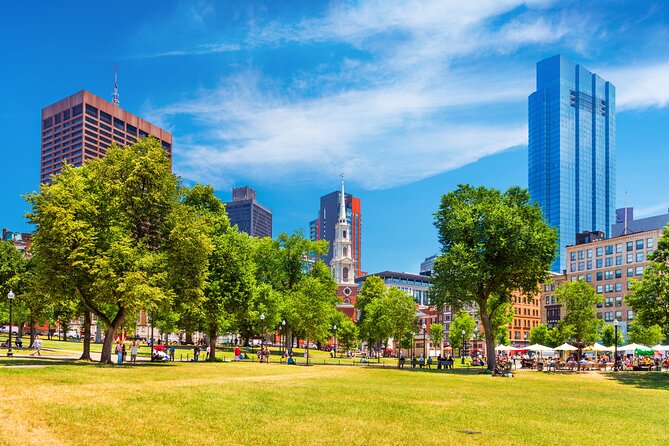
The tour starts near the Soldiers and Sailors Monument in the center of Boston Common. It’s an easy landmark to find—look for the white granite column topped by a female figure holding a flag, surrounded by bronze statues.
This opening matters because Boston Common is more than a park. It’s a “center of gravity” location. From here, your guide can frame Boston’s role in the slavery-and-abolition story without making it feel like a disconnected topic you read about in a textbook.
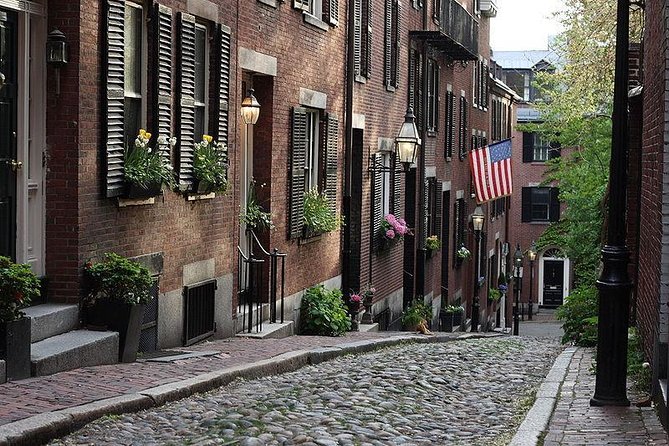
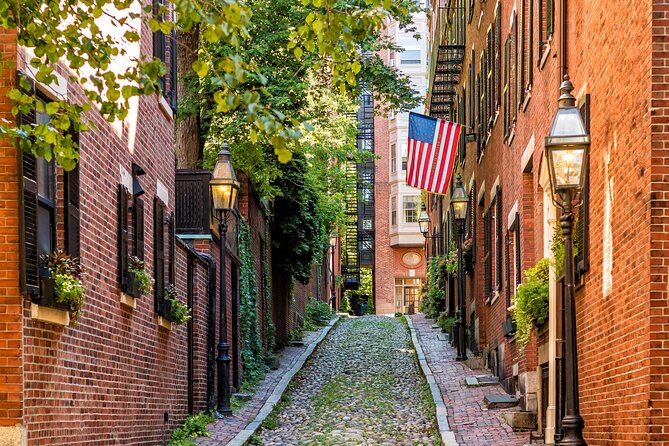
After that, you’ll move into Beacon Hill’s tight streets, including Acorn Street, famous for its narrow cobblestone alleyways. The practical value here is big: Beacon Hill looks like a postcard, but the guide uses that scenery to anchor a tougher narrative underneath it. You start to see how architecture and social power can share the same blocks.
You’ll also spend time at an important neighborhood square linked to the 19th-century world of the Boston Brahmins. That’s your setup for understanding how wealth, status, and reform debates could exist in the same area—sometimes in the same families, sometimes in the same circles.
Phillips School: a school built to exclude, then pulled toward integration
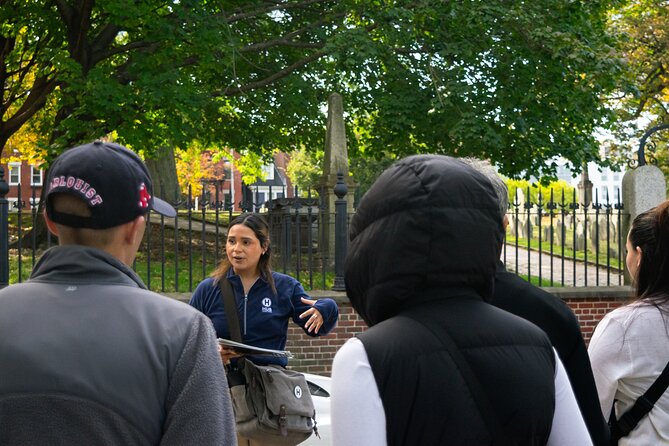
One of the stops that gives the tour its emotional clarity is the Phillips School. The key point: it was built as a whites-only school in 1824, but by 1855 it became among the first schools in Boston to integrate.
That detail does a lot of work for you as a visitor. It keeps the story from being only about dramatic escapes. You see how abolition and civil rights pressure showed up in everyday institutions like schools.
You’ll also get a sense of how Beacon Hill functioned as a mix of power and resistance. Elite circles could dominate public life, yet reformers pushed back hard enough to change policies—at least in some places—before the Civil War even ended slavery nationwide.
John J Smith House to Charles Street Meeting House: abolitionist work in plain sight
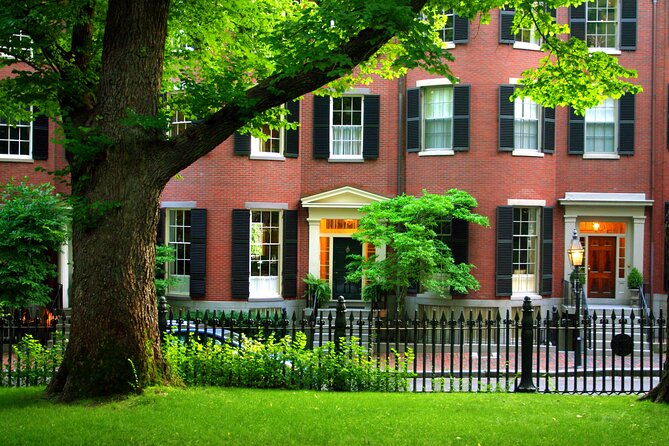
Next comes a cluster of stops where the tour shifts from public debate to personal commitment.
At the John J Smith House, you’ll learn about a leading abolitionist who was also a state legislator and a former barber. That combination is more than trivia. It shows how abolition leadership in Boston wasn’t limited to scholars or clergy. People built influence through work, community ties, and politics.
Then you’ll visit the Charles Street Meeting House, built in 1807, a site tied to contentious debate over racial integration. This stop helps you understand why meeting houses mattered so much in that era. Public arguments weren’t only in newspapers or courts. They happened in community spaces where faith, identity, and civic life mixed.
If you like tours that answer the unasked question—how did ordinary people argue for change—this is where the tour starts to click. Your guide connects the debate to broader fights over who belonged, who could participate, and who got to shape public morality.

66 Phillips St: what a safe house teaches you
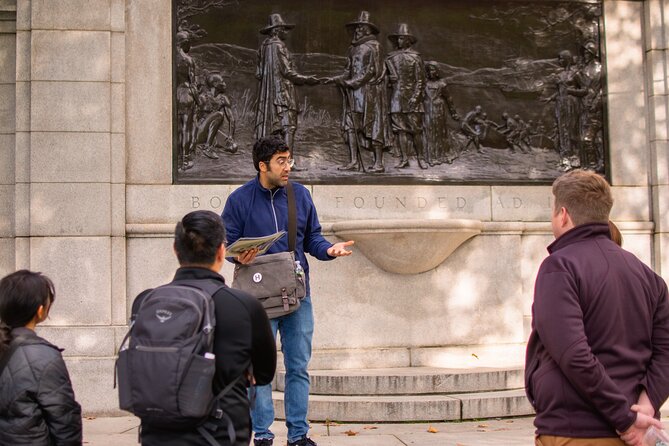
The tour’s underground railroad heart is 66 Phillips St, a safe house owned by the Haydens—staunch abolitionists who were formerly enslaved. This is one of those stops where you’ll feel the history as more than a story about the past. It’s a story about risk, planning, and the practical work of hiding people while pushing for freedom.
Because the tour keeps you moving street to street, this stop doesn’t feel like a museum exhibit. It feels like you’re walking through a map of choices. Your guide’s job here is to help you visualize the network behind the scenes—who had resources, who offered shelter, and how Boston’s communities could coordinate action.
One small caution: the subject matter is heavy. The way the guide handles it is part of the experience, but it’s still a lot to hold, especially if you’re sensitive to stories involving slavery and violence.
Otis House and the 1806 church: when politics turned personal
As you continue, you’ll pass by Otis House, a 1796 residence tied to Harrison Gray Otis, a Boston mayor and nephew of Revolutionary leader James Otis Jr.
Nearby, you’ll also hear about an 1806 church designed by Asher Benjamin. This is where Beacon Hill’s architectural identity matters. It’s not just pretty brick. The design and the prominence of buildings help explain how power displayed itself in the neighborhood.
The tour also connects this period to political conflict over slavery, including the story of an outspoken abolitionist and U.S. Senator who was beaten unconscious in the Capitol over the issue of slavery in 1856. Even if you’ve read bits of Civil War-era politics before, placing it on a Beacon Hill walking route forces you to see how close these conflicts were to daily life in Boston.
The guide also brings in more names, including homes of African-American abolitionists and historian William Cooper Nell. If you’re the type who likes figuring out who these people were beyond famous headlines, this part delivers.
African Meeting House (included): the oldest extant black church building in the U.S.
At the African Meeting House, you get your included admission and a chance to go inside. This building is described as the oldest extant black church building in the United States, built in 1806.
This stop is worth building your day around. A church can sound like a background setting, but here it functions as a cultural center for Boston’s African-American community. It’s also a reminder that abolition wasn’t only about escaping bondage. It was about community building, education, worship, and organizing.
You’ll come away with a stronger sense of why meeting houses, schools, and neighborhoods show up again and again in the abolition story. They were safe spaces, leadership spaces, and places where people could plan for what came next.
5 Pinckney St: the Revolutionary-era veteran behind an old facade
Another strong stop is 5 Pinckney St, tied to the oldest extant house in Beacon Hill (1787). It was home to an African-American Revolutionary War veteran.
This is a clever moment in the tour. After a serious stop at the African Meeting House, you shift to an earlier timeframe that makes one point clear: Black history in Boston isn’t limited to the Underground Railroad years alone. It stretches back into the founding era.
For me, this kind of time-shift is a key reason the tour feels different from a simple “slavery timeline.” It helps you understand that communities were here, contributing, forming identity, and shaping American life long before the phrase Underground Railroad became famous.
Ending by the Massachusetts State House and the 54th Regiment Memorial
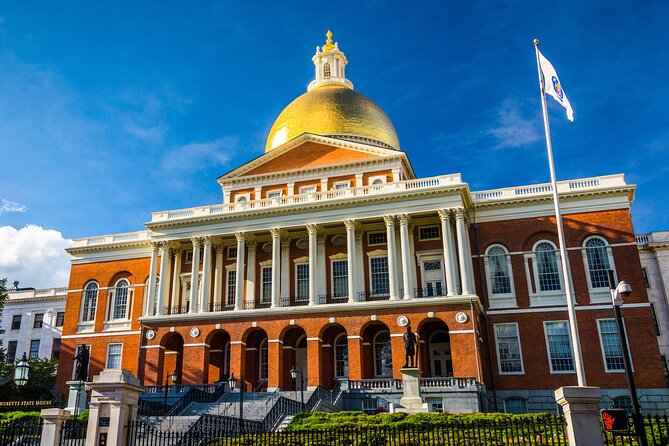
The last stretch brings you toward the Massachusetts State House, often nicknamed the Hub of the Solar System. Even if you just like architecture, it’s a good visual marker for why Boston mattered in national debates.
Then your tour concludes at the Robert Gould Shaw and the 54th Regiment Memorial, across from 24 Beacon Street. The 54th Regiment is one of the most powerful symbols of Black service during the Civil War era, and this stop closes the loop between abolition work and the conflict that followed.
You finish near the end point of the loop, close to where your starting area is relative to Beacon Hill. That is part of the value: you get a guided route that makes the neighborhood feel understandable, not random.
Guide style: what makes these tours feel different
If you’re picky about tours, this one is built around storytelling quality and pacing. The tour is structured as a small-group walk, and the guide approach is practical: you get enough context to follow the bigger themes, but you also get details tied to exact addresses.
Guides connected with this experience—Dana, Will, Meghan, Lin, Joe, and Drew—are repeatedly described as enthusiastic and strong at answering questions. Meghan is also mentioned with National Parks Service background, which fits the way her style is framed: clear, organized explanations with steady pace.
A final tip if you want to get the most out of your guide: have one question ready before you start walking. Something like how abolition in Boston influenced national politics, or why certain buildings became organizing centers. A good guide can turn your question into a story you won’t forget.
Should you book this Boston Underground Railroad history tour?
Book it if you want abolition and Civil War-era Boston tied to a real neighborhood you can revisit later. This tour is ideal when you like walking, you want a small group, and you care about Black history that connects schools, meeting houses, private homes, and public memorials.
Skip it (or at least think twice) if you know you have trouble standing for long stretches or handling uneven, hilly pavement. Beacon Hill is beautiful, but it’s also physical.
If you’re deciding between spending money on a single indoor museum and doing a guided neighborhood circuit, I think this is the stronger choice for most first-time Boston visitors—especially if you want the Underground Railroad story in a way that feels specific, local, and human.
FAQ
How long is the Boston Underground Railroad History Tour of Beacon Hill?
It runs for about 2 hours 30 minutes.
What is the price per person?
The tour costs $35.00 per person.
How many stops will we see?
You’ll visit 10 landmarks as part of the Black Heritage Trail.
Is the tour in English?
Yes, it is offered in English.
Is this a small-group tour?
Yes. The maximum group size is 16 guests.
Where does the tour start and end?
It starts at the Soldiers and Sailors Monument at 139 Tremont St, and ends at the Robert Gould Shaw and the 54th Regiment Memorial at 26 Beacon St, across from the Massachusetts State House.
Is there a place where admission is included?
Yes. Admission is included for the African Meeting House.
Does the tour include museum entry at every stop?
No. Admission inside museums is not included, except for the African Meeting House.
Are guides dressed in period costume?
No. Guides in period costume are not included.
What if weather is bad or the minimum number of travelers is not met?
This tour requires good weather. If it’s canceled due to poor weather, you’ll be offered a different date or a full refund. If it doesn’t meet the minimum number of travelers, you’ll also be offered a different option or a full refund.
Is free cancellation available?
Yes. You can cancel up to 24 hours in advance for a full refund. If you cancel less than 24 hours before the start time, the amount you paid won’t be refunded.
If you want, tell me your travel dates and who’s going with you (adults only or kids), and I’ll suggest a smart order for pairing this with other Boston sights.