REVIEW · PORTO
3-Hour Porto Jewish Heritage Walking Tour with Local Guide
Book on Viator →Operated by EFun Tours · Bookable on Viator
Porto hides a Jewish story in plain sight. This 3-hour walking tour stitches that history through the streets around Porto Cathedral and toward Ribeira Square, with a local guide connecting merchant life, medieval quarters, and the trauma of the Inquisition to what you can still spot today. You’ll choose a morning or afternoon start, and you’ll walk a compact route packed with landmarks and viewpoints.
I especially like two things about how this tour is built. First, you don’t just get names—you walk the area where Jewish communities shaped trade and neighborhoods, including references to quarters inside and outside the city walls. Second, the guide experience matters: people consistently highlight guides like Ricardo and Pedro for clear explanations in English and for handling questions well.
One consideration: this is not a sit-down history lecture. Expect stairs, steep streets, and a bit of uphill walking, and depending on weather you may notice more “traces and context” than dramatic surviving sites.
Small group feel (and real street-level focus)
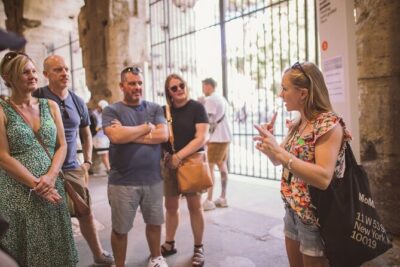
You’re kept to a small group (up to 10 in some cases, and a cap of 20 overall), so you can actually hear details and ask questions.
Start at Porto Cathedral, then move into the old quarters
The route is anchored in one of Porto’s best-known landmarks, then quickly shifts into neighborhood history.
Inquisition stories with specific locations
You’ll hear how the Inquisition targeted Jewish people and how authorities tried to erase their presence, tied to the spots you pass.
Medieval views are part of the lesson
Bridges, viewpoints, and terraces aren’t an add-on; they help you understand how the city’s layout shaped life.
Memorial stops at major religious landmarks
You’ll pause at places like Mosteiro de São Bento da Vitória and the nearby parish church to connect architecture and remembrance.
Your walking finish is near Ribeira Square
The tour ends around the Ribeira area, so you can keep exploring right after.
In This Review
- Why This Walk Works: Jewish Heritage Seen Through Porto’s Street Layout
- The Route Starts at Porto Cathedral (Terreiro da Sé)
- From Ribeira Square to the Old Jewish Quarter Area
- São Bento da Vitória: Memorial Stop and Local Connections
- Postigo do Carvão: A Medieval Porto Feel
- Iglesia Paroquial de Nossa Senhora da Vitória: Another Stop, Another Layer
- Passeio das Virtudes: Views as a History Tool
- Chafariz da Porta do Olival: A History-Laced Water Feature
- Miradouro da Vitória: Hidden Viewpoint Finale
- What You Really Learn Here (Beyond “Places to Visit”)
- Who This Walking Tour Is Best For
- Price and Value: What $36.30 Buys You in Real Terms
- Tips Before You Go (So the Walk Feels Easy)
- Should You Book This Jewish Heritage Walking Tour in Porto?
- FAQ
- What is the duration of the Porto Jewish Heritage Walking Tour?
- How much does the tour cost?
- Where do I meet the guide, and where does the tour end?
- Is the tour only for mornings or can I choose an afternoon time?
- How big is the group?
- What language is the tour offered in?
- Does the tour include visits to the Porto Synagogue or the Porto Jewish Museum?
- Is admission free at the stops during the walk?
- What should I wear or bring?
- What if it rains or the tour is canceled?
Why This Walk Works: Jewish Heritage Seen Through Porto’s Street Layout
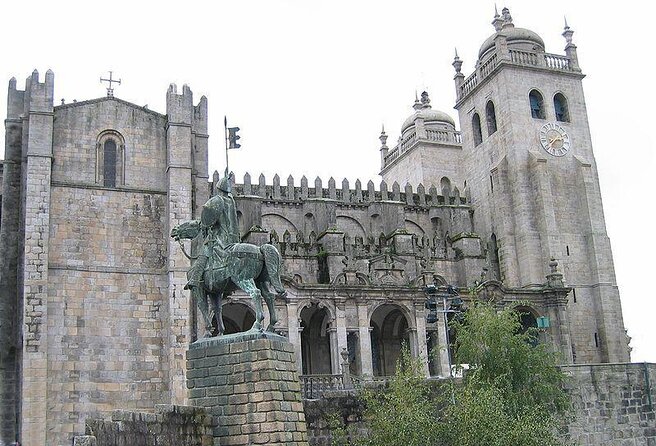
Porto is not set up like a museum city. What you get here is the next best thing: a route that uses the city itself as the “display.” You start at Catedral do Porto and then follow the logic of where people would have lived, traded, and been restricted over time.
The big value for me is the way the tour balances story and location. Instead of only saying what happened, the guide helps you track where those communities were concentrated—inside and outside the walls—and how later persecution reshaped the landscape. Even if many original structures are gone, the geography still explains a lot.
Also, the guides getting top marks for English clarity is a real plus. When the subject matter is detailed, you want someone who can translate complex history into street-level observations without losing you.
The Route Starts at Porto Cathedral (Terreiro da Sé)
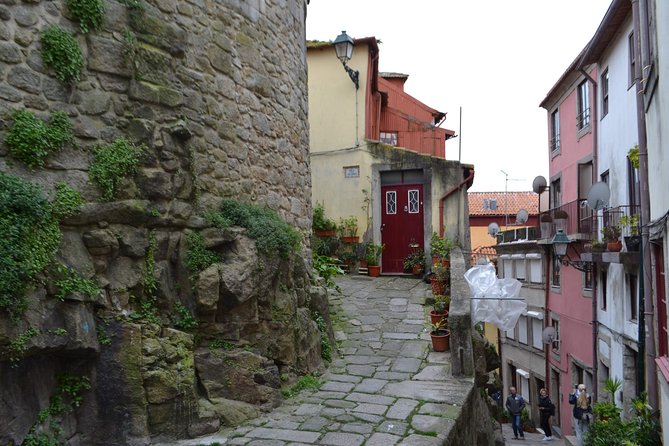
Your meeting point is Porto Cathedral at Terrei ro da Sé, and that’s a smart choice. It’s central, easy to recognize, and it gives the walk a “grounding” point before you head into quieter, older lanes.
At the cathedral stop, the time is short, but it sets the tone: this tour treats the Jewish story as part of Porto’s broader urban development. If you’re only half paying attention when you first arrive, you’ll still get the big picture fast.
Practical tip: arrive a few minutes early and be ready to move. Even with a relaxed group pace, the route starts building momentum quickly.
You can also read our reviews of more walking tours in Porto

From Ribeira Square to the Old Jewish Quarter Area
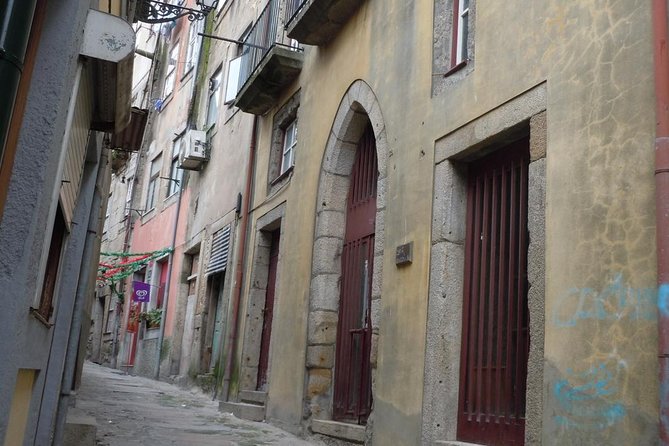
After the cathedral, you head toward Praca da Ribeira, where you spend about 15 minutes. This is where the tour leans into the idea of “quarters”—not one single site, but a patchwork of neighborhood spaces with different roles.
You’ll learn how Jewish people contributed to Porto’s early merchant trade—and why that matters. Trade history isn’t abstract here; the streets, market-adjacent areas, and the city’s commercial rhythms become part of the explanation. The tour also helps you connect that earlier prosperity to what came later.
One reason I like this segment: it doesn’t require you to have prior knowledge. You get enough framing to understand why later policies would target specific communities.
São Bento da Vitória: Memorial Stop and Local Connections
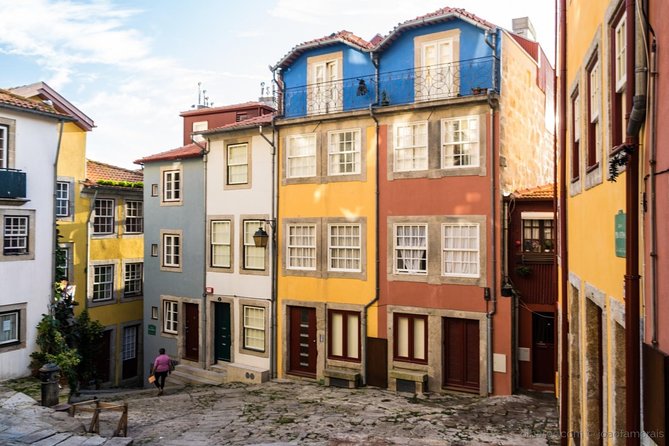
Next up is Mosteiro de São Bento da Vitória (around 10 minutes). This stop is about more than architecture; it’s used to highlight remembrance and local connections tied to the Jewish presence in the region.
This is one of the places where you can feel the tour shifting from “history facts” to “here’s why this place matters today.” If you like learning that connects past communities to how cities commemorate them, you’ll enjoy this.
Watch for the guide’s pointers. Places like this can look straightforward from the outside, but the tour approach turns small details into big meaning.
Postigo do Carvão: A Medieval Porto Feel
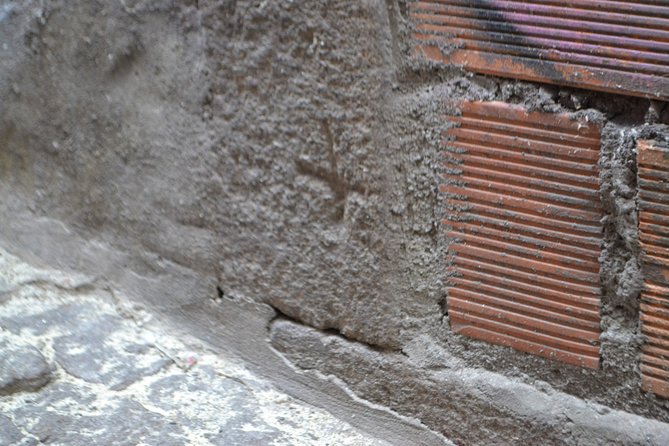
Then you hit Postigo do Carvão, another short stop with a focus on medieval Porto. Even though it’s only about 10 minutes, it helps you understand the city’s older defensive and passage patterns—how gates and access points shaped where people could move and where they could be trapped.
For me, this is where the tour starts to feel “real” in a physical way. The city’s slopes and tight passages aren’t just scenery; they explain how daily life could be hard to navigate—and how authorities could control movement.
If you’re prone to getting winded, pace yourself here. The walking is short between stops, but the terrain adds up.
Iglesia Paroquial de Nossa Senhora da Vitória: Another Stop, Another Layer
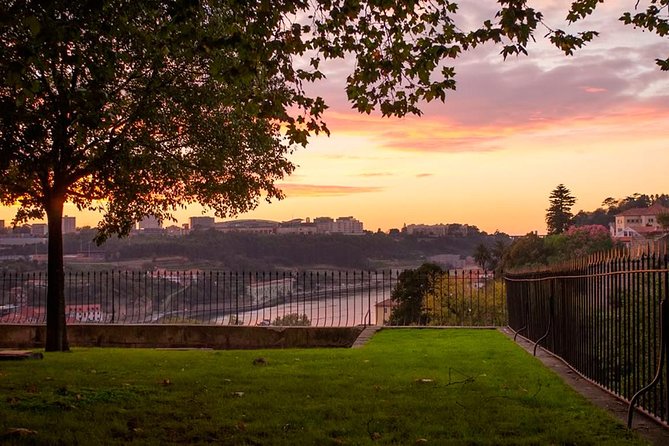
You’ll also stop at Igreja Paroquial de Nossa Senhora da Vitória (around 10 minutes). Like São Bento da Vitória, it functions as a memorial/passage point in the narrative, linking the story to religious and community spaces.
What makes this useful is the cumulative effect. By the time you leave this area, the tour has repeatedly reminded you that Jewish life in Porto wasn’t confined to one building. It showed up in trade, neighborhoods, and how the city’s institutions responded over time.
You can also read our reviews of more guided tours in Porto

Passeio das Virtudes: Views as a History Tool
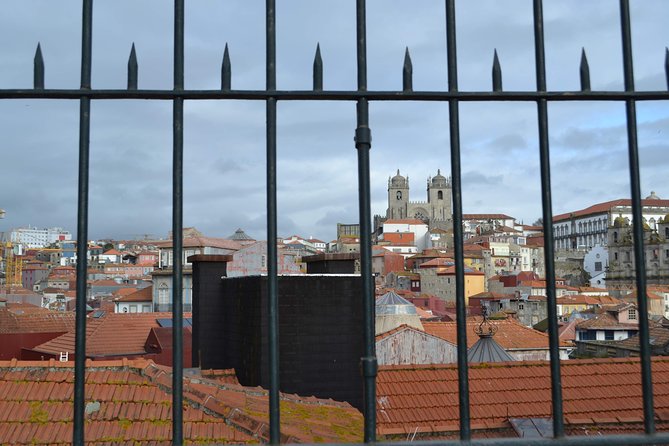
Next comes Passeio das Virtudes for a glimpse of the view from the pont (about 10 minutes). This stop is a reminder that what you see from higher ground wasn’t random. Viewpoints help you picture distances, street structure, and how communities experienced the city’s layout.
You also get a nice “reset” moment in the middle of the walk. If the stairs start piling up, this is a good place to slow down, catch your breath, and refocus.
As you look out, keep listening for how the guide ties the terrain to access, movement, and confinement.
Chafariz da Porta do Olival: A History-Laced Water Feature
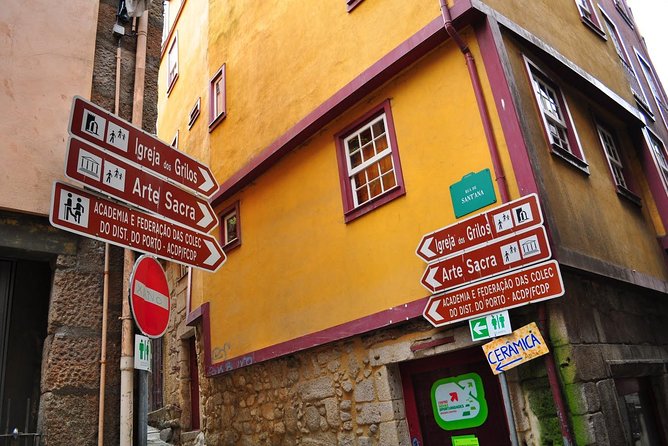
Then you reach Chafariz da Porta do Olival (about 10 minutes). The tour uses this spot to point out history in ordinary objects—because in Porto, the past often lives inside what still functions as part of daily life.
This stop supports one of the tour’s key themes: Jewish presence was both visible in its impact and later targeted for erasure. Water features and street corners become part of the “trail” even when grand buildings aren’t preserved.
Miradouro da Vitória: Hidden Viewpoint Finale
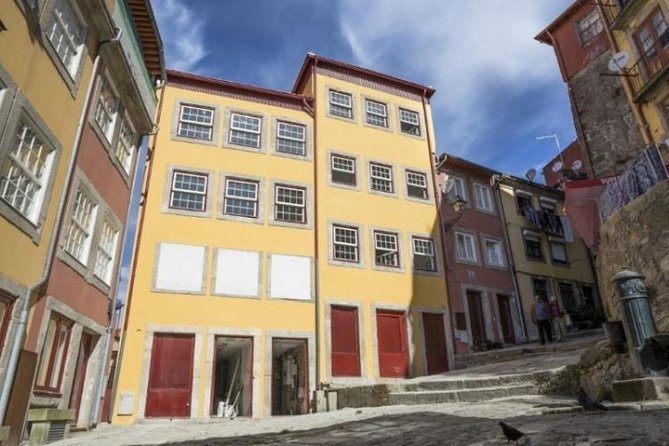
Finally, you end around Miradouro da Vitória, another short viewpoint stop (about 10 minutes). The timing matters: by the end of the walk, you’ve already heard the Inquisition story and the attempts to erase Jewish roles, so the scenery hits differently.
The tour’s finishing point is listed at Passeio das Virtudes, close to the Ribeira Square area. That’s helpful because once you’re done, you’re in a great zone to grab a bite or keep exploring along the river.
What You Really Learn Here (Beyond “Places to Visit”)
This tour’s core story is about movement and erasure. First, you follow the outlines of different Jewish quarters—both inside and outside city walls. Then you shift to persecution, including how the Portuguese Inquisition tormented Jewish people and tried to remove their imprint from the past.
The tour also makes a point of locating a gate that once opened onto a medieval ghetto, plus other places where the Jewish community left its mark. Even if many original structures are missing today, you’re not just staring at history—you’re learning how power worked on a city map.
One more thing: some reviews noted that not everything still exists on the ground. That’s worth taking seriously. If you’re expecting a tour centered on surviving synagogue buildings and museums, this won’t be that kind of outing. The tradeoff is you get a guided “interpretation route,” using traces, memorial sites, and city logic to bring the story alive.
Who This Walking Tour Is Best For
You’ll get the most from this experience if you:
- like history tied to street geography, not only indoor exhibits
- want an English-guided walk with strong Q&A and clear explanations (guides such as Ricardo and Pedro come up often)
- enjoy viewpoints and short stops rather than long museum sessions
It’s also a great pick if you’re already planning time in central Porto and want a focused 3-hour activity that leaves you free afterward.
If you’re the type who hates hills or you’re sensitive to stairs, adjust your expectations. The tour explicitly notes steep streets and stairs, and many people flag that as the main challenge.
Price and Value: What $36.30 Buys You in Real Terms
At $36.30 per person for about 3 hours, this is priced like an intentional, guided experience rather than a quick sightseeing add-on. You’re paying for a local guide experience and a structured route that connects multiple landmarks into one historical story.
It also helps that the stops themselves are indicated as free admission at the listed points. And since it’s a group format with a stated size cap, you’re not paying for private pacing—unless you book that option.
Is it worth it? If you want context that helps you understand what you’re seeing in Porto beyond the usual postcard spots, yes. If you’re expecting lots of surviving Jewish buildings to tour end-to-end, you may feel you’re walking through “what’s left” more than “what’s still here.”
Tips Before You Go (So the Walk Feels Easy)
- Bring comfortable shoes. The route includes stairs and steep streets.
- Use smart casual clothing, as the tour suggests, and dress for weather since it operates all-weather but can be tougher if conditions are rough.
- If you have mobility concerns, plan for a steady walking pace and keep your breaks simple and short.
- If you use public transport, plan to arrive early since the meeting point is a specific landmark (Porto Cathedral).
Should You Book This Jewish Heritage Walking Tour in Porto?
I’d book it if you want a short, memorable walk that explains Porto through a lens most visitors miss. Starting at Porto Cathedral, then moving through neighborhood landmarks and viewpoints toward the Ribeira area is an efficient way to learn without spending a whole day indoors.
I would skip—or at least think hard—if you need surviving Jewish sites as the main event. This is a “traces + interpretation” tour, and the walk can be demanding on uneven streets and hills.
If that fits your travel style, it’s one of those experiences that turns a familiar city center into a place you understand differently once you leave.
FAQ
What is the duration of the Porto Jewish Heritage Walking Tour?
The tour lasts about 3 hours.
How much does the tour cost?
The price is $36.30 per person.
Where do I meet the guide, and where does the tour end?
You meet at Porto Cathedral (Terreiro da Sé, 4050-573 Porto, Portugal). The tour ends at Passeio das Virtudes (4050 Porto), near the Ribeira Square area.
Is the tour only for mornings or can I choose an afternoon time?
You can choose either a morning or afternoon tour time.
How big is the group?
Group size can be up to 10 travelers for non-private tours, and the activity has a maximum overall cap of 20 travelers.
What language is the tour offered in?
The tour is offered in English.
Does the tour include visits to the Porto Synagogue or the Porto Jewish Museum?
No. The tour does not include visits to the Porto Synagogue or the Porto Jewish Museum.
Is admission free at the stops during the walk?
The listed stops (including Porto Cathedral and the other landmarks on the route) are shown as free admission.
What should I wear or bring?
Wear smart casual clothes, and bring comfortable shoes, since the tour goes up through some stairs and steep streets. It operates in all weather conditions, so dress appropriately.
What if it rains or the tour is canceled?
The tour requires good weather. If it’s canceled due to poor weather, you’ll be offered a different date or a full refund. For cancellations, you can get a full refund if you cancel at least 24 hours before the experience start time.