REVIEW · PORTO
Porto: Jewish Heritage Walking Tour
Book on GetYourGuide →Operated by EFun Tours · Bookable on GetYourGuide
Jewish Porto hides in plain sight. This walk through tight lanes and stair climbs brings secret synagogues and real neighborhood history into focus, with guides like Ricardo Silva and Pedro bringing the stories to life. I like the way the tour follows the city’s clues step by step, including the saga of Captain Arthur Carlos de Barros Basto (Abraham Israel Ben-Rosh) and his role in the Kadoorie Mekor Haim synagogue. One thing to keep in mind: this is a walking-heavy route in a hilly city, and you should not count on an actual synagogue or museum visit.
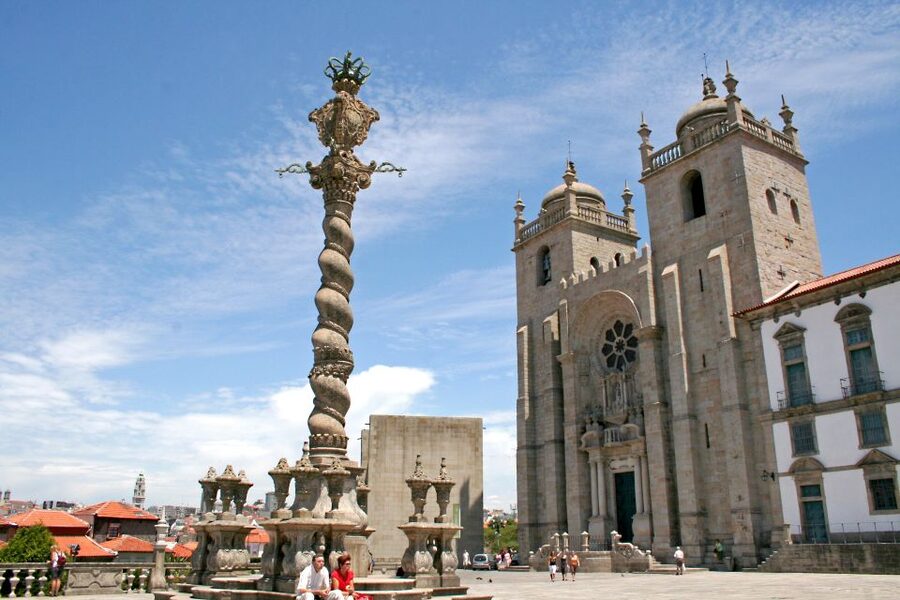
You’ll meet at a central spot (often Pelourinho do Porto or Rua de Sant’ Ana), then head through key streets such as Sant’ana Street and Comércio do Porto Street toward major viewpoint stops. I like that it ends at Parque das Virtudes, so you finish with a breather and a sense of place rather than just turning around mid-walk. Bring comfortable shoes, and plan for some steep streets.
In This Review
- Key things I’d focus on before you go
- What makes the Porto Jewish Heritage Tour worth your time
- Where you start and how the route is paced
- Sant’ana Street: learning the neighborhood map the city won’t hand you
- Miradouro da Vitória: a photo stop that actually changes how you see the city
- Esnoga stairs and the church stretch: history in motion up steep steps
- Parque das Virtudes: where the tour ends (and the view wins)
- The people and events you’ll hear about (and why they matter)
- What you’re likely to see (and what you won’t)
- Price and value: why $35 can be a bargain in this city
- Who this tour suits best (and who should skip it)
- Tips to get the most out of it
- Should you book the Porto Jewish Heritage Walking Tour?
- FAQ
- How long is the Porto Jewish Heritage Walking Tour?
- What is the price per person?
- Where does the tour start and where does it end?
- What’s included in the tour price?
- Is a synagogue visit included?
- Is the Jewish Heritage Museum included?
- What languages is the guide available in?
- Is the tour wheelchair accessible?
- How much walking should I expect?
- Is this tour private?
Key things I’d focus on before you go
- Secret synagogues and outside clues: You learn what to look for when little visible evidence remains.
- Stories tied to named figures: Captain Arthur Carlos de Barros Basto (Abraham Israel Ben-Rosh) comes up in a concrete way, including Kadoorie Mekor Haim.
- Viewpoints built into the history: Miradouro da Vitória and the Esnoga stairs give you pauses plus context.
- Hills matter: Expect a moderate walking load with steep streets—pace yourself.
- Guides who handle questions well: Many guides are patient and warm, keeping the tour engaging rather than lecture-only.
- No synagogue or museum stop: The value is in the guided walk-through and interpretation, not entering buildings.
What makes the Porto Jewish Heritage Tour worth your time
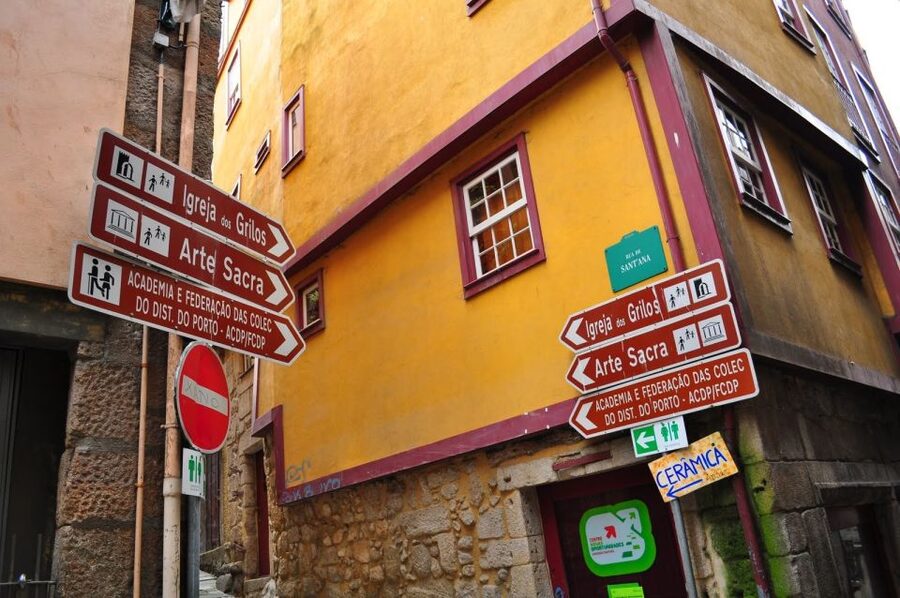
Porto’s Jewish story is easy to miss on your own. The city is layered, and a lot of what remains isn’t a big, obvious monument. That’s why this tour works: you don’t just hear dates, you walk the places where the community shaped daily life, trade, and neighborhoods, then you learn how those traces can show up in subtle ways.
The best part is that the tour is practical and location-based. You start in the older core of town, move through streets that connect to the former Jewish quarters, and then climb toward viewpoints where the geography starts to make sense. I also like that the guide’s storytelling gives you a timeline you can hold in your head, from early presence in the 12th century to later pressures and forced changes.
At the same time, you should set your expectations correctly. This isn’t a tour where you spend the afternoon inside religious sites. It’s a walking route that uses the city itself—stairs, street corners, church-adjacent areas, and small inscriptions or building signs—as the classroom. If you’re hoping for an easy, flat walk or guaranteed interior access to a synagogue, you may feel underwhelmed.
You can also read our reviews of more walking tours in Porto

Where you start and how the route is paced
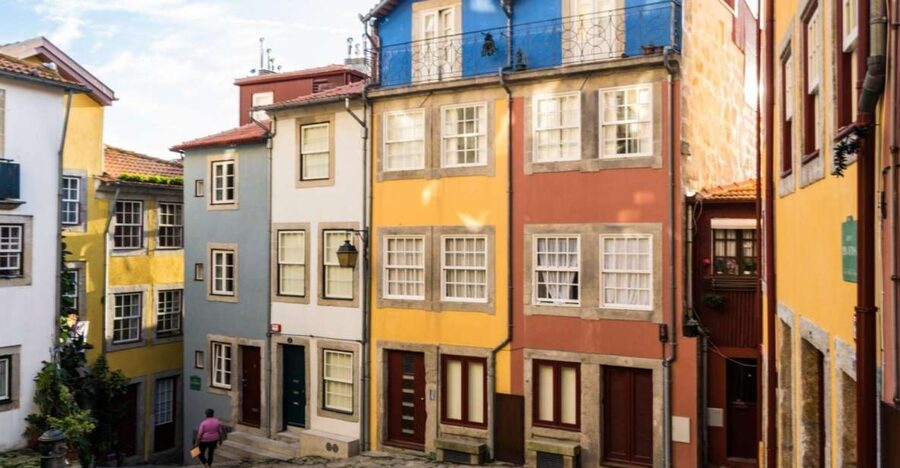
The tour is designed around a central meeting point, with two common options: Pelourinho do Porto or Rua de Sant’ Ana. Because the exact meeting spot can vary depending on what you booked, I recommend you arrive a few minutes early and confirm the location with your voucher so you don’t waste time circling.
Once you start, the flow is steady. You begin walking on city streets with a guided orientation to Porto’s Jewish quarters, then you shift into a pattern of short segments, photo/view pauses, and stair sections. The full tour runs about 3 hours, and the route includes hilly sections, so your personal fitness matters more than you might think.
A useful reality check from people who went: some visitors felt the climb and walking pace strongly enough that they left early after roughly 2 hours. If hills tire you fast, you may want to plan a lighter rest of your day afterward.
Sant’ana Street: learning the neighborhood map the city won’t hand you
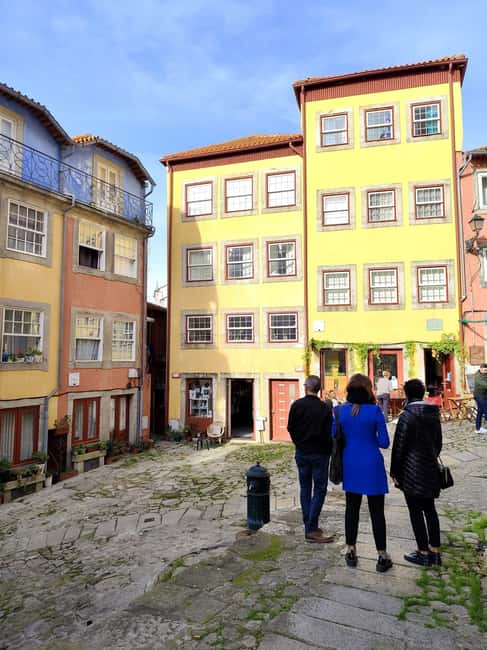
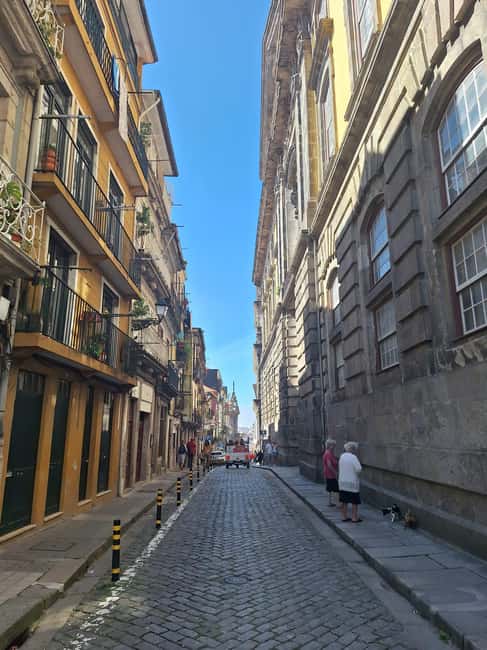
One of the early sections focuses on Rua de Sant’ Ana and then continues through key nearby streets, including Comércio do Porto Street. This is where the tour starts doing its main job: turning a confusing patchwork of old streets into a clear story you can follow.
You’ll hear how Porto’s Jewish presence dates back to the 12th century and how, for a long stretch, Jewish communities coexisted with local Christians. That framing matters because it prevents the story from feeling like only a tragedy. You also learn about trade relations—how everyday economic connections shaped living patterns—and about where wealthier Jewish families settled.
In plain terms, this is a good stage if you want orientation. It’s also where the guide helps you understand why certain places look the way they do now, even if the original community is mostly gone.
A drawback here is simple: in a city with limited remaining physical evidence, you have to rely on interpretation. If you want big, obvious remnants at every stop, you might find fewer “wow, there it is” moments and more “oh, that’s what that sign means” moments.
Miradouro da Vitória: a photo stop that actually changes how you see the city
The route includes a pause at Miradouro da Vitória. You’ll use it as a photo stop, but the viewpoint is more than a break. When you look over Porto from here, the hills and the old street layout click into place.
This helps you understand why old quarters were where they were and how moving through the city worked in earlier centuries. It’s also a nice moment to slow down, catch your breath, and reset before the stair work.
Practical tip: if you’re traveling in warm weather, this is a good time to drink water and protect yourself from sun. It’s also a reminder that Porto’s vertical layout isn’t just scenic—it shapes how hard your walk will feel.
Esnoga stairs and the church stretch: history in motion up steep steps
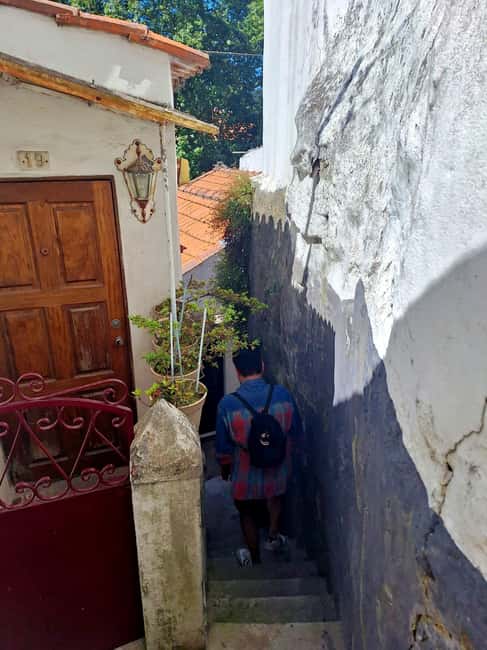
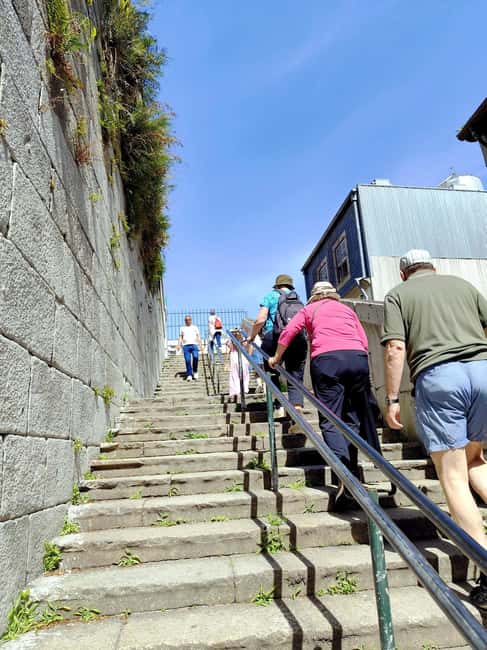
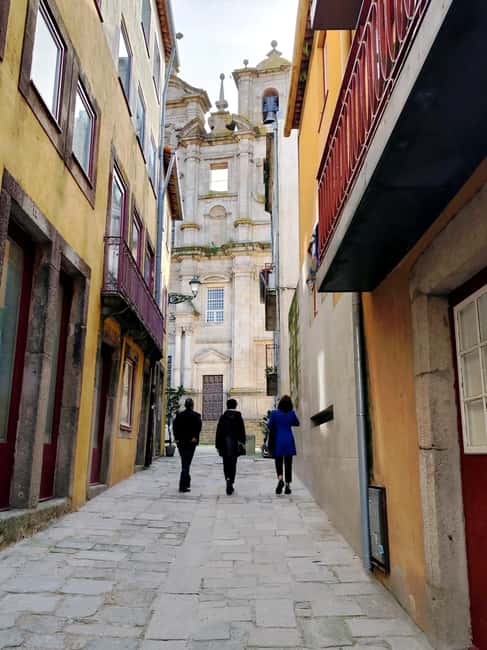
From viewpoints, the tour shifts into the stair-and-changes-of-level parts of Porto. You’ll go up the Esnoga stairs, and the route also connects to the S. Bento da Vitória church area.
I like this segment because it matches the tour’s theme. Jewish history in Porto wasn’t static. It moved through neighborhoods, adapted to pressure, and left marks—sometimes in ways that survive only as references in buildings or street names, not as intact community spaces.
Stairs are the obvious challenge. Porto can be steep under good conditions, and the route calls for comfortable shoes. If you’re sensitive to steep walking, take your time on the steps, and don’t be shy about slowing the group down.
You can also read our reviews of more historical tours in Porto



Parque das Virtudes: where the tour ends (and the view wins)
The tour includes Parque das Virtudes as both a scenic photo stop and the finishing point. This is a smart place to end, because you get one last stretch of open space and a chance to decompress after climbing.
During the tour, the route also references Virtudes garden and an area described as Jewish Mountain. Even if you don’t get a big landmark sign every few minutes, the guide’s explanation is what helps you connect the terrain to the story—where people lived, how the community related to the wider city, and how later events altered who could stay.
If you like finishing tours with a view and time to linger, you’ll probably appreciate this ending. If you prefer a fast, back-to-the-start walk, the payoff is that you don’t just loop in circles—you end with a sense of where the story sits on the map.
The people and events you’ll hear about (and why they matter)
A big reason this tour rates so well is that it doesn’t keep the story in the clouds. It connects to individuals and named contributions, including Captain Arthur Carlos de Barros Basto (Abraham Israel Ben-Rosh), who is described as a key founder figure for Porto’s Jewish community and a major contributor to the construction of the Kadoorie Mekor Haim synagogue.
The guide also ties Jewish-Porto history to broader pressure points. You’ll hear about the Inquisition and how consequences of forced conversion affected Jews in Portugal. One of the more important takeaways here is how those events can leave traces beyond the obvious: symbols, inscriptions, or subtle signs on buildings that only make sense once someone explains the context.
Some guides also bring in more modern echoes, including references to the 20th century and how Jewish life changed over time. The result is a story with continuity: not only what happened, but how the city kept living while the community faced shifts in safety and acceptance.
What you’re likely to see (and what you won’t)
This is a walking tour that focuses on what’s still visible in the city today and how to interpret it. The tour description highlights hidden synagogues and the old Jewish quarters, but it also clearly states what doesn’t happen on the tour: there’s no synagogue visit and there’s no visit to the Jewish Heritage Museum.
That means the value is in the guided route and explanation. You might spot small inscriptions on buildings, exterior marks, or references that can otherwise look like random details. Guides tend to point them out and explain what you’re seeing and why it connects to the Jewish presence in Porto.
If you want to go inside a synagogue as part of your trip, you’ll need to plan that separately. Even so, the walk still matters because it teaches you where to look and gives you the map of the former community areas.
Price and value: why $35 can be a bargain in this city
At $35 per person for about 3 hours, you’re paying for two things: a local guide and a carefully structured route. In Porto, walking tours can sometimes feel like a general overview of the city. This one leans hard into a specific theme—Jewish heritage—so the guide’s knowledge becomes the main product.
It also helps that the tour includes multiple “learning moments” rather than one museum stop. You get street-level storytelling across several areas, viewpoint breaks for context, and an end point that keeps the tour from feeling like a drag-and-drop checklist.
Is it perfect value for everyone? Not necessarily. If you already know a lot about Portuguese-Jewish history and you want a lot of interior access, you may feel the price should include more site entry. But if you want a guided way to understand Porto’s hidden layers without spending hours researching on your own, the cost looks fair.
Who this tour suits best (and who should skip it)
This tour is best for you if:
- You like history that you can walk between, not just read later
- You enjoy street-level details, even when the physical evidence is limited
- You ask questions and want a guide who stays patient and organized
- You want a route that finishes at a pleasant city spot rather than ending abruptly
It’s not a great fit if:
- You need wheelchair access or you have mobility impairments (the tour is not suitable for these needs)
- You have low fitness or you’re not comfortable with hilly, steep streets
- You expect a low-effort stroll with minimal stairs
The good news is that the tour is only 3 hours. You can still build it into a busy Porto day. Just treat it like exercise and plan accordingly.
Tips to get the most out of it
Here’s how to make the walking parts feel easier and the history stick:
- Wear comfortable shoes with grip. Porto’s steps and slopes are part of the experience, not a side quest.
- Pace yourself on the stair sections. Your goal is to enjoy the story, not win a hill race.
- Bring a curious mindset. When the visible remnants are small, your attention is what turns street corners into clues.
- If you’re traveling with others, decide early who’s okay with slower climbs. The tour’s main value depends on staying together during the explanations.
One more practical note: some people found it a bit tricky to locate the guide at the start. If you’re prone to getting turned around, give yourself a little buffer time before the departure.
Should you book the Porto Jewish Heritage Walking Tour?
If you want a Porto experience that feels specific, thoughtful, and genuinely connected to place, I think this one earns a spot on your list. The route pairs viewpoints and stair sections with a narrative that connects early coexistence, later hardship, and named figures like Captain Arthur Carlos de Barros Basto (Abraham Israel Ben-Rosh). You’re not just collecting sights; you’re learning how to read the city.
I’d only tell you to skip it if you have difficulty with steep walking or if your top priority is entering religious buildings. In that case, you’ll likely feel the tour is too much movement and too little interior time.
FAQ
How long is the Porto Jewish Heritage Walking Tour?
The tour lasts 3 hours.
What is the price per person?
The price is $35 per person.
Where does the tour start and where does it end?
Meeting point can vary depending on the option booked, with starting options including Pelourinho do Porto or Rua de Sant’ Ana. The tour finishes at Parque das Virtudes.
What’s included in the tour price?
The tour includes a walking tour and a local guide.
Is a synagogue visit included?
No. A visit to Porto’s synagogue is not included.
Is the Jewish Heritage Museum included?
No. A visit to the Jewish Heritage Museum is not included.
What languages is the guide available in?
The live guide is available in English and Portuguese.
Is the tour wheelchair accessible?
No. It is not suitable for people with mobility impairments or wheelchair users.
How much walking should I expect?
There is a moderate amount of walking, and Porto has steep streets. Comfortable shoes are recommended.
Is this tour private?
Private group options are available.