REVIEW · CAIRO
All Inclusive 2-Day Ancient Egypt and Old Cairo Highlights Tour
Book on Viator →Operated by Tree of Life Day Tours · Bookable on Viator
Two days, a whole lot of Cairo. This tour strings together Giza, Saqqara, Memphis-area stops, and Old Cairo with an Egyptologist guide, so the ancient world and today’s neighborhoods run back-to-back.
I love that lunch and entrance fees are included, which makes budgeting simple in a city where small add-ons add up fast. I also like the private feel and the way a good guide can pace the day around real-world crowd and traffic pressure.
One drawback to plan for: some groups have reported extra shopping stops (like perfume or papyrus places) that can stretch the schedule. If your time is tight, ask for a firm itinerary before you go.
In This Review
- Key Things You Should Know Before You Go
- Price and Inclusions: What $95.05 Buys You in Cairo
- Day 1 on the Giza Plateau: Cheops, Chephren, Mycerinus, and the Sphinx
- Camel ride: short, scenic, and usually the real highlight for photos
- What you should know about extra pyramid interiors
- Saqqara Pyramids Plus Noble Tombs: Zoser, Teti, and the Feel of “real time”
- The quick reality: expect dust and a “carry your focus” pace
- Mit Rahina Museum: Ramses II and a Giant Alabaster Sphinx
- Egyptian Museum on Day 2: Tutankhamun’s Gold and the Time-Sensitive Highlights
- How to enjoy the museum without rushing yourself
- Cairo Citadel and the Alabaster Mosque: A Break Between Eras
- Coptic Cairo: Hanging Church, Ben Ezra Synagogue, and Abu Serga
- Dress code: your most important packing decision
- Egyptologist Guides and the Private Day Advantage
- Traffic, Timing, and How to Stay Fresh
- Lunches, Shops, and the Reality of Cairo Add-Ons
- Who Should Book This Tour (and Who Might Want Something Else)
- Should You Book This All-Inclusive 2-Day Highlights Tour?
- FAQ
- Is hotel pickup and drop-off included?
- What time does the tour start?
- Is lunch included, and is there a vegetarian option?
- Does the price include entrance fees?
- Is the camel ride included?
- What is the dress code for Day 2?
Key Things You Should Know Before You Go

- Giza highlights plus camel time: you’ll see the Great Pyramid of Cheops, Chephren and Mycerinus, then ride a camel for about 25 minutes around the plateau.
- Valley Temple and the Sphinx included: after the pyramids, you also get the Valley Temple of Chephren and the Sphinx, which gives context beyond just standing in front of stones.
- Saqqara’s major names: the Step Pyramid complex of Zoser and the Pyramid of Teti are a strong one-two punch for Old Kingdom history.
- Memphis-area stop at Mit Rahina: you’ll visit the museum area with the colossal Ramses II statue and a huge alabaster Sphinx.
- Day 2 mixes museum + faith history: Egyptian Museum time plus the Citadel’s Alabaster Mosque, then Coptic Cairo’s Hanging Church and more.
- Dress code matters on worship sites: knees and shoulders must be covered for both men and women, or entry can be refused.
Price and Inclusions: What $95.05 Buys You in Cairo
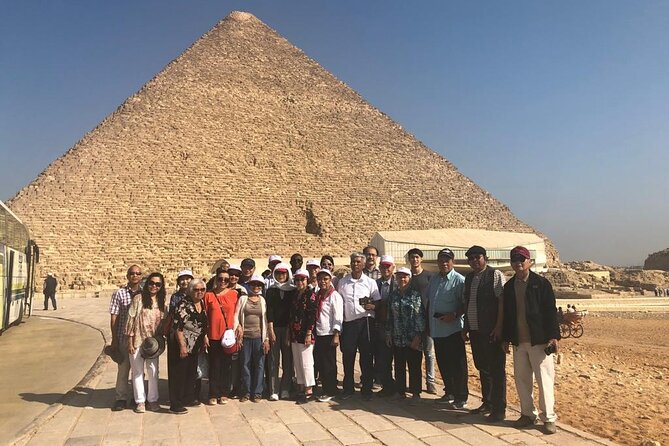
At about $95.05 per person for a two-day highlights tour, the best value is what the price covers. You get hotel pickup and drop-off (so you’re not hunting down meeting points), air-conditioned minivan transport, an Egyptologist guide, entrance fees, and two lunches. On top of that, the big ticket items are there: Giza pyramids, Saqqara, and major stops in Old/Coptic Cairo.
What’s not included is also important. Extra entrances can add up if you want to go inside parts of Giza (the interior of pyramids), plus optional add-ons like the Solar Boat museum and the Royal Mummy Room. Drinks are also not included, so you’ll still want a small budget for bottled water and anything else you’ll sip during long museum stretches.
One more detail: this is listed as a private tour where only your group participates, but it also notes group discounts. In real life, that often means you may pay a set per-person rate that can feel very reasonable versus cobbling together separate tickets, transfers, and a guide.
If you’re doing Cairo for the first time and you want the “hit list” without decision fatigue, this format is built for you.
You can also read our reviews of more tours and experiences in Cairo.
Day 1 on the Giza Plateau: Cheops, Chephren, Mycerinus, and the Sphinx
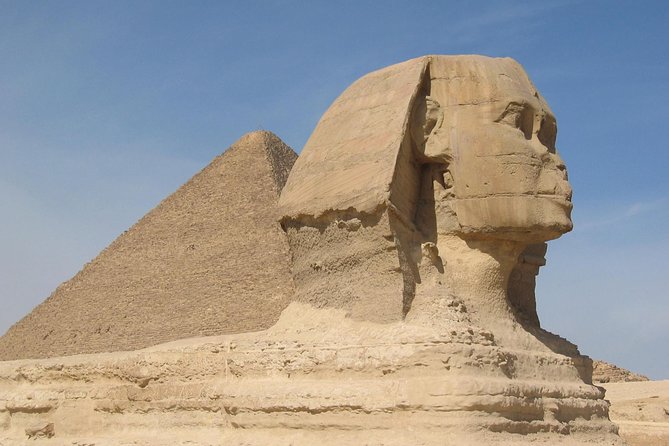
Your day starts with Giza at 8:00 am, which is a smart move because the plateau can feel relentless later in the day. Expect a set of pyramid stops that hit the big names rather than skipping around randomly. You’ll spend time at the Great Pyramid of Cheops, plus the Pyramids of Chephren and Mycerinus.
Here’s what makes this stop practical: you’re not just looking at one angle. You get to shift between major structures, and then the tour adds two key context pieces. First, you’ll visit the Valley Temple of Chephren. Then you’ll move on to the Sphinx. That trio helps you understand that Giza wasn’t built as one monument in isolation—it was a whole system of religious and royal spaces.
Camel ride: short, scenic, and usually the real highlight for photos
The tour includes a 25-minute camel ride around the pyramids. It’s long enough to feel like an experience, but short enough that you’re not stuck far from your group for the rest of the morning. If you’re the kind of person who wants to say you did it, this is the cleanest way to do it without hunting a vendor.
What you should know about extra pyramid interiors
The tour includes standard access for the listed sights, but it does not include extra entrances like going inside the pyramids. If you know you want interior chambers, factor that in early so you can decide before you’re standing there with limited time.
Also, plan for walking on uneven ground and lots of sun exposure. Even with air-conditioned breaks later, Giza is still Giza.
Saqqara Pyramids Plus Noble Tombs: Zoser, Teti, and the Feel of “real time”
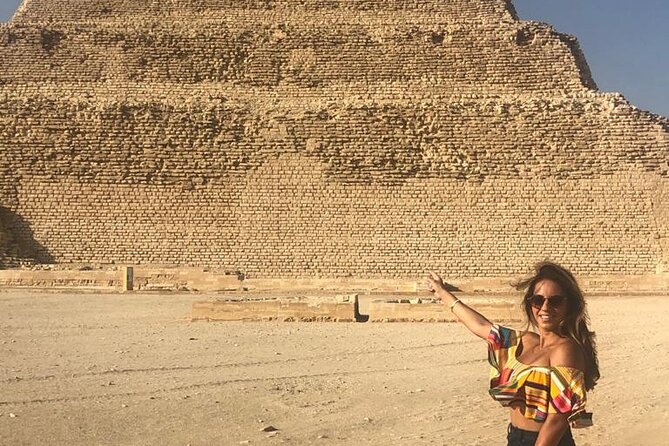
Saqqara is where your tour starts to feel more like a journey through time instead of a checklist. You’ll visit the Step Pyramid complex of Zoser and the Pyramid of Teti, plus a stop for a Nobleman’s tomb.
This is valuable because Saqqara is not just about one famous pyramid. It’s the kind of place where the buildings look like they’re part of a larger story. The Step Pyramid is the headline, but the rest of the site helps you see why this area matters for the evolution of royal architecture.
The stop is about 1 hour, so it’s enough to understand what you’re looking at but not enough to turn Saqqara into a whole-day dig-through-every-corner mission. If you tend to move slowly through ruins, you might want to prioritize taking photos and listening to your guide’s explanations so you’re not doing both at once.

The quick reality: expect dust and a “carry your focus” pace
Saqqara is outdoors, and it’s the kind of site where your eyes work overtime. Wear sunscreen and keep water in mind. Your guide’s job is to make the site readable; your job is to keep your body going.
Mit Rahina Museum: Ramses II and a Giant Alabaster Sphinx
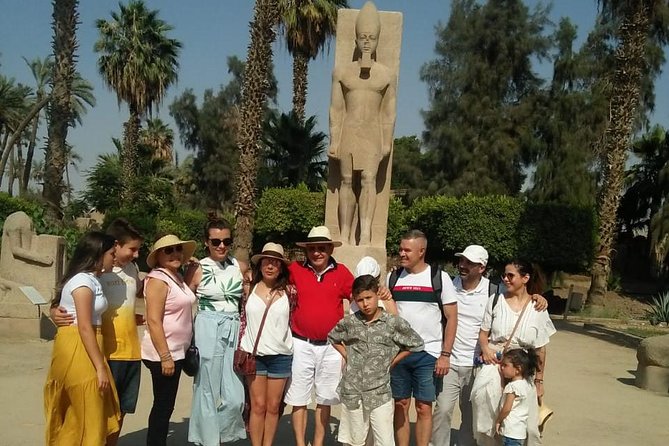
After Saqqara, you’ll head to Mit Rahina Museum for about 45 minutes. This stop brings a different flavor to the day: instead of only Old Kingdom pyramids, you get a massive leap into later royal history through artifacts and monumental pieces.
You’ll see the colossal statue of Ramses II and a huge alabaster Sphinx. That pairing is helpful if you’re trying to connect the dots between “pyramid age” Egypt and the dynasties that came after. It also gives your feet a different kind of sightseeing—less climbing, more viewing and interpreting.
If you’re the kind of person who likes your photos to tell a story (not just a pretty ruin), this museum stop does that well.
Egyptian Museum on Day 2: Tutankhamun’s Gold and the Time-Sensitive Highlights
Day 2 begins with the Egyptian Museum in Cairo for about 2 hours. The tour is built around a clear reason to come: you’ll see hundreds of thousands of ancient Egyptian artifacts and you’ll be drawn toward the display highlights connected to Tutankhamun’s golden treasures.
Two hours can feel tight in a museum this size, so the best way to make it work is to let your guide steer you to the priority rooms and tell you what you’re actually seeing. A strong Egyptologist can explain why certain pieces matter beyond their fame.
There’s also a practical heads-up from how the museum has been operating: at some times, not every exhibit is where you’d expect because objects have been moved to a newer museum building. You won’t have to guess, though—your guide can point out what’s currently available and what’s still worth your time in the older halls.
How to enjoy the museum without rushing yourself
Use this rule: pick a few must-see icons, then let the guide connect the rest. You’ll get more satisfaction that way than trying to “complete” the museum in a sprint.
Cairo Citadel and the Alabaster Mosque: A Break Between Eras
After the museum, you’ll head to the Cairo Citadel and the Alabaster Mosque. This stop runs about 1 hour and gives you a change of pace from ancient artifacts and tombs.
The Citadel area is useful because it anchors you in Cairo’s more recent history and helps your brain stop treating everything as only pyramids. Even if you’re primarily in Cairo for Egypt’s ancient side, this is where you experience the living city as more than a backdrop for monuments.
Expect prayer-space rules: the tour notes a strict dress code for places of worship. Plan for it. If you show up in shorts or sleeveless tops, you might get turned away at exactly the time you need to be flexible.
Coptic Cairo: Hanging Church, Ben Ezra Synagogue, and Abu Serga
Coptic Cairo is the heart of Day 2’s cultural variety. You’ll visit the Hanging Church and also the Synagogue of Ben Ezra and Church of Abu Serga. The time listed is about 1 hour for the Coptic Cairo block.
This part matters because Cairo’s older neighborhoods carry layers: Christian sites, Jewish history, and centuries of community memory all in walking distance of each other. If your interest is Egypt as a continuous human story—not only a distant ancient civilization—this stop delivers.
Dress code: your most important packing decision
The tour’s rules are clear: knees and shoulders must be covered for both men and women. No shorts and no sleeveless tops, and entry can be refused if you don’t follow the rules (especially on Day 2).
This is a place where you’ll feel smarter if you pack light pants or a shawl-style cover-up.
Egyptologist Guides and the Private Day Advantage
This tour lives or dies on the guide. The names you might run into are a big clue that you’re not just getting a driver with a script. I’ve seen guides on this route who bring serious academic detail and real-world coaching style.
For example, Eraky is noted as having a PhD in hieroglyphics, which means he can connect the dots between symbols, names, and what’s actually carved on monuments. Nour and Fatma show up repeatedly in positive feedback, often paired with the idea of smooth pacing and smart handling of traffic and crowds. Zeinab is praised for explaining things clearly and being accommodating. Ahmed gets credit for coordinating needs and making the tour feel easy, even offering a good Italian experience for one group.
What you should care about as a traveler is the outcome: a great guide helps you avoid wasted time, translate what you’re seeing into meaning, and answer the follow-up questions that pop up once you’re standing in front of something huge.
And yes, it’s a private tour, so you’re not getting the “wait while the group catches up” syndrome as often.
Traffic, Timing, and How to Stay Fresh
Cairo travel can be a full-time job. The tour includes transport by air-conditioned minivan, plus hotel pickup and drop-off, which removes a lot of stress. Many guides on this route are praised for planning around traffic and crowds, which matters because your time is limited to two days.
Your best strategy is simple:
- Start strong at 8:00 am
- Drink water when you can
- Keep your expectations realistic about walking time on outdoor sites
One practical caution: one past experience flagged an issue with unscheduled stops, which can eat hours that you thought were already accounted for. Some guides may add demonstrations or shop stops during the day, and they might even frame them as free or low-pressure. But if your goal is strict sightseeing time, ask the operator to confirm what’s included and what’s optional.
Lunches, Shops, and the Reality of Cairo Add-Ons
Lunch is included two times, which is a win because Cairo dining can be its own adventure. The catch is you can’t always control the exact restaurant or what you’ll feel like eating after a long morning of sun, stairs, and museums.
Vegetarian options are available if you request them at booking. That’s worth doing early instead of trying to solve it at the last minute.
About shops: the tour data itself doesn’t list specific shopping stops in the core itinerary, but some guides have taken groups to places like perfume and papyrus-making demonstrations. One experience praised them as no-obligation and not pushy, while another complained about unplanned extra time. Both can be true depending on how the day gets managed.
So here’s the practical move: ask what these stops are, whether they’re optional, and how long they’ll take.
Who Should Book This Tour (and Who Might Want Something Else)
This tour is a good fit if you:
- Want Cairo’s biggest highlights in two days
- Like having an expert guide explain what you’re seeing
- Prefer to have entrance fees and lunches handled
- Are okay with moderate physical fitness needs (walking outdoors, museum time, stairs)
You might want a different plan if you:
- Want to spend long hours in the Egyptian Museum without being time-boxed
- Are very sensitive to schedule changes
- Dislike added stops like demonstrations or shop visits
Also, note the rules for kids: children must be accompanied by an adult.
Should You Book This All-Inclusive 2-Day Highlights Tour?
I’d book it if your goal is straightforward: see Giza, Saqqara, major Cairo museum time, and Coptic Cairo without stressing over tickets, transport, or finding a guide on the fly. The price starts to look fair once you factor in that entrance fees, lunches, and air-conditioned transfers are included.
But book it smart. Confirm what’s included versus optional, and take the dress code seriously, especially for Day 2. If you want strict sightseeing time, message ahead and ask the operator to keep the day tight.
If you do that, this tour is one of the more efficient ways to get your bearings in Cairo and leave with a clear mental map of where Egypt’s old wonders sit inside the modern city.
FAQ
Is hotel pickup and drop-off included?
Yes. The tour includes hotel pickup and drop-off in Cairo.
What time does the tour start?
The start time is listed as 8:00 am.
Is lunch included, and is there a vegetarian option?
Lunch is included twice during the two days. A vegetarian option is available—tell the operator about your needs when booking.
Does the price include entrance fees?
Yes. Entrance fees are included for the stops listed, but extra entrances (like interior pyramid access and a couple of additional museum rooms) are not included.
Is the camel ride included?
Yes. The tour includes a 25-minute camel ride around the Giza Pyramids.
What is the dress code for Day 2?
A dress code is required for places of worship and selected museums. No shorts or sleeveless tops. Knees and shoulders must be covered for both men and women, or entry may be refused.