REVIEW · CAIRO
Cairo: Egyptian Heritage Tanoura Dancing Troupe Show
Book on GetYourGuide →Operated by Sun Pyramids Tours · Bookable on GetYourGuide
Cairo traffic, then spinning skirts. I like the set-seat setup that helps you actually enjoy the show (not crane your neck), and I like pairing the dance with live Egyptian folk music in the 16th-century Wekalet El Ghouri arts center. One consideration: the performance is in an open-air area much of the time, so temperature can change your comfort.
This tour is built for evenings when Cairo can feel chaotic, so you get air-conditioned door-to-door transfer and a guide who handles tickets and keeps the schedule moving. In past runs with this operator, people noted guides such as Mostafa, Hady, or Nagy, and a driver named Mohamed, for calm, on-time pickup even when traffic gets intense.
The whole experience runs about 4 hours, with two transfers of roughly 45 minutes and about 2 hours at the venue, plus bottled water. Show format depends on the season: it can be outdoors, and sometimes in winter it is moved to an indoor dome.
In This Review
- Key Things You’ll Really Notice
- Wekalet El Ghouri: A 16th-century setting for a night show
- Tanoura + whirling dervish: What the performance actually feels like
- Live musicians: The sound you came for
- Getting there and back: Why door-to-door in Cairo is worth paying for
- Timing, comfort, and the outdoor vs dome factor
- Price and value: What $42 buys you (and what it does not)
- Who this tour fits best
- Quick practical checklist before you go
- Should you book this Cairo Tanoura show?
- FAQ
- How long is the Cairo Egyptian Heritage Tanoura Dancing Troupe Show?
- Where does the show take place?
- Is hotel pickup and drop-off included?
- What if I need pickup from Cairo airport or other locations?
- What is included in the price?
- Is food included?
- Is the show indoors or outdoors?
- What languages are offered by the host or greeter?
- Is the experience wheelchair accessible?
Key Things You’ll Really Notice
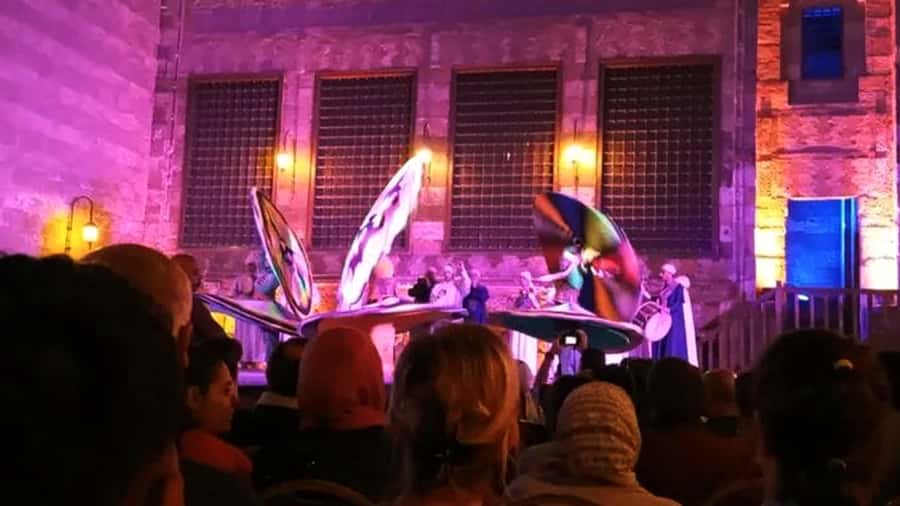
- Wekalet El Ghouri’s Mameluke-era architecture: You are watching dance inside a landmark built during the Mameluke reign, and it feels part of the experience.
- Live folk music, not a soundtrack: Musicians play traditional music as the troupe appears and moves into the performance.
- Two-part performance flow: Tanoura-style dance comes first, then the spiritual whirling dervish (Darawish) section.
- Door-to-door logistics matter in Cairo: You skip the stress of finding your way through the evening traffic on your own.
- Comfort depends on the venue setup: If it is outdoors, dress for warmth or heat; if it is winter, you may be indoors under a dome.
Wekalet El Ghouri: A 16th-century setting for a night show
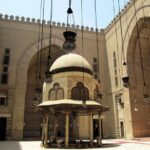
The Wekalet El Ghouri Arts Center sits in the El Azhar area, and it is not just a random venue. The building itself is a big part of why this show feels memorable: it was built during the Mamelukes reign, and the architecture gives the whole evening a sense of place.
When the lights come up and the musicians begin, the space does something useful: it frames the dance. Even if you are not a dance expert, you can follow what is happening more easily when the stage area has clear sightlines and a historic backdrop. Plus, you are not stuck in a generic theater with weak atmosphere. This feels like a cultural performance staged in a real architectural landmark.
One practical note: because the show can be outdoors, the venue is not a fully climate-controlled room. That affects how you plan your clothing and comfort, more than most indoor shows do.
You can also read our reviews of more tours and experiences in Cairo.
Tanoura + whirling dervish: What the performance actually feels like
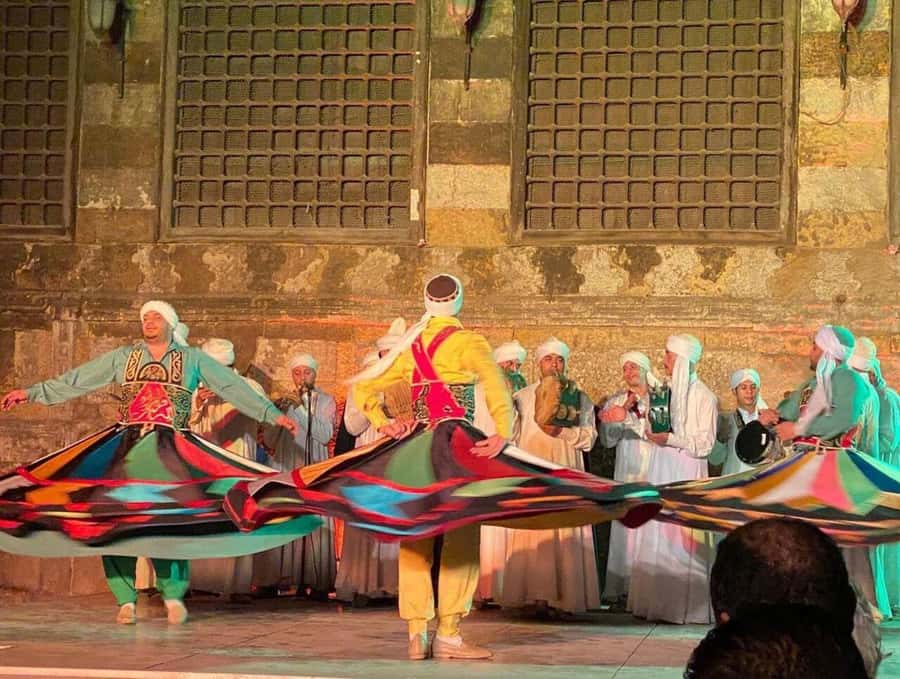
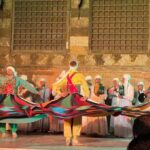
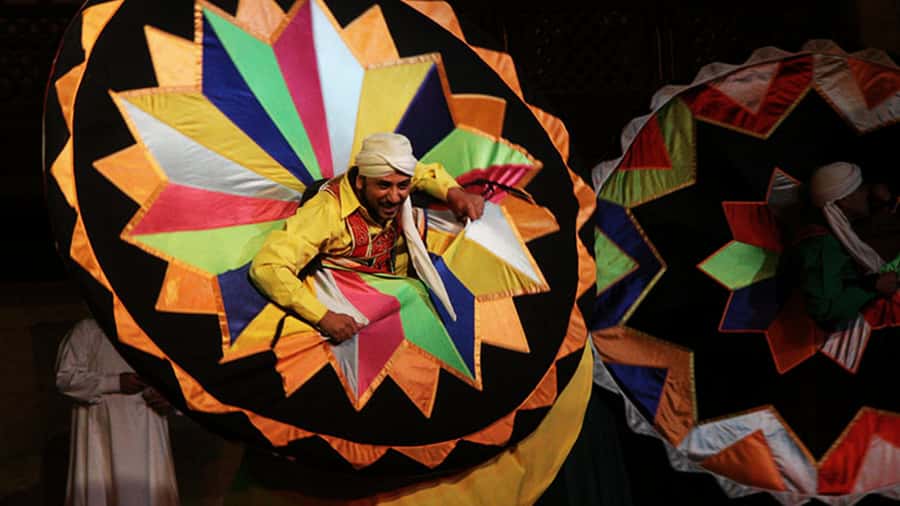
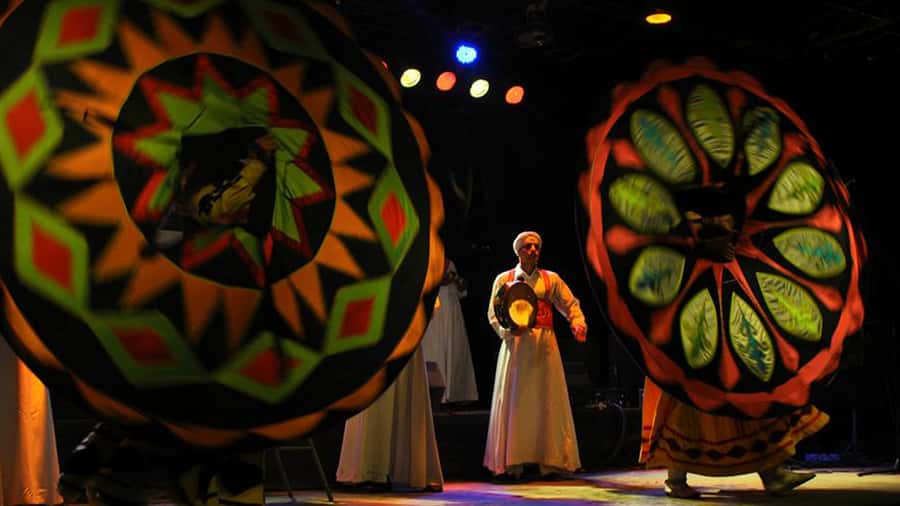
This is a true night performance format, with trained dancers and live musicians. The sequence is straightforward: you sit down, listen as local musicians play traditional Egyptian folk music, and then the El Tanoura troupe dancers enter and start moving to the music.
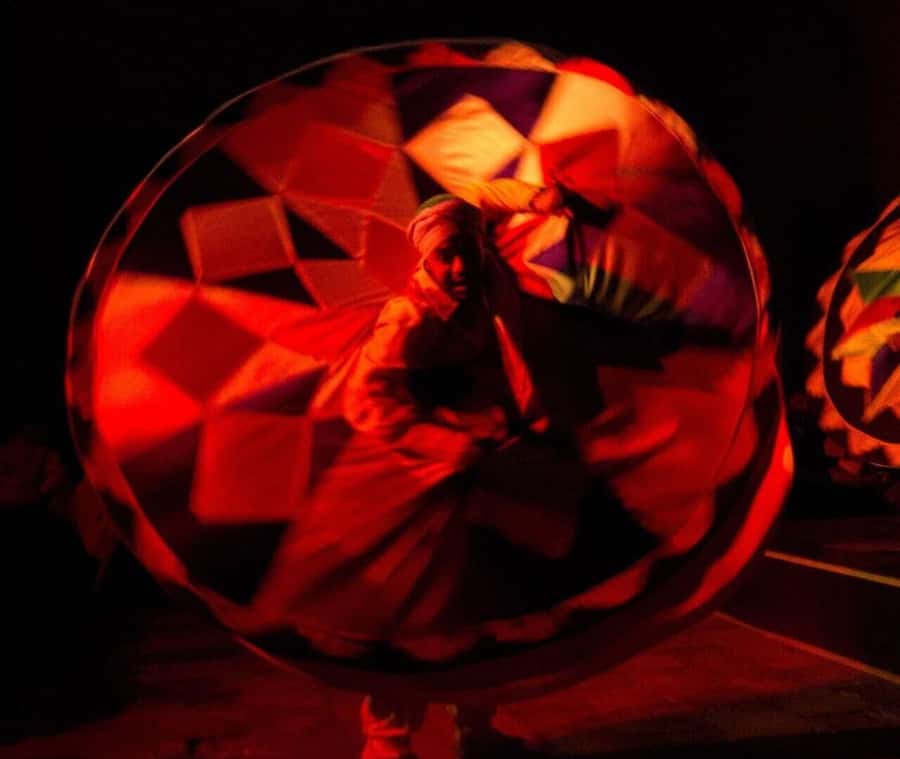
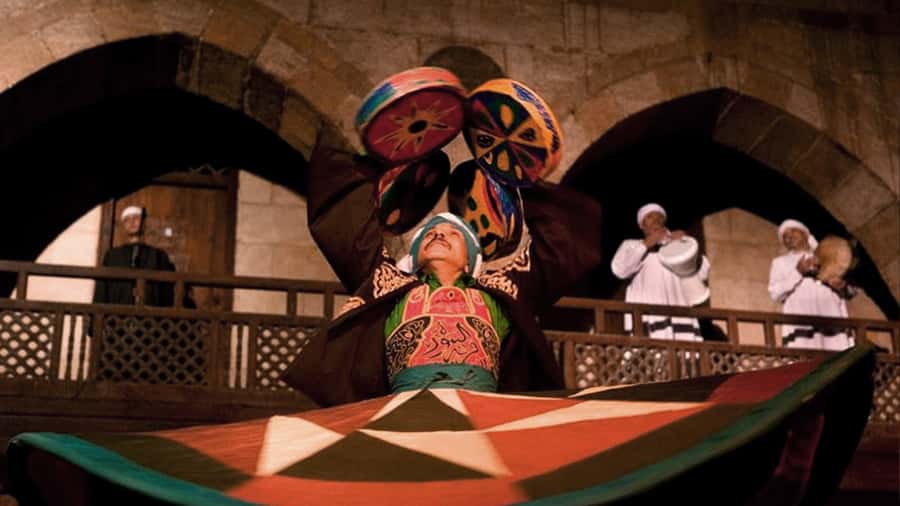
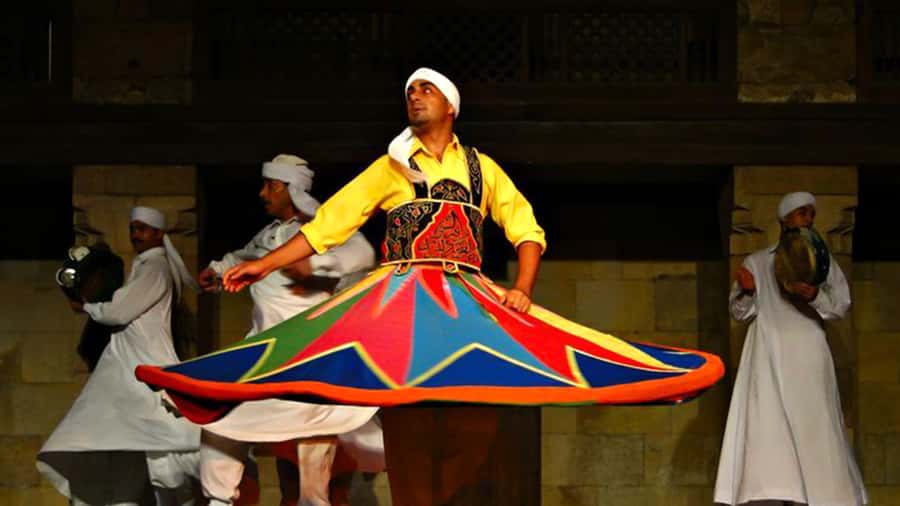
The Tanoura section is all about controlled motion and the look of the spinning skirts. The choreography is designed to be readable from the audience, which matters because good viewing makes the difference between watching the dance and watching people wander on stage. If you are seated in a good spot, the performance clicks into place quickly.
Then comes the spiritual whirling dervish (Darawish) performance. This part typically shifts the mood. The dancers’ spinning is more than spectacle; it feels like a focused, disciplined movement style guided by the rhythm of the music. Even if you come mainly for Tanoura, the dervish segment is often the moment people remember later because it changes the pace and tone.
What I like about this combo is that it gives you two different dance “languages” in one sitting. You get the folk-and-performance energy first, then a more ritual-feeling whirling section.
Live musicians: The sound you came for
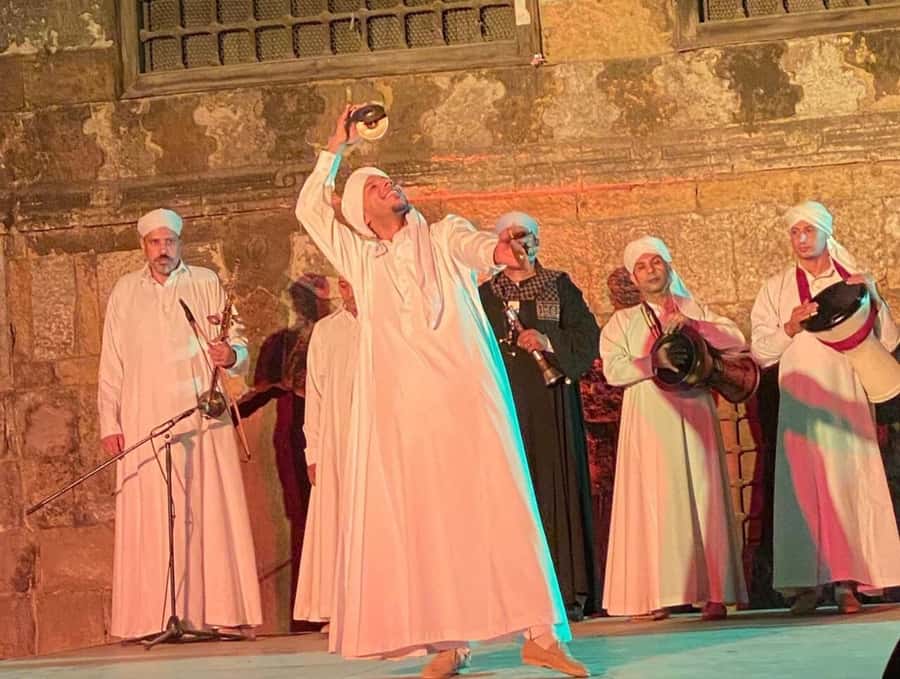
A lot of “dance shows” online are basically choreography with background audio. Here, the big point is live folk music. You sit and listen as talented local musicians play traditional music, and the dancers react and move with that rhythm.
That live element is what makes the night feel alive. You are not just watching motion; you are hearing the performance breathe. And it also helps with timing. The moment the musicians get rolling, you know the show is about to start, and then the dancers appear as the music cues their entry.
If you are the type who enjoys sound as much as visuals, you will likely appreciate this part more than you expected. The music is not an accessory; it is driving the whole event.
Getting there and back: Why door-to-door in Cairo is worth paying for
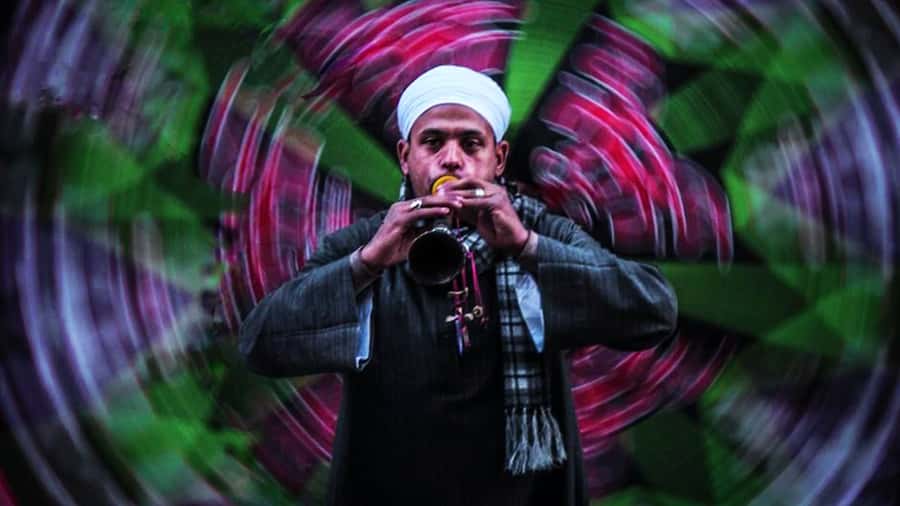
In Cairo, the hardest part of many tours is not the attraction. It is the travel in traffic. This experience solves that with pickup and drop-off, plus an air-conditioned vehicle.
In real life, that means you get collected from your accommodation in the evening and guided to the Wekalet El Ghouri venue without you navigating streets on your own. A guide is on hand, and the driver gets you there safely even when roads slow down. People have specifically praised guides who were on time at hotels and drivers who handled the ride confidently.
It also helps that there is coordination around the ticket and seating. You do not want to spend the first 15 minutes at the venue figuring out where to go and where to sit. This tour is designed to reduce that scramble.
If you are short on energy after a day of sightseeing, this is a solid way to still do a memorable evening activity without turning the trip itself into your main workout.
Timing, comfort, and the outdoor vs dome factor
The schedule is evening-focused and pretty efficient. You spend about 45 minutes on the ride each way, then around 2 hours at the venue.
But the comfort variable is the venue setup:
- The show takes place in an open-air area.
- Sometimes in winter it is moved to an indoor dome.
That matters more than people think when they book. If it is outdoors, pack for the weather you will actually feel in Cairo at night. If it is hot, wear light clothing and be ready for sweat. If it is chilly, dress in layers you can handle easily outdoors before and after the performance.
Also, be punctual at your pickup point. The tour notes that staff need time to hand the ticket to the tour leader, and delays can ripple through the evening schedule. The simple move: arrive at the meeting spot early, not right on time.
Price and value: What $42 buys you (and what it does not)
At about $42 per person for roughly 4 hours, the value comes from the package deal:
- Hotel pickup and drop-off
- Entrance fees
- Bottled water
- A tour leader
What you do not get is food. So if you are hungry, plan a dinner before pickup or bring a simple plan for afterwards.
Here is how I think about the price: the show itself is one part, but the real cost savings is the travel management. Cairo is not a city where you always want to rely on last-minute navigation at night. You are paying for reduced stress—air-conditioned transport, guided coordination, and a ticketed entry that keeps you in the flow.
Also, the seating advantage can be a quiet value booster. People have described getting very good seats when the guide arranged it, including front-row viewing. Even if you cannot assume that every time, the tour is clearly set up to get you sorted at the venue.
Who this tour fits best
This is a good match if:
- You want a cultural night activity in Cairo that is easy to manage.
- You like live music and want it tied directly to dance.
- You want door-to-door logistics rather than figuring out transport late in the evening.
- You enjoy both folk-style dance and a more spiritual whirling performance style.
It may be less ideal if:
- You strongly prefer fully indoor, climate-controlled events.
- You are very sensitive to temperature in outdoor settings and hate waiting outside.
The wheelchair accessible note is a positive signal if mobility is a concern. Still, because the show area can be open-air depending on conditions, ask your operator what the venue setup is like for your date if that detail matters to you.
Quick practical checklist before you go
This is not complicated, but a few details will make the evening smoother:
- Plan your clothing for open-air comfort (or possible dome seating in winter).
- Arrive early at your pickup meeting point.
- Keep an eye on your phone message if your tour leader contacts you ahead of time.
- If you want a full meal, eat before you go since food is not included.
If you do these things, the tour becomes the kind of easy Cairo evening that feels like a treat, not a chore.
Should you book this Cairo Tanoura show?
I would book it if you want a straightforward, ticketed night program with live musicians, real performance pacing, and a venue with strong architectural presence at Wekalet El Ghouri. The door-to-door transfer is especially valuable if you do not want to deal with Cairo navigation at night.
Skip it or think twice if you are uncomfortable with outdoor night conditions and you do not handle temperature well. Otherwise, for a couple of hours of Tanoura-style spinning and a Darawish whirling segment set to live Egyptian folk music, this is a solid use of your evening—and a practical one.
FAQ
How long is the Cairo Egyptian Heritage Tanoura Dancing Troupe Show?
The tour lasts about 4 hours total.
Where does the show take place?
The performance is held at the Wekalet El Ghouri Arts Center in the El Azhar area.
Is hotel pickup and drop-off included?
Yes. Hotel pickup and drop-off are included for Cairo/Giza pickup.
What if I need pickup from Cairo airport or other locations?
Pickup or drop-off from Cairo airport, Sphinx airport, New Administrative Capital, New Cairo, Heliopolis, and several other listed areas is available for an additional cost.
What is included in the price?
Entrance fees, hotel pickup and drop-off, bottled water, and a tour leader are included.
Is food included?
No, food is not included.
Is the show indoors or outdoors?
The show takes place in an open-air area, and sometimes during winter it is held in an indoor dome.
What languages are offered by the host or greeter?
Arabic, English, French, German, Italian, Japanese, and Spanish.
Is the experience wheelchair accessible?
Yes, it is wheelchair accessible.