REVIEW · CAIRO
Cairo Half Day Tours visit Islamic Cairo & ancient mosques
Book on Viator →Operated by EMO TOURS EGYPT · Bookable on Viator
Mosques, minarets, and a market stop in one go. This half-day route through Islamic Cairo pairs big-name landmarks like Mohamed Ali’s Alabaster Mosque with smooth door-to-door transfers, so you spend less time figuring out logistics and more time learning what you’re seeing.
I like the practical value: entry fees and bottled water come included, and you still get a real guide rather than just a bus ride. I also like how the stops aren’t random—when guides such as Mirna, Sayed Mahmoud, Deena, or Tito are on your schedule, you’re more likely to get clear explanations and on-the-spot help with getting properly covered.
The main thing to watch is time pressure. Four major sites plus Khan al-Khalili can feel fast, and if you’re there on a Friday prayer day, you should expect bigger crowds and a slower flow through the mosques.
In This Review
- Key things worth knowing before you go
- Islamic Cairo in 3 to 5 Hours: How This Tour Works
- Stop 1: Salah El-Din Citadel and Mohamed Ali Mosque (Alabaster Mosque)
- Stop 2: Al-Rifa’i Mosque Across From Sultan Hassan
- Stop 3: Al-Azhar Mosque and Its Fatimid Roots (Built for 970)
- Stop 4: Mosque-Madrasa of Sultan Hassan and the El Hussein Mosque Area
- Stop 5: Khan al-Khalili Bazaar—Crafts, Perfumes, and Bargaining Energy
- Price and Value: Is $45 a Fair Deal for This Half Day?
- Transportation Comfort: Door-to-Door Beats “Who Knows When”
- Mosque Etiquette That Saves You Stress
- The Guide Factor: Why Some Tours Feel Easy
- Who Should Book This Tour (and Who Might Skip It)
- Should You Book This Islamic Cairo Half Day Tour?
- FAQ
- How long is the Cairo Islamic Cairo and ancient mosques half-day tour?
- What’s included in the price?
- Is lunch included?
- Do I pay entrance fees separately?
- Is this tour private or shared?
- Is pickup and drop-off provided?
- Can I cancel for a full refund?
Key things worth knowing before you go
- Citadel first: You start at Salah El-Din’s fortress area, then work your way through major mosques close together.
- Mohamed Ali Mosque nickname: You’ll hear why it’s called the Alabaster Mosque, thanks to alabaster-stone cladding on the exterior walls.
- Rifa’i vs. Sultan Hassan: Al-Rifa’i is planned as a complement to the older Sultan Hassan Mosque-Madrasa, and the location makes comparison easy.
- Al-Azhar’s origin dates: Construction is tied to the Fatimid Caliphate and the year 970 for the new capital city.
- What Khan al-Khalili is for: You’ll pass dense shop lanes trading brassware, copper, perfumes, leather, silver, gold, antiques, and more.
- Friday prayer crowds: If you come on prayer day, expect lots of people (often families), so plan for slower movement.
Islamic Cairo in 3 to 5 Hours: How This Tour Works
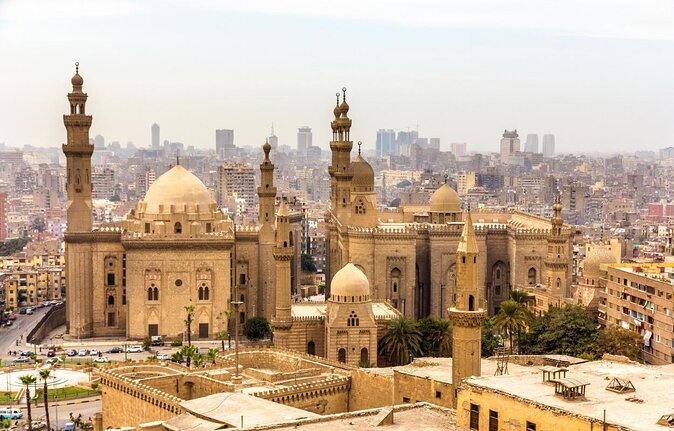
This is the kind of tour that’s built for your limited time in Cairo. You get hotel pickup and drop-off, a local guide, and a tight sightseeing loop that hits the most famous Islamic landmarks in the “old Cairo” area. At about 3 to 5 hours, it’s long enough to make meaningful stops but short enough that you won’t feel trapped all day.
For me, the big win is how the route clusters famous buildings that visitors often struggle to string together on their own. You’re not just looking at scenery—you’re getting context for why each mosque looks the way it does and how the city’s rulers used religion and architecture to signal power. Guides often bring it to life in plain language, and the names that show up repeatedly in real-world experiences—like Ahmed Khattab, Essam, Khaled, or Sam—hint that the quality of the guide matters here.
You can also read our reviews of more tours and experiences in Cairo.
Stop 1: Salah El-Din Citadel and Mohamed Ali Mosque (Alabaster Mosque)
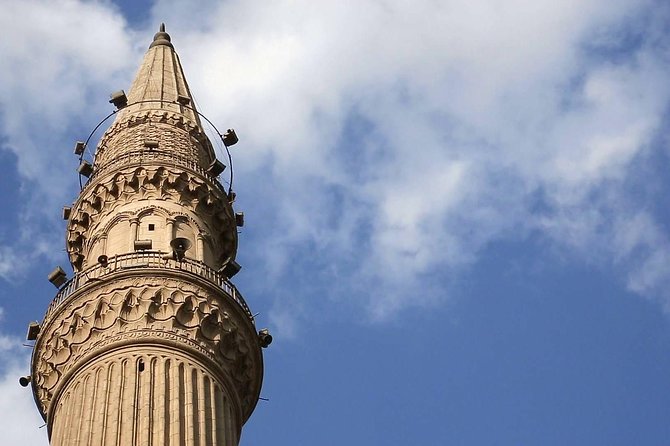
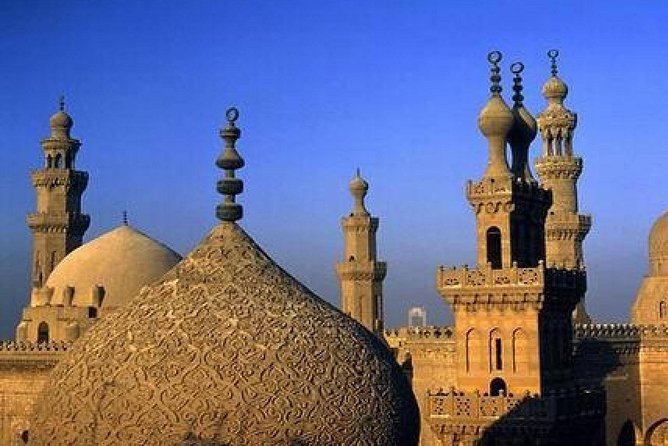
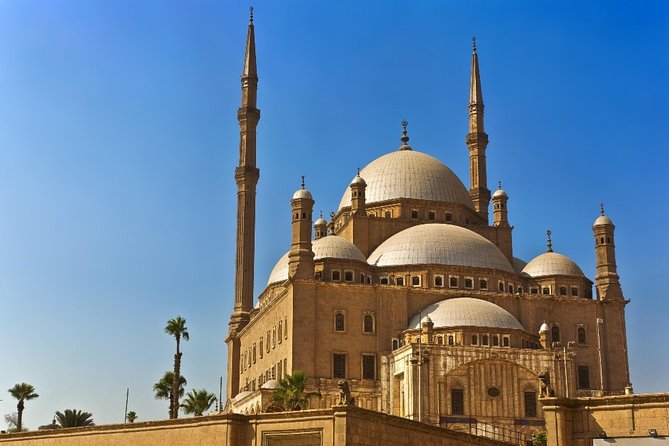
You begin at the Citadel of Salah El-Din, with a visit to Mohamed Ali Mosque, which people commonly call the Alabaster Mosque because its outer walls are covered with alabaster stone. This first stop sets the tone. From here, you’re in the “Cairo from above” mindset—big fortress walls, dramatic architecture, and the sense that this area was designed to be seen and defended.
What I like about starting here is that it frames the rest of the day. After the Citadel, the mosques you visit feel less like separate tourist stops and more like a timeline of rulers, design choices, and religious priorities.
Practical note: mosque visits are usually about showing respect with what you wear. If you’re not prepared, don’t panic—some guides, like Mirna in one set of experiences, are known for checking clothing and arranging the right head coverings before you step inside.
Stop 2: Al-Rifa’i Mosque Across From Sultan Hassan
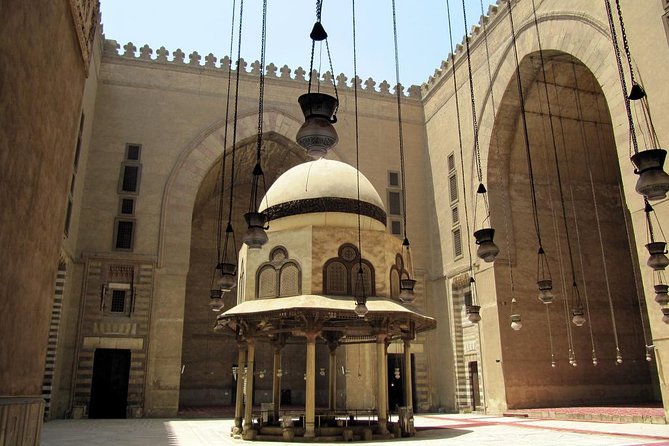
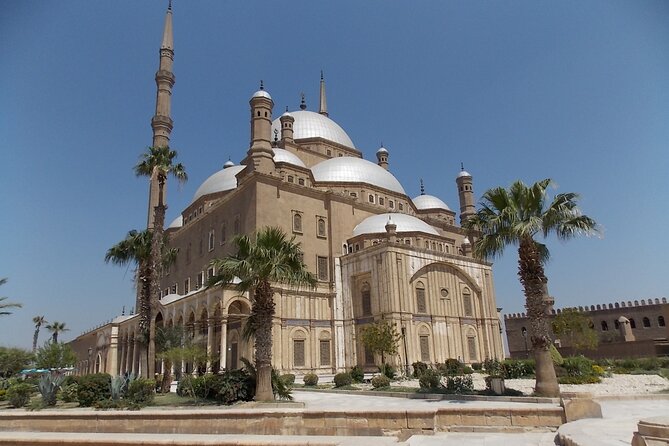
Next comes Al-Rifa’i Mosque, and it’s a smart pairing with what you’ll see later at the Sultan Hassan area. Al-Rifa’i sits opposite the Mosque-Madrassa of Sultan Hassan, and the buildings are linked by a story of planning. The Rifa’i structure was designed as a complement to the older Sultan Hassan complex, tied to a campaign by later Egyptian rulers to connect themselves with earlier Islamic glory while modernizing the city.
You’ll spend around an hour here, which is enough time to look closely without feeling rushed—assuming the group stays on pace. The best part is that you’re learning to “read” architecture. Don’t just scan for decorations. Ask yourself what the builders were trying to communicate: authority, piety, permanence, and continuity.
If you’re the type who likes questions, this stop is usually where a good guide earns their pay. A common strength in guides like Muhsin or Muhsin-style explanations is making the building make sense fast: what’s where, what it was for, and why it matters beyond the photos.
Stop 3: Al-Azhar Mosque and Its Fatimid Roots (Built for 970)

Then you head to Al-Azhar Mosque, one of the anchors of Islamic Cairo. You’ll hear its origin story tied to the Fatimid Caliphate: the mosque was commissioned for the newly established capital city in 970. The name is also commonly connected to Fatimah, with the title az-Zahrā often explained as meaning the shining or resplendent one.
This stop is short—about 30 minutes—so treat it like a focused visit. Step in, pause, look at the interior details, and absorb the atmosphere. Even if you’ve seen mosque architecture before, Al-Azhar has a sense of gravity because it’s tied to Cairo’s identity and its earliest major Islamic institutions.
One more thing: if you’re visiting on a Friday, the energy changes. There’s a real chance you’ll experience the crowd flow and family presence that comes with prayer day. In one firsthand-style experience, it was described as thousands of people, mostly children—an authentic reminder that these places aren’t museums. They’re active, lived religious spaces.
Stop 4: Mosque-Madrasa of Sultan Hassan and the El Hussein Mosque Area
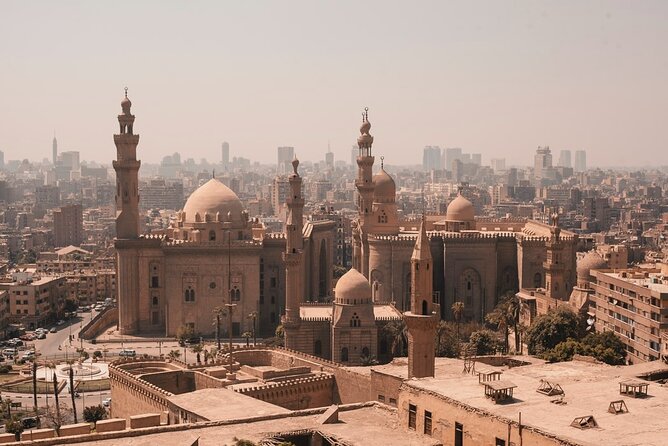
After Al-Azhar, the tour moves to the Mosque-Madrasa of Sultan Hassan area, with additional time focused on El Hussein Mosque—a site described as hallowed and believed to be the burial site of the head of the prophet Muhammad’s grandson.
This portion is also around 30 minutes, so again: quality over quantity. You’ll likely spend part of the time appreciating the grand setting of the Sultan Hassan complex and part of the time in the El Hussein area. The real value here is understanding why these mosques hold emotional meaning for people, not only architectural significance.
If you’re planning for comfort and respect, this is the place to stay mindful of how you move. Some guides are especially good at managing group flow so you aren’t blocking others or getting tangled in foot traffic.

Stop 5: Khan al-Khalili Bazaar—Crafts, Perfumes, and Bargaining Energy
The final stop is Khan al-Khalili Bazaar. This isn’t just a “walk through shops” detour. It’s part of Cairo’s everyday rhythm. The shops here are known for trading brassware, copper, perfumes, leather, silver, gold, antiques, and more.
You’ll get about an hour in the bazaar. Use it for what you actually want—photos, small souvenirs, or watching the trade. If bargaining is your thing, this is where you can practice without feeling like you’re bothering anyone. If bargaining isn’t your thing, you can still enjoy it as a sensory stop: smells, sounds, and the density of trades make it feel like a living market.
One nice detail from real experiences: people often find spontaneous fun here, like henna done on hands. Even if you don’t plan on it, it’s the kind of market behavior Cairo allows—impromptu moments that feel local.
Price and Value: Is $45 a Fair Deal for This Half Day?
At $45 per person, the value mostly comes from what’s included. This tour lists hotel pickup and drop-off, a tour guide, entry fees, and bottled water. Entrance costs can add up quickly in a city like Cairo, and paying them separately while also trying to coordinate transport is often where DIY plans get annoying.
So the pricing math is simple: if you want the mosques, the Citadel, and the bazaar, plus the guide to make the buildings understandable, you’re paying for convenience and interpretation. If you only want one or two sites, then you might feel like half-day tours are paying for the extra stops. But if you’re trying to see the key names efficiently, $45 looks reasonable.
Also, check the listed options when you book. There’s an optional lunch add-on, often mentioned as koshari, and entrance fees can depend on the tour option you choose. That’s worth confirming so there are no surprises later.
Transportation Comfort: Door-to-Door Beats “Who Knows When”

Cairo traffic can turn a good plan into a bad mood. This tour tackles that with round-trip transfers from your hotel, delivered as door-to-door service.
Why it matters: in Islamic Cairo, you want your mental energy for the mosques, not for map apps and negotiating with drivers. A good driver also helps with timing. In real experiences, drivers have been credited for making the drive through Cairo smoother, which is exactly what you want on a tight schedule.
You’ll also get the benefit of a clean start time, with pickup around the start of the day’s window (commonly around 10:00 am in the described plan). That’s helpful if you have only half a day and a later dinner plan.
Mosque Etiquette That Saves You Stress
Even with a guide, you’ll enjoy the day more if you plan for respectful mosque visiting. From the way guides prepare people for entry—head coverings and appropriate clothing show up in real experiences—you should assume you’ll need to be covered in some way.
My practical advice:
- Bring a light scarf you can use quickly at entrances.
- Wear clothing that feels comfortable for walking and that covers appropriately.
- Be ready for short lines and stop-start movement inside active prayer spaces.
And don’t underestimate the role of timing. When you’re moving through several major sites, the people flow inside each mosque affects how fast you can move. On prayer days, that rhythm changes, and it’s okay to slow down.
The Guide Factor: Why Some Tours Feel Easy
This is one of those Cairo tours where the guide quality can turn the whole experience from good to great. You’ll see names like Deena, Reina, Sayed Mahmoud, Tito, Essam, Ahmed Khattab, Khaled, Sam, and Muhsin tied to positive outcomes—especially clear English, thoughtful explanations, and good group management.
What does “good guide” mean on this route?
- They connect each building to what you saw earlier.
- They explain the key elements without drowning you in details.
- They manage time so you actually hit all the major stops.
- They help with practical issues like head coverings and respectful entry.
One caution: if you end up with a guide whose English is hard to follow or whose timing slips, the itinerary can feel shorter than you expected. This isn’t about the mosques being less impressive—it’s about missing the explanation that gives you meaning.
Who Should Book This Tour (and Who Might Skip It)
This tour is a strong match if:
- you have a half day and want a focused route through the most famous Islamic Cairo landmarks
- you want pickup and drop-off rather than figuring out transport
- you like architecture and want someone to explain what you’re looking at
- you enjoy markets and want Khan al-Khalili included without extra planning
You might skip it if:
- you dislike crowds on prayer days and your dates fall on a Friday
- you’re the type who wants long, unhurried time in just one site (this is several stops in a single session)
- you’re expecting a slow-paced gallery tour rather than a guided circuit
Should You Book This Islamic Cairo Half Day Tour?
Yes, if your goal is efficient sightseeing with real context. The combination of Citadel + Mohamed Ali Mosque, Al-Rifa’i + Sultan Hassan area, Al-Azhar, and Khan al-Khalili gives you a full sampler of Islamic Cairo in a manageable time block.
Book it with confidence if the tour includes what you care about most: guide, entry fees, and door-to-door transfers. If you’re going on Friday, just treat it like an active day of worship, not a quiet photo session.
If you want one decision rule: choose this tour when you want the big names and the explanations, not when you want maximum stillness in a single building. That’s where the value is.
FAQ
How long is the Cairo Islamic Cairo and ancient mosques half-day tour?
It runs about 3 to 5 hours (approx.).
What’s included in the price?
The tour includes a guide, hotel pickup and drop-off, entry fees, and bottled water.
Is lunch included?
Lunch is optional. There’s an option mentioned for local koshari.
Do I pay entrance fees separately?
No, entrance fees are included in the tour (depending on the tour option chosen).
Is this tour private or shared?
It’s listed as private, meaning only your group participates.
Is pickup and drop-off provided?
Yes, there are hotel pickup and drop-off with door-to-door round-trip transfers.
Can I cancel for a full refund?
Yes. You can cancel up to 24 hours in advance for a full refund.