REVIEW · CAIRO
8 Days Egypts Ancient Civilization Private Tour
Book on Viator →Operated by Halino Travel · Bookable on Viator
Eight days, and Egypt does not slow down. I like how this route links Cairo, Alexandria, Aswan, and Luxor with Egyptologist-led site visits and organized transfers, so your days run on rails. The other big draw for me is the 5-star Nile cruise, which turns the middle of the trip into a moving hotel base.
What you get feels efficient without feeling like a blur on paper. You’ll be covering major highlights like the Giza pyramids and Great Sphinx, Alexandria’s Catacombs and Qaitbay Citadel, plus Luxor and Karnak temples, with included entry fees and domestic flights handled for you. The main caution is that the schedule is full and you’ll be walking through temples and tomb areas, so bring comfortable shoes and plan for a moderate fitness level.
In This Review
- Key things that make this tour work
- Eight Days Cover Cairo, Alexandria, Aswan, and Luxor
- Cairo arrival: fast meet-and-assist, then you’re checked in
- Giza Pyramids, Great Sphinx, and the Egyptian Museum without chaos
- The Pyramids of Giza: the one stop that sets the tone
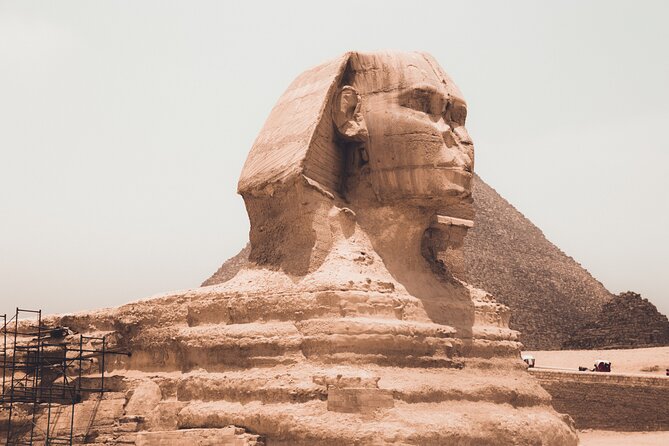
- Great Sphinx: quick, iconic, and unforgettable
- Egyptian Museum: the time you actually need
- Small drawback to plan for
- Alexandria day trip: Catacombs, Roman theater, Pompey’s Pillar, Qaitbay Citadel
- Kom el Shoqafa Catacombs: where layers of faith meet
- Roman Amphitheater: simple, direct, and effective
- Pompey’s Pillar: short visit, impressive scale
- Qaitbay Citadel: the sea-coast fortress finale
- Flying to Aswan and checking into the Nile cruise rhythm
- Aswan High Dam and Temple of Philae
- Kom Ombo and Edfu: temple days with built-in pacing
- Edfu Temple: the best-preserved temple in Egypt (and why that matters)
- Cruise dinner while you sail to Luxor
- Luxor West Bank: Valley of the Kings, Hatshepsut, Colossi of Memnon
- Valley of the Kings: secret tomb geography
- Hatshepsut at Deir el Bahari: built from limestone and distinction
- Colossi of Memnon: two statues, big scale
- Karnak and Luxor Temple: closing with two major religious centers
- Karnak Temple: the scale lesson
- Luxor Temple: kingship and the idea of renewal
- Price and value at $1,950 per person: what’s included (and why it matters)
- What you should budget separately
- Who this tour fits best (and where it might feel too much)
- Should you book this 8-day Egypt Ancient Civilization Private Tour?
- FAQ
- Is airport pickup included?
- Where do I stay during the trip?
- Does the price include domestic flights?
- Are entrance fees included?
- Do I need an Egypt entry visa?
- Are tips included for the guide or driver?
- Is this a private tour?
- What meals are included?
- Is the tour suitable for everyone physically?
- What is the cancellation policy for a full refund?
Key things that make this tour work
- Door-to-door Cairo transfers keep your first and last days from turning into a scavenger hunt at airports.
- Giza in one focused block gives you pyramids plus Sphinx plus proper time for the Egyptian Museum.
- Alexandria is done in daylight hours with several high-impact stops in one day, including Kom el Shoqafa Catacombs.
- Aswan-to-Luxor cruising is built into the route so you aren’t constantly changing hotels.
- Temple-heavy days with smart sequencing include Kom Ombo, Edfu, then Luxor’s West Bank.
- Solid guide support is a recurring theme, with Egyptologist leadership and attentive, storytelling-forward guiding.
Eight Days Cover Cairo, Alexandria, Aswan, and Luxor
This is a classic “greatest hits” Egypt plan, but it’s arranged in a way that reduces wasted time. You start in Cairo and move through Giza, then head north to Alexandria, then fly south to Aswan to begin the Nile cruise, and finally finish with Luxor’s West Bank and major temples like Karnak and Luxor Temple.
For you, that means two practical wins. First, the itinerary keeps the travel flow logical: Cairo and Giza first, Alexandria as a day break, then the Nile corridor. Second, it builds in meal plans and hotel changes that are already handled, which matters when you’re dealing with tight site opening times and the daily reality of traffic.
This tour is also rated very highly by past travelers, with a 4.9 rating and a strong recommendation score. That’s not a guarantee of perfection, but it does suggest the company is good at running the mechanics: meeting you, getting you to the sites, and keeping the day moving.
You can also read our reviews of more private tours in Cairo

Cairo arrival: fast meet-and-assist, then you’re checked in
Day 1 starts the way you want it to start: you’re greeted at Cairo International Airport and taken to your Cairo hotel by a private vehicle. The tour includes meet-and-assist in destinations and airport pick-ups and drop-offs, which can feel small until you’ve tried to figure out taxis right after a flight.
You’re staying 4 nights in Cairo at a 3-star hotel on a bed-and-breakfast basis. That matters because it gives you a stable base in the city before the cruise. You’ll also be using this Cairo base for your Alexandria day trip and for your final departure day.
If you’re the type who likes to get your bearings early, this opening setup is a big deal. You don’t have to waste your first hours dealing with payment desks, driver negotiations, or language gaps.
Giza Pyramids, Great Sphinx, and the Egyptian Museum without chaos
Your Day 2 is a heavy hitter and it’s built as a sensible sequence. You start with the Pyramids of Giza, then move to the Great Sphinx, and finish with the Egyptian Museum.
The Pyramids of Giza: the one stop that sets the tone
You’re given about two hours for the Three Pyramids. That’s enough time to really look, not just pose. And it’s also enough time to pace yourself, because the area can feel busy and hot, especially if you’re visiting during warmer months.
A practical advantage of a guided setup here is orientation. When you understand what you’re looking at, the pyramids stop being just massive shapes and start becoming a timeline of building, power, and design. You also get help planning where to focus, instead of wandering until your feet complain.
Great Sphinx: quick, iconic, and unforgettable
After the pyramids, you get about an hour at the Great Sphinx. This is one of those sites where time is less about quantity and more about angles and attention. Spend the time your guide suggests, especially around the features people usually miss when they rush.



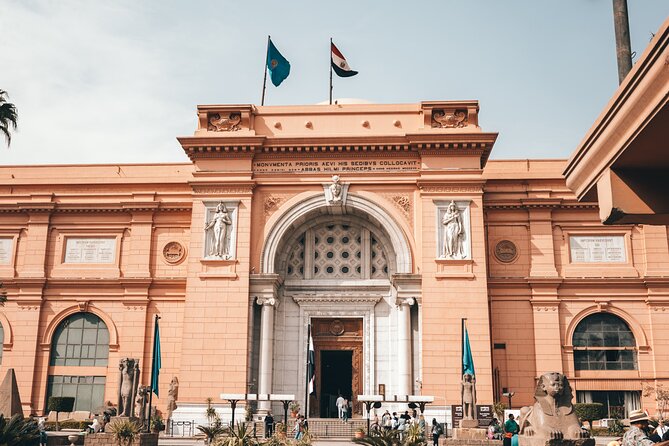
Egyptian Museum: the time you actually need
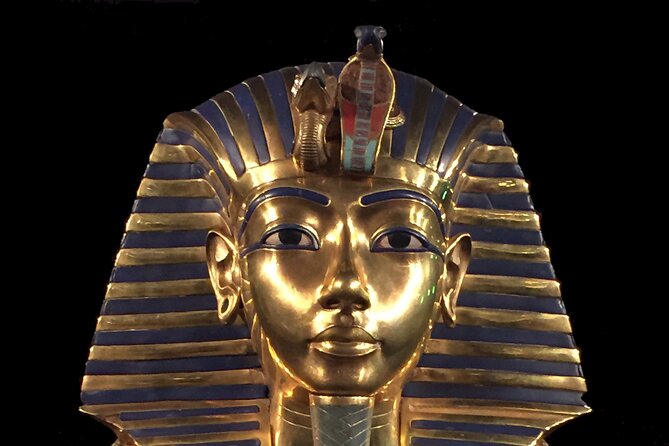
In the afternoon you head to the Egyptian Museum, with about two hours there. The museum is described as holding a rare collection spanning 5000 years, and you’ll see ancient Egyptian artifacts that number in the hundreds of thousands.
Two hours in a big museum sounds short until you realize the value is in direction. A good Egyptologist can help you pick what matters, explain why it matters, and connect objects to the larger story. If you’re not a museum person, this is still worth doing because the museum helps you decode what you’re seeing outside in Giza.
Small drawback to plan for
The day is intense: pyramids, Sphinx, museum, and travel in between. If you have low tolerance for crowds or heat, build in patience. This tour tries to keep you moving efficiently, but it can’t erase the fact that these are the most popular sites in Egypt.
Alexandria day trip: Catacombs, Roman theater, Pompey’s Pillar, Qaitbay Citadel
Day 3 is a full day north. You travel by private air-conditioned vehicle from Cairo to Alexandria, roughly 3 hours each way, and you pack in several key stops. The drive time is the real trade-off here. You gain a major change of scenery, but you lose a lazy morning in Cairo.
Still, Alexandria gives you variety in a way that makes the effort feel justified. You’re not only seeing Greek-and-Roman era remnants, you’re also seeing how early Christians used the underground spaces there.
Kom el Shoqafa Catacombs: where layers of faith meet
Your first stop is the Catacombs of Kom el Shoqafa, often called the burial place of early Christians. You’re given about an hour here.
This is one of those sites that rewards a guide. The architecture and symbolism can feel confusing if you don’t know what you’re looking at. With Egyptologist context, the catacombs become more than a dark tunnel system—they become a clue to how different cultures adapted shared spaces.
Roman Amphitheater: simple, direct, and effective
Next is the Roman Amphitheater, with about an hour. It’s described as something common across the Roman Empire, which is a helpful framing. This stop is about recognition: you’re seeing a familiar Roman form, transplanted into Egyptian geography.
Pompey’s Pillar: short visit, impressive scale
Then you visit Pompey’s Pillar—a red granite memorial column around 28 meters high. Your time is about 30 minutes. That’s the right amount. You come, you notice the size, and you move on without overdoing it.
Qaitbay Citadel: the sea-coast fortress finale
The day wraps with the Citadel of Qaitbay, a fortified site on the Mediterranean coast tied to the ruins of the Alexandria Lighthouse and built by the Mamluk Sultan Al-Ashraf Qaitbay. You’re given about an hour here, and then you’re driven back to Cairo.
If you like history that shows change over centuries, this is a good place to end the day. It reminds you that Alexandria isn’t frozen in one era; it’s a palimpsest of new powers taking over old places.
Flying to Aswan and checking into the Nile cruise rhythm

Day 4 switches gears. After breakfast, you check out of your Cairo hotel and go to the airport for a flight to Aswan. Upon arrival, you’re met and transferred to your Nile cruise boat, described as your floating hotel for three nights.
This is one of the tour’s strongest value ideas: rather than doing another hotel shuffle, you use the cruise as a base between Aswan and Luxor. Your cruise stay is 5-star and on a full board basis, meaning breakfast, lunch, and dinner are handled while you’re cruising.
A practical tip: when you’re doing a temple circuit, travel fatigue is real. The cruise structure can reduce it because you’re not constantly packing and unpacking.
Aswan High Dam and Temple of Philae
Still on Day 4, you see the Aswan High Dam (around one hour) and then the Temple of Philae (around two hours). The Temple of Philae is described as having been moved to the island of Agilika after waters flooded the original location on Philae due to Lake Nasser.
Even if you’ve seen the dam mentioned in passing before, this guided stop helps put it into context: it’s not only a modern structure, it’s tied to major changes in where ancient monuments could survive. Then you follow into Philae, where the focus returns to sacred architecture.
Kom Ombo and Edfu: temple days with built-in pacing
On Day 5, you’re cruising and visiting temple highlights in an efficient order. After breakfast, you sail to Kom Ombo Temple—dedicated to Horus and Sobek—with about one hour on site. This is followed by sailing onward for your next major temple stop.
Edfu Temple: the best-preserved temple in Egypt (and why that matters)
After Kom Ombo, you head to Edfu (Temple of Horus), described as one of the best-preserved temples in Egypt. Your time here is about two hours.
The tour explanation also gives you a timeline: origins likely earlier than the final structure, but the temple you see mainly dates to Ptolemaic times, with construction starting under Ptolemy III and continuing through Ptolemy IV, plus later additions by other Ptolemaic kings and the Roman Emperor Augustus. You even get the sense that the decoration and inscriptions took around 180 years to complete.
That’s useful for you. It turns the stop into more than a pretty facade. You can understand why the carvings look detailed and why the temple reads like layered propaganda, religion, and art at the same time.
Cruise dinner while you sail to Luxor
Your dinner is included while the cruise sails onward to Luxor. That scheduling is not random. Temple days can leave you hungry and tired. Having dinner handled reduces the chance that you end up eating something rushed and forgettable near a tourist hub.
Luxor West Bank: Valley of the Kings, Hatshepsut, Colossi of Memnon
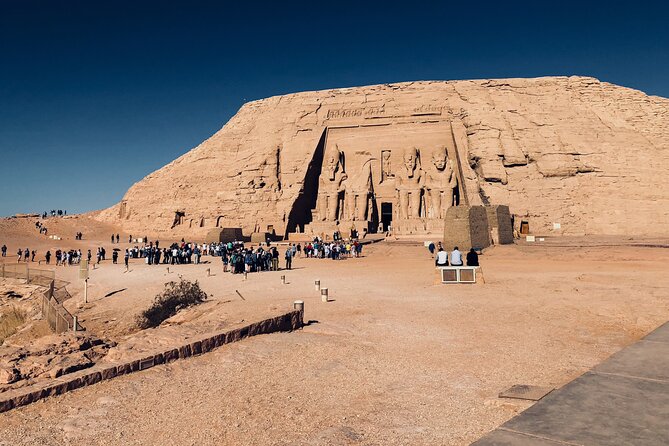
Day 6 is a classic Luxor power day. After breakfast on board, you go to the West Bank for three key stops: Valley of the Kings, Temple of Hatshepsut at Deir el Bahari, and the Colossi of Memnon.
Valley of the Kings: secret tomb geography
You get about three hours at the Valley of the Kings, described as the burial place of New Kingdom pharaohs, with 62 Pharaohs mentioned. It’s also described as a secret location, with sentries guarding entrances and hills meant to discourage tomb robbers.
This is where a guide helps you feel the logic of the site. The valley isn’t just dramatic scenery—it’s a defensive layout built around secrecy. When you understand the why, the why-you-should-care becomes obvious.
Hatshepsut at Deir el Bahari: built from limestone and distinction
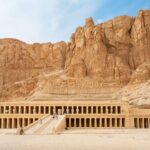
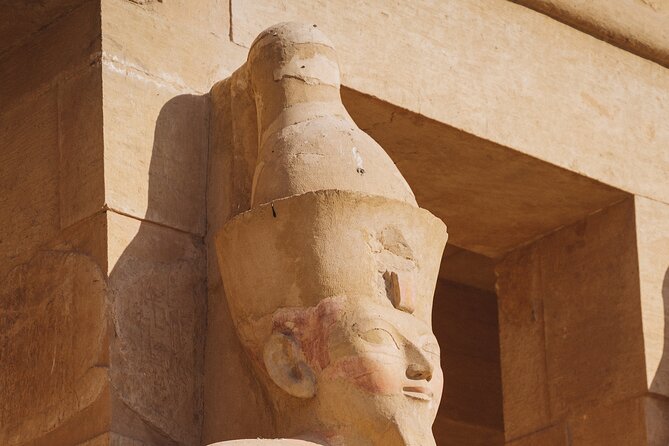
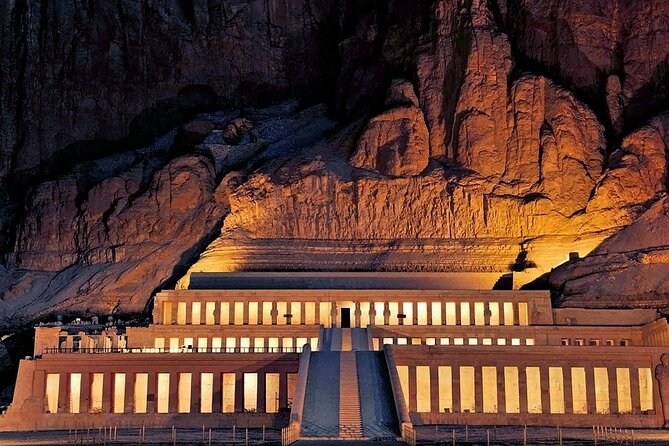
Next is Hatshepsut’s Temple at Deir el Bahari. You get about two hours, and the tour notes it’s built of limestone, not sandstone like many other funerary temples of the New Kingdom period.
What you’ll likely enjoy here is the difference in texture and form. It’s also a site where you can connect architecture to a person: Queen Hatshepsut’s role isn’t just a footnote when you’re standing in a temple built to project authority.
Colossi of Memnon: two statues, big scale
Finally, you see the Colossi of Memnon, two huge statues linked to Amenhotep III, each about 21 meters tall. Your time is shorter here—about 30 minutes—and that’s correct for how the stop works. You’re there to appreciate scale, then let the day rest your feet a bit.
Back on board, lunch and some downtime are included so you’re not forced into another “run, run, run” day.
Karnak and Luxor Temple: closing with two major religious centers
Day 7 is your last day of major temples. After your final breakfast onboard, you check out and then go to Karnak Temple with your Egyptologist.
Karnak Temple: the scale lesson
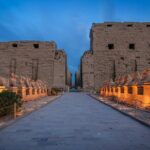
You get about two hours at Karnak, described as the largest and most important religious complex in ancient Egypt at its peak. The biggest structure is the Temple of Amun-Ra, tied in the tour description to where Amun-Ra was believed to live with Mut and Khonsu.
Karnak can feel overwhelming if you don’t have context. A guide’s job is to help you see structure and purpose, not just columns and walls.
Luxor Temple: kingship and the idea of renewal
Then you visit Luxor Temple with about two hours. It’s framed here as a temple dedicated to rejuvenation of kingship, not simply worship of a god. The tour description even connects it to the idea of ceremonies around kingship, including a note about Alexander the Great’s claim of coronation there.
When you finish the day with Luxor Temple right after Karnak, you get contrast: one site builds scale, the other focuses more on the feeling of royal ceremony.
You’ll be accompanied to Luxor airport afterward to catch your flight back to Cairo.
Price and value at $1,950 per person: what’s included (and why it matters)
At $1,950 per person for about eight days, this package isn’t cheap. But it’s also not just “a driver and a map.” You’re paying for a chain of services that add up fast in Egypt.
Here’s what’s built into the price based on what you’re told you’ll receive:
- All airport pick-ups and drop-offs plus meet-and-assist
- Private A/C vehicles for land transfers
- Expert Egyptologist English-speaking guide
- Entrance fees to the sightseeing
- Domestic flights: Cairo/Aswan and Luxor/Cairo
- Accommodation: 4 nights in Cairo (3-star, bed-and-breakfast) plus 3 nights on a 5-star Nile cruise (full board)
- Meals on the itinerary: breakfast every morning (7), lunch (5), dinner (3), with lunch and dinner included on the cruise
So the value argument is mostly about friction. With this setup, you avoid the most time-consuming parts of Egypt planning: getting from airport to hotel to the next city, paying for entrance fees, and coordinating multiple guides and transport segments. You also avoid the common problem of being stuck in a schedule that changes at the last minute.
What you should budget separately
The tour does not include Egypt entry visa, international airfare, personal expenses, and tipping to guide and driver. In other words, your main fixed costs are covered, but your extras will still be yours to handle.
Who this tour fits best (and where it might feel too much)
This is a smart fit if you:
- Want the big name sites without handling tickets and logistics yourself
- Like temple and museum storytelling led by an Egyptologist
- Prefer a cruise hotel base for the Aswan-to-Luxor segment
- Want an itinerary that works well for first-timers to Egypt’s central corridor
It might feel like too much if you:
- Hate packed days and long travel blocks (Alexandria requires a roughly 3-hour drive each way)
- Get worn out by walking in tomb and temple areas
- Want long, slow free time in each city (this itinerary is structured and scheduled)
Also note the “private” part with a reality check. The experience is private in the sense that only your group participates, but the cruise sightseeing includes shared English-speaking guide and transportation. That usually means your guidance stays coordinated, but you might be grouped with other cruise passengers for certain shore excursions.
Should you book this 8-day Egypt Ancient Civilization Private Tour?
If your goal is to see Cairo and Giza, add Alexandria for a culture shift, then stack Aswan and Luxor temples in an organized flow, this tour is built for that. The biggest selling point for me is how much is handled for you: guides, entrances, hotels, meals on the cruise, and even domestic flights.
I would book it if you want efficiency with expert context—especially for Giza and the museum, plus Karnak and Luxor Temple, where a guide’s storytelling makes the difference between seeing things and understanding them.
I’d think twice only if you want lots of unstructured time or you’re sensitive to a fast schedule. With a moderate fitness level and good shoes, though, the pacing is exactly what makes this trip feel worth it.
FAQ
Is airport pickup included?
Yes. The tour includes all airport pick-ups and drop-offs, plus meet and assist in destinations.
Where do I stay during the trip?
You’ll have 4 nights in Cairo at a 3-star hotel on a bed-and-breakfast basis, and 3 nights on a 5-star Nile cruise on a full board basis.
Does the price include domestic flights?
Yes. It includes two-way domestic flights: Cairo/Aswan and Luxor/Cairo.
Are entrance fees included?
Yes. Entrance fees to all sightseeing are included.
Do I need an Egypt entry visa?
Egypt entry visa is not included, so you’ll need to arrange it separately.
Are tips included for the guide or driver?
No. Tipping to your guide and driver is not included.
Is this a private tour?
The experience is private in the sense that only your group will participate. On Nile cruise sightseeing, it includes shared English-speaking guide and transportation.
What meals are included?
Meals included are breakfast (7), lunch (5), and dinner (3). The Nile cruise is on a full board basis.
Is the tour suitable for everyone physically?
The tour notes a moderate physical fitness level. You should be comfortable with walking in temple and tomb areas.
What is the cancellation policy for a full refund?
You can cancel up to 6 days in advance for a full refund, meaning at least 6 full days before the experience’s start time.