REVIEW · GUANGZHOU
All Inclusive Kaiping Diaolou Heritage Private Day Trip from Guangzhou
Book on Viator →Operated by SilkRoadTrips · Bookable on Viator
Watchtowers with a serious job. This private day trip takes you through Kaiping’s diaolou and into Liyuan Garden, where the buildings and gardens tell one story. You get time inside and up top for the views, plus an easy day plan with lunch, tickets, and hotel pickup handled.
What I like most is how the day mixes three very different places: Zili’s fortified watchtowers, Li Garden’s clever garden design, and Ma-Xianglong’s older village houses. The main drawback is simple: it’s a long day with several hours on the road total, so you’ll want decent walking shoes and patience for traffic.
The tour runs about 8 to 9 hours and is priced at $269 per person, which matters when you compare it to self-guided options. The upside is that you’re not spending your day figuring out routes, entrances, and timing in rural Guangdong.
In This Review
- Key takeaways before you go
- Why Kaiping’s diaolou feel like a time machine from Guangzhou
- Getting there from Guangzhou: timing, pickup, and road reality
- Zili Village’s diaolou watchtowers: where fortification meets family life
- Liyuan (Li) Garden in Kaiping: more than a stroll stop
- Ma-Xianglong Village and Jingjiangli: old houses and quiet bamboos
- Lunch and tickets: what the all-inclusive label really means
- The real value of a private guide (and why it matters here)
- Price and value: is $269 per person worth it?
- Who this Kaiping private day trip suits best
- Should you book this Kaiping private day trip from Guangzhou?
- FAQ
- How long is the Kaiping diaolou private day trip?
- What time does the tour start?
- Do I get hotel pickup and drop-off in Guangzhou?
- What’s included in the price?
- Is this tour private or shared?
- Which places are included during the day?
- Do I receive a mobile ticket?
- Is free cancellation available?
Key takeaways before you go

- Zili Village’s diaolou: you’ll see why these towers doubled as protection and family residences.
- Liyuan (Li) Garden: a well-designed garden stop, not just a quick photo break.
- Rooftop and interior access: you get actual time inside, not only from outside.
- Hotel pickup and drop-off: it saves energy in a region where “public transport simple” is not a promise.
- Lunch and entrance fees included: fewer add-ons, more predictable value.
- Private guide attention: better pacing, with explanations tied to what you’re looking at.
Why Kaiping’s diaolou feel like a time machine from Guangzhou
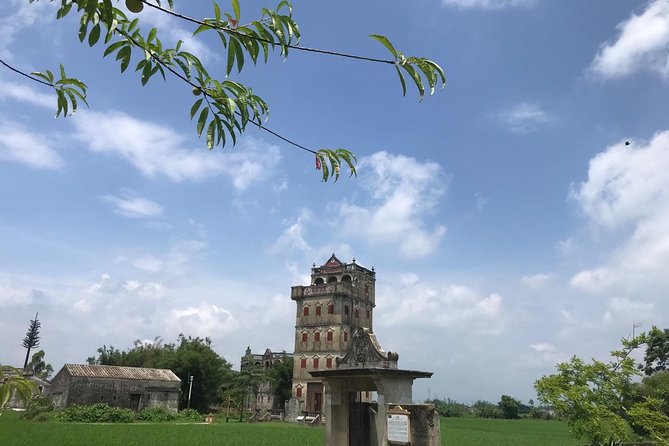
Kaiping’s diaolou don’t look like typical Chinese village homes. They look like small castles scattered across fields and settlements, built to protect people and store memories, then later updated with Western-influenced details. That mix is exactly why I find this day trip so satisfying: it’s visual history you can walk through.
The private format helps too. You’re not trying to keep up with a big group at the exact moment you decide you want one more look at a tower stairway or a garden bridge. Instead, you get time to absorb what you’re seeing and ask questions that actually match your pace.
And yes, the towers are photogenic. But the bigger win is understanding what you’re looking at. Once you know they were used as flood refuges, forts, and alert points, the architecture stops being decoration and starts being practical engineering.
You can also read our reviews of more private tours in Guangzhou


Getting there from Guangzhou: timing, pickup, and road reality
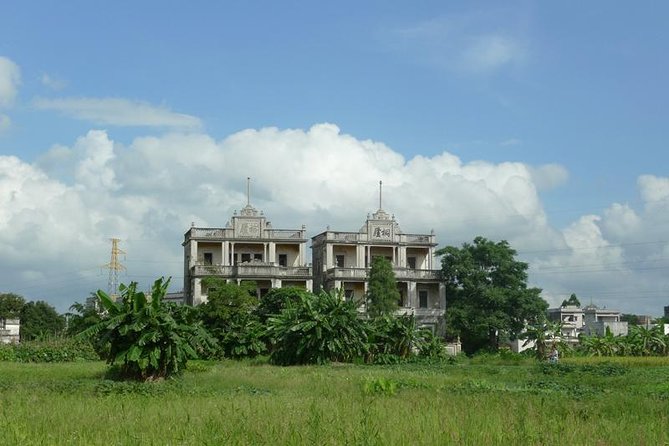
The day starts at 8:00am with hotel pickup, then you ride out in a private, air-conditioned vehicle. Expect roughly two hours each way in many cases, and that’s long enough that comfort matters. If you get carsick, this is the part you should plan for.
Total duration is about 8 to 9 hours, including site time. Because the schedule is built around multiple stops, you’ll probably do a bit of walking and some stairs. You don’t need athletic mode, but you should come ready to move.
A good trick: treat the first ride like your warm-up. Read up on the diaolou purpose before you go, or simply keep an eye out for how the towers sit in the countryside. Once you start seeing them from the road, the day feels less like “tour stops” and more like a connected region.
Zili Village’s diaolou watchtowers: where fortification meets family life
Zili Village is one of the most famous diaolou areas around Kaiping, and it’s well preserved. When you arrive, the focus is on the watchtowers and the village setting around them, which is what makes Zili worth your time.
Here’s the core idea you’ll want to keep in your head: diaolou evolved through several roles. The oldest towers date back to the Ming dynasty era (between the 14th and 17th centuries), and they took shape as:
- Communal refuges built by multiple families
- Residential fortresses built for individual households
- Watchtowers for spotting danger, including bandit threats
On this tour, you’ll go beyond the outside view. You head into selected towers to see interiors and get that bird’s-eye perspective from the top areas. That rooftop access changes everything, because from up there you can understand how the towers watched the land instead of just standing there for decoration.
What I especially like is the story of return migrants. Some towers were built or redesigned by Chinese people who came back from overseas, adding Western-style influences to the design. The result is a visual conversation between local needs and outside ideas, all within the same fort-like structure.
Practical tip: wear something comfortable and be ready to pause for stair sections. The best views take a little effort, and it’s worth it.
Liyuan (Li) Garden in Kaiping: more than a stroll stop
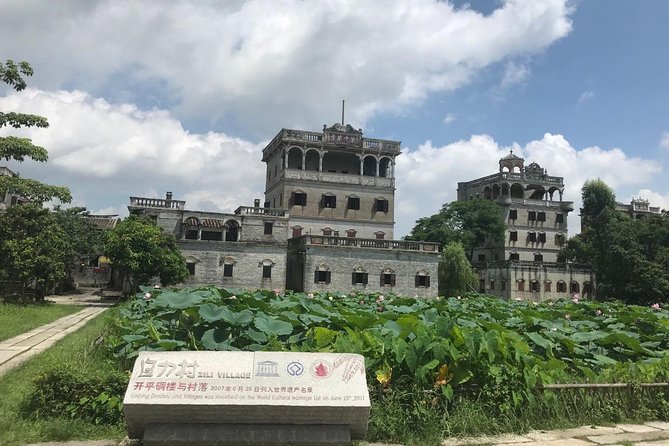
After Zili, you’ll shift to Liyuan Garden, also known as Li Garden. This is the place where the day slows down just enough to feel like you’re still sightseeing after a lot of strong architecture.
This garden is designed with small surprises. You’ll wander through ornate paths and structures, and you’ll see highlights like:
- A birdcage-shaped pavilion
- Bridges and canals
- Watchtower-like elements worked into the garden world
If you like garden design, this stop pays off because it’s not only scenery. It’s a reminder that the diaolou area isn’t just about protection and defense. It’s also about taste, aesthetics, and everyday life built around family compounds.
In a day trip with multiple villages, the garden works like a pressure release. You can step back, rest your legs, take photos, and still feel like you’re moving through the region’s culture rather than just ticking boxes.
If you prefer fast tours, you might think you could skip the garden. But if you like places where you can breathe for a bit, Li Garden is a strong reason to pick this specific route.
Ma-Xianglong Village and Jingjiangli: old houses and quiet bamboos
After lunch, the trip heads toward quieter village areas where you’ll see old houses spread out with a calmer feel. One of the highlights is Ma-Xianglong Village, where the homes are found among green bamboo.
This part of the day works well if you like the “real village” feeling—less grand spectacle, more quiet atmosphere. You’re looking at older residential structures set into the landscape, and that gives you a different angle on why the diaolou mattered. It’s easier to imagine daily life when you can compare the fortified towers to more typical old houses nearby.
Then there’s Jingjiangli Village, a stop built around seeing well-designed old houses in a calmer setting. It’s the kind of place where you might notice details you’d miss if your day was only towers. The architecture becomes subtler, but that’s the point: the region has layers, not just one iconic type of building.
Practical tip: if you’re a photographer, this is often your best lighting window depending on the season and the exact schedule. Don’t rush; take a few minutes at street level to look at proportions, doors, and windows, not only the big tower shapes.
You can also read our reviews of more historical tours in Guangzhou
Lunch and tickets: what the all-inclusive label really means
This tour includes lunch, entrance fees, and bottled water, which is where “value” starts to show up. When you’re paying $269 per person, you’re not just buying transport. You’re buying the elimination of several smaller headaches: ticket lines, unpredictable entrance costs, and the time lost trying to figure out what’s open and how much it costs.
The itinerary is also built to avoid wasted time. You spend concentrated periods at each major stop—around two hours at key locations—so your day doesn’t feel like it’s made of long drives with five minutes at each site.
Another small win: the tour uses a mobile ticket, so you’re not juggling printed paperwork. That’s especially helpful on a day trip where you’re also handling phone maps, photos, and payments.
If you have any food preferences, plan for standard local restaurant lunch. The good news is you won’t have to manage that part yourself.
The real value of a private guide (and why it matters here)
Kaiping’s diaolou are visual and dramatic, but they’re also easy to misunderstand if you only look at them as buildings. A private guide makes this experience click because the explanations tie directly to what you’re seeing: flood refuge purpose, fort structure ideas, and why Western-inspired features appeared in later towers.
You also get pacing control. If you want more time at Zili rooftops or you’d rather slow down in the garden, the day can flex. That’s not a luxury thing. It directly affects how much you get out of the day.
The best guides don’t just recite facts; they help you see patterns. For example, once you understand how towers functioned for alerts, you start noticing sightlines and spacing. Once you connect the garden features to later lifestyle influence, Li Garden feels purposeful instead of decorative.
One more practical benefit: starting early helps. With hotel pickup and a morning start, you’re likely to arrive before some later wave crowds, which makes entrances feel calmer and less rushed. It’s a small detail, but it changes the mood.
Price and value: is $269 per person worth it?
At $269 per person, this is not the cheapest way to reach Kaiping. But it can be good value if you factor in three things you’d otherwise pay for or manage yourself:
- Hotel pickup and drop-off
- Private vehicle transport across rural distances
- Lunch and entrance fees included
For many people, the real cost of self-planning isn’t money. It’s time and stress. With a private day trip, your schedule is already stitched together, and you’re not negotiating around opening hours or figuring out how to move between village clusters efficiently.
It also helps that this is a private tour, meaning it’s designed for your group rather than a rotating herd. If you’re a couple, a family, or a small group, that can make the per-person cost feel more reasonable than it first appears.
One more detail: there’s group discount mentioned. If your group size qualifies, ask about how pricing works for multiple people. That’s one of those small levers that can tip a “meh” trip into a “yes.”
Who this Kaiping private day trip suits best
This tour fits best if you want:
- Iconic diaolou architecture without complicated logistics
- Time inside towers for interiors and views
- A balanced day with both fortified spaces and garden design
- A guided story that explains what you’re looking at
It’s also a good choice if you’re mixing ages or interests. The towers deliver the big wow factor. The garden gives you a calmer, slower segment. The village houses round out the picture so the day doesn’t feel one-note.
Who should think twice: if you hate long car rides or you’re dealing with serious mobility limits, the route likely won’t be the best fit. Even without extreme trekking, the day includes moving between sites and accessing tower areas.
Should you book this Kaiping private day trip from Guangzhou?
If your goal is to see the major diaolou sites around Kaiping with less hassle, I’d book it. The combination of Zili Village, Liuyuan Garden, and Ma-Xianglong/Jingjiangli gives you variety in a single day. Add in hotel pickup, entrance fees, and lunch, and the day feels well built.
If you’re the type who loves DIY travel, you might save money by researching transport and buying tickets on your own. But you’ll trade that saving for time spent managing details. This tour is built for people who want the architecture and story, not planning stress.
My simple decision rule: if you want a smooth day with real access to interiors and viewpoints, this is a strong pick.
FAQ
How long is the Kaiping diaolou private day trip?
The tour runs about 8 to 9 hours.
What time does the tour start?
It starts at 8:00am.
Do I get hotel pickup and drop-off in Guangzhou?
Yes. The tour includes hotel pickup and drop-off.
What’s included in the price?
Lunch, a local guide, hotel pickup and drop-off, private vehicle transport, entrance fees, and bottled water are included.
Is this tour private or shared?
This is a private tour/activity, so only your group participates.
Which places are included during the day?
You’ll visit Kaiping diaolou areas including Zili Village, Liyuan (Li) Garden, and Ma-Xianglong Village, along with the Kaiping village watchtower areas listed in the experience.
Do I receive a mobile ticket?
Yes, the tour includes a mobile ticket.
Is free cancellation available?
Yes, you can cancel for a full refund up to 24 hours before the experience’s start time (local time).