REVIEW · ROME
Rome Aperitifs Tour in Mini Cooper Classic , Ancient Highlights
Book on Viator →Operated by MINI TOUR ROMA · Bookable on Viator
Some cities feel built for wandering. Rome feels built for shortcuts—done right. This private classic Mini tour pairs iconic sights with real photo time and a traditional Roman aperitivo, led by Luca and the MINI TOUR ROMA team. I also love the small group setup (space for just three), which means you get more back-and-forth than you’ll find on big buses. One drawback to note: it runs in the evening window, so if you’re hoping for a daytime plan or want long museum time, this won’t be that.
What makes this one work is the pacing. You hop from stop to stop—Piazza Navona, the Trevi Fountain area, St. Peter’s Basilica, the Pantheon area, and several of the city’s best viewpoint hills—then you end at a local café for a classic Italian cappuccino. The plan is simple: hotel pickup and drop-off, live commentary on board, bottled water and snacks, and photo stops that don’t feel rushed. Do it when the streets are cooler and the monuments start looking their best.
In This Review
- Key things to know before you go
- Why a classic Mini works so well for Rome’s night sights
- Private tour for three: what that changes for your day
- Pickup, mobile ticket, and the onboard comfort basics
- Aperitivo in Rome: how the drink-snack-café rhythm feels
- Piazza Navona, Trevi Fountain, and the baroque-photo circuit
- Castel Sant’Angelo and Campo de’ Fiori: classic Rome street energy
- St. Peter’s Basilica and Piazza Venezia: Vatican-side awe and civic monuments
- The Pantheon, Rome’s ancient core, and that horse-racing circus moment
- Seven hills viewpoints: Aventine, Gianicolo, and the orange garden
- Piramide Cestia, Trastevere, and the river-to-street contrast
- Fontana dell’Acqua Paola and imperial baths: water and empire scale
- Piazza di Spagna, Via del Corso, and the night’s last push
- Photo strategy and timing: how to make 10 minutes count
- Price and value: what $260.20 buys you in Rome
- Who this Rome Aperitifs Mini tour fits best
- Should you book the Rome Aperitifs Mini Cooper Classic tour?
- FAQ
- FAQ
- What’s the length of the Rome Aperitifs Tour?
- Is pickup from my hotel included?
- How many people are in the Mini?
- What time does the tour operate?
- Is the tour ticket digital?
- Are tickets and entry fees included for all stops?
- Is alcohol included with the aperitivo?
- Does the tour include food and drinks?
- Where does the tour end?
- Does weather affect the tour?
Key things to know before you go
- Private means personal: space for only three passengers, so you can ask for photo stops and route tweaks.
- Evening departure works: the tour runs roughly 6:30 PM to 9:30 PM, when Rome looks dramatic and street life is in full swing.
- Aperitivo is part of the point: you’ll enjoy a traditional Roman aperitivo, with alcoholic drinks available to purchase (not included).
- Tickets are mixed: some sights have admissions handled, while others are listed as free.
- You’ll cover a lot fast: short stops (often 5–10 minutes) around Rome’s top landmarks and viewpoints.
- You finish with a café classic: the tour ends at a local café, where you can get a cappuccino.
Why a classic Mini works so well for Rome’s night sights
Rome can be tough to do “efficiently” on foot. Streets are crowded, distances add up fast, and parking is… a dream you don’t want to chase. That’s where a vintage Mini cabriolet makes sense. You get that fun, open-air sense of movement, plus quick access to different neighborhoods without the fatigue.
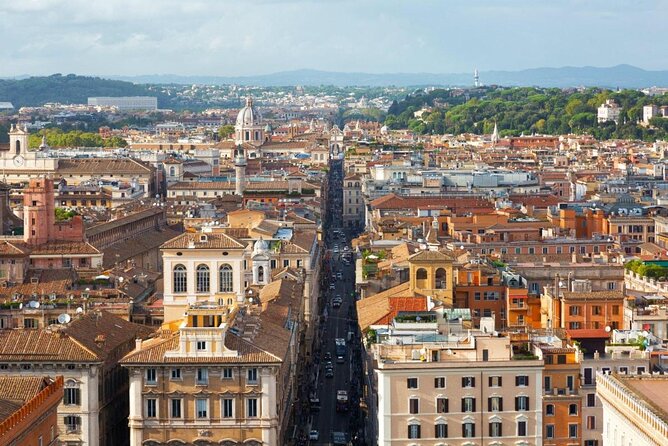
The timing matters too. This tour operates in the evening window (Monday to Sunday, roughly 6:30 PM to 9:30 PM). That’s prime for photos: fountains look better after the sun drops, church façades glow, and viewpoints are easier to enjoy without the midday heat. If you’re the type who wants to see Rome’s greatest hits and still get good light, this format fits.
And yes, the route is built for photos. You’re not stuck staring through a window. The driver/guide can stop so you can grab shots, stretch your legs, and actually look around.
You can also read our reviews of more tours and experiences in Rome.
Private tour for three: what that changes for your day
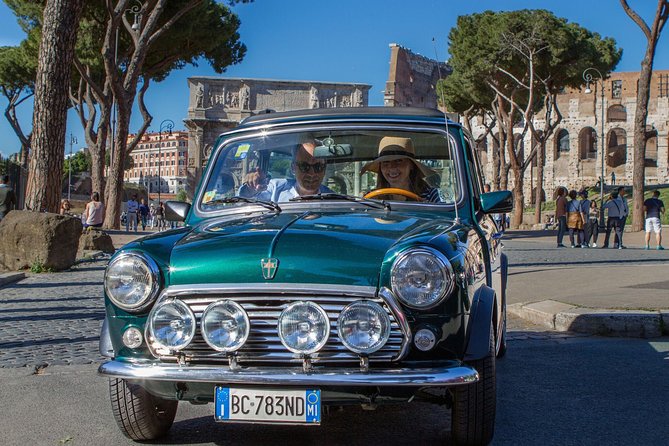
A lot of Rome tours promise “personalized,” then still feel like a school trip. Here, the limit to three passengers is the real deal. With a tiny group, you can control the vibe. You’ll spend less time negotiating for space and more time noticing details.
It also changes the way the commentary lands. Live commentary on board means you’re getting context while things are moving, then you can ask questions during stops. Luca (from the tour’s team) shows up in people’s memories for a reason: he’s the kind of guide who talks in plain language, not a lecture.
A practical benefit: with only your group in the Mini, you can move at your pace. Want extra minutes at a viewpoint? You can typically ask. Want to focus more on architecture or street scenes? Your driver can tailor the feel without turning it into a full rewrite.
Pickup, mobile ticket, and the onboard comfort basics

This is built to be hassle-free. You get hotel pickup and drop-off, plus round-trip private transfer. That alone is worth something in Rome, where “meet at the entrance” plans can turn into a scavenger hunt.
You also get a mobile ticket, bottled water, and snacks. That matters on an evening run—especially when stops are short. If you’re prone to getting hungry before dinner, these snacks help you stay comfortable until the café stop.
Dress code is smart casual. In practice, think: comfortable shoes, something you can move in, and a layer in case the evening breeze shows up. You’re outside at multiple monuments and viewpoints, so don’t show up in shoes you wouldn’t trust on cobblestones.
Aperitivo in Rome: how the drink-snack-café rhythm feels
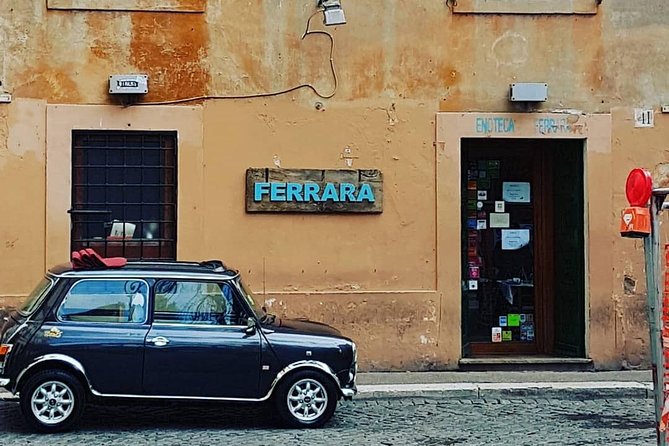
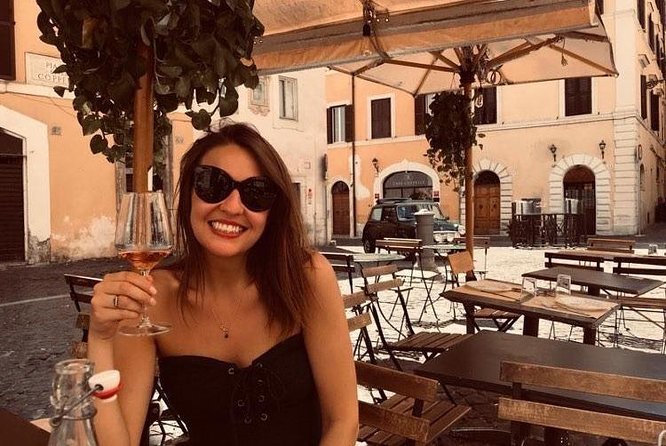
The heart of the experience is the Roman aperitivo. Aperitivo in Rome is less about getting hammered and more about the ritual: a drink (or two if that’s your plan), small bites, and slowing down while the city turns on.
Alcoholic drinks aren’t included, but you can purchase them. The minimum drinking age is 18. If you’re traveling with a group that includes younger people, this is still workable—just keep the aperitivo side aligned with what’s included.
I like that you’re not left guessing how the tour “turns into” food and drink. The itinerary is set up so the experience ends at a local café, where you can enjoy a classic Italian cappuccino. You’ll leave with both a memory of Rome’s big monuments and a taste of how locals wrap the night.
Piazza Navona, Trevi Fountain, and the baroque-photo circuit

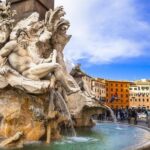
Your evening starts in the baroque zone. Piazza Navona is the kind of square that looks different from every angle, and the tour spends time there for a reason. You’ll see the three Bernini fountains and also the church of Borromini nearby. Even if you don’t go inside, the exteriors and the plaza geometry are worth the quick stop.
From there, you head toward the Trevi Fountain area. It’s listed as free, with time set aside (about 10 minutes). Trevi can be a zoo in daytime; at night, you’re still dealing with crowds, but the lighting improves the photos. The fountain is also more than a postcard moment—its scale and the way water moves around the statues is something you feel once you’re close.
Two quick tips to make these stops work:
- Decide what you want first: wide fountain photo, then detail shots.
- Keep your phone power on. Your “Trevi minute” disappears fast if you’re charging.
Castel Sant’Angelo and Campo de’ Fiori: classic Rome street energy
Next up is Castel Sant’Angelo. The tour frames it around the Tomb of Hadrian (Tomba di Adriano). Even with a short visit window, it’s a strong choice because this area sits right where river views and monumental Rome overlap. The building is instantly recognizable, and the setting gives you a different perspective than the main square stops.
Then you’ll pass through Campo de’ Fiori, one of Rome’s oldest markets. That’s a good counterbalance. You get big-art and big-empire monuments, then you hit an area that still feels like a neighborhood—street life, textures, and the sense of a place that operates beyond sightseeing.
If you prefer Rome as a lived-in city rather than a set of isolated landmarks, these stops help anchor the tour.
St. Peter’s Basilica and Piazza Venezia: Vatican-side awe and civic monuments
St. Peter’s Basilica is one of those places where you feel the scale in your chest. The tour includes a stop at St. Peter’s Basilica, with time to see the basilica and the Piazza designed by Bernini. You may not get a long visit here, but you do get close, and the evening light helps the façade and piazza feel cinematic.
Then you move to Piazza Venezia, home to the Vittoriano (the Altare della Patria). This stop is short (about 5 minutes), but Piazza Venezia is useful because it gives you a wide city feel—like Rome stretching out in multiple directions rather than one tight sightseeing lane.
If you’re the type who only likes “one photo” at each stop, you might find these quick hits perfect. If you’re hoping for long interior time, this tour is not aimed at deep museum/chapel hours.
The Pantheon, Rome’s ancient core, and that horse-racing circus moment
The Pantheon is listed as a quick stop with free admission. Even for a brief look, it’s a stop you’ll remember. The space inside is controlled and calm compared with the streets outside, and the exterior dome silhouette is one of Rome’s most recognizable shapes.
After that, the tour includes an ancient Roman horse-racing circus site—one of the old arenas dedicated to races. You’re not getting a full lecture on chariot history, but you do get the visual reminder that this city wasn’t always about modern crowds and scooters. It also adds a nice “Rome the machine” feel: a city built for spectacle.
Then you head to Palatine Hill, one of the Seven Hills and one of the oldest parts of the city. This is a smart pairing after the central classics because it shifts the focus to the city’s earliest power and its imperial-era footprint.
Seven hills viewpoints: Aventine, Gianicolo, and the orange garden
Rome’s viewpoint hills are where your tour payoff gets real. After the ancient core, the route starts feeding you long sightlines and photo angles.
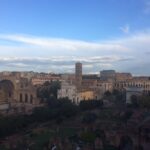
You’ll visit the Colle Aventino (Aventine Hill), listed as one of the Seven Hills and the one furthest south in this grouping. You’ll then also get to the Giardino degli Aranci (the Garden of Oranges), specifically highlighted for a spectacular view over Rome from the Aventine area. This is the kind of stop that makes the fast pacing feel worth it. You’re not just collecting monuments; you’re getting a view that helps everything click.
Then there’s the Colle del Gianicolo (Gianicolo Hill), another viewpoint stop with time to look out over the city. If you want a single “take it in” moment, these viewpoint breaks are it.
Pro tip: bring your patience, not just your camera. These stops are timed, but if you take 2 minutes to look around with your eyes first, the photos come out better.
Piramide Cestia, Trastevere, and the river-to-street contrast
The Piramide Cestia stop is quick, but memorable: an Egyptian-style pyramid built between 18 and 12 BC. It’s a strange little shock in the middle of Roman normal. In a short window, you get the fun surprise factor without needing museum time.
Trastevere follows. This area is described as an ancient, characteristic, and original neighborhood. That’s a good way to say it: it’s the kind of Rome district that feels different just walking around. The contrast is useful. You go from grand monuments and ceremonial piazzas to neighborhood streets and a more lived-in feel.
Together, Piramide Cestia + Trastevere help prevent the tour from turning into a straight checklist of famous buildings.
Fontana dell’Acqua Paola and imperial baths: water and empire scale
Next comes Fontana dell’Acqua Paola, listed as one of Rome’s most beautiful fountains, with views over the city. Fountains in Rome aren’t just decoration. They signal where water came from and how the city cared for public space. This stop also gives you a different kind of photo compared with Trevi: smaller, more personal, and surrounded by viewpoint energy.
After that, the route includes one of the grand examples of imperial baths in Rome. The emphasis here is on scale. Even if you only see parts from outside the main areas, the sheer size and remaining structure remind you how much Rome built for daily public life.
If your brain likes “big Roman ideas,” this pairing works well: water infrastructure, then empire-scale public bathing.
Piazza di Spagna, Via del Corso, and the night’s last push
Piazza di Spagna is next, with time for the Fontana del Bernini called La Barcaccia. This is a classic Rome composition stop: stairs, fountain, architecture, and always people moving through. At night, you get a calmer feel than peak daytime hours, and you can still snag a good angle.
Then the tour ends with Via del Corso, Rome’s shopping district. It’s a practical final neighborhood because you’re close to lots of street options for dessert or a late walk after the tour. You’re also not dropped in the middle of nowhere. You finish in an area where you can keep moving however your evening goes.
And as the itinerary wraps up, you land at a local café for cappuccino to close out the experience. This final café moment is the cultural bookend: you see the monuments, then you relax with something simple and Roman.
Photo strategy and timing: how to make 10 minutes count
Many stops are around 5 to 10 minutes. That can sound short, but for Rome at night it can be the perfect length. The goal isn’t to “stay all day.” The goal is to hit the best angles while you still have energy and good light.
Here’s how to get the most:
- Pick one must-have shot per stop. After that, go for details.
- If you have a group, decide who’s shooting first so nobody waits around.
- When the driver pauses, stand in the place you want before you start taking pictures. It sounds basic, but it prevents the awkward scramble.
The tour also allows you to stop as often as you like for photos. That flexibility is what keeps the short time from feeling like a strict drive-by.
Price and value: what $260.20 buys you in Rome
At $260.20 per person for a private tour lasting about 3 to 4 hours, you’re paying for three things: transportation in a classic Mini, a tailored route, and guide time.
If you’re traveling as a couple, the math can feel reasonable because you’re essentially buying private access to a tight route across Rome’s top sights plus a café finish. If you’re a small group of three, you’re getting the full advantage of the capacity limit, since the Mini stays intimate.
You also get several “extras” in the package: hotel pickup and drop-off, round-trip private transfer, live commentary, bottled water, and snacks. Admissions are not all the same—some stops are listed as free, and at least one stop includes an admission ticket—so you aren’t paying for every individual entrance on top.
Is it the cheapest way to see Rome? No. Is it a good-value way to see a lot without exhausting yourself? Yes, especially if you care about photo time, evening ambiance, and not getting stuck in long lines.
Who this Rome Aperitifs Mini tour fits best
This tour makes the most sense if you:
- want to see multiple major landmarks in one evening without renting a car
- like viewpoint stops and quick photo breaks
- care about the aperitivo tradition, not just sightseeing
- prefer a small group plan over big-group logistics
It might not be the best fit if you:
- want long museum hours or deep interior time
- need a daytime schedule
- dislike tours with many short stops
Should you book the Rome Aperitifs Mini Cooper Classic tour?
I’d book it if your priority is a fun, efficient Rome night with aperitivo + real photo time. The small group size and the evening timing are the big strengths, and the café finish gives it that human touch beyond monument hunting.
Skip it if you’re chasing long museum visits or a slow, wandering itinerary. This is a “hit the highlights, look at the city, then relax” kind of evening—and when that’s your goal, it works.
FAQ
FAQ
What’s the length of the Rome Aperitifs Tour?
The tour runs about 3 to 4 hours.
Is pickup from my hotel included?
Yes. Hotel pickup and drop-off are included, along with round-trip private transfer.
How many people are in the Mini?
The tour is private and has space for just three passengers.
What time does the tour operate?
Tours run daily from about 6:30 PM to 9:30 PM.
Is the tour ticket digital?
Yes. You receive a mobile ticket.
Are tickets and entry fees included for all stops?
Not all stops are the same. Some stops list admission as included, while others are listed as free.
Is alcohol included with the aperitivo?
No. Alcoholic drinks are not included, though you can purchase them.
Does the tour include food and drinks?
Bottled water and snacks are included. The aperitivo and the café stop provide food and drinks as specified, while lunch is not included.
Where does the tour end?
It ends at a local café where you can enjoy a classic Italian cappuccino.
Does weather affect the tour?
Yes. The experience requires good weather. If it’s canceled due to poor weather, you’ll be offered a different date or a full refund.