REVIEW · RIO DE JANEIRO
Ancient Rio and Santa Teresa Tour with Hotel pick-up and drop-off
Book on Viator →Operated by Rio Carioca Tour Ltda · Bookable on Viator
Rio has two faces, and this tour shows both. In about four hours, you bounce from Santa Teresa’s hillside bohemia to Rio’s downtown landmarks, with clear local context for why these neighborhoods matter. I especially like how the route turns everyday streets into a story you can actually picture.
I also love the architecture-focused stops in the historic center. You get timed looks at grand early-1900s buildings like the Theatro Municipal area and the National School of Fine Arts building, even though you do not go inside.
The main drawback to plan for is pace. Many stops are short, and you’ll spend most of the time sightseeing outside, with a fair amount of walking over uneven streets in Santa Teresa.
In This Review
- Key Highlights You Should Actually Plan For
- Price and Logistics: What $55 Buys You
- Santa Teresa: Mansions, Painters, and the Tram Story You Can See
- Parque das Ruínas: Laurinda Santos Lobo’s Art Legacy
- Arcos da Lapa: From Water Transport to Everyday Neighborhood Movement
- Praça XV de Novembro: Civic Power Meets Waterfront Transit
- Arco do Teles: Former Market Streets and a Food-and-Drink Scene
- Cinelandia: The Photo Square Built for Downtown Rio
- Museu Nacional de Belas Artes and Theatro Municipal: Exteriors Only, Still Worth It
- Biblioteca Nacional: Latin America’s Big Library, Seen from the Outside
- Guide Quality Matters More Than You’d Think
- Timing Tips: Holidays, Traffic, and Why Some Shops May Be Quiet
- Who This Tour Is For (and Who Should Rethink It)
- Should You Book Ancient Rio and Santa Teresa?
- FAQ
- How long is the Ancient Rio and Santa Teresa tour?
- What’s included in the price?
- Is lunch included?
- Do we enter the museums and major buildings?
- Is there a tram ride included in Santa Teresa?
- How many people are in the group?
- Where does pickup and drop-off happen?
- Can I cancel and get a full refund?
Key Highlights You Should Actually Plan For
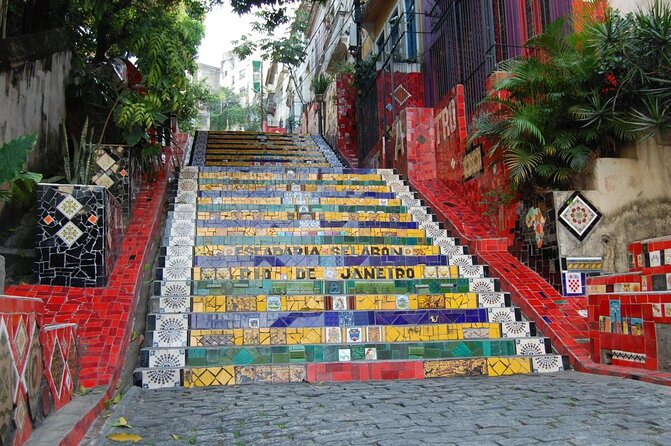
- Santa Teresa’s 1897 tram era shows up in the neighborhood’s look and layout, even if you do not ride
- Arcos da Lapa connects past water infrastructure to today’s Santa Teresa commute
- Praça XV de Novembro anchors the old center with major civic buildings and a ferry-terminal vibe
- Arco do Teles leads you through a former downtown market area packed with bars and small restaurants
- Cinelandia is built for photos, with classic downtown facades around the square
- Architecture stops only for the fine arts building, Theatro Municipal, and Biblioteca Nacional (worth it for the exteriors)
Price and Logistics: What $55 Buys You
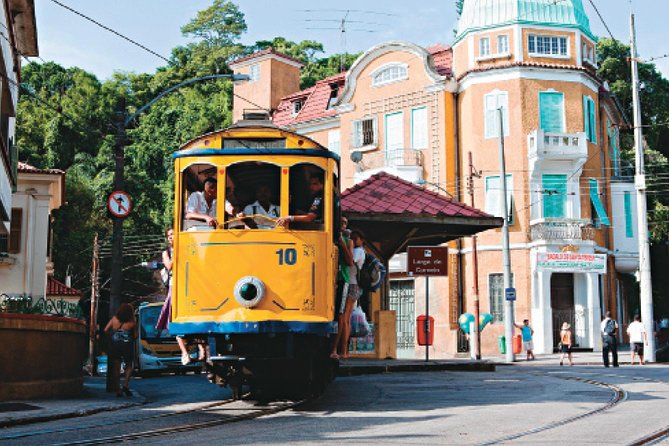
For $55 per person, you’re paying for a guided, high-efficiency circuit with an air-conditioned vehicle and hotel pickup/drop-off. This is the kind of tour you book when you want a fast first look at Rio without trying to stitch together multiple neighborhoods on your own.
The group size is capped at 19 travelers per minivan, which usually keeps things manageable for quick photo breaks and street-level navigation. The tour itself runs about four hours, so you should expect short stops more than long hangs.
One thing I’d treat as a deal-breaker for some people: several stops are exterior viewing only, and the timed walking can feel brisk when traffic and traffic lights are working against you.
You can also read our reviews of more tours and experiences in Rio de Janeiro.



Santa Teresa: Mansions, Painters, and the Tram Story You Can See
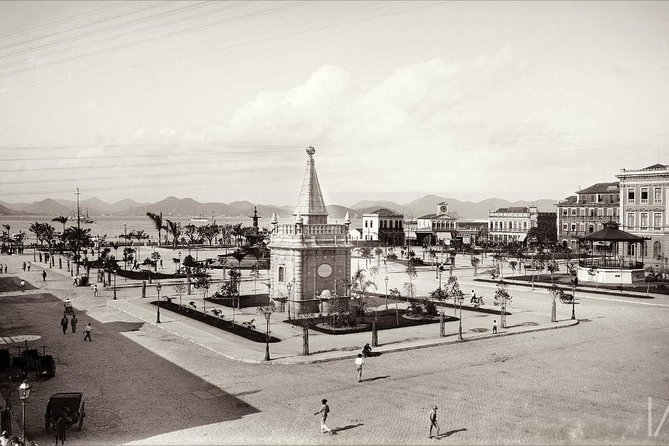
Santa Teresa is the bohemian side of Rio that people fall for fast. You’ll spend about an hour here, taking in the neighborhood’s hillside feel, its painter culture vibe, and especially its early-1900s mansions.
The big “aha” is the tram legacy. Santa Teresa still has the tram that traces back to 1897, and it shapes the neighborhood’s identity. Even when you’re not riding, you can understand why the area developed the way it did once you see the track history around the streets.
Practical note: Santa Teresa streets can be uneven. If you’ve got walking concerns, wear shoes with good grip and plan for careful steps on cobblestones and slopes.
Parque das Ruínas: Laurinda Santos Lobo’s Art Legacy
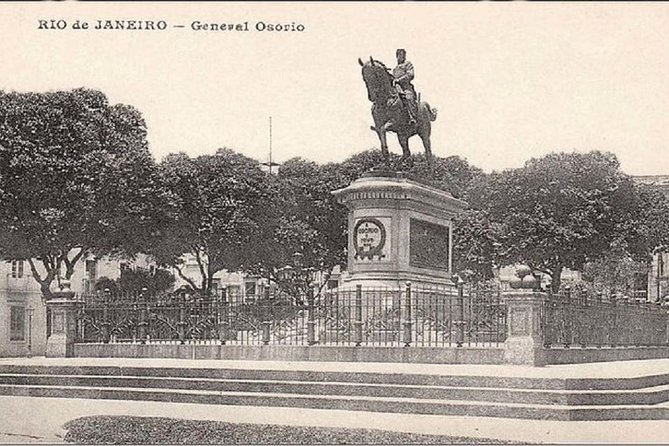
Your next stop is Centro Cultural Municipal Parque das Ruínas, where the tone shifts from street scenery to a specific person’s impact. This cultural center preserves the legacy of Laurinda Santos Lobo, a major female art supporter whose work helped back artists across the city.
You’ll have about 20 minutes, with admission listed as free. That short time is enough to get the meaning of the place—less about a full museum-style visit, more about understanding the story behind why the arts gained a home here.
If you love connecting names to places, this stop is one of the best “meaning-per-minute” moments on the route.
Arcos da Lapa: From Water Transport to Everyday Neighborhood Movement
Then it’s on to Arcos da Lapa, the iconic aqueduct-like arches that used to transport water. Today, the arches are part of daily life: they’re used as a local transportation landmark for residents going between areas.
You’ll have about 30 minutes here. Time is tight enough that you’ll mostly do exterior views and photos, but you’ll also get the context that turns the arches from a postcard into infrastructure.
Admission here is noted as not included, but you’re not missing a “must-do” interior—this is really about understanding what the arches enabled.
Praça XV de Novembro: Civic Power Meets Waterfront Transit
Next comes Praça Quinze de Novembro, around 30 minutes, with free admission. This square sits in the historical center and is framed by major institutions, including Palácio Tiradentes, the Legislative Assembly of Rio de Janeiro, and Paço Imperial.
One detail that helps you “read” the square: Praça XV Station functions as a ferry terminal with connections across Rio and toward Niterói. So you get a feel for how the city’s old core connects to water transport even now.
This stop is great if you want the broad-brush map of what downtown Rio has been doing for generations—politics, business, and movement all in one frame.
Arco do Teles: Former Market Streets and a Food-and-Drink Scene
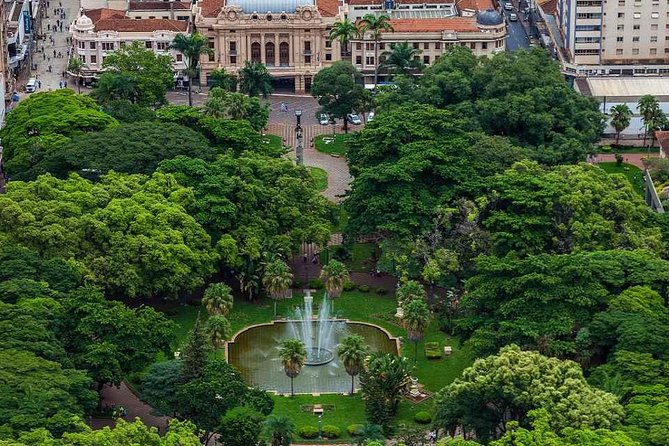
Arco do Teles is a short, punchy stop—around 20 minutes and free admission. It sits in what used to be the downtown market area, and that past still shows up in the street pattern and energy.
You’ll walk through smaller streets and alleys lined with bars and small restaurants. The trick here is to use the time for a quick sensory scan: look at storefront styles, check out the alley rhythm, and pick one spot for a future meal if the timing doesn’t allow a sit-down.
Cinelandia: The Photo Square Built for Downtown Rio
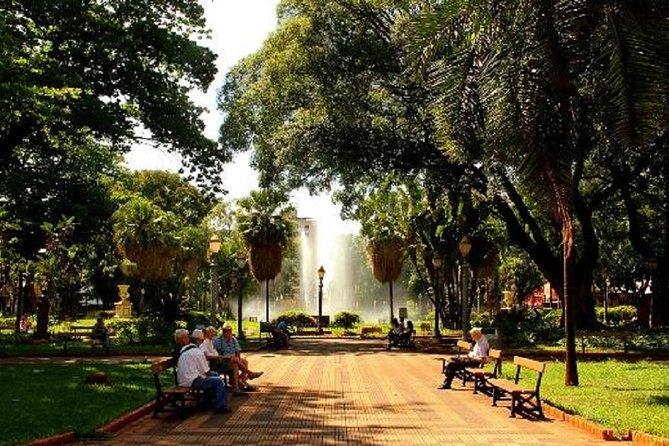
Cinelandia is one of those squares that makes you stop without trying. You’ll spend about 30 minutes, and admission is free, with time to take pictures and absorb the surrounding historical buildings.
It’s also a good “reset” point in the tour. After Santa Teresa’s slopes and the arches-and-arches scenery, Cinelandia gives you a flatter, more open space where you can get oriented visually before the architecture walk.
If you like crisp skyline photos with classic facades, plan to use at least part of this stop for a steady photo session, not just a quick glance.
Museu Nacional de Belas Artes and Theatro Municipal: Exteriors Only, Still Worth It
After Cinelandia, you move into a trio of big-name architecture stops where you do not enter the buildings. First is Museu Nacional de Belas Artes, about 10 minutes, with admission not included.
The building’s importance comes from its role in early-1900s art education. Designed in 1908 by architect Adolfo Morales de los Rios, it was built during Rio’s modernization under Mayor Pereira Passos, in the era when the city was the Federal Capital.
Then comes the Theatro Municipal do Rio de Janeiro, also about 10 minutes, with admission not included. The theater opened in 1909 and is one of Brazil’s major cultural landmarks. You’ll also learn why it became known for artistic independence starting in the 1930s, and that it’s the only Brazilian institution with its own choir, symphony orchestra, and ballet company.
Even without entering, the exterior viewing time works if you pay attention to details like symmetry, facade lines, and how the buildings frame the streets.
Biblioteca Nacional: Latin America’s Big Library, Seen from the Outside
Your last architecture stop is Biblioteca Nacional, again about 10 minutes, with admission not included. This is the largest library in Latin America, founded in 1810 by D. João VI.
What makes it memorable is the scale and the collection claims: an archive of almost 9 million items, including rare books, manuscripts, original letters written by Princess Isabel, early newspapers, and two copies of the Mainz Psalter Bible printed in 1492.
The stop is short, and you won’t access the archives in this format. But the exterior visit still helps you connect modern Rio with its long intellectual and political roots.
Guide Quality Matters More Than You’d Think
This tour is built on timing, walking, and storytelling. That means the guide can make the difference between a “good sightseeing run” and a trip that actually sticks.
In the real world, you’ll see strong guide feedback tied to people like Renato, Wagner, Roger, Dario, and Monica. When guides bring energy and clear explanations, you’ll feel the route connect like one continuous story instead of nine disconnected stops.
There have also been complaints about some guides seeming disengaged or rushing photo moments. If this tour is your only day for downtown, I’d take control in a small way: ask your guide what the best photo corners are before you move on, and tell them you prefer slower pacing at one or two stops.
Timing Tips: Holidays, Traffic, and Why Some Shops May Be Quiet
This circuit works best when Rio is moving normally. On major holidays, though, opening hours can change fast.
For example, if your day hits a public holiday like New Year’s Day, you may find shops in the city center and in Santa Teresa closed. Mondays can also be quieter for businesses in Santa Teresa, which affects that neighborhood’s everyday feel.
And if Carnival timing lines up with your travel week, traffic can become a real factor. Expect possible delays and a tighter-feeling schedule if streets slow down.
Who This Tour Is For (and Who Should Rethink It)
This is a smart pick if you:
- want a first-time orientation to Santa Teresa plus old downtown
- like photo stops with major architecture rather than deep museum time
- enjoy neighborhood context, not just big-ticket landmarks
- have limited hours and want a structured route
You might rethink it if you:
- need long museum visits or interior time (this format keeps you outside)
- cannot handle uneven cobblestone walking in Santa Teresa
- get stressed by rushed pacing in short stops
For mobility concerns, I’d message the operator ahead of time and ask what can be adjusted. The route has been adapted by guides for guests with walking difficulty in at least some cases, but you should not assume that will happen without a heads-up.
Should You Book Ancient Rio and Santa Teresa?
Yes, if you want a high-value snapshot of Rio’s past and present neighborhoods in one morning/afternoon block. The $55 price makes sense when you add up what you’re getting: guided context, hotel pickup/drop-off, an efficient route, and free admission at several key outdoor stops.
Also yes if you enjoy understanding how infrastructure (like Arcos da Lapa) and arts patronage (Laurinda Santos Lobo at Parque das Ruínas) shaped the city.
I’d skip or choose a different format if you need lots of indoor time, long lingering sessions, or step-free navigation. This tour rewards curiosity and good walking shoes more than it rewards ticking off interiors.
FAQ
How long is the Ancient Rio and Santa Teresa tour?
The tour runs about 4 hours, approximately.
What’s included in the price?
The price includes an air-conditioned vehicle and hotel pickup/drop-off. The tour also includes the guided route through the listed stops.
Is lunch included?
No. Lunch is not included.
Do we enter the museums and major buildings?
No. For Museu Nacional de Belas Artes, Theatro Municipal do Rio de Janeiro, and Biblioteca Nacional, the plan is to view the architecture from the outside, not to enter.
Is there a tram ride included in Santa Teresa?
The tram is part of Santa Teresa’s history, but the tour does not list an included tram ride. You’ll focus on the tram’s presence and the neighborhood’s character.
How many people are in the group?
The tour uses a minivan with a maximum of 19 travelers. The overall tour maximum listed is 99 travelers.
Where does pickup and drop-off happen?
You’ll start from the meeting point at Hotel Rio Othon Palace in Copacabana, and the activity ends back at the meeting point. Pickup timing is coordinated based on your hotel location after booking confirmation.
Can I cancel and get a full refund?
Yes, you can cancel up to 24 hours in advance for a full refund. If you cancel less than 24 hours before the start time, the amount paid is not refunded.