REVIEW · ATHENS
Athens Ghost Walk: Mystical Ruins & Ancient Legends
Book on GetYourGuide →Operated by Dawn Tours · Bookable on GetYourGuide
Lanterns, ruins, and stories that linger. This lantern-led Athens Ghost Walk turns major classics into a night-time legend hunt, mixing myth talk with pauses that make you listen. I also love the small-group size here, which makes it easier to connect with your guide instead of getting rushed along.
You’ll cover key archaeological areas in a single evening, from Kerameikos to the Acropolis edge, and you’ll finish with a specialized card reading. One possible drawback: site entry isn’t included, so if you’re hoping to go inside every stop, you’ll want to plan for that separately.
Still, for $36 and a short walking window (about 90 minutes to 2 hours), it’s a smart way to experience Athens after dark without feeling like you’re sprinting through history.
In This Review
- Key Highlights Worth Booking
- Entering The Night: Pompeion Propylon to the First Whisper
- Kerameikos Cemetery and the Ancient Agora: Where Athens’ Past Feels Close
- Hadrian’s Library and the Roman Agora: Scholars, Merchants, and Conspiracies
- Plaka’s Shadowed Alleys and the Acropolis Edge at Dusk
- Odeon of Herodes Atticus: The Final Echo and the Card Reading
- Price, Duration, and Why $36 Can Make Sense for a Night Route
- Who This Tour Is For (And Who Might Want Something Else)
- Small-Group Guides: What Makes Beyla and Emese’s Style Matter
- Should You Book the Athens Ghost Walk?
- FAQ
- Where does the tour start and where does it end?
- How long is the Athens Ghost Walk?
- How big is the group?
- What’s included in the price?
- Are entrance fees to the sites included?
- What languages are available?
Key Highlights Worth Booking
- Lantern-led suspense at historic sites, with storytelling timed for dusk
- Small group limit (10 people) so your guide can actually interact
- Kerameikos to Acropolis edge route connecting legends to places you can point at
- Card reading finale at the end of the walk (including a theater-of-Dionysus moment noted by guides)
- Multiple guides and languages offered, including English, Arabic, French, and Spanish
- A guided walk that passes major landmarks without requiring you to drive around town
Entering The Night: Pompeion Propylon to the First Whisper
Your evening starts at Pompeion Propylon, a clear launching point if you’re arriving early and want to get your bearings. The vibe is built for night walking: you’re not just moving between sites, you’re getting pulled into a story told at human scale.
This is where the tone matters. The tour leans into whispered storytelling and suspenseful pauses, and it uses lantern light to keep your attention on the details around you. Instead of a lecture you half-hear while scrolling, you get a guided experience where the guide’s pacing is part of the show.
If you like your Athens a bit darker, this opening sets expectations fast: the goal isn’t to turn everything into a spooky theme park. It’s to connect legends to the spaces where people once gathered, argued, studied, traded, and prayed.
You can also read our reviews of more walking tours in Athens


Kerameikos Cemetery and the Ancient Agora: Where Athens’ Past Feels Close

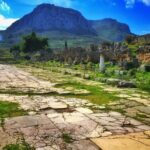
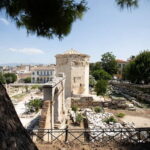
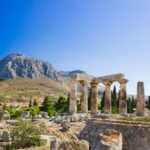
The first true stop-style experience is the ancient Kerameikos Cemetery area, where the tour frames the landscape through the idea that Athens’ spirits linger among tombs and mausoleums. Even if you’re not looking for paranormal thrills, this approach works because it makes you slow down and notice what you’re standing next to.
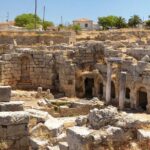
From there, you move into the Ancient Agora—once a bustling heart for philosophical debate. The tour uses that setting to bring Socrates into the atmosphere, not as a dry name-drop, but as an imagined presence hanging around the ruins. That matters because the Agora is easy to see as just “old stones.” Here, it’s presented like a place where ideas had stakes, and where mystery could grow from everyday talk.
What I like about this section is how it blends myth and setting. You’re walking through recognizable anchors of Athens, but you’re also being asked to picture how people moved and thought there. That turns the route into more than sightseeing.
A practical consideration: this portion is still a walking tour format, so you’ll want to be comfortable standing and moving steadily for an evening of stops.
Hadrian’s Library and the Roman Agora: Scholars, Merchants, and Conspiracies
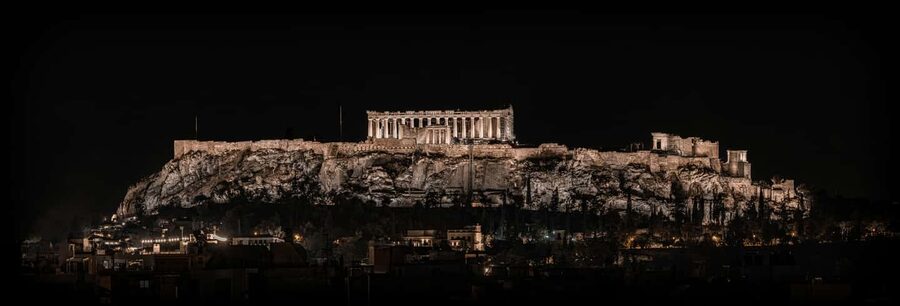
Next comes a stretch through Hadrian’s Library and the Roman Agora. The tone shifts from philosophy to the texture of public life—scholars, merchants, and ancient conspiracies in one connected story-world.
Hadrian’s Library gets treated like a corridor of echoes: not just a landmark to recognize, but a space where the guide’s narration helps you feel the distance between then and now. Then you step into the Roman Agora, where the tour leans harder into the idea that “secrets” lived alongside commerce and conversation.
For you, this segment is the payoff if you like history that has personality. It’s not only dates and architecture. It’s the sense that different kinds of people overlapped in the same streets: thinkers and traders, rumor spreaders and planners.
One drawback to note: the tour’s style is mystical. If your main goal is strictly archaeological detail, you may find yourself wanting more straight factual commentary. The tour does include history and myths together, but it prioritizes the atmosphere and storytelling.
Plaka’s Shadowed Alleys and the Acropolis Edge at Dusk
As you move into Plaka, the narration changes character again. Plaka’s shadowed alleys are framed through medieval ghosts, Byzantine spirits, and urban legends. This is the part of the evening that feels most like Athens as a living city, not a museum.
You’re also guided toward circling the base of the majestic Acropolis. The tour doesn’t stop at a generic viewpoint. It ties the Acropolis area to myths, rituals, and philosophical whispers that fit the earlier Agora theme. The effect is a kind of storytelling loop: the tour starts with ideas, then public life, then the legends that cling to neighborhoods and stairways leading toward the Acropolis.
Why this section is valuable: it connects the big-name sights to the smaller, human-scale lanes between them. If you’ve only seen Athens from the “main drag,” you’ll likely appreciate how the tour uses the walking pattern to reframe what those neighborhoods mean.
Timing-wise, the tour is designed around nightfall. That means the route feels different than daytime sightseeing, and you get that dusk lighting that makes legends easier to accept. (It’s also worth knowing that this is where night walking can feel longer than you expect, so keep your energy for the second half.)
Odeon of Herodes Atticus: The Final Echo and the Card Reading
The tour finishes at the Odeon of Herodes Atticus, an ancient theatre described through the echoes of tragedy, music, and timeless spirits. Even without formal explanation, you can see why a theatre is a natural ending point for a ghost-and-legend format. There’s something about the shape of performance spaces that makes stories feel louder.
This is also where the specialized card reading happens. One account specifically notes the card reading at the theatre of Dionyses at the Acropolis area, which fits the idea of ending your walk in the heart of Athens’ theatrical past.
If you’re into the supernatural, this finale is the moment that turns the whole walk from a guided stroll into a full themed experience. If you’re more skeptical, it can still be fun as a ritual-style wrap-up—less about believing and more about participating in a locally flavored tradition of interpretation.
Either way, I think the ending works because it’s not random. It ties directly to storytelling and dramatic atmosphere, right where the guide’s narrative culminates.

Price, Duration, and Why $36 Can Make Sense for a Night Route
At $36 per person and 90 minutes to 2 hours, this Athens Ghost Walk sits in the “evening value” category. You’re paying for guided storytelling plus the card reading finale—not for paid entry into sites.
That matters for your planning. Since entry to any sites isn’t included, you’re essentially getting a route-based experience: you see major landmarks, and your guide provides context and legend framing as you pass them. If you want a tour that replaces tickets and museum time, this may not be the right match. If you want a well-paced night overview with a supernatural twist, the price can feel fair.
The small group size (limited to 10 participants) is the big value driver. When you can hear the guide clearly and ask questions without competing with a crowd, you’re more likely to actually enjoy the story thread instead of just collecting photos.
Languages offered—English, Arabic, French, and Spanish—also help the tour feel accessible. More people can follow along closely, and that makes the storytelling format work.
Who This Tour Is For (And Who Might Want Something Else)
This tour is a great fit if you want Athens at night with a narrative thread. It suits you if you like:
- ancient legends mixed with real places you can identify
- a small-group experience where the guide can respond
- an ending that goes beyond walking and into a themed reading moment
It may not be ideal if you prefer your sightseeing strictly practical and factual, with minimal folklore. The tour’s format is explicitly mystical, and even though it touches myths and history, it’s designed to keep you in the mood.
Also consider your comfort with walking. You’re on your feet for the full 90 minutes to 2 hours, and the excitement doesn’t slow down just because you’ve reached the Acropolis edge. If you’re hoping for a short, low-movement option, you might want to compare formats.
Small-Group Guides: What Makes Beyla and Emese’s Style Matter
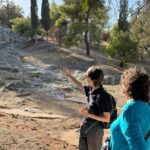
The standout here is the way the guide interacts. Names like Beyla and Emese show up in experiences of the evening, and the common thread is a personal touch: the storytelling doesn’t feel like it’s delivered from a distance.
In practice, that usually means better pacing. Instead of racing stop to stop, the guide can pause when a question lands, or when the story needs time to click. That’s a huge deal for an experience built on suspense and atmosphere.
If you choose this tour, I’d look for that small-group promise as your “why.” It’s the difference between hearing the legend and understanding how the guide frames it.
Should You Book the Athens Ghost Walk?
Book it if you want Athens after dark with a story spine—lantern-led, myth-forward, and finished with a specialized card reading in a theatre setting. At $36, it’s a reasonable way to connect the dots between Kerameikos, the Ancient Agora, Hadrian’s Library, the Roman Agora, Plaka, and the Acropolis edge without spending the whole night navigating on your own.
Skip it (or compare alternatives) if you mainly want ticketed site access or strictly textbook history. This tour is built for mood and movement, not for deep paid entry into every landmark.
If you’re the type who enjoys urban legends, Byzantine and medieval spirit stories, and the feeling that Athens has layers you can hear after sunset, this one is likely to fit your travel style.
FAQ
Where does the tour start and where does it end?
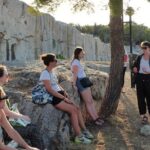
The meeting point is at Pompeion Propylon (you’ll see a big stone and stairs, with a map at the archeological site). The tour ends at Odeon of Herodes Atticus.
How long is the Athens Ghost Walk?
The tour runs about 90 minutes to 2 hours.
How big is the group?
The group is small, limited to 10 participants.
What’s included in the price?
The price includes a walking tour with a guide and a specialized card reading.
Are entrance fees to the sites included?
No. Entry to any of the sites is not included.
What languages are available?
The live guide is available in English, Arabic, French, and Spanish.