REVIEW · ATHENS
Athens: Women in Ancient Greece Guided Walking Tour
Book on GetYourGuide →Operated by Culture Hunters · Bookable on GetYourGuide
Athens turns personal when you hear women’s stories. This guided walking tour lets you read familiar landmarks through a female perspective—from the Agora to the Acropolis viewpoints—while you pick up the names and myths that shaped real daily life in ancient Greece. You’ll connect places you thought you already knew to the women who lived, worked, argued, taught, and sometimes broke the rules.
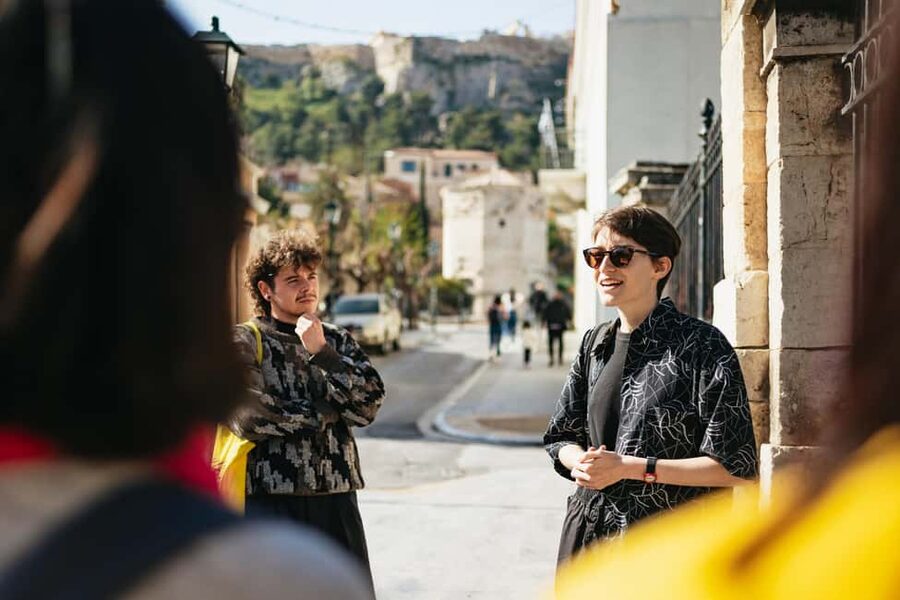
I like two things most. First, the tour links major sites like Hadrian’s Library and the Ancient Agora to everyday roles—so history feels human, not distant. Second, the guide, often identified as Maelle, keeps the pace lively and answers questions in a conversational way, mixing myth figures like Athena with real historical names such as Sappho and Aspasia.
One heads-up: it’s a 2-hour walk with steps, so it may not be suitable if you have mobility issues or heart problems, and it is not designed for wheelchair users.
In This Review
- Key highlights worth your time
- Women’s lens on Athens: what this tour changes
- Stop-by-stop: from Monastiraki to Filopappou Hill
- Stop 1: Holy Church of the Virgin Mary Pantanassa (your starting point)
- Stop 2: Monastiraki for a quick orientation
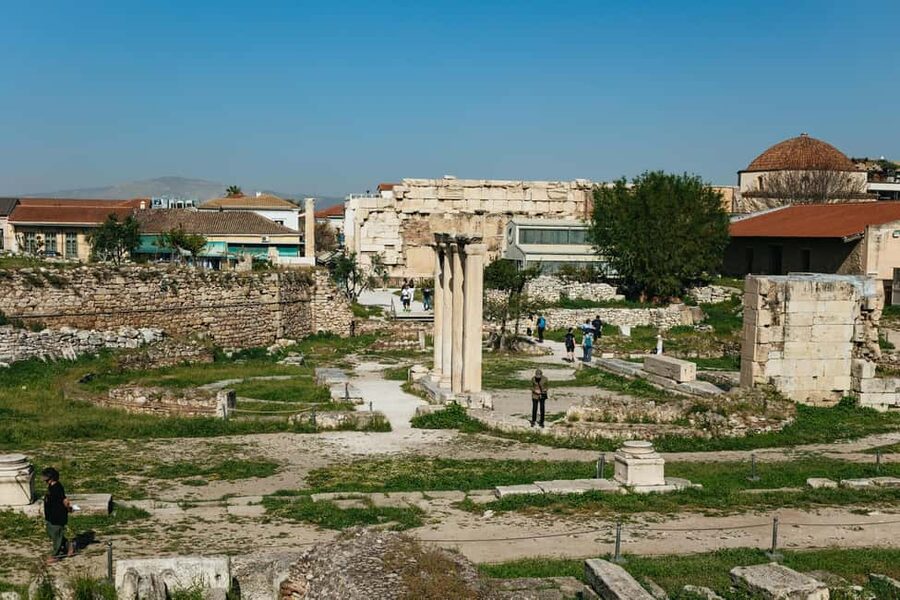
- Stop 3: Hadrian’s Library (where education meets power)
- Stop 4: Plaka streets (daily life storytelling zone)
- Stop 5: Gate of Athena Archegetis (Athena as a social clue)
- Stop 6: The secret stop (the “wait for it” moment)
- Stop 7: Ancient Agora of Athens (woman-shaped society)
- Stop 8: Pnyx (democracy, and what’s missing)
- Stop 9: Viewpoint on the way (quick sights break)
- Stop 10: Filopappou Hill (a scenic ending with perspective)
- End: back near your starting area
- Myth, goddesses, and famous women: how the stories connect
- Acropolis views without the ticket stress
- Price and value: is $44.04 worth it?
- Who should book this Women in Ancient Greece tour
- Tips to make your 2-hour walk smoother
- Book it or skip it: my straight take
- FAQ
- How long is the Athens Women in Ancient Greece guided walking tour?
- What is the price per person?
- Where do I meet the guide?
- Is this tour available in English and French?
- Are tickets to archaeological sites included?
- Is there a private tour option?
- Is the tour wheelchair accessible?
Key highlights worth your time
- Women’s lens on classic landmarks: Iconic Athens sites get re-read through women’s lives and social roles
- Myth plus real-world context: Athena, Penelope, Demeter, and Pandora aren’t just characters; they’re used to explain expectations
- Unexpected historical characters: Sappho, Aspasia, and Agnodice show how some women pushed past limits
- A stop the guide keeps for later: there’s a secret stop that adds surprise and photo potential
- Conversation-style guidance: Maelle’s approach is friendly and question-friendly, not lecture-only
- No site ticket stress: you get exterior views, so you can focus on stories rather than ticket lines
Women’s lens on Athens: what this tour changes

Most Athens tours tell you who built what, when a battle happened, and which god got a temple. This one changes the “who.” You still see the famous places—just with a sharper question in mind: where did women fit into this world?
That shift is the point. When you hear how Greek mythology shaped expectations (think goddess stories and famous women used as moral examples), the city starts to feel less like a museum grid and more like a lived-in society. You’re not only walking through stone and columns. You’re walking through social rules—inheritance, education, public roles, and what people believed women should be.
And because the tour focuses on both famous names and day-to-day life, you get a sense of contrast. Some women became visible through art, teaching, or public influence. Others experienced the limits of their status—often through family life, work, and religious festivals you’re actually hearing about as you walk.
You can also read our reviews of more walking tours in Athens


Stop-by-stop: from Monastiraki to Filopappou Hill

This is a smart route for a short visit: it threads together Athens’ core ancient areas with a finale that gives you room to breathe and look out over the city.
Stop 1: Holy Church of the Virgin Mary Pantanassa (your starting point)
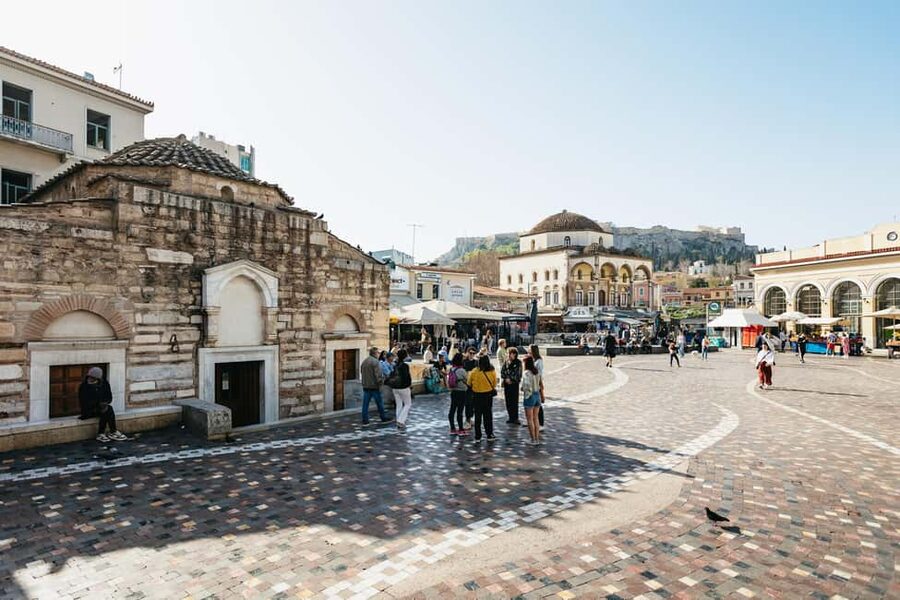
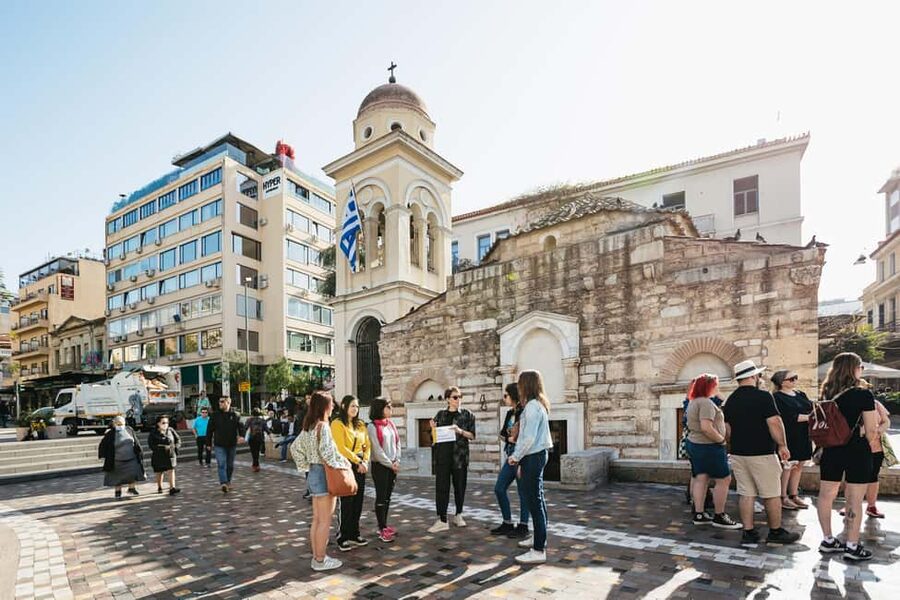
You meet at the Holy Church of the Virgin Mary Pantanassa area near Monastiraki Square. The guide holds a sign for the Women in Ancient Greece tour, so you can spot the group quickly.
Why this start works: it sets the tone before you rush into major ruins. You begin with stories that frame what you’re about to see, not just a map of stops.
Stop 2: Monastiraki for a quick orientation
Monastiraki is only a brief stop, but it’s useful. You get a handhold on how you’ll move through the old city, and it helps you connect modern street life with ancient spaces nearby.
You’ll spend about five minutes here, so treat it as orientation, not a detour. If you’re the type who loves quick photo checks, bring your phone out—but keep listening.
Stop 3: Hadrian’s Library (where education meets power)
At Hadrian’s Library, you’re guided through a site that signals who had access to learning. That’s a strong match for this tour, because the women stories aren’t only about myths and romance. They also point to education, intellectual life, and the contrast between what society expected and what some women achieved.
Timing is short—around five minutes. The benefit is that the guide keeps the focus tight: you’re there to pick up a key idea you’ll reuse later at other stops.
You can also read our reviews of more guided tours in Athens




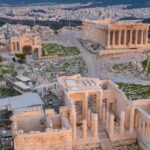
Stop 4: Plaka streets (daily life storytelling zone)
You’ll pass through Plaka for about ten minutes. This is where the tour’s “daily life” theme really clicks. Plaka is one of those neighborhoods where you can easily get lost looking at shops and balconies. On this walk, you’re meant to notice street feel and human scale, then connect it back to how people moved through their world in ancient Athens.
If it’s hot, this stretch can feel long in the sun, so plan for shade breaks when your guide suggests them.
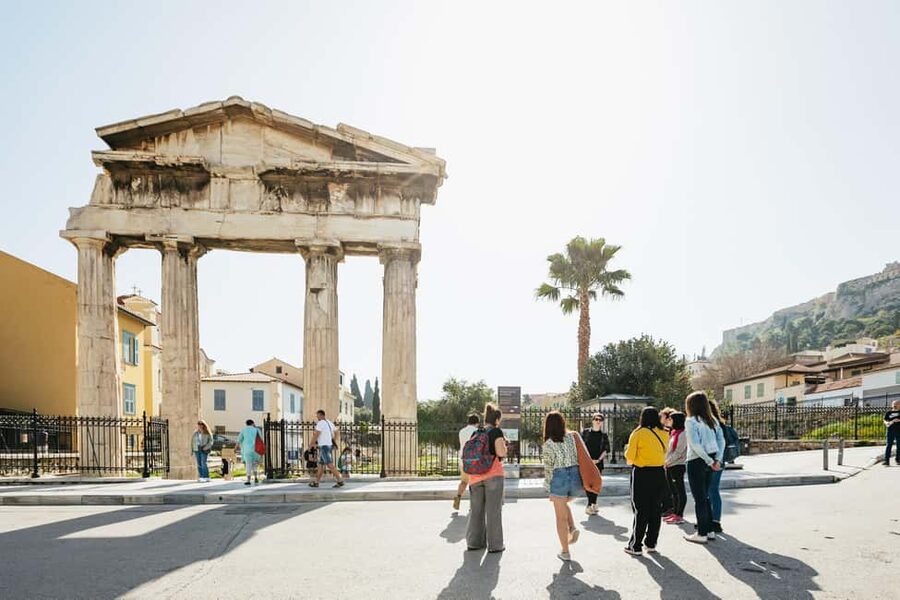
Stop 5: Gate of Athena Archegetis (Athena as a social clue)
At the Gate of Athena Archegetis, you get myth in a practical role. Athena isn’t just a name in a storybook here. The guide uses Athena to explain how myth could shape ideas about women’s roles—what was praised, what was feared, and what was expected.
This stop lasts around ten minutes. It’s enough time to connect the symbolism to the women you’re learning about, especially as the tour moves toward civic spaces.
Stop 6: The secret stop (the “wait for it” moment)
There’s a secret stop on the route, guided for about ten minutes. You won’t know the details in advance, which is part of the fun. It also breaks the rhythm of always going from big landmark to big landmark.
Plan for this: if you’re eager to photograph constantly, you’ll want to follow the guide’s timing instead. The story matters more than the shot.
Stop 7: Ancient Agora of Athens (woman-shaped society)
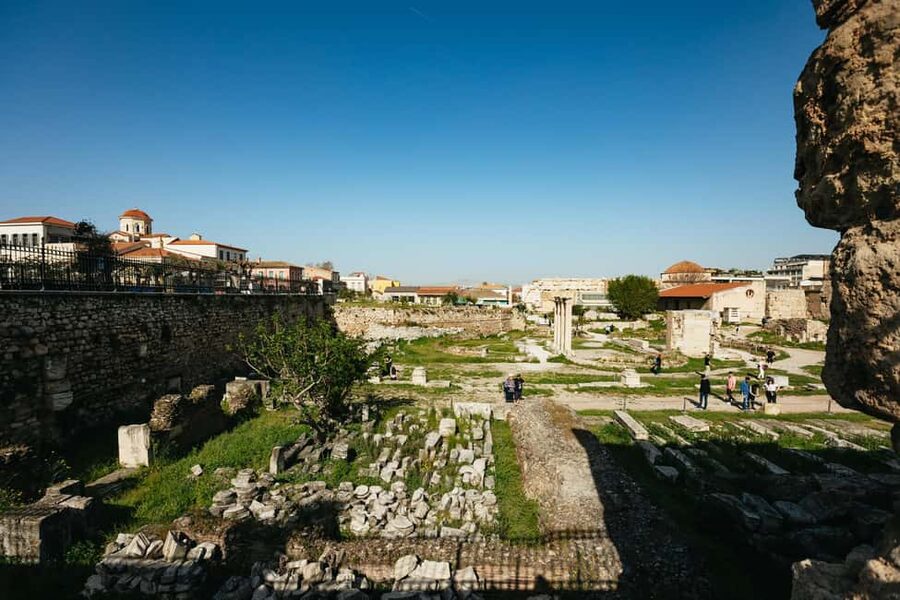
At the Ancient Agora, the tour shifts from myth symbolism to public space. The Agora was where civic life happened, and your guide uses the area to talk about roles—what women could and couldn’t do in public settings, and how different social expectations could play out.
Expect about ten minutes here. Since the Agora can be visually busy, your job is simple: listen for the “women’s question” the guide keeps returning to.
Stop 8: Pnyx (democracy, and what’s missing)
At Pnyx, you get the famous stage for early democratic voting. This tour’s framing is smart: you’ll look at a civic landmark and also talk about who was included and who wasn’t.
The guide spends about fifteen minutes here, plus you’ll likely pause for views. It’s longer than some stops because the idea matters. You’re being asked to notice the gap between ideals and real participation.
Stop 9: Viewpoint on the way (quick sights break)
There’s a short scenic break, around five minutes. It’s built into the route, which helps your body and keeps your brain reset.
If you want photos, this is the moment to grab them—without missing the next explanation.
Stop 10: Filopappou Hill (a scenic ending with perspective)
You finish at Filopappou Hill after about ten minutes of guided time. The payoff is the viewpoint and the sense of connection across Athens.
This ending is the right kind of wrap-up. You’ve spent the walk tracing stories around power and expectation. From here, you can step back and see the city as a whole again.
End: back near your starting area
The tour ends with drop-off options listed at a kiosk location, but the activity itself finishes back at the meeting area. In plain terms: plan to return to the Monastiraki side of town when you’re done.
Myth, goddesses, and famous women: how the stories connect
One of the tour’s big strengths is that it doesn’t treat mythology as pure fantasy. You’ll hear how Athena, Penelope, Demeter, and Pandora are used to show social expectations for women—and how those expectations could shape everything from status to behavior.
Then the guide pairs myth figures with real or semi-real historical women you can actually name. You’ll hear about people like Sappho and Aspasia, framed as women who defied expectations. You’ll also hear Agnodice, mentioned among those who became leaders in fields like philosophy, medicine, and poetry.
Why this combo matters: if you only hear the myth side, you might assume everything was symbolic. If you only hear the famous-women side, you might miss the pressure those stories represented. Here you get both.
This also makes the tour feel relevant beyond Athens. The tour’s themes connect naturally to debates about education, voice, and public life. Even if you’ve never cared much about ancient feminism debates, the guide keeps it grounded in what you see around you.
Acropolis views without the ticket stress
You do see major ancient areas from the outside, with stops that include Acropolis viewpoints and important surrounding sites. Tickets are not included; the tour is built for exterior viewing.
That can be a real advantage if you’re on a tight schedule. Instead of spending energy buying passes and negotiating entry, you spend it learning what matters in each spot. You’ll still get those “wow” views, just with a story-first approach.
If you’re the type who wants to go inside buildings, you can pair this with a separate Acropolis visit. But as a focused, guided primer, this route does what it’s designed to do: it tells you what to notice, and it keeps your time efficient.
Price and value: is $44.04 worth it?
At about $44.04 per person for a 2-hour guided walk, the value depends on your style.
If you enjoy themed tours, story-driven walking, and learning how history worked for real people, you’ll likely feel it’s worth it quickly. You get a live guide, a walking route through multiple ancient landmarks, and even a small gift—plus the tour’s unique angle on women’s roles, which you usually don’t get on standard Athens classics.
If you only want the “top monument checklist,” this tour might feel more interpretive than you expect, since many stops are exterior views and the emphasis is on storytelling rather than deep site access.
Still, the pricing feels practical for what you’re getting: a compact route, a specific topic focus, and a guide who can handle questions in English or French.
Who should book this Women in Ancient Greece tour
This walk is a great fit if:
- you want Athens through a fresh angle, not another repeat of the same facts
- you care about how mythology connects to society
- you like guides who keep things interactive and answer questions
- you’re curious about women named in history who don’t get much time on regular itineraries
It might not be the best fit if:
- you need wheelchair access or you struggle with steps
- you have heart problems and need to avoid physically demanding outdoor walking
- you’re hoping for long stops inside major archaeological sites (tickets aren’t included)
Tips to make your 2-hour walk smoother

Do the boring planning up front, and the stories will land better.
- Bring water and sip early. Don’t wait until you feel thirsty.
- Pack sunscreen and a sun hat. Athens sun can be relentless.
- Wear shoes that handle steps and uneven ancient surfaces. This is a walking tour.
- When your guide points out a shady pause, take it. One of the nice things about a good guide is using the environment to keep the group comfortable.
- If you have questions, ask them as you go. This tour is designed to invite discussion rather than keep you passive.
Book it or skip it: my straight take

Book this tour if you want Athens to feel more personal and more complete. The biggest reason is the angle: women’s lives, myths that shaped expectations, and named figures like Sappho and Aspasia woven into a route through the Agora, Pnyx, and nearby ancient landmarks.
Skip it if your top priority is entering major sites for extended time. This is an exterior, story-first walk, and it’s paced for interpretation over ticket-heavy sightseeing.
If you do book, plan your day so you’re not rushed right afterward. Use the final viewpoint energy at Filopappou Hill as your “reset” before you jump into the rest of Athens.
FAQ
How long is the Athens Women in Ancient Greece guided walking tour?
The tour lasts 2 hours.
What is the price per person?
The price is $44.04 per person.
Where do I meet the guide?
Meet on Monastiraki Square in front of the Church Pantanassa. The guide will be holding a sign for Women in Ancient Greece.
Is this tour available in English and French?
Yes. The live guide speaks English and French.
Are tickets to archaeological sites included?
No. Tickets are not included, and the tour provides exterior views only.
Is there a private tour option?
Yes. A private group option is available.
Is the tour wheelchair accessible?
No. It is not suitable for wheelchair users or people with mobility impairments, and it includes steps.