REVIEW · ATHENS
Private Walk Women in Ancient Greece
Book on Viator →Operated by Culture Hunters · Bookable on Viator
Athens reveals women’s stories in plain sight. I love how this women-in-Ancient-Greece walk swaps the usual highlights for scenes that actually talk about girls, wives, and public life. I also like the private guide format, so you can stop and ask questions as the street-level clues come together. The one drawback: it’s a mostly outdoor walk with limited pauses, so if you’re very slow on your feet, this route may feel like a grind.
What makes it work is the story style. Instead of treating ancient Greece like a museum behind glass, the guide ties myths and everyday roles to real places you can point at. You’ll hear about goddesses, love, marriage in both Athens and Sparta, and even a women-only festival that most people never learn about.
Logistics are simple and practical. You meet in Monastiraki and finish at Philopappos Hill for a famous view toward the Acropolis. Each stop is admission-free and you’ll see archaeological sights from outside only, not as a ticketed entry tour. Good weather matters, and the tour isn’t set up for mobility issues.
In This Review
- Key things to know before you go
- Women in Ancient Greece: Why This Tour Feels Different
- Price and Value: Is $90.22 Fair for 2 Hours?
- Route Map in Your Head: Monastiraki to Philopappos Hill
- Stop-by-Stop: Women’s Lives and Myths Across Athens
- Monastiraki (Meet on the Square)
- Hadrian’s Library (Education for Girls and Women)
- Holy Church of the All-Great Taxiarchs and the Virgin Mary Gregorousa (Marriage and Eros)
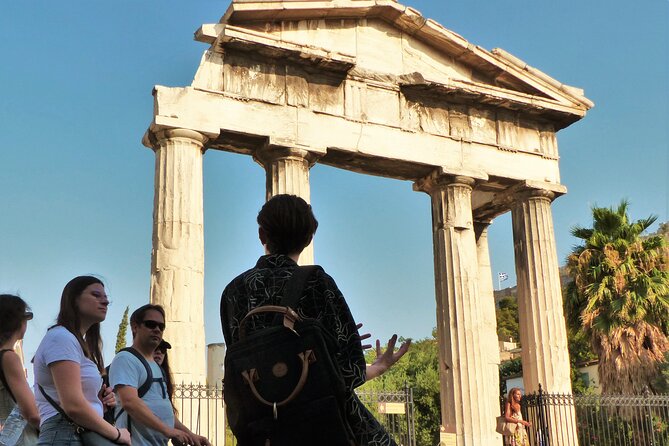
- Gate of Athena Archegetis (Married Life and Athena Myths)
- Dioskouron (A Women-Only Festival)
- Ancient Agora of Athens (Public Life, Slaves, and Courtesans—From Outside)
- Areopago (Trials, a Risk-Taking Woman, and Rights)
- Pnyx (Democracy Began Here—With Men Voting, and Women Influencing)
- Philopappos Hill (Hill of the Muses and Acropolis Views)
- What the Guide Brings to the Story (Especially in a Private Setting)
- Comfort Tips and Timing for This 2-Hour Walk
- Who Should Book This Tour
- Should You Book Private Walk Women in Ancient Greece?
- FAQ
- FAQ
- How long is the Private Walk Women in Ancient Greece?
- What’s the price per person?
- Is the tour private?
- Where does the tour start and end?
- What language is the tour offered in?
- Are tickets or admission fees included?
- Do you enter archaeological sites during the tour?
- Is transportation included?
- Is the tour suitable for people with mobility issues?
- Are there weather requirements?
- Can I cancel for a full refund?
- Are service animals allowed?
Key things to know before you go

- A private, question-friendly format for a route that actually answers your curiosity
- Women-centered stories tied to Athens locations you likely walk past anyway
- Myths with a point about marriage, Eros, and public life for women and enslaved people
- All stops are admission-free, and archaeological sites are viewed from outside
- A finish with Acropolis-area views at Philopappos Hill
- Best for ages 10+, with a steady walking pace across central Athens
Women in Ancient Greece: Why This Tour Feels Different
If your Athens plan is the standard route—Acropolis, Agora, a quick myth story—this walk offers a sharper angle. It’s built around women’s lives and the roles society assigned them. That means you spend less time reciting famous names and more time understanding what it meant to be a girl, a wife, a citizen’s counterpart, a slave, or part of the city’s private world.
I especially like how the tour uses mythology as more than entertainment. Myths here act like social commentary. When the guide brings up stories tied to Athena, Eros, marriage, or women-only festivals, you get the sense that ancient people used stories to talk about power, desire, and limits.
You also get a real “street-to-story” rhythm. The route moves through central Athens, but the focus stays on how women fit into that landscape. That’s why it keeps working after the tour, too. The themes stick, because they’re not just facts. They’re human patterns.
One practical note: this isn’t a sit-down lecture. It’s a walk, with short stops and a guide who keeps the narrative moving.
You can also read our reviews of more walking tours in Athens


Price and Value: Is $90.22 Fair for 2 Hours?

At about $90.22 per person for roughly two hours, you’re paying for three things: a private guide, a targeted theme, and a route that stays efficient.
First, admission isn’t an extra cost. Each stop lists free tickets, and the tour also avoids paid entry to archaeological interiors. Second, private means you’re not sharing attention with strangers. That matters on a topic like this, because questions come quickly. You can ask about how marriage was understood, why certain myths matter, or what daily life might have looked like.
Third, the guide approach is story-driven but grounded in place. You’re not just hearing a list of characters. You’re standing near the landmarks connected to those themes, then getting the meaning explained on the spot.
So what’s the value catch? The price is per person, and private pricing usually makes sense when you have a group (or at least two people). If you’re traveling solo and paying full private rates, compare that cost to what you’d spend on an ordinary group tour. If you want the women-specific focus badly—and you want to ask questions—this price often feels fair.
Route Map in Your Head: Monastiraki to Philopappos Hill
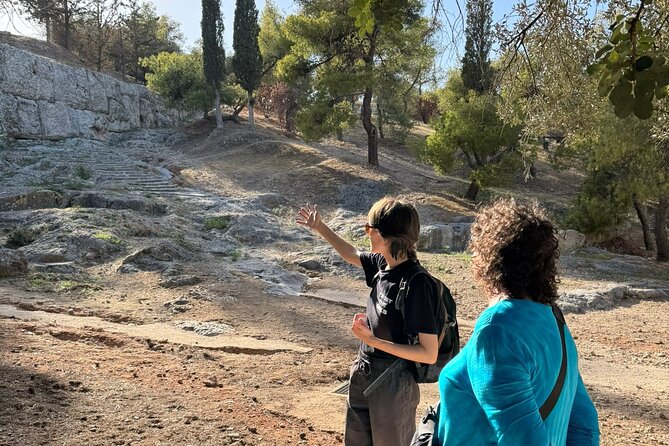
This is a walk through central Athens that starts in Monastiraki and finishes at Philopappos Hill. You meet at Pl. Monastirakiou 2 in the city center, then you end at Philopappos Hill (Fυλής 215 area). That end point is a bonus: it’s close to the Acropolis view zone and gives you a scenic wrap-up.
Because the tour is private, your group pace can work better than a standard group bus schedule. Still, plan for a steady walk. The tour is designed around quick stop-and-story moments—no long museum detours.
Also, you should know the structure: it’s about nine stops. Most are outside, and you’ll spend time looking, listening, and linking the setting to the theme. It’s ideal for people who like “explain it while we stand here” travel.
One caution that affects comfort: this isn’t recommended for travelers with mobility issues. Even with private flexibility, the walking and uneven surfaces of central Athens can add up.
Stop-by-Stop: Women’s Lives and Myths Across Athens
The stops are short, but the themes build. Here’s what you can expect at each location and what to watch for.
Monastiraki (Meet on the Square)
You start in the emblematic square of Monastiraki. This opening matters because Monastiraki is a real neighborhood hub, not a removed historic stage. You get oriented fast, and the guide can frame the day’s core question: how women lived, loved, and were shaped by the city’s rules.
Practical tip: if you’re catching the metro, Monastiraki is easy to reach. Plan to arrive a few minutes early so you don’t miss the first framing.
You can also read our reviews of more private tours in Athens



Hadrian’s Library (Education for Girls and Women)
Next is Hadrian’s Library, where the story turns to learning. This stop highlights the education of girls and women in ancient Athens, which is a topic many general tours gloss over.
What makes this one hit harder is the contrast. People often assume education was only for men. The guide’s angle forces you to think about access, roles, and what “learning” meant in daily life.
This is also a quick stop. If you like photos, take them early, because the tour keeps moving.
Holy Church of the All-Great Taxiarchs and the Virgin Mary Gregorousa (Marriage and Eros)
At the church, the focus shifts to marriage and the meaning of love. You’ll hear about marriage in both ancient Athens and ancient Sparta, and you’ll also explore EROS—the passionate kind of love.
Even though you’re standing at a church, the point is how stories about love and unions echo across time. The guide uses the site as a jumping-off point for the ancient conversation about desire, duty, and relationship expectations.
Potential drawback: if you prefer purely ancient ruins, this stop is more interpretive than archaeological. Still, it’s key for the theme, especially if you’re interested in how love and marriage were framed.
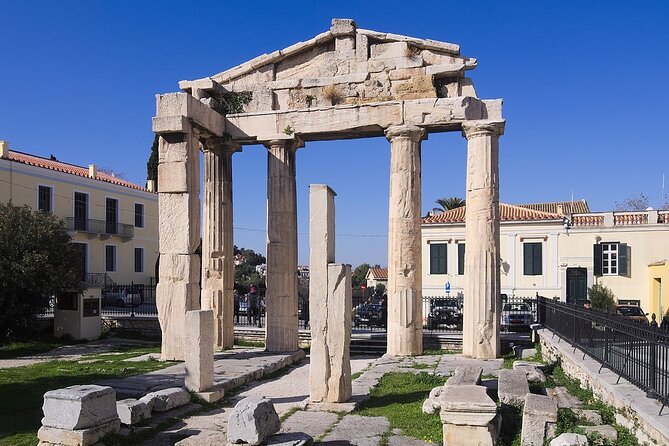
Gate of Athena Archegetis (Married Life and Athena Myths)
Now you’re at a gateway connected to Athena Archegetis. This stop leans into the myths tied to Athena and connects them to married life for women in Athens and Sparta.
Athena is often taught as a symbol—wisdom, strategy, power. Here, the guide brings her into real social meaning by linking the goddess to the expectations surrounding wives and domestic roles.
Look for the way the guide connects symbolism to behavior. That’s where it becomes more than mythology trivia.
Dioskouron (A Women-Only Festival)
This is one of the most intriguing stops. You’ll learn about a mysterious ancient festival dedicated exclusively to women.
This is the kind of detail that changes your mental map of ancient Greek life. Instead of assuming public events are only for men, you get a glimpse of how women also had spaces for ritual, tradition, and shared identity—even if those spaces worked inside strict boundaries.
Because the stop is brief, stay attentive. The guide often explains the significance in a tight burst, and then moves you on.
Ancient Agora of Athens (Public Life, Slaves, and Courtesans—From Outside)
The Ancient Agora is the center of public life in Athens. Here, you learn about the role of women in public space and what life could look like for female slaves or courtesans in the city.
Important: you don’t enter archaeological areas during this tour. You’ll see the sites from outside. So think of this as learning through viewpoint and placement, not a ticketed exploration.
If you love street-level history, this stop delivers. It’s easy to picture the movement of people around the marketplace—and the guide frames where women could appear, where they were constrained, and how other roles intersected with public life.
Areopago (Trials, a Risk-Taking Woman, and Rights)
At the Areopago, the tone shifts to justice and consequences. This is where the worst sinners were tried in ancient times, according to what the guide explains.
Then you get an inspiring element: the story of a woman who risked a death sentence to change women’s rights. Even without a dramatic action scene, the message lands. You realize rights were not theoretical. They had real stakes.
This stop is about moral risk and social pressure. If you’re interested in how change happens inside rigid systems, it’s one of the tour’s emotional anchors.
Pnyx (Democracy Began Here—With Men Voting, and Women Influencing)
Next is Pnyx, the place where democracy all began and where only men citizens used to vote. The guide uses that contrast to talk about political influence during Athens’ Golden Age.
Then comes the twist: you’ll hear about a woman who influenced politics during that era. The lesson isn’t that women voted. The lesson is that women shaped outcomes through other channels—relationships, reputation, persuasion, and the power of being connected to decision-makers.
If you want a more nuanced version of Athens democracy, this is where you get it. It’s also a good reminder that political power is often more complicated than a voting booth.
Philopappos Hill (Hill of the Muses and Acropolis Views)
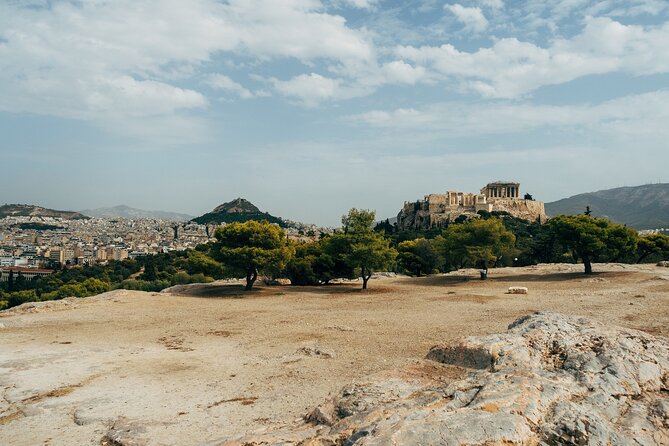
The tour ends at Philopappos Hill, tied to the Hill of the Muses. You get the view on the Acropolis, which gives the walk a satisfying finish.
This part is practical and emotional. Practical because the viewpoint is real, and you can stand and take in the scale of Athens. Emotional because the tour’s women-centered themes now sit against a backdrop that people usually treat as male-only history.
If the light is good, linger a bit. You won’t have a massive schedule to run, since the tour ends here.
What the Guide Brings to the Story (Especially in a Private Setting)
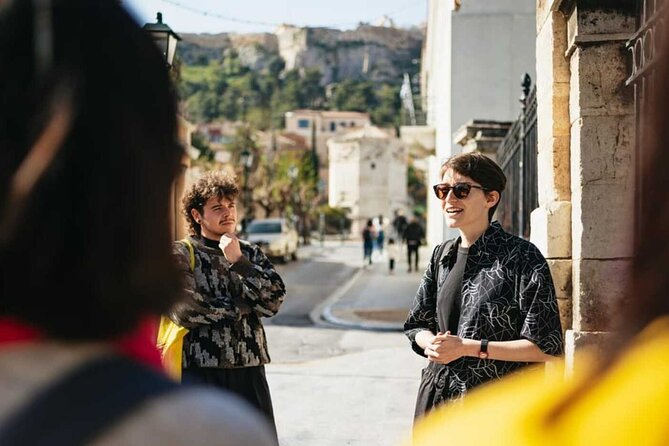
A women-focused tour can either feel like a lecture or feel like a conversation. This one aims for the second option, mainly because it’s private. You can ask questions while you’re standing at the exact place where the idea connects.
The review feedback highlights how engaging the guide experience can be, and one guide name comes through clearly: Maelle. The emphasis isn’t just on facts. It’s on perspective—stories you don’t usually find in a guidebook, with a clear, energetic way of explaining how these themes fit together.
For you, the advantage is simple: if something doesn’t make sense, you can ask in real time. If you want more detail about marriage in Athens versus Sparta, you can steer the conversation. If the myths feel like symbols, the guide can translate them into social meaning.
Comfort Tips and Timing for This 2-Hour Walk
This experience runs about two hours and is structured around frequent short stops. That makes it a good option if you don’t have half a day, but it also means you’ll keep moving.
Wear comfortable shoes. Central Athens streets can be uneven, and the tour isn’t recommended for mobility issues. If you’re prone to getting sun-burned, plan for it. You’ll be outside for much of the time.
Good weather is required. If weather gets bad, the provider will offer a different date or a full refund. So don’t plan this as a fragile keystone on a day with rain in the forecast.
Who Should Book This Tour
This tour fits best if you want more than the standard Athens highlight reel. It’s ideal for curious travelers who like story-based history and want their Athens learning to include women’s roles.
It’s also well-suited for families with older kids, since it’s adapted for participants over 10 years old. If you’re traveling in a group, private format can make the price feel more reasonable per person.
If you want only ruins you can enter and roam freely, you might feel limited. This tour is built around viewing from outside and learning the meaning of places as you walk.
Should You Book Private Walk Women in Ancient Greece?
Yes—if your goal is a sharper Athens. This tour is a strong choice when you care about gender roles, mythology with social meaning, and how women appear in public life, private relationships, and civic storylines.
I’d say skip it only if mobility is an issue for your group or if you want long, ticketed archaeological visits. Since you’re walking and viewing from outside, the payoff is in the narration, not in museum time.
If you want a tour that turns ancient Athens into something you can talk about days later, this one is a solid bet.
FAQ
FAQ
How long is the Private Walk Women in Ancient Greece?
It’s approximately 2 hours.
What’s the price per person?
The price is $90.22 per person.
Is the tour private?
Yes. It’s a private tour/activity, so only your group participates.
Where does the tour start and end?
It starts at Pl. Monastirakiou 2, Athina 105 55, Greece (Monastiraki). It ends at Philopappos Hill (Φυλής 215, Athina 117 41, Greece).
What language is the tour offered in?
The tour is offered in English.
Are tickets or admission fees included?
Admission tickets are listed as free for the stops, and the tour includes all fees and taxes.
Do you enter archaeological sites during the tour?
No. You see archaeological sites from outside only, with no entrance to the archaeological site at least for the Ancient Agora stop mentioned.
Is transportation included?
No. Private transportation is not included.
Is the tour suitable for people with mobility issues?
It’s not recommended for travelers with mobility issues.
Are there weather requirements?
Yes. This experience requires good weather, and if it’s canceled due to poor weather, you’ll be offered a different date or a full refund.
Can I cancel for a full refund?
Yes. You can cancel up to 24 hours in advance for a full refund.
Are service animals allowed?
Yes, service animals are allowed.