REVIEW · ATHENS
Biblical Corinth Taste Faith & History with wine & Oil Tasting
Book on Viator →Operated by Yomadic.Tours & Transfers · Bookable on Viator
Corinth pulls you in fast, then rewards you at the top. In about five hours, you’ll cover the Corinth Canal, ancient ruins linked to Saint Paul, and the fortress views of Acrocorinth—with optional wine and oil tasting for the food-and-faith angle. I love the small-group private van setup and the way the driver keeps things moving without rushing.
My other favorite part is the balance: big stone history plus stops that explain why the region mattered for trade and for faith. The one drawback to plan for is that entrance fees are extra, and on rare occasions a major ruins stop can be affected by events/production schedules.
In This Review
- Key things that make this Corinth trip worth your time
- Why Ancient Corinth still hits: trade routes, cities, and Paul
- The drive from Athens: a small group beats the bus crowd
- Corinth Canal and the Diolkos: the shipping dream that took 2,000 years
- Isthmia and the museum stop: sports, sanctuary life, and Paul’s connection
- Ancient Corinth: where Paul’s letters meet the city’s rise and collapse
- The Archaeological Museum of Corinth: street-plan context you can feel
- Temple of Apollo: a Doric landmark with early design bones
- Acrocorinth fortress: the view that sells the whole day
- Wine and oil tasting: optional, but fun if food is part of your trip
- Price and value: what you pay for, and what you still need to budget
- Who this tour fits best
- Final verdict: should you book this Corinth faith-and-flavor day trip?
- FAQ
- Is pickup from Athens hotels and apartments included?
- How large is the group, and what vehicle will I ride in?
- Are entrance fees included in the tour price?
- Are the wine and oil tastings included?
- Do I get a licensed tour guide?
- What happens if the weather is bad?
Key things that make this Corinth trip worth your time
- Private pickup in Athens, with drop-off back where you started (hotel, apartment entrance, port gate, and airport meet-and-greet style).
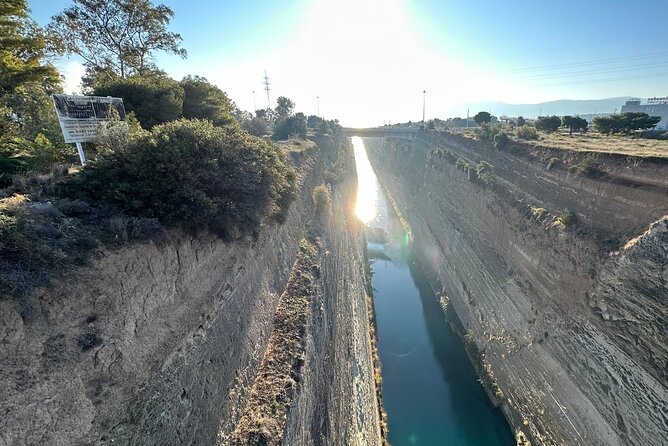
- Corinth Canal + Diolkos: you’ll see the shipping shortcut idea that took centuries to build.
- Faith context for Paul at the Isthmian games area, tied to the tour’s Bible-and-history framing.
- Acrocorinth fortress: the high point that turns the whole day into a view-based win.
- Optional wine and oil tasting (oil includes finger food; both are priced separately).
- English-speaking driver who also helps with on-the-ground timing and practical site pacing.
Why Ancient Corinth still hits: trade routes, cities, and Paul
Ancient Corinth sat on a narrow land bridge, and that location mattered. This was a place where ships, goods, and people could move between the Greek mainland and the Peloponnese without doing the long, risky loop around the peninsula.
What I like about this kind of Athens day trip is that it doesn’t treat Corinth as one museum stop. You feel it as a system: waterway engineering below, sport and sanctuary life nearby, then the big urban center on the plain, and finally the fortress above. Add the tour’s Bible connection, and you get another layer of meaning: Corinth shows up in Paul’s letters in the New Testament, and the tour also connects him with the Isthmian games context.
You can also read our reviews of more tours and experiences in Athens.

The drive from Athens: a small group beats the bus crowd
This is built around a private group setup, not a mega-bus day. If you’re traveling as 1–3 people, you ride in a sedan; 4–7 people use a minivan. Either way, you get a modern vehicle with Wi‑Fi, A/C, and bottled water, which is a big deal when you’re doing multiple sites in one stretch.
I also like that the pickup isn’t vague. You’re met at a clear spot—hotel lobby, apartment entrance, port gate, and at the airport you’re met in the arrival hall with a sign and flight monitoring. That removes the usual Athens-day-trip stress of finding your driver while you’re juggling bags and heat.
Timing note: the overall duration is about five hours, so you’ll want to keep your expectations realistic. This is enough time for the highlights, not for a slow archaeological ramble.
Corinth Canal and the Diolkos: the shipping dream that took 2,000 years
You start with the Corinth Canal, a narrow waterway linking the Gulf of Corinth and the Saronic Gulf. It’s a late-19th-century project, but the idea is ancient. Long before the canal existed, ships trying to go between the Aegean and toward the Adriatic would have to sail around the Peloponnese—adding roughly 185 nautical miles to the journey.
Here’s the fun detail to watch for: the canal didn’t start as a single “let’s build it” moment. The tour connects the concept to earlier Corinthian ambitions, including the tyrant Periander (602 BC) and the practical workaround that existed before modern engineering—moving ships over land.
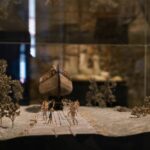
That leads you to the Diolkos, a paved trackway designed to transfer boats across the Isthmus. It worked like an early rail/transport system: vessels could be moved over land rather than sailing the long route. The Diolkos ran for roughly 6–8.5 km and was used from around 600 BC into the first century AD. The tour also ties the phrase as fast as a Corinthian to Aristophanes, which helps you understand why this shortcut became part of everyday language.
What you should know: this part of the day is short, but it sets the theme for everything else. Corinth’s power wasn’t just armies and monuments—it was the ability to move things faster.
Isthmia and the museum stop: sports, sanctuary life, and Paul’s connection
Near the canal area, you’ll reach Isthmia, tied to the Isthmian games, described as second most important across the ancient Greek world after the Olympics. If you like the “why did people come here?” angle, this stop gives it to you.
The tour frames the region through a faith-and-history lens: it connects Apostle Paul with the Isthmian setting, including the detail that he worked there as a tent maker for athletes and visitors. The emphasis here is on the tour’s claim that Paul’s presence is an early Christian presence in the context of the games.
Then you shift into something more hands-on at the Archaeological Museum of Isthmia. The museum is where the story stops being abstract. You’ll see items tied to sanctuaries and harbor life, including:
- An archaic marble pediment connected to a temple entrance
- The glazing of Kechreon, colored glass fragments found submerged near the harbor, with images reminiscent of stained glass-style storytelling (harbor views, landscapes, animals, and figures)
- A statue type linked to Zeus (mid-2nd century BC)
- An epinician stele linked to a Corinthian musician (Lefkios Cornelius)
- Animal votives, including a golden bull connected to a vow to a sanctuary
- Commercial amphorae and other offerings, plus artifacts tied to Mycenaean and Roman cemetery finds
Practical tip: museum time here is relatively tight (about 20 minutes), so don’t try to read every label end to end. Pick a few objects that match what you’re curious about—glass fragments, statue pieces, or offerings—and let those anchor your understanding.
Ancient Corinth: where Paul’s letters meet the city’s rise and collapse
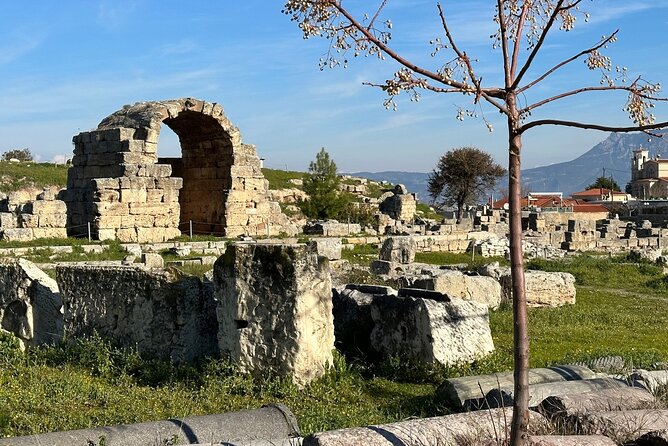
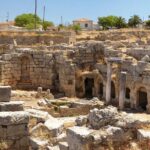
Next comes Ancient Corinth (Archaia Korinthos)—the main urban story. This is where the tour leans hardest into both history and faith. Corinth is linked to Paul’s First and Second Corinthians, and the tour also connects Corinth to Paul’s travels mentioned in Acts.
On the historical side, Corinth’s arc is dramatic:
- It was one of Greece’s major city-states on the Isthmus.
- The population is described as about 90,000 in 400 BC.
- The Romans destroyed Corinth in 146 BC, then rebuilt a new city later (not long after, in 44 BC).
- Under Roman rule, it became a provincial capital.
For a five-hour trip, you’re getting a guided “hit list” look rather than a full-site study. Still, this stop is often the one that makes people say, okay, I get why Corinth mattered.
A key consideration: some periods can affect access to the main site. In at least one documented situation, the Ancient Corinth area was closed for filming related to The Odyssey, with safety concerns and limited advance notice. That’s not something you can always predict, so it’s smart to choose a date with flexibility if your schedule allows.
You can also read our reviews of more historical tours in Athens
The Archaeological Museum of Corinth: street-plan context you can feel
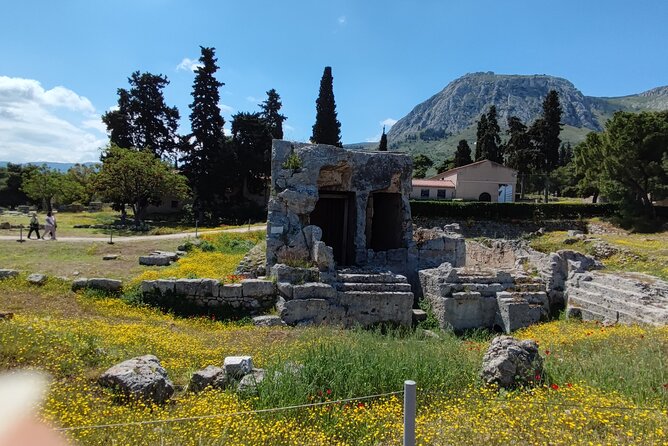
You also stop at the Archaeological Museum of Corinth, a museum built in the early 1930s to display results from excavations. It sits within the broader archaeological area.
What’s valuable here is not just the objects—it’s the chance to picture the city layout. The tour’s museum/site context highlights elements like:
- Hadgimoustafa spring
- Lechaion Road
- A basilica
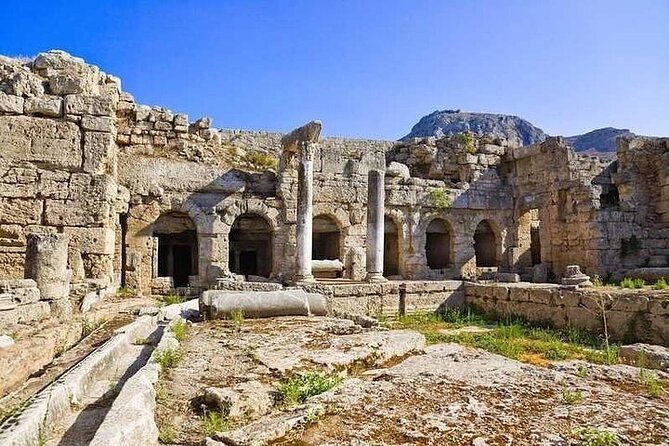
- The Fountain of Peirene
- A stoa, agora, and odeion
If you’ve ever visited ruins where everything looks like scattered stones, this is the fix. Even a short museum orientation can make it easier to connect what you’re seeing outside with how the city functioned.
Time-wise: museum time is brief (around 30 minutes), so treat it like a mapping session, not a lecture.
Temple of Apollo: a Doric landmark with early design bones
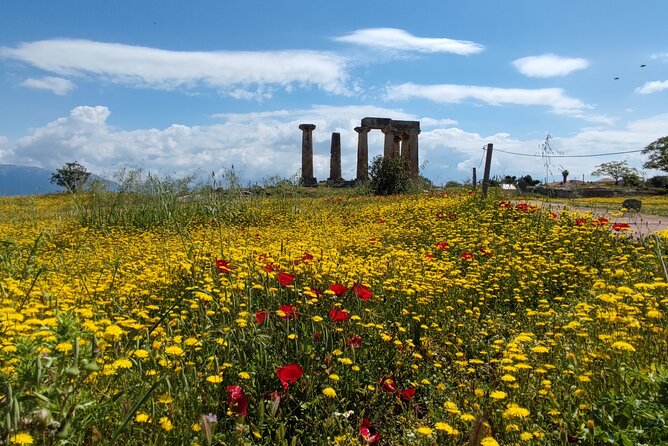
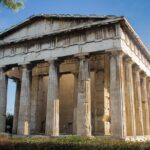
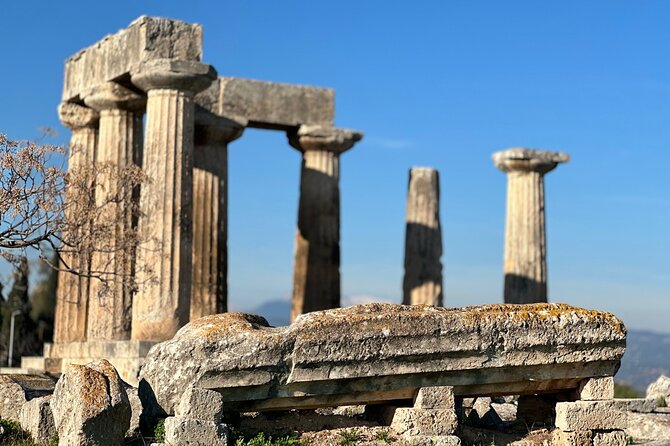
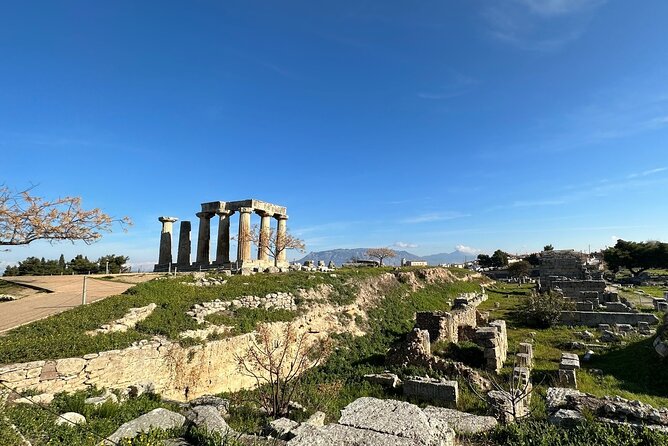
Another quick stop is the Temple of Apollo, described as constructed around 550 BC. The tour frames it as one of the earliest Doric temples on the Peloponnese and on the Greek mainland, noted for monolithic columns—columns cut from single blocks, which is rarer in the ancient world.
When you stand near a temple like this, it’s not just about the religion. It’s also architecture you can recognize. Doric proportions, column rhythm, and the sheer seriousness of the stonework show how public life and cult life were built into the landscape.
This is a shorter pause on the day plan (about 15 minutes), so it works best if you keep your camera ready and your questions focused: what makes this Doric here different, and what role would it have played in daily city life?
Acrocorinth fortress: the view that sells the whole day
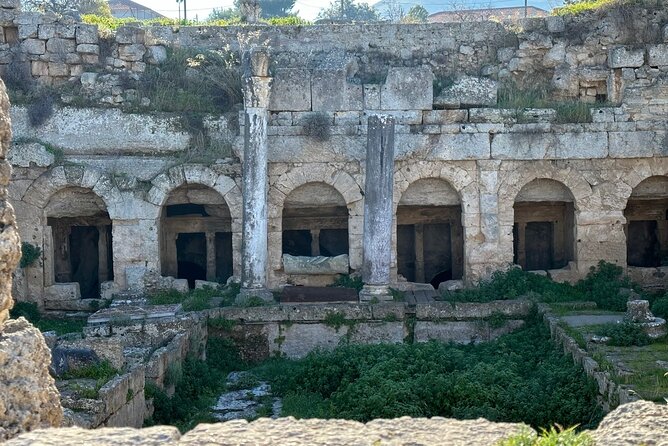
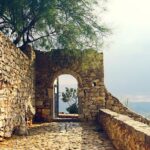
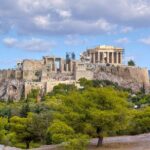
Then you finish strong at Acrocorinth—the “upper Corinth” rock fortress. The site sits on a monolithic rock overlooking the ancient city below, and the tour emphasizes why it was so strategically important. It controlled access to the Isthmus of Corinth, with a secure water supply that made it usable as a last defense point.
This is where you slow down, because the view pulls you out of the past and into the present geography. You can look out and understand why this spot could repel invasions and control movement into the Peloponnese.
Time here is about 30 minutes, so you should plan on grabbing the best photo angles quickly, then taking a few minutes to scan the horizon. If you enjoy viewpoints as much as ruins, this is likely the moment you’ll remember most clearly.
Wine and oil tasting: optional, but fun if food is part of your trip
The tour name includes tasting, but the tastings are priced separately, so you need to decide if you want that “taste of place” add-on.
From the provided pricing:
- Wine tasting: €15 per person
- Oil tasting (with finger food): €80 per person
If you’re thinking about value, here’s my take: a small wine pour is usually an easy yes. Oil tasting with finger food is pricier, so treat it like a mini-food event. If you already love olive oil culture, don’t mind spending extra for a structured tasting, and you want a break from stones and sandals, it can be a satisfying way to end the day.
If you’re traveling on a tighter budget, start with wine or skip both and use that time for lunch shopping in Ancient Corinth—there’s also free time scheduled for that.
Price and value: what you pay for, and what you still need to budget
The headline price is $190.46 per person for about five hours with private transport and an English-speaking driver. For Athens, that’s often what you’re really buying: door-to-door pickup, a small group, and a vehicle with A/C and Wi‑Fi.
But the day does have add-on costs you should plan for:
- Entrance fees are listed as extra (not included), shown as €15.00 per person.
- The Archaeological Site of Ancient Corinth is also explicitly listed as €15.00 per person.
- The licensed tour guide is optional, at an extra €140.00 per person.
- Meals aren’t included.
- Oil and wine tastings cost extra as noted above.
A useful way to judge value: if you’re the kind of traveler who wants the convenience of a private van and interpretation between stops—plus the Acrocorinth payoff—this day trip can feel worth it. If you’re comfortable handling entrances yourself and you prefer slower exploration with a longer day, you might compare against a longer self-guided option.
Who this tour fits best
This tour works especially well if:
- You want an Athens day trip that hits major Corinth highlights in limited time.
- You like faith-and-history context tied to Paul’s letters and the Isthmian games framing.
- You value small-group pacing and appreciate a driver who can recommend lunch spots and adjust for your comfort.
It may be less ideal if:
- You’re trying to do everything at a museum-level pace.
- You want unlimited time at each archaeological stop.
- You’re very budget-sensitive once you add entrances, optional tastings, and a licensed guide.
Final verdict: should you book this Corinth faith-and-flavor day trip?
I’d book it if you want a high-impact, low-stress day. The private transport, the mix of canal/ruins/fortress, and the option to add wine and oil tasting makes this a good match for travelers who like structure but still want room for photos, breaks, and lunch.
Skip the booking only if you know you need lots of time inside the archaeological site buildings, or if you’re traveling on a date where you can’t afford surprises like a major closure. Otherwise, Corinth is one of those places where you don’t just see history—you understand the geography that created it.
If you do book, do one smart thing: wear comfortable walking shoes and keep your camera charged for Acrocorinth. That view is the pay-off.
FAQ
Is pickup from Athens hotels and apartments included?
Yes. Pickup is offered from Athens hotel and Airbnb/apartment locations, and the driver waits in the hotel lobby or at the building entrance. The tour also includes drop-off back to the meeting point (or to a point you prefer).
How large is the group, and what vehicle will I ride in?
This is a private tour for your group only. Small groups of 1–3 ride in a luxurious sedan, while groups of 4–7 use comfortable mini vans.
Are entrance fees included in the tour price?
No. Entrance fees are not included, and they’re listed as €15.00 per person for attractions. The Archaeological Site of Ancient Corinth is also listed as €15.00 per person and not included.
Are the wine and oil tastings included?
No. Wine tasting is listed as €15.00 per person, and oil tasting (with finger food) is listed as €80.00 per person.
Do I get a licensed tour guide?
An English-speaking driver is included. A licensed tour guide is optional upon request and costs extra at €140.00 per person depending on availability.
What happens if the weather is bad?
This experience requires good weather. If it’s canceled due to poor weather, you’ll be offered a different date or a full refund.