REVIEW · ATHENS
Acropolis of Athens Historical Tour For History Enthusiasts
Book on Viator →Operated by Athens Historic Experiences · Bookable on Viator
The Parthenon makes more sense with a guide. This Acropolis history tour stitches together gods, theatre, and politics into one story, and the headset receivers mean you can actually hear the good stuff instead of craning your neck. I like that the guide is a historian or archaeologist, not a memorizer. One possible drawback: the route involves a real uphill climb and lots of time in open-air sun.
You’ll walk key monuments in sequence, starting near Dionysiou Areopagitou and finishing at the Parthenon at the top. The price is low for what you get, especially if your selected option includes admission tickets.
In This Review
- Key Highlights Worth Your Time
- Price and Timing: Why This Feels Like Good Value
- Where You Start on Dionysiou Areopagitou and Where You End
- Stop 1: South Slope of the Acropolis and the Civilization-Start Lesson
- Theatre of Dionysus: The First Big Stage and the Famous Playwrights
- Odeon of Herodes Atticus: A 2nd-Century Memorial in Stone
- Temple of Athena Nike and Propylaea: Victory, Gateways, and Views
- Erechtheion: Myths, Legends, and Sculptures You Can Actually Study
- Parthenon: The Jewel in the Crown and the Tech Behind the Beauty
- What the Best Guides Do Here (And Why People Get So Much Out of This Tour)
- Who This Tour Fits Best (And Who Might Want a Simpler Plan)
- Should You Book the Acropolis Historical Tour?
- FAQ
- How long is the Acropolis Historical Tour?
- Where does the tour start and end?
- What language is the tour offered in?
- What does it cost per person?
- Are entry tickets included?
- What’s included besides the guide?
- How many people are in the group?
- Does the tour run in bad weather?
- What is the cancellation policy?
- Are service animals allowed?
Key Highlights Worth Your Time
- Headsets for clarity so the explanations land, even when crowds compress the group
- A historian or archaeologist guide who connects Athens to bigger ideas (theatre, democracy, philosophy)
- Start with the South Slope story: a short lesson placing Greek civilization in a longer human timeline
- Theatre of Dionysus framed as the first great stage culture, tied to names like Sophocles, Euripides, and Aeschylus
- Parthenon tech details explained with an engineering-minded eye, not just art-history platitudes
Price and Timing: Why This Feels Like Good Value
At $36.14 per person for about 2 hours 40 minutes, this is priced like a smart add-on to a normal Athens day—except it covers far more than a standard walk-and-point tour. The big value isn’t the monuments alone. It’s the way the guide helps you see connections: why theatre matters, why temples were built where they were, and how Athens’ political ideas shaped what later Europeans called Western civilization.
One practical note: admission ticket coverage depends on the option you choose. The tour description indicates entry fees may be included only for guests who pick the ticket-inclusive version, so I’d check before you go, especially if you’re trying to budget tightly.
You can also read our reviews of more historical tours in Athens

Where You Start on Dionysiou Areopagitou and Where You End
The tour meeting point is Dionysiou Areopagitou 17, Athina 117 42. That location puts you in the right zone for the climb up toward the Acropolis hill. You’ll finish at the top, ending in front of the Parthenon, right where you want to be if you’re planning photos or a final museum stop afterward.
The tour is offered in English, and it runs with a group cap of 25 people. Smaller groups matter here. Less crowd crush means you can listen more easily and step into those better viewing spots without constantly getting swept backward.
Stop 1: South Slope of the Acropolis and the Civilization-Start Lesson
You kick things off on the South Slope, and the tone is important: this isn’t just a monument rundown. It starts with a concise lesson on the creation of human civilization, then zooms in on ancient Greek civilization—and Athens in particular—so the rest of the walk has a backbone.
That matters because the Acropolis can feel like a pile of impressive ruins if you only know what stands in front of you. With this opening, you get a framework. You start to connect why people built religious spaces on such a commanding site, and why civic identity, myths, and public life were all braided together.
A second practical win: you’re early enough in the experience that the guide can set your questions for the rest of the day. You’re not reacting to the site in confusion—you’re learning how to look.
Theatre of Dionysus: The First Big Stage and the Famous Playwrights
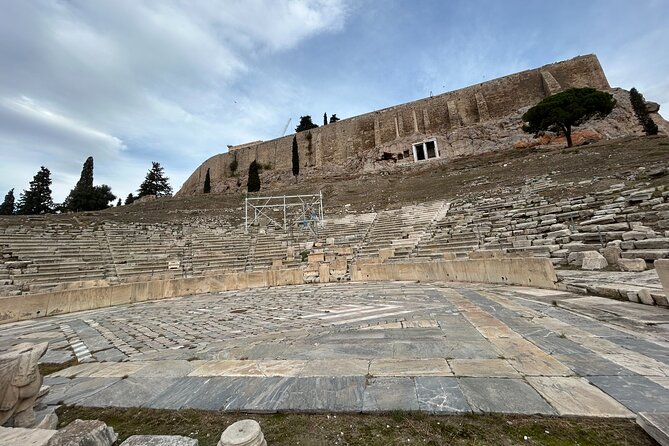
Next comes the Theatre of Dionysus, described as the first theatre in human history. Whether you care about dates or not, the idea hits fast: this is where drama as a public practice was born in front of the Athenian public.
The guide ties the site to the people who made Greek drama famous—Sophocles, Euripides, and Aeschylus. That’s a smart move for your brain. Instead of seeing seats and stone walls, you start imagining the performances: the plays, the audience, and the civic weight of storytelling.
One drawback to plan for: theatres are often easier to understand when you can picture sound and staging. You might not walk into a perfect reconstruction of an ancient performance. Still, this stop helps you do the next best thing—mentally place the plays back into the landscape and see why the Acropolis world valued public speech so much.
Odeon of Herodes Atticus: A 2nd-Century Memorial in Stone
As you continue, you reach the Odeon of Herodes Atticus. This one is built by a city benefactor and famous philosopher of the 2nd century AD, honoring his deceased wife.
That backstory changes the vibe. You’re not only looking at an entertainment venue. You’re looking at personal loss turned into public architecture—status, memory, and community built into one structure. It also adds a useful layer to your understanding of Athens over time: the Acropolis wasn’t frozen in the Classical period. It kept getting reused, remembered, rebuilt, and reinterpreted.
If you love history as a living chain, this stop will give you that. If you prefer purely chronological sites, the shift from one era to another might feel like you’re moving through chapters quickly—but that’s also why the tour works.





Temple of Athena Nike and Propylaea: Victory, Gateways, and Views
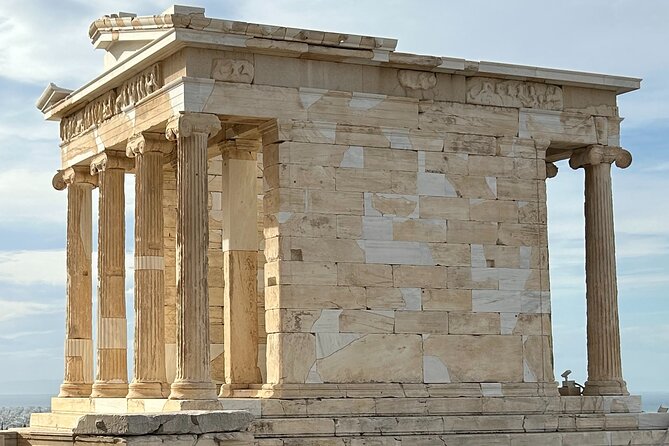
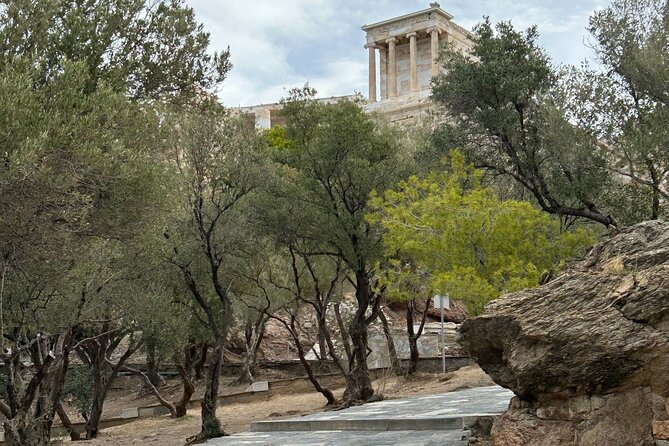
At the main entrance of the Acropolis sanctuary, you see the Temple of Athena Nike, dedicated to the goddess of victory. Even if you’re not a cult-and-ritual person, the concept is clear: victory wasn’t only military. It was civic pride, religious meaning, and political legitimacy wrapped together.
Then you reach Propylaea, the monumental gateway. This stop blends architecture with that must-do Acropolis moment: you’ll take in the view of the surrounding hills and walk up the main stairway into the sanctuary interior.
For me, gateway stops are what separate a quick sightseeing day from a meaningful one. The Parthenon is the star, sure. But gates teach you how the Greeks guided movement, emphasized transitions, and made the act of approaching sacred space feel ceremonial.
Erechtheion: Myths, Legends, and Sculptures You Can Actually Study
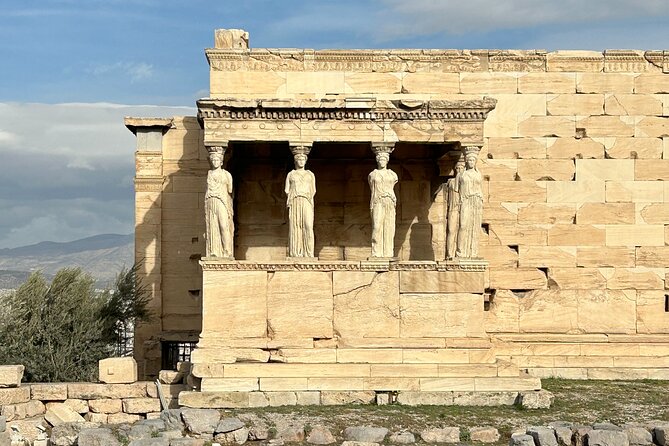
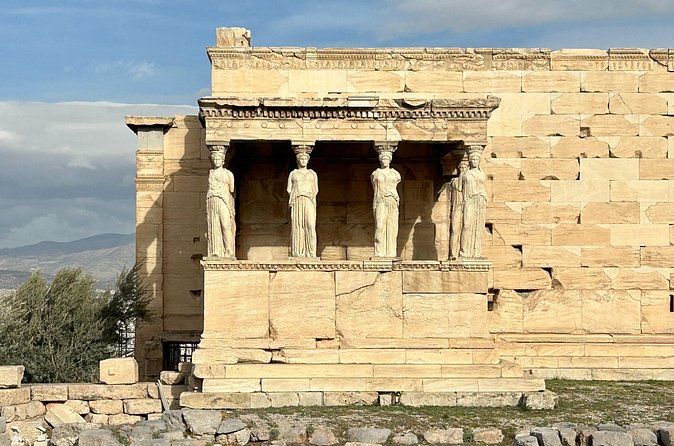
Next is the Erechtheion, called the temple of myths and legends, located in the center of the Acropolis sanctuary. It’s especially famous for its unique sculptures, and the tour uses that fame as a teaching tool—helping you understand what makes the sculpture program stand out and why it would matter to people in that world.
This is also a great stop for slowing down your eyes. If you rush, you might treat the Erechtheion as just another carved facade. With a guide, you can start noticing how myths work visually—symbols, figures, and details that aren’t random decoration.
If you’re traveling with someone who thinks sculpture is boring, this stop is often where you win them over. The building gives you a reason to care.
Parthenon: The Jewel in the Crown and the Tech Behind the Beauty

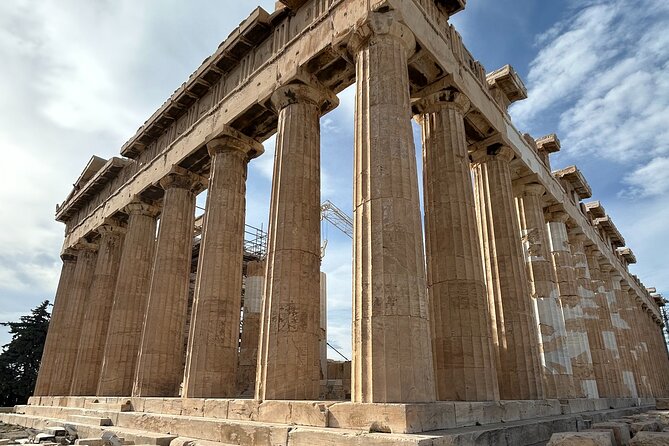
Finally, you reach the Parthenon, often described as the jewel in the crown. In this tour framing, it’s both:
- a gift to the patron goddess, and
- a masterpiece of Classical-period Greek architecture, tied to the greatest technical achievement of the democratic state and a symbol of Western civilization.
The guide doesn’t stop at themes. People love when the explanation gets concrete, like how the marble pieces were joined and why some parts can look curved up close while appearing straight from farther away. That engineering-minded approach makes the Parthenon feel less like a postcard and more like a clever piece of human problem-solving.
And yes, the view up here is a big deal. Standing at the top, you see modern Athens spread out below, and that contrast makes ancient choices feel even more intentional. This is where the tour’s big promise lands: you understand the monument as both art and statement—religious, political, and technical all at once.
What the Best Guides Do Here (And Why People Get So Much Out of This Tour)
A major reason this tour earns such consistent praise is the guide style. Examples named in recent experiences include Harris and Haralampos, and the consistent theme is energy plus depth. The guide approach blends history with questions and conversation. The explanations also aim to make ideas stick, using humor and storytelling rather than dumping facts.
You’ll also get practical listening support through the provided headset receivers. That sounds like a small perk until you’re in a busy archaeological site trying to hear a whisper of scholarship over footsteps and voices.
Some tours are built like lectures. This one feels more like a guided walk where the guide keeps steering your attention to what matters: why a temple sits where it sits, why theatre mattered for civic identity, and why later generations kept pointing to Athens as a model.
If you’re traveling with kids, there can be room for quizzes and playful engagement, which helps younger minds stay interested instead of drifting.
Who This Tour Fits Best (And Who Might Want a Simpler Plan)
Book this if you:
- love history and want more than a quick read-the-signs visit
- like explanations tied to big themes—democracy, philosophy, theatre, civic life
- prefer a guide who can answer questions and keep you engaged with stories
- want help understanding architecture up close, including practical details
You might skip or consider something lighter if you:
- don’t enjoy uphill walking and standing in open air
- prefer self-paced sightseeing where you can stop forever at the same viewpoint
- only want a short taste of monuments without connecting them to broader ideas
The route ends at the Parthenon, so you’re also set up well if you want to keep exploring after the tour.
Should You Book the Acropolis Historical Tour?
Yes, if your goal is understanding, not just photos. For the money, you’re buying a structured way to see the Acropolis: start with context, then move from theatre to temples to the Parthenon with an expert-style guide and headset support.
If you’re the kind of person who gets annoyed when a tour is just names and dates, this one is built around meaning. If you’re the kind of person who wants meaning made clear, this is an easy yes.
FAQ
How long is the Acropolis Historical Tour?
It runs about 2 hours 40 minutes.
Where does the tour start and end?
It starts at Dionysiou Areopagitou 17, Athina 117 42, Greece and ends in front of the Parthenon temple at the top of the Acropolis hill (ParthenonAthens 105 58, Greece).
What language is the tour offered in?
The tour is offered in English.
What does it cost per person?
The price is $36.14 per person.
Are entry tickets included?
Admission and entry fees are included only if you choose the option that includes them.
What’s included besides the guide?
You get a local licensed English speaking tour guide and headset receivers for each guest. Some surprises may also be included.
How many people are in the group?
The tour has a maximum of 25 people.
Does the tour run in bad weather?
The experience requires good weather. If it’s canceled due to poor weather, you’ll be offered a different date or a full refund.
What is the cancellation policy?
You can cancel for a full refund up to 24 hours in advance. If you cancel less than 24 hours before the start time, the amount you paid is not refunded.
Are service animals allowed?
Yes, service animals are allowed.