REVIEW · CHARLESTON
Evening History Tour
Book on Viator →Operated by Peninsula Walking Tours · Bookable on Viator
Charleston glows after dark. This 2-hour Evening History Tour is built for comfort and context, with a guide-led walk through downtown landmarks and the key stories behind them. I like how the route helps you avoid the hottest part of the day, and I really appreciated hearing the details from Evans, the guide who shared a lot of Charleston history. One thing to consider: this experience needs good weather, so you’ll want a backup plan if rain moves in.
You’ll start at 80 Broad St and finish near Charleston City Hall, taking short stops long enough to understand what you’re looking at without turning the evening into a slog. With a maximum of 20 people, it stays easy to ask questions and keep up with the pace—though you are still walking, so wear shoes you trust on city sidewalks.
In This Review
- Key highlights worth your time
- Why an evening history walk beats daytime in Charleston
- Meet at 80 Broad Street, then end at City Hall
- Stop 1: Pineapple Fountain and Robert Smalls’ escape
- Stop 2: Rainbow Row’s 1740s–1750s street-level magic
- Stop 3: Fort Sumter National Monument and the harbor’s big turning points
- Stop 4: Old Exchange & Provost Dungeon—where power meets danger
- Stop 5: St. Michael’s Church and the Four Corners of Law
- The real value: multiple major sites in a tight 2-hour loop
- Pace and practical tips for a smoother evening
- Who this tour fits best
- Should you book the Evening History Tour?
- FAQ
- How long is the Evening History Tour in Charleston?
- Where does the tour start and where does it end?
- What is the maximum group size?
- Is the tour offered in English, and do I use a mobile ticket?
- Are service animals allowed?
- Are there admission fees for the stops included?
- What’s the cancellation policy and what if the weather is bad?
Key highlights worth your time
- Evening timing: beats midday heat while keeping the city’s energy in view
- Local storytelling: stop-by-stop context that connects sites across the harbor and the city
- Robert Smalls at Pineapple Fountain: a powerful Civil War escape story right where you’ll pause
- Rainbow Row details: built in the 1740s to 1750s, with today’s cultural imprint (needlepoint, shot glasses)
- Harbor history at Fort Sumter: links from the Revolution to the first Civil War shots
- Old Exchange & Provost Dungeon: one colonial complex with stories that range from presidents to pirates
Why an evening history walk beats daytime in Charleston
Charleston in the sun can feel like a test. This tour’s evening timing is the practical fix: you get out after the worst of the heat, but you still see the same core downtown sights in proper light.
The other win is the way the tour stays focused. Instead of scattering you across too many random corners, it builds a route that connects major themes: hospitality and freedom stories, colonial-era architecture, and Charleston’s military role centered on the harbor.
You can also read our reviews of more historical tours in Charleston



Meet at 80 Broad Street, then end at City Hall
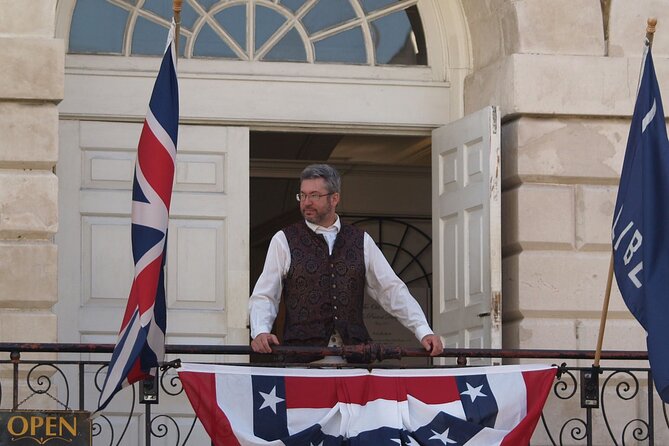
You meet at 80 Broad St, Charleston, SC 29401, and the walk ends at Charleston City Hall, on the corner of Broad and Meeting Streets. That matters more than it sounds, because you can plan dinner and a post-tour stroll without guesswork.
The tour is offered in English, and you’ll use a mobile ticket. It also runs with a small cap of 20 people, which usually means less waiting and more back-and-forth with your guide.
Stop 1: Pineapple Fountain and Robert Smalls’ escape
Your first stop is the Pineapple Fountain, a symbol of hospitality and welcome. It’s a nice opener because it sets a tone for the evening: Charleston doesn’t just trade in old buildings—it trades in stories about how people lived, survived, and tried to be seen.
Right nearby is the monument to Robert Smalls, and that’s where the tour gets real. You’ll hear the story of the bravest escape by an enslaved African American during the Civil War, tied to Charleston’s role in the conflict. Even if you think you know the broad Civil War timeline, this kind of local, human-scale story can change how you read the city streets afterward.
Time on this stop: about 15 minutes.
Stop 2: Rainbow Row’s 1740s–1750s street-level magic
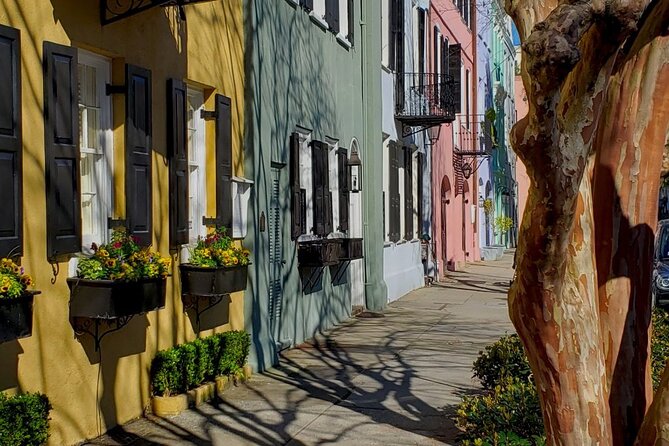
Next up is Rainbow Row, Charleston’s most famous single stretch of landmark buildings. The row was built between the 1740s and 1750s, so what you’re seeing isn’t just “old”—it’s a snapshot of a specific era of wealth, craftsmanship, and urban planning.
What I find especially useful is how the tour frames Rainbow Row as more than a photo spot. You’ll learn how the buildings have spilled into popular culture, showing up on needlepoint designs and even shot glasses. That angle helps you look at the facades with a “why this matters” mindset, instead of only chasing images.
Time on this stop: about 10 minutes.
Stop 3: Fort Sumter National Monument and the harbor’s big turning points
Then the tour shifts from downtown streets to the idea of the harbor as a historical engine. You’ll spend time at Fort Sumter National Monument, and the guide connects multiple conflicts to this same coastline.
You’ll hear about the battle of Fort Sullivan during the American Revolution, then move forward to the first shots of the Civil War at Fort Sumter. The story also reaches out to the Massachusetts 54th at Battery Wagner, tying together who fought, what was at stake, and how Charleston became a repeated flashpoint.
This stop works well for first-timers because it gives a “map in your head.” You start to connect where naval power mattered, and why this region kept showing up on national history pages.
Time on this stop: about 15 minutes.


Stop 4: Old Exchange & Provost Dungeon—where power meets danger
The Old Exchange & Provost Dungeon stop is one of the city’s most dramatic history settings. The complex includes the Exchange, Customs House, and Provost Dungeon, and you’ll hear it described as one of the three most historic colonial American structures.
What makes this stop especially engaging is the range of personalities it’s linked to—stories from presidents to pirates. That doesn’t mean you’ll get gossip-only tales; it’s more that the guide uses the space to show how Charleston collected power, commerce, and conflict in the same place.
Time on this stop: about 10 minutes.
Stop 5: St. Michael’s Church and the Four Corners of Law
The final stop is St. Michael’s Church, where the tour brings up the Four Corners of Law, a concept named by Robert Ripley of Ripley’s Believe it or Not. You’ll learn that the idea is represented through God, local state law, and federal law.
This is a shorter stop (around five minutes), but it lands well because it’s interpretive. Instead of just pointing at an old building, the guide helps you understand how institutions, authority, and belief systems got stitched together in Charleston’s built world.
Time on this stop: about 5 minutes.
The real value: multiple major sites in a tight 2-hour loop
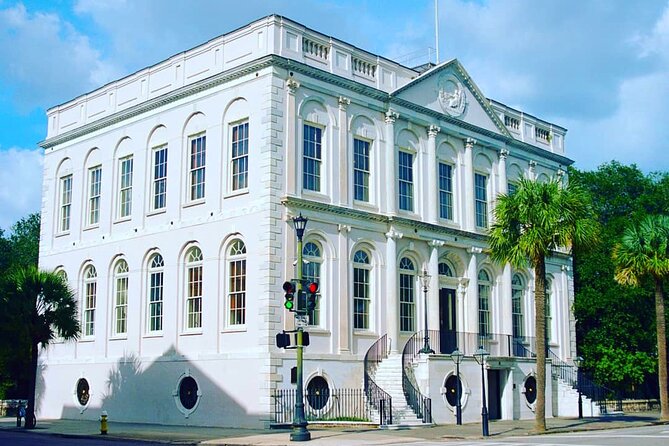
This tour is built around a simple promise: you’ll see major Charleston landmarks and leave with a clearer sense of how they connect. In about two hours, you hit major themes—hospitality symbols, a Civil War escape story, Revolutionary and Civil War harbor events, and colonial-era institutions tied to real power.
It also helps that the stops themselves are listed as free admission. That doesn’t eliminate your time costs (you’re still walking), but it does reduce the “surprise bill” factor. You’re paying for the guide and the route, not for a pile of separate entry fees.
And because the group is kept to 20 people max, your experience is likely to feel less like a lecture line and more like a conversation with a plan.
Pace and practical tips for a smoother evening
Evening tours can still be crowded, so treat this one like a guided walk with quick conversations. Expect short pauses, then movement again—especially between downtown points and the harbor-linked stop.
A few practical tips:
- Wear comfortable shoes. You’re on city sidewalks for the full 2 hours.
- Keep an eye on the weather. This experience requires good weather, and that can affect whether it runs.
- If you want more out of each stop, stay close to the guide during the walking segments. The explanations tie directly to what you’re about to see.
Service animals are allowed, and the tour is near public transportation, which makes it easier to tack onto the rest of your Charleston evening plans.
Who this tour fits best
I’d aim this for you if:
- You’re in Charleston for a short time and want the key downtown and harbor-linked stories without planning a route of your own.
- You’re a history fan who likes your facts tied to places, not just timelines.
- You’re a repeat visitor who wants a smarter second look at familiar landmarks.
It’s also a solid choice for first-timers because it doesn’t overload you. You get a handful of anchors—Pineapple Fountain, Rainbow Row, Fort Sumter connections, Old Exchange, and St. Michael’s—and the guide connects the dots.
Should you book the Evening History Tour?
If you want an efficient, well-paced way to learn Charleston at night, I think this is a strong booking choice. The guide-led storytelling—especially around Robert Smalls—and the evening timing are the two biggest reasons to choose this format over a midday walk.
I’d only hesitate if you hate walking, or if weather forecasts look shaky. Since good weather is required and the tour can shift if conditions are poor, you’ll enjoy it more if you’re flexible and dressed for an evening on the move.
FAQ
How long is the Evening History Tour in Charleston?
It runs for about 2 hours.
Where does the tour start and where does it end?
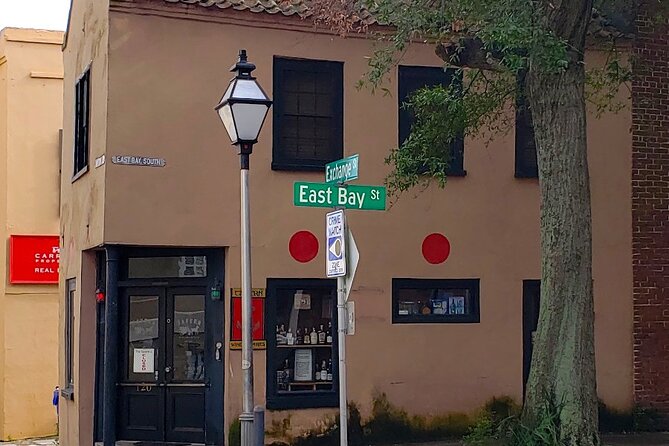
You start at 80 Broad St, Charleston, SC 29401. The tour ends in front of Charleston City Hall at the intersection of Broad and Meeting Streets.
What is the maximum group size?
The tour has a maximum of 20 travelers.
Is the tour offered in English, and do I use a mobile ticket?
Yes, it’s offered in English, and you’ll use a mobile ticket.
Are service animals allowed?
Yes, service animals are allowed.
Are there admission fees for the stops included?
The tour’s listed stops show free admission.
What’s the cancellation policy and what if the weather is bad?
You can cancel for a full refund up to 24 hours before the experience starts. If it’s canceled due to poor weather, you’ll be offered a different date or a full refund.