REVIEW · BISHKEK
Ancient Burana Tower (Architectural wonder of Central Asia)
Book on GetYourGuide →Operated by TDP · Bookable on GetYourGuide
Ancient ruins and mountain air in Kyrgyzstan. I like how Burana Tower frames the Tien Shan peaks, and I really enjoy the balbals and petroglyphs that turn a quick stop into something you can actually read. One thing to weigh: climbing the tower is optional, and the space up top may not suit claustrophobic visitors.
This trip works best when you expect a real guided history walk, not just a photo run. Guides such as Alex, Tariel, Azamat, and Ernest have a track record of clear explanations and practical touches, like confirming pickup the night before.
In This Review
- Key things to notice before you go
- Burana Tower: why this Chui Valley site feels bigger than it is
- Getting there from Bishkek: timing and what the drive teaches you
- Entering the Burana site: tower views, museum time, and walking rhythm
- The Balasagun story: stone markers, symbols, and why the guide’s narration matters
- Petroglyphs, balbals, and grinding stones: the features that reward your curiosity
- Photo planning: getting the Tien Shan backdrop without rushing
- Price and value: is $76 worth 5.5 hours from Bishkek?
- What to expect at each part of the day (and where you might lose time)
- Who should book this Burana Tower tour
- Should you book the Ancient Burana Tower experience?
- FAQ
- How long is the Ancient Burana Tower tour?
- How much does the tour cost?
- Do you include transport from Bishkek?
- What is included in the price?
- Are food and drinks included?
- What sites and features will I see besides the tower?
- What languages are available for the live guide?
- Is the tour wheelchair accessible, and is there an age limit?
- Is alcohol allowed?
- Can I cancel for a full refund?
Key things to notice before you go
- Burana Tower is the standout monument of Balasagun, tied to centuries of nomad and steppe history.
- Petroglyphs and balbals are the real attention-grabbers if you like seeing older symbols up close.
- You get guided context, including how Islam’s arrival is treated in the region’s story.
- The road itself delivers mountain photo moments, with the Tien Shan showing up clearly during the drive.
- The visit includes museum time, plus stone-focused displays.
- It’s small group travel (up to 12), which usually means fewer wait times and more time for questions.
Burana Tower: why this Chui Valley site feels bigger than it is
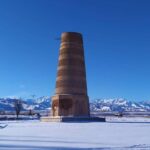
Burana Tower is famous because it’s what’s left of the ancient city of Balasagun. The tower is the largest minaret in the Chui Valley, and it survives while the city around it is mostly gone. Even if you only spend a short time on site, the scale of what used to be here comes through fast.
Balasagun matters because it sits in the story of Central Asia’s big turning points. It was part of the Kalahandi khaganate between the 9th and 11th centuries, then the Mongols ransacked it in 1218. By the 14th century, the city was destroyed and left in disrepair—so what you see today is essentially the long shadow of those eras.
I also like the way the tour keeps the site grounded in objects, not just dates. You’re not stuck reading a plaque the whole time. You’ll connect the tower to what’s on the ground nearby: stone forms, older carvings, and surviving fragments that show how people marked meaning in the landscape.
You can also read our reviews of more tours and experiences in Bishkek.
Getting there from Bishkek: timing and what the drive teaches you
This is a day trip built around a drive, and that matters for value. Burana Tower is about 70 km from Bishkek, and it’s roughly 12 km from Tokmok. One guide-style experience I’ve seen described puts the drive at around 90 minutes each way, which fits real-world Central Asian roads better than thinking in straight-line distances.
Plan your expectations like this: you’re buying a focused 5.5-hour program that includes transportation from Bishkek, then you spend a solid chunk at the ruins. If you’re the type who wants a long, open-ended nature day, you may prefer a different excursion. But if you want one strong cultural stop with a guide and time to wander, this is a workable format.
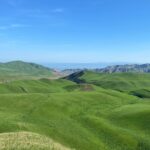
The drive is also where the Tien Shan mountain range starts stealing the show. You’ll have scenic views on the way, and that makes the photos feel earned instead of forced. Bring weather-ready clothing, because mountain weather can change quickly.
Entering the Burana site: tower views, museum time, and walking rhythm
When you arrive, your first real moment is the tower itself—tall, ancient, and positioned so it can dominate a view even above tree tops. The tour includes a guided visit, plus break time and free time, so you can balance listening with looking. That balance is important here, because the site is full of details that reward slowing down.
The tower visit is also where you decide your comfort level. One visitor from Australia noted that they skipped climbing due to claustrophobia, but still found plenty to enjoy at the ground-level stone features. Another person said they did climb up, so the tower is climbable, but your body and nerves get the final say.
The museum stop is designed to support what you see outside. You get tickets included for the museum of ancient stones, and it’s built around the kinds of things you’ll encounter: stones, petroglyph themes, and balbals. The museum is also the part of the day that helps you organize the site in your head. Without that context, the ruins can feel scattered; with it, you start to recognize patterns.
Some guide experiences also include additional local touches like visiting yurts, which adds a different pace to the program—more cultural, less archaeological. And if you’re into small souvenir rituals, one guide (Tariel) even shared souvenir stamps, which is a fun little way to make the day feel tangible.
The Balasagun story: stone markers, symbols, and why the guide’s narration matters
This stop is more than “look at old rocks.” Burana Tower is the centerpiece, but the tour’s real value is how it ties together the big historical swings and the physical evidence.
You’ll hear how Balasagun’s timeline moves from early prominence (9th–11th centuries) to devastation (1218 Mongol ransacking) to eventual decline by the 14th century. Those events shape the city’s ruins, and your guide helps connect that history to what survives: parts of the architecture, plus a field of stone remnants.
One highlight in the tour description is the inclusion of how Islam’s emergence in the region fits into the broader story. If that topic matters to you, you’ll likely appreciate having it explained in plain terms instead of trying to piece it together from a few signs.
This is also where I recommend asking questions. With a small group (limited to 12 participants), you’re not fighting for attention. If you want more detail on why specific stones look the way they do, a good guide will usually give you a clean answer without turning it into a lecture.
Petroglyphs, balbals, and grinding stones: the features that reward your curiosity
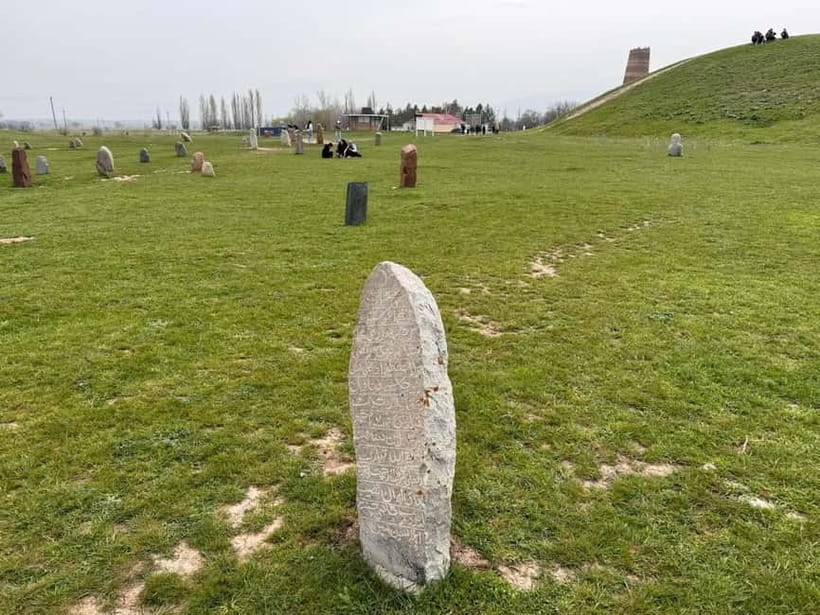
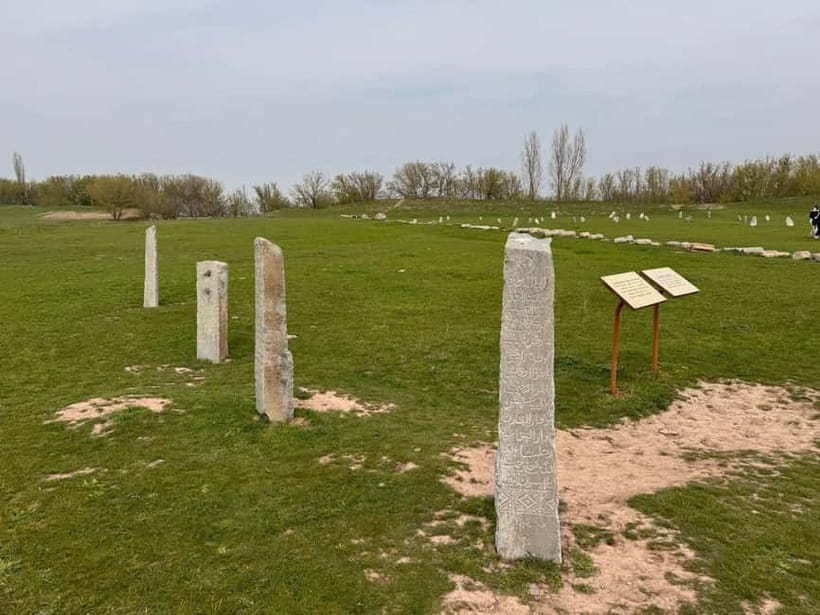
If the tower is the headline, petroglyphs, balbals, and grinding stones are the supporting cast that often makes the visit memorable. You don’t need to be a stone expert. You just need time to look slowly and then listen for what your guide points out.
Petroglyphs are often what hooks people first, because you can see the work of older hands without needing any special equipment. Even when you don’t fully decode the symbols, the presence of intentional markings changes your sense of place. They make it feel lived-in rather than museum-like.
Balbals—stone figures associated with memorial or symbolic traditions—add another layer. One visitor found them amazing, and I agree with that kind of reaction. Balbals help you understand that this site wasn’t only about structures. It was also about people leaving signals that carried meaning.
Grinding stones also belong in the story, but in a less dramatic way. They’re physical proof of everyday labor—how food and resources were processed. That’s a quiet kind of history that many ruins don’t deliver as clearly, so it’s worth paying attention to even if you’re not the type to get excited by tools.
Some guides also mention and point out features like ancient stone heads around the area. Those details are easy to miss when you’re focused only on the tower. If you have free time, walk around with your camera put away for a minute. You’ll often see more.
Photo planning: getting the Tien Shan backdrop without rushing
The tour is built for photos, but not in a chaotic way. You’ll take photographic shots with the Tien Shan mountain range in the background, and you’ll get scenery on the way too. The tower’s position helps: it’s visible against the horizon, so you can frame it with mountains rather than generic road views.
My practical advice: aim for calm, not speed. If you try to sprint through every viewpoint, you’ll miss the small compositions—like stone features in the foreground with the tower anchored behind. And if you plan to climb, remember you’ll likely have less time for slower shots on the ground.
Also think about your clothing. You’ll be outdoors, and you’re traveling to a site where weather can shift. Wear layers you can adjust quickly, and keep your ID/passport ready; a copy is accepted.
Price and value: is $76 worth 5.5 hours from Bishkek?
At $76 per person for a 5.5-hour tour, the value depends on what you’re optimizing for. You’re paying for more than a ticket. Your price includes all transport from Bishkek city, an English-speaking guide, and museum entrance tickets.
That matters because transportation is a big chunk of the effort here. One person called it pricey due to travel distance and the difficulty of getting a group option instead of a private setup. If you end up paying for a more individualized experience, it can feel less efficient.
Still, I think the price makes sense for what you get when you want a guided cultural stop: tower + stone features + petroglyphs + balbals + museum time, all in one half-day format. If you’re doing Bishkek with limited time, this is one of the clearer ways to get a concentrated dose of Central Asian archaeology without spending your entire day hunting logistics.
What to expect at each part of the day (and where you might lose time)
Here’s the rhythm you can expect, without pretending it’s a checklist you can ignore.
1) Pickup and drive
You’ll start from a Kyrgyz meeting point near the Kyrgyz Republic flag, then head out from Bishkek. Expect a longish drive. If you’re sensitive to road time, plan snacks around the day and keep water in mind, since food and drinks aren’t included.
2) Burana Tower main stop (about 2.25 hours)
This is the heart of the day. You’ll get a guided tour, break time, and free time to walk and photograph. The program also includes a bit of walking around the area and some chance for shopping depending on what’s available at the stop. This is also where you decide about climbing.
3) Return
After the tower complex, you’ll head back to the Bishkek meeting point.
The biggest time consideration isn’t the walking. It’s energy. If you arrive already tired, the site can feel like too much in too little time. If you arrive fresh, the guided narration plus your own viewing time makes the most of that 2.25-hour window.
Who should book this Burana Tower tour
This works best for you if:
- You want a focused cultural day trip instead of a long nature excursion.
- You like stone features: petroglyphs, balbals, grinding stones, and other carved or shaped remnants.
- You want a small group format, with a guide who can answer questions.
You might skip it if:
- You hate short trips with lots of driving and wish you had more time to explore independently.
- You can’t handle climbs or tight spaces, even if climbing is optional. The tower is climbable, and comfort varies.
There’s also a clear fit/limit noted by the operator: it’s not suitable for people over 95 years.
Should you book the Ancient Burana Tower experience?
If you’re coming to northern Kyrgyzstan and want one day where history shows up in the open air, I think this is a strong pick. Burana Tower is the draw, but the way the visit includes petroglyphs and balbals makes it more than a single landmark stop. With the museum time and a real guide (English-speaking), you’ll leave with a better sense of what the ruins mean.
If your main goal is the smoothest, cheapest day trip from Bishkek, you might compare options because the drive adds cost. But if you want an efficient half-day that blends monument views with stone-focused cultural details, this is the kind of tour that delivers.
FAQ
How long is the Ancient Burana Tower tour?
The tour lasts 5.5 hours.
How much does the tour cost?
The price is $76 per person.
Do you include transport from Bishkek?
Yes. All transport from Bishkek city is included.
What is included in the price?
The tour includes an English-speaking guide, transport from Bishkek, museum entrance tickets, and guided learning about history and historical themes.
Are food and drinks included?
No. Food and drinks are not included.
What sites and features will I see besides the tower?
You’ll see Petroglyphs, Balbals, and Grinding Stones, plus the museum of ancient stones.
What languages are available for the live guide?
The live guide is available in English, Urdu, and Russian.
Is the tour wheelchair accessible, and is there an age limit?
Yes, it is wheelchair accessible. It is not suitable for people over 95 years.
Is alcohol allowed?
No. Alcohol and drugs are not allowed.
Can I cancel for a full refund?
Yes. Free cancellation is available up to 24 hours in advance for a full refund.