REVIEW · BUSAN
From Busan: Gyeongju Full-Day Historical Tour
Book on GetYourGuide →Operated by Lecirt · Bookable on GetYourGuide
Three Kingdoms Korea in one full day. I love how the tour lines up Bulguksa Temple with the dreamy lake views at Wolji Pond, so you get both spiritual heritage and cinematic scenery. The main trade-off: it’s a long day, and some stops are tight, so you have to move with the group to get the full experience.
What makes it work is the steady rhythm of guided time plus breathing room for photos. You’ll ride out from Busan in a comfortable van/bus, meet your bilingual guide, and get stories that connect the sites to the Three Kingdoms era and Silla rule. Just note this isn’t a good fit if you need step-free access, since the tour isn’t suited for people with mobility impairments or wheelchair users.
In This Review
- Key highlights you’ll actually feel
- Why this Busan to Gyeongju day trip is such good value
- Getting to Gyeongju: the ride, the pacing, and the “long day” reality
- Bulguksa Temple: UNESCO scale plus guided meaning
- Lunch break strategy: one hour off the clock
- Yangdong Traditional Village: hanok beauty with context
- Daereungwon Tomb Complex: Silla royal burial on a big scale
- Cheomseongdae and quick-photo rhythm: small stops, big contrasts
- Hwangridan-gil stroll: 1960s charm you can actually feel
- Donggung Palace & Wolji Pond (Anapji Pond): the day’s most poetic payoff
- Guide experience: when storytelling makes the monuments stick
- What’s included (and what you’ll still need to budget for)
- Weather and comfort: rain-or-shine is the rule
- Who this tour is best for (and who should choose something else)
- A practical “day-of” game plan
- Should you book this Busan to Gyeongju full-day historical tour?
- FAQ
- How long is the Busan to Gyeongju full-day historical tour?
- Where do you meet in Busan?
- What attractions are included in the tour?
- Are entrance fees included?
- Is the tour guided, and what languages are offered?
- Is food included?
- What should I bring?
- Does the tour run in bad weather?
- Is cancellation possible, and how flexible is it?
- Is there a reservation option that lets me pay later?
Key highlights you’ll actually feel
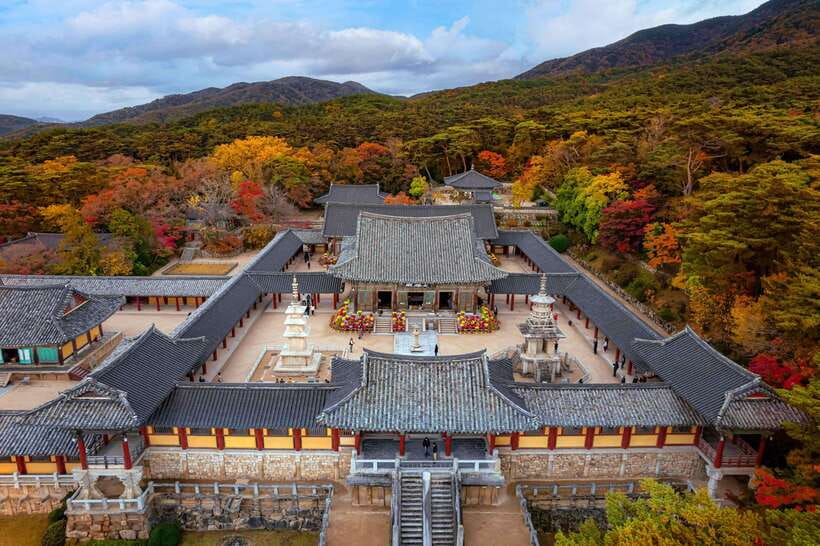
- UNESCO-listed Bulguksa Temple with a guided walkthrough that ties the buildings to place and purpose
- Yangdong Traditional Village where hanok architecture turns into real context, not just photos
- Daereungwon Tomb Complex for the scale of Silla royal burial culture
- Cheomseongdae + Hwangridan-gil as quick stops that give big “ancient science and everyday streets” contrast
- Donggung Palace and Wolji Pond (Anapji Pond) with one of the best photo-and-walk moments of the day
Why this Busan to Gyeongju day trip is such good value
At $60 per person for a full-day tour, you’re paying for the stuff that’s hardest to DIY from Busan: round-trip transport, entrance to the included sights, and English and Chinese tour guidance. The “not included” part is simple—food and drinks are on you—so most of the day’s cost is already handled.
This is a smart choice if you want to see the headline Gyeongju monuments without juggling buses, tickets, and timing. It’s also a solid pick if your Korean language is limited and you’d rather spend your energy watching and asking questions than decoding signs.
The flip side is that you’re on a schedule. If you’re the type who likes to linger for 30 minutes after everyone else moves on, you’ll want to treat free time as exactly that—short.
You can also read our reviews of more historical tours in Busan
Getting to Gyeongju: the ride, the pacing, and the “long day” reality
Pickup happens at one of several central meeting options in Busan (the exact point depends on what you book). From there, you’ll head out by van or bus and settle into the countryside drive toward North Gyeongsang Province.
A key thing to know: even though the tour is listed as 10 hours, you should plan for a longer day. One recent group reported being out in the van from 11:00 to 21:30, and everyone came back pretty tired. That lines up with the reality of a packed itinerary where multiple guided stops are stacked back-to-back.
So bring your comfort strategy:
- Comfortable shoes (you’ll be walking at multiple sites)
- Sunscreen (good daylight can happen even when plans shift)
- A calm mindset about travel time and group flow
It’s also rain-or-shine. That matters because outdoor walking is part of the core experience.
Bulguksa Temple: UNESCO scale plus guided meaning
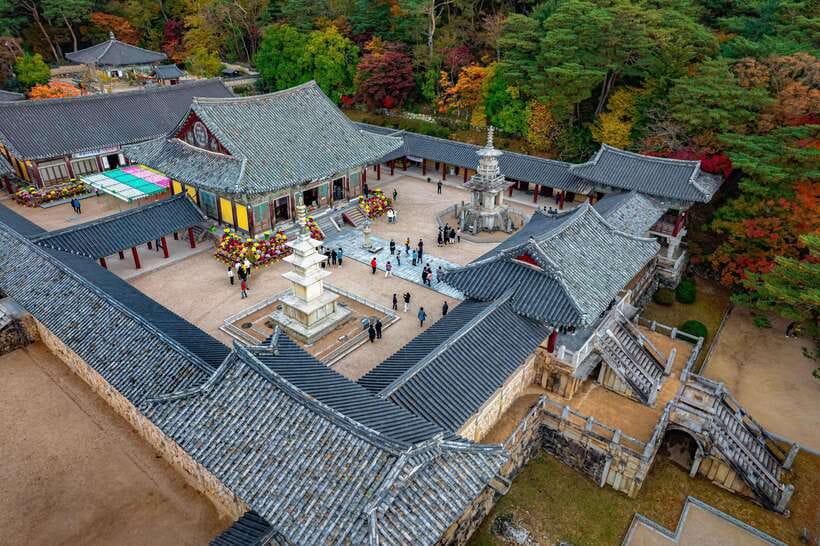
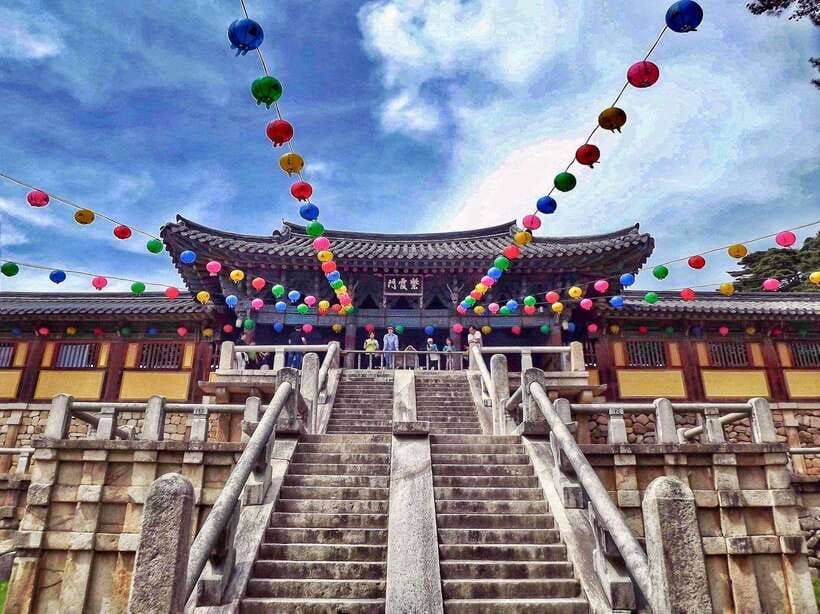
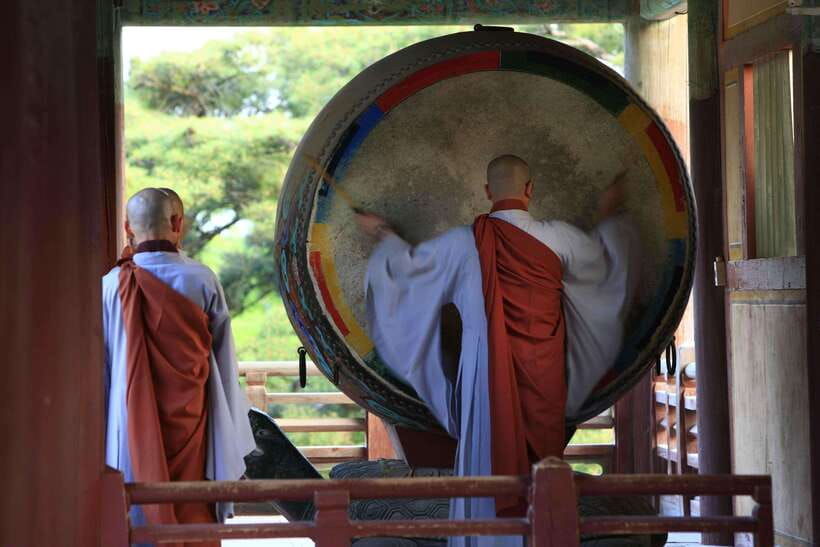
Your day starts with Bulguksa Temple, the major UNESCO stop on this route. You’ll get about 70 minutes with a guide, which is enough time to see the main areas without feeling like you’re rushing the second you arrive.
The best part of a guided Bulguksa visit is the way the temple sits in a natural setting. You’re not just looking at structures—you’re learning how the layout and placement relate to the surroundings and why certain sights matter in Korean Buddhist history.
If you’re visiting from Busan and only have one day, this is one of the best places to spend guided time. Temple spaces can feel repetitive when you’re on your own, but with a guide you catch details you’d otherwise miss.
Lunch break strategy: one hour off the clock
After Bulguksa, you’ll have a 1-hour restaurant break. Food and drinks aren’t included, so use this hour to eat without stress and then come back with a full battery.
Practical advice: don’t overthink lunch. The day’s big wow moments are still ahead—so pick something you can eat quickly and comfortably, and save your appetite for the evening return.
Yangdong Traditional Village: hanok beauty with context
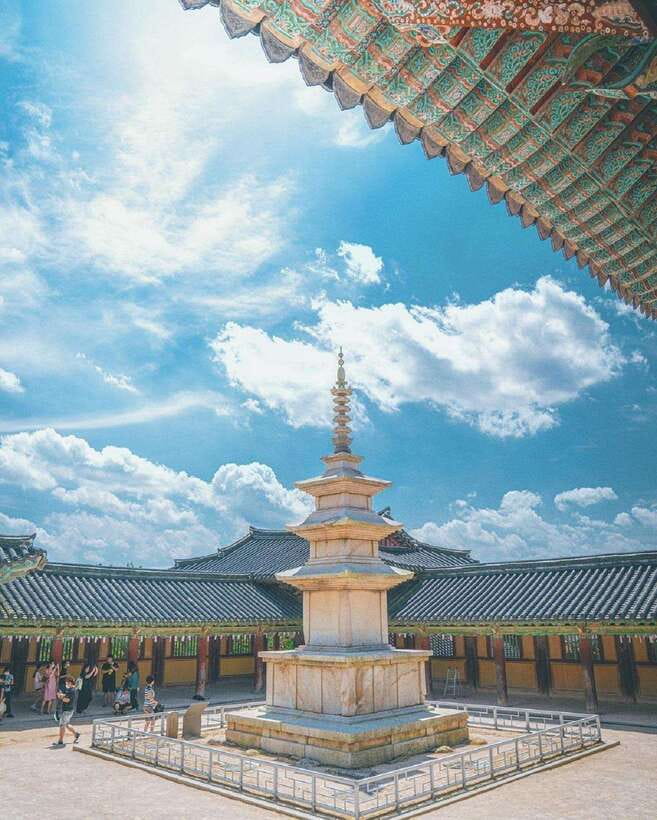
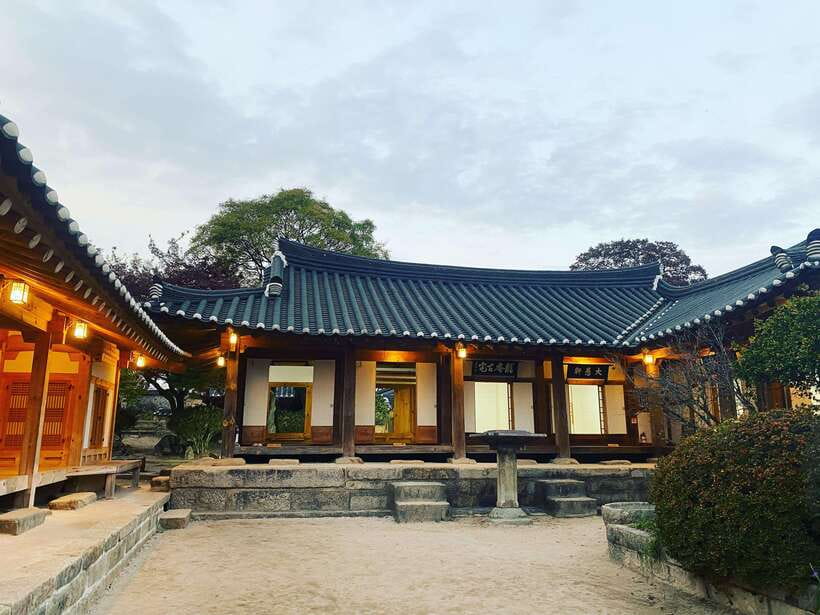
Next up is Yangdong Traditional Village, with about 1 hour that includes a guided component and a photo stop. This is where Gyeongju shifts from monumental temples and tombs into everyday elite life.
The hanok architecture here is elegant, but the real value is how the guide helps you read the village as a living cultural system—how people built, lived, and organized space over time. Without that context, you can end up treating it like a set of pretty houses. With it, you start noticing the logic behind the form.
This is also a good stop for photos, especially if the day is clear. Just watch your pace: village paths can be uneven, and your time is fixed by the group schedule.
Daereungwon Tomb Complex: Silla royal burial on a big scale
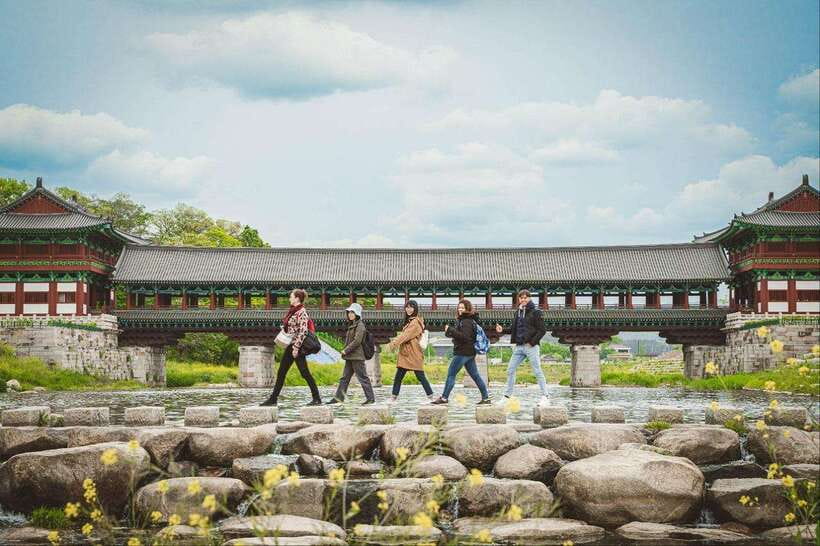
Then comes Daereungwon Tomb Complex, again with about 1 hour of guided time. This is one of the tour’s most educational stops, because it gives you a clear sense of the scale and status involved in Silla burial culture.
You’ll walk through a cluster of grand tombs associated with ancient Silla monarchs, queens, and aristocrats. If you like history that feels physical—something you can stand next to—this is the place. Tombs can sound abstract, but here they’re huge and visually dominant, so the guide’s explanation lands fast.
One consideration: tomb grounds are outdoors. If it’s rainy, expect slick spots and take it slow. If it’s hot, plan for sun exposure and keep water habits steady (you’ll need to buy what you drink yourself).
Cheomseongdae and quick-photo rhythm: small stops, big contrasts
Between the longer guided sites, you’ll get a break with photo stop and free time (about 30 minutes). Then the itinerary includes Cheomseongdae as a photo stop for about 30 minutes.
Cheomseongdae is a sharp contrast to the tombs: it’s linked to ancient astronomy and early scientific thinking, and it adds variety to the day so it doesn’t feel like one long historical theme with no change of pace.
This is also where you should manage expectations. Photo stops are short on purpose. Your job is to choose your angles, get the essentials, and then get back to the group without losing time.
Hwangridan-gil stroll: 1960s charm you can actually feel
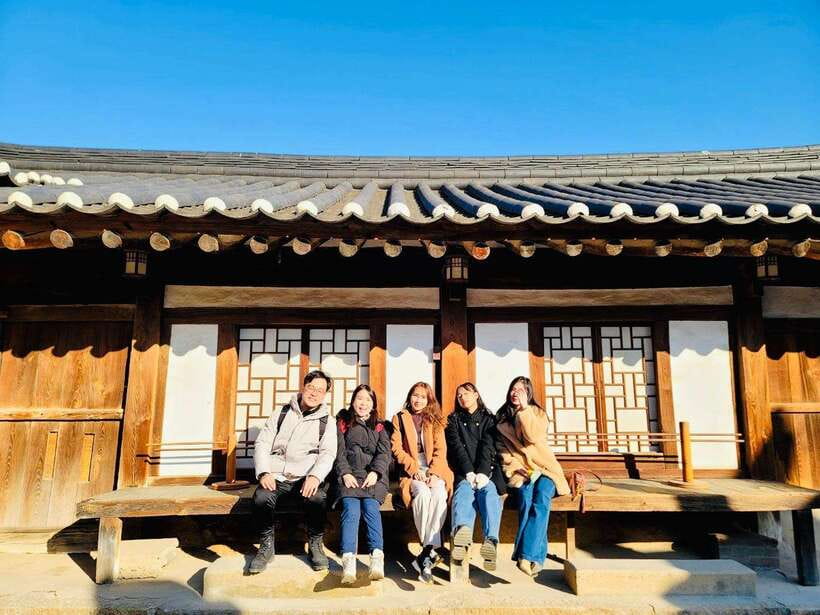
You’ll also stroll through Hwangridan-gil, a street known for well-preserved buildings from the 1960s. That time period might seem “modern” compared to temples and Silla tombs, but it adds an important layer.
It gives you a sense of how Gyeongju wasn’t frozen in ancient time—it kept living, trading, building, and shaping its own identity. Even if you only have a small window here, it’s a nice sensory break from the big monuments.
If you like street photography, this is the moment to slow down for a few minutes. Even when time is tight, streets can reward you with angles that ruins and tombs don’t.
Donggung Palace & Wolji Pond (Anapji Pond): the day’s most poetic payoff
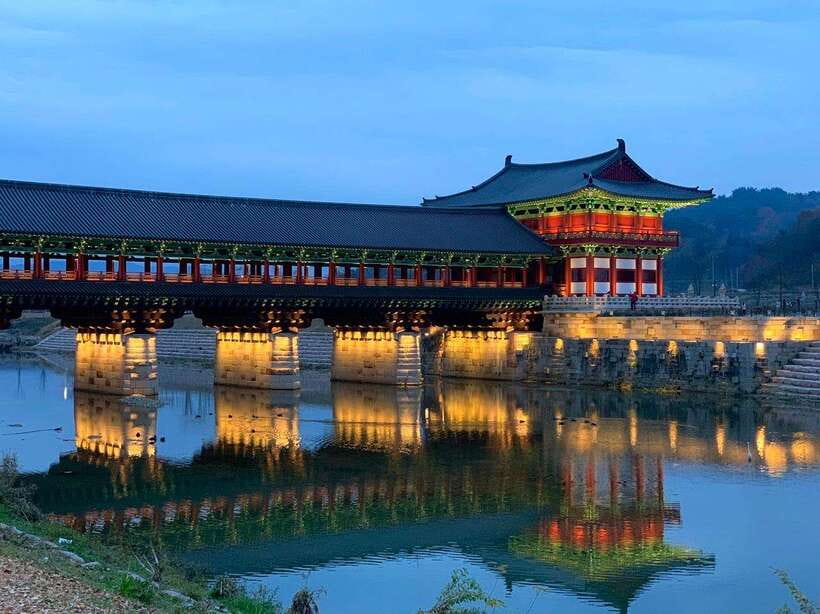
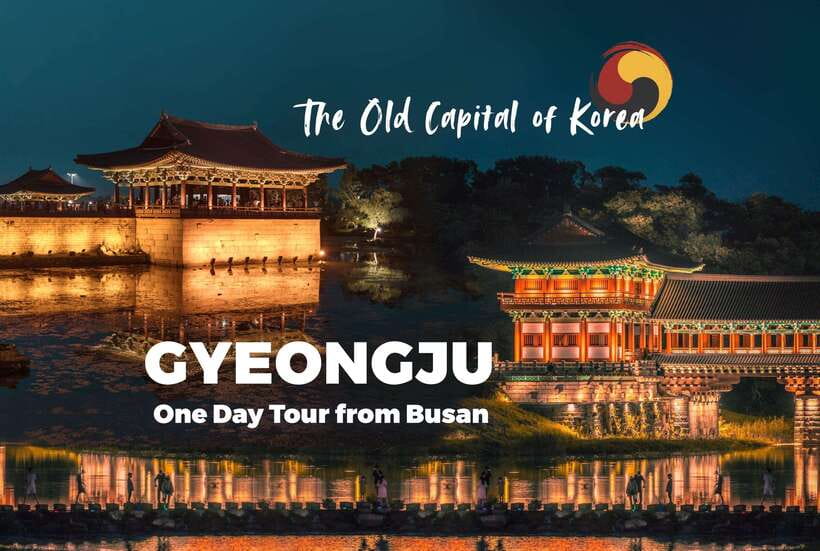
The final big highlight is Donggung Palace and Wolji Pond, also known as Anapji Pond. You’ll spend about 1 hour, including sightseeing time and photo time.
This is the “wow” finish for many people. The palace grounds are built for views, and the pond acts like a mirror—so the reflections become part of the monument itself. Even in daytime, the effect can feel calm and theatrical at the same time.
Your guide will explain the palace and its Unified Silla period background, which helps you understand why the water and the layout matter. Without that, it can be easy to treat Wolji as a scenic stop. With the explanation, you’re looking at architecture tied to a specific historical moment.
Guide experience: when storytelling makes the monuments stick
One reason this tour earns good ratings is the guide presence. One German review specifically praised a guide named Bada for being informative, entertaining, and keeping the day varied. Another review noted that the guides were friendly and that they gave lots of explanations.
That matters because Gyeongju is dense with meaning. If the day is just walking and snapping photos, you can leave with images but not much understanding. With an active guide, you leave with clearer mental connections between Bulguksa, the village lifestyle, the burial sites, and the palace-pool setting.
You’ll still have free moments, so the guide doesn’t run the whole day like a lecture. That balance is part of what makes it feel enjoyable instead of exhausting.
What’s included (and what you’ll still need to budget for)
Included:
- Transport from Busan meeting points
- Entry to the visited attractions
- English and Chinese tour guide
Not included:
- Food and drinks
- Travel insurance
- Personal expenses
This matters for value. The tour price covers the costly parts you’d otherwise have to solve yourself. Your biggest planning item is lunch and snacks. If you’re the type who gets hangry, bring an energy plan even if lunch is scheduled—because the day’s rhythm can feel tight between stops.
Weather and comfort: rain-or-shine is the rule
The tour runs in rain or shine, so you should dress for changing conditions. You already know the basics—comfortable shoes and sunscreen—but also think about grip on wet ground.
Even on a clear day, you’ll be outside through multiple stops. If you don’t like sun exposure, treat sunscreen as non-negotiable and consider a hat.
Who this tour is best for (and who should choose something else)
This itinerary is best for you if:
- You want a high-impact overview of Gyeongju’s major landmarks
- You’d rather have bilingual guidance than navigate sites alone
- You like history but also want the payoff of beautiful places like Wolji Pond
It may be less ideal if:
- You need a slower pace and lots of unscheduled time
- You have mobility limitations that don’t work with uneven outdoor walking
- You’re hoping for a relaxed, flexible day with lots of wandering
A practical “day-of” game plan
If you want the best outcome from a scheduled day, do this:
- Wear shoes you trust for long walking.
- Treat the guided portions as your learning time.
- Use free and photo stops to capture what matters most to you, then rejoin quickly.
- Plan a simple lunch and don’t wait for it to be perfect.
And remember: the tour ends with one of the most scenic finishes of the whole day. If you save your best energy for Donggung Palace and Wolji Pond, the effort earlier in the day will feel worth it.
Should you book this Busan to Gyeongju full-day historical tour?
I’d book it if you want one-day, high-coverage Gyeongju history with strong scenery—especially if Bulguksa Temple and Wolji Pond are on your must-see list. The transport + entrance + guided storytelling combo is what makes the $60 feel reasonable, and the guide quality seems to be a repeat strength.
I’d think twice if you hate long days or need lots of extra time at each site. This is a structured itinerary. You’ll still see a lot, but you won’t have the freedom to linger at every corner.
If your priority is big monuments, clear explanations, and a memorable visual finish, this tour is a very solid choice.
FAQ
How long is the Busan to Gyeongju full-day historical tour?
The tour is listed as 10 hours.
Where do you meet in Busan?
The meeting point can vary depending on the option you book, with multiple central starting locations in Busan.
What attractions are included in the tour?
You’ll visit Bulguksa Temple, Yangdong Traditional Village, Daereungwon Tomb Complex, Cheomseongdae (photo stop), and Donggung Palace & Wolji Pond (Anapji Pond). You’ll also have time around Hwangridan-gil.
Are entrance fees included?
Yes. Entry to the attractions on the itinerary is included.
Is the tour guided, and what languages are offered?
Yes. The tour includes a live guide, with English and Chinese tour guidance.
Is food included?
No. Food and drinks are not included, and there is a break for a local restaurant.
What should I bring?
You should bring comfortable shoes and sunscreen.
Does the tour run in bad weather?
Yes. The tour runs rain or shine.
Is cancellation possible, and how flexible is it?
Free cancellation is available up to 24 hours in advance for a full refund.
Is there a reservation option that lets me pay later?
Yes. You can reserve now and pay later, with the option to book without paying immediately.