REVIEW · ISTANBUL
Istanbul: Ancient Town of Constantinople Guided Tour
Book on GetYourGuide →Operated by ISTANBUL VOYAGE TRAVEL · Bookable on GetYourGuide
One city, three empires on one tight route. This small-group guided tour strings together the old heart of Constantinople—from the Hippodrome area to the Grand Bazaar—with just enough structure to keep you moving.
I especially like two parts: the chance to see Hagia Sophia with a licensed guide, and the way the tour helps you navigate big-ticket sights without wasting time. The small group format (10 participants max) also makes questions and photo breaks easier to manage.
One drawback to plan around: lunch isn’t included, and mosque visits come with etiquette rules. If you’re going in hot weather, bring breathable layers and comfortable shoes because you’ll be on your feet.
In This Review
- Quick reasons this Constantinople tour is worth your time
- The big idea: Constantinople as a walkable story
- Price and value for a 5-hour guided loop
- Hotel pick-up: where the minivan will meet you
- The Byzantine Hippodrome: where chariot races once owned the ground
- Hagia Sophia: the guide makes the building feel readable
- The Blue Mosque: blue tiles, rules, and time management
- Turkish coffee in an old wooden house: a small pause with big payoff
- Lunch stop: convenient, but you’ll pay for it
- Roman underground water cistern: a cool, unusual switch in mood
- Grand Bazaar: getting the layout right in a maze of lanes
- How the small-group size changes the day
- Who should book this tour?
- Should you book this Istanbul: Ancient Town of Constantinople tour?
- FAQ
- FAQ
- What’s the duration of the Istanbul: Ancient Town of Constantinople guided tour?
- How much does the tour cost?
- Does the tour include hotel pick-up and drop-off?
- What’s included in the tour price?
- Is lunch included?
- What stops are included in the itinerary?
- What languages are offered for the guide?
- Is there a dress requirement for the mosque visits?
- What should I bring?
Quick reasons this Constantinople tour is worth your time
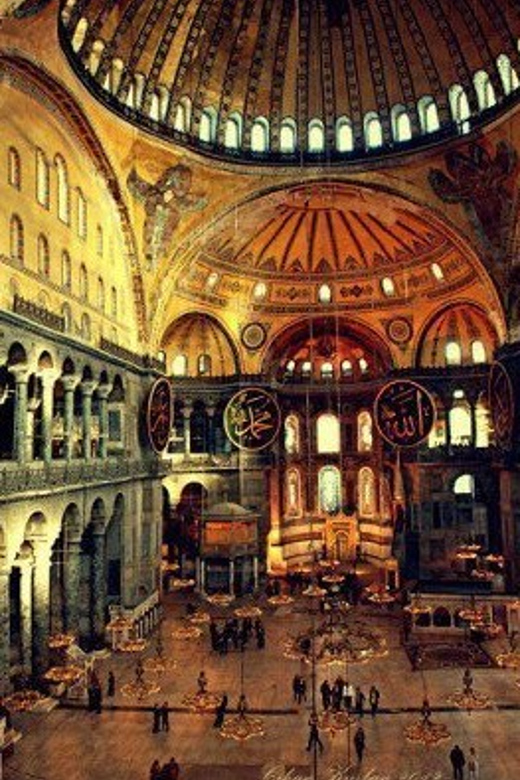
- Hagia Sophia + Blue Mosque on the same day plan so you don’t have to stitch together multiple tours
- Licensed official guide in Spanish, English, French, or Italian
- Skip-the-ticket-line to cut down on standing around
- Roman underground water cister after the main monuments (a nice left turn)
- Turkish coffee stop in an old wooden house for a real local-feeling pause
- Grand Bazaar navigation through maze-like streets and alleys under the dome roof
The big idea: Constantinople as a walkable story
This tour works because it doesn’t treat Istanbul like a checklist. It strings together Roman, Byzantine, and Ottoman landmarks in a way that makes cause-and-effect feel natural. You’ll start with the political and spectacle world of the Byzantine capital, then move into the religious “wow” spaces, then end in a market that still runs on the same human energy: trade, bargaining, and constant motion.
The value is in the flow. You’re not just staring at famous buildings. You’re learning what each place was for—entertainment, state power, worship, water infrastructure, commerce—so the city starts to make sense even when you’re far from your hotel.
You can also read our reviews of more guided tours in Istanbul
Price and value for a 5-hour guided loop
At $125 per person for about 5 hours, this sits in the mid-range for guided “big hits” tours. Here’s what you’re actually paying for:
- Hotel pick-up and drop-off by minivan (within specific districts)
- A licensed official tour guide
- Skip-the-ticket-line
- A tight route that includes major stops: Hagia Sophia, the Blue Mosque, the Grand Bazaar, and a Roman-era underground water cistern
What’s not included matters for planning. Lunch isn’t included, and entrance fees to museums aren’t included either (so set aside extra cash for any sites that charge). If you’re trying to keep the day simple and you don’t want to coordinate transport and tickets alone, the guide + logistics package is the real convenience.
If you’re the kind of traveler who enjoys a plan but still likes to wander at your own pace, the small group helps. If you’re hoping for a deep-discipline museum day, you might feel the time is tight. This is “see and understand,” not “stay forever.”
Hotel pick-up: where the minivan will meet you
Pickup is included, but only from these districts: Taksim, Sultanahmet, Fatih, and Beşiktaş. If your hotel is outside those areas, you’ll need to contact the provider for instructions.
In real terms, this means you should:
- Confirm you’re in one of the pickup zones before booking.
- Plan on being ready at the designated pickup time, since the tour runs a schedule built around the main sights.
The upside of pickup is obvious: no transit puzzle after a long flight or on a day when you just want to get moving.
The Byzantine Hippodrome: where chariot races once owned the ground
Your tour starts around the Byzantine Hippodrome, the arena area connected to chariot racing and big public spectacle. Even if you’re not a “sports history” person, this stop is useful because it sets the stage for how power worked in Constantinople.
Think of it like this: before people cared about marble churches and blue tiles, they gathered for events. The Hippodrome area is one of the ways you can feel that the city’s identity was never only religious. It was political, social, and loud.
Practical tip: wear shoes with good grip. Istanbul sidewalks can be uneven, and you’ll want stable footing early in the route.
Hagia Sophia: the guide makes the building feel readable
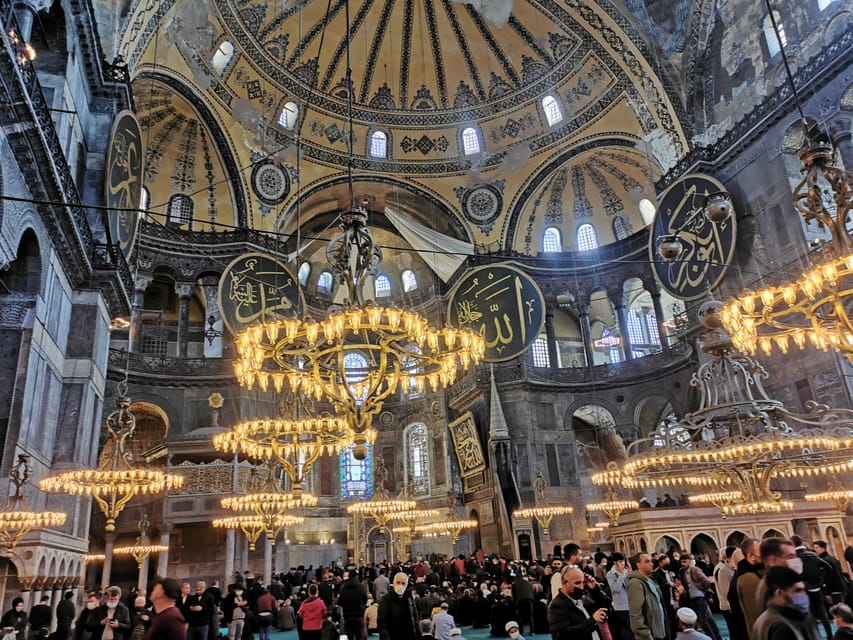
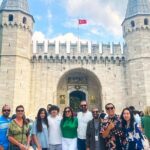
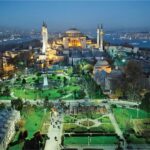
Next up is Hagia Sophia, commissioned by Emperor Justinian. This is one of those places where people often come with big expectations—and then still end up overwhelmed. A good guide helps you look past the obvious and notice what’s important.
What I like about this stop on a guided route:
- You get context for what you’re seeing right away, so your photos aren’t random angles.
- You can ask questions when you’re standing inside the space, not later when you’re back in your room.
Even without going into technical details, the key is how the building was meant to show Roman imperial greatness. Once you understand that, the scale feels purposeful instead of just massive.
If you plan to photograph, expect to share space with other visitors. The benefit of the tour’s organization is that you’re not stuck managing ticket chaos by yourself—there’s a skip-the-ticket-line element built in.

The Blue Mosque: blue tiles, rules, and time management
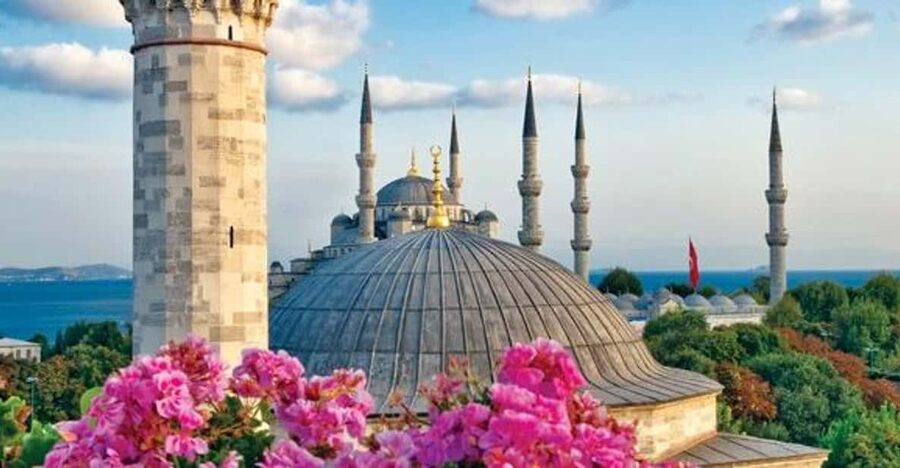
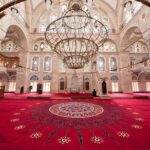
The tour then heads to the Blue Mosque, famous for its stunning blue tiles. This is another “main character” site, so going with a guide is smart. You’ll know what you’re looking at and what to watch for, which saves time when the crowd pressure kicks in.
Mosque etiquette is part of the experience. The tour notes that for women, you’ll need a scarf to cover your hair during mosque tours. If you forget, you’ll be stuck solving the problem on-site, which can easily steal the most interesting part of your visit.
Other practical thoughts:
- Dress in a way that lets you be comfortable standing and walking for a bit.
- Keep your scarf accessible so you can adjust quickly.
This stop also tests how well the tour’s schedule works. Mosques can be slow due to entry rules and crowd flow. Having a guide helps you keep your day on track.
Turkish coffee in an old wooden house: a small pause with big payoff
One of the more charming highlights is the Turkish coffee stop in an old wooden house. This is the kind of detour that makes the day feel human.
Even if you don’t drink coffee, this break works because it gives you:
- A moment to reset
- A taste of a slower, more local rhythm between major monuments
- A setting that feels connected to daily life, not just famous landmarks
Look at this stop as a timing tool too. After Hagia Sophia and the Blue Mosque, you’ll likely appreciate the chance to sit for a minute and regroup before moving to lunch and then the more unusual stop underground.
Lunch stop: convenient, but you’ll pay for it
After the big sights, the tour includes a lunch stop. However, lunch and drinks during lunch are not included.
I recommend planning like this:
- Bring a rough idea of what you want to spend so lunch doesn’t become a stress decision.
- If you’re sensitive to spice or prefer lighter food, consider eating sooner in the lunch window rather than waiting for the “best-sounding” option.
This lunch break is still valuable even though you’ll pay separately. It keeps the day moving in a single flow—no hunting for food after the most popular sites.
Roman underground water cistern: a cool, unusual switch in mood
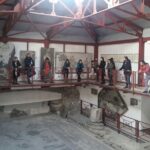
One of the best surprises on the route is the Roman-era underground water cistern stop. On paper, it sounds niche. In practice, it’s a great contrast to the bright monuments above ground.
Why this stop feels worthwhile:
- It changes the sensory experience—cooler air, different acoustics, and an underground world you don’t get to see on most first-time Istanbul days.
- It explains that empire-building wasn’t only about temples and palaces. Cities needed water systems to survive and function.
If you want a tour that doesn’t just repeat the same type of sightseeing, this cistern gives you variety without adding extra hours.
Also, because underground spaces can feel tighter, keep an eye on your belongings. You don’t want your day to end with a lost phone or snagged bag.
Grand Bazaar: getting the layout right in a maze of lanes
Finally, you end at the Grand Bazaar, described as the biggest covered market in the world, with a maze of streets and alleys and a dome roof.
Here’s where a guide truly earns their pay. The Bazaar can overwhelm you fast if you wander without orientation. A tour helps you:
- Understand the “logic” of the space
- Move through the main lanes more confidently
- Spot the kinds of shops that match what you actually want to buy
What I like about ending here is that it’s a city-style finale. You get to see Istanbul as a place where commerce is still alive, not only a collection of monuments. You’ll also get a better chance of finding something practical—a scarf, a small leather item, spices—without turning it into an all-day negotiation marathon.
If you like shopping, go in with a clear budget. Bazaar pricing often feels like a conversation. If you don’t want that, treat it like a walk-through and buy only if something genuinely fits your taste.
How the small-group size changes the day
With up to 10 participants, the tour feels less like a conveyor belt and more like a shared outing. That matters at major stops where people tend to get separated easily.
A smaller group helps you:
- Hear instructions without repeating yourself every minute
- Ask questions as you walk between places
- Get better guidance on mosque rules and what to do next
It also reduces the chance that you’ll feel lost. In a city like Istanbul, that’s not a small thing.
Who should book this tour?
This experience is a good match if you want:
- A guided “greatest hits” route through Istanbul’s Constantinople-era landmarks
- The main monuments (Hagia Sophia and the Blue Mosque) plus a couple of smart extras (the Hippodrome area and the Roman cistern)
- A market finale at the Grand Bazaar
- A group small enough that you can actually interact with your guide
You might want a different plan if you’re looking for:
- A full-day museum-style pace
- Deep time in only one area (like only Sultanahmet for hours)
- Included lunch and entrance fees (because both are listed as not included)
Should you book this Istanbul: Ancient Town of Constantinople tour?
I’d book it if you want structure and context, not just pictures. The mix of sites makes sense: power and spectacle (Hippodrome), religious and imperial branding (Hagia Sophia), Ottoman-era iconography (Blue Mosque), a quick local rhythm (Turkish coffee in a wooden house), then a smart curveball (underground cistern), finishing with the market life of the Grand Bazaar.
My call hinges on one thing: you’re comfortable paying for lunch and any site entrance fees separately. If that’s fine, and you can handle a few hours of walking with mosque etiquette, this tour is a strong value way to get oriented fast in Istanbul.
FAQ
FAQ
What’s the duration of the Istanbul: Ancient Town of Constantinople guided tour?
It runs for about 5 hours. Starting times vary, so you’ll need to check availability to see what works for your schedule.
How much does the tour cost?
The price is listed as $125 per person.
Does the tour include hotel pick-up and drop-off?
Yes. Pickup and drop-off are included by minivan, but pickup is available only from the Taksim, Sultanahmet, Fatih, and Besiktas districts.
What’s included in the tour price?
Included are hotel transportation by minivan, pickup/drop-off, and a licensed official tour guide. The tour also includes skip-the-ticket-line service.
Is lunch included?
No. Lunch isn’t included, and drinks during lunch aren’t included either.
What stops are included in the itinerary?
The tour includes visits related to the Byzantine Hippodrome, Hagia Sophia, the Blue Mosque, a Roman era underground water cistern, and the Grand Bazaar. There’s also a Turkish coffee stop in an old wooden house.
What languages are offered for the guide?
The tour guide is available in Spanish, English, French, and Italian.
Is there a dress requirement for the mosque visits?
Yes for women: you’ll need a scarf to cover your hair during the mosque tours.
What should I bring?
Bring a passport or ID card, and wear comfortable shoes for walking.