REVIEW · LIVERPOOL
Liverpool: Theatrical History Tour and The Dead House
Book on GetYourGuide →Operated by Shiverpool · Bookable on GetYourGuide
Liverpool has a softer side. Then it turns dark.
What makes this tour such a fun pick is the mix of theatrical street performance with an actual, rarely accessed subterranean morgue called The Dead House. You’ll follow a guide through key parts of old Liverpool, watching the city’s original streets come alive with street-theatre-style storytelling, plus a final descent into a Gothic setting that’s been closed to the public for more than a century.
I really like the payoff: you’re not just hearing creepy tales, you’re getting access to a place with specific, documented uses—like its time as a temporary police station during World War II. One possible consideration: you’ll need to bring your own torch and the underground section isn’t for everyone, especially if you’re sensitive to the subject or have mobility/vision limits.
In This Review
- Key highlights you’ll feel on the walk
- Queen Victoria Monument: the start of the seven-streets story
- Town Hall and Castle Street banking halls: grand faces, dark motives
- Nelson Monument and the crooked commercial lanes
- Five Old Churchyard and the Gothic spire trapdoor finale
- Entering The Dead House: what’s under the church grounds
- Theatrical guides, humor, and audience participation
- Price and timing: is $26 good value?
- Who this tour suits (and who should skip it)
- Planning your evening: stairs, photos, and the Mersey view
- Should you book the Liverpool Theatrical History Tour and The Dead House?
- FAQ
- How long is the Liverpool Theatrical History Tour and The Dead House?
- How much does it cost?
- What’s included in the price?
- Are refreshments included?
- Do I need to bring a torch?
- Is the underground location open to the public?
- Is the tour wheelchair accessible?
- Are unaccompanied minors allowed?
- Is there a cancellation refund?
- Are guide dogs allowed?
Key highlights you’ll feel on the walk
- Exclusive access to The Dead House subterranean morgue (not open to the public)
- Seven streets / original street layout brought to life with theatrical street techniques
- Landmarks with contrast: Town Hall opulence, Castle Street banking halls, and crooked back lanes
- A real historical anchor: the morgue site tied to WWII policing and later public viewing through iron grates
- A dramatic finale under a Gothic spire, reached through a trapdoor
- Performance energy with humor and audience participation from the guides, including Jo (named in guest feedback)
Queen Victoria Monument: the start of the seven-streets story
The tour kicks off at the Queen Victoria Monument in Derby Square, which is a handy place to orient yourself in central Liverpool. From there, you’ll walk as the guide builds the story in chunks—short stretches that keep the momentum up without turning the whole evening into a grind.
This is the kind of tour where the route matters. The point isn’t to hit every famous photo spot; it’s to move through Liverpool’s older fabric so the “why here?” questions make sense. Along the way, you’ll get a feel for how the city’s street grid and key civic buildings shaped daily life.
You can also read our reviews of more historical tours in Liverpool


Town Hall and Castle Street banking halls: grand faces, dark motives
One of the big stops is Liverpool Town Hall. You’ll get to see the building’s regal presence up close, and the guide uses that grandeur to set up the contrast that makes this whole experience work: fancy public spaces paired with grim, hidden realities below street level.
The story also touches Castle Street’s banking halls, which is a great reminder that history isn’t just museums. Liverpool’s power structures sat in plain sight, while other parts of the city held darker functions. That contrast—public wealth above, grim spaces below—is exactly what you should expect from a tour like this.
Nelson Monument and the crooked commercial lanes
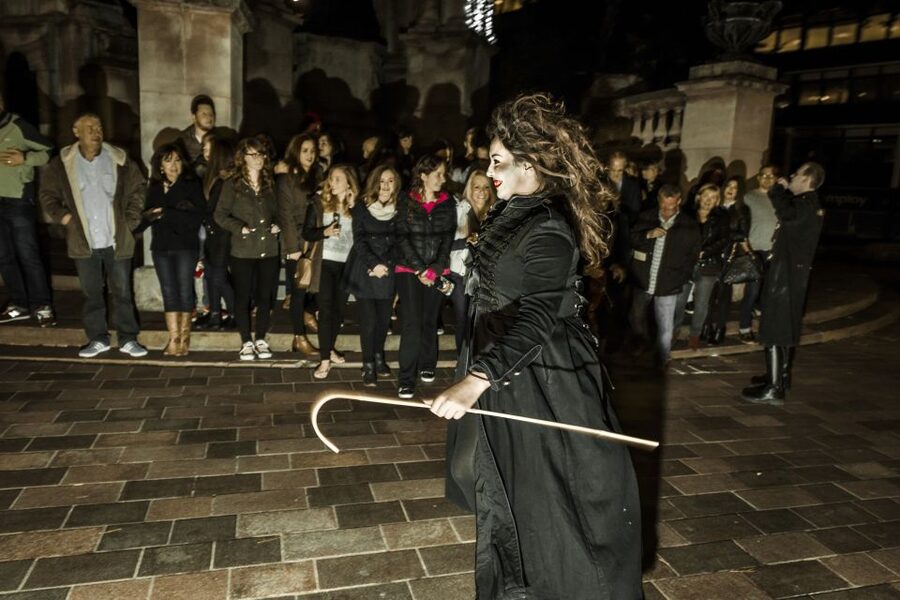
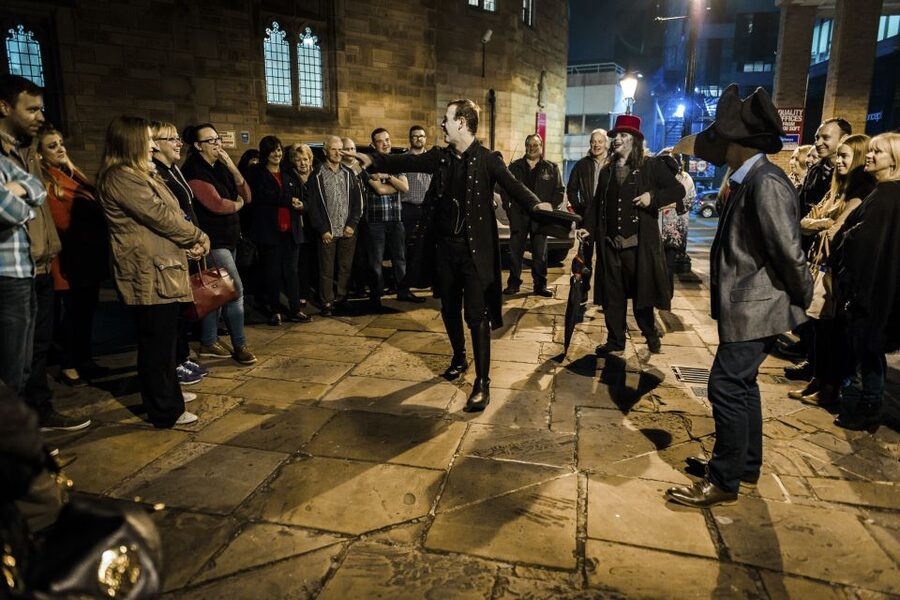
Next you’ll head toward Nelson Monument, with the walk connecting you to the more winding side of the city. The guiding style is theatrical and street-based, so you’re not just standing still for facts. You’re moving, watching, and reacting as the guide pulls you through lamp-lit lanes and crooked back alleys.
The commercial district vibe comes through as well. Even without a formal museum stop, you’ll feel the city’s older lanes and back corners as working routes, not just scenic shortcuts. It’s also a smart pacing choice: you’re always slightly in motion, which helps keep a 1.5-hour tour from dragging.
Five Old Churchyard and the Gothic spire trapdoor finale
The finish point is 5 Old Churchyard, Liverpool L2 8GW, and the last phase is built like a proper scene change. You end up at the boundary of a medieval garden, hidden beneath a Gothic spire, and the entrance is through a trapdoor.
That approach does two things for you. First, it heightens the mood in a practical way—you’re physically arriving at the place before the story fully lands. Second, it makes the “The Dead House” title feel earned rather than random. It’s a quiet setup that turns into a moment of suspense as you reach the stairwell.
Entering The Dead House: what’s under the church grounds
The underground portion is the headline: an exclusive look at the subterranean morgue associated with Liverpool’s The Dead House. It’s located in the quiet surroundings of the Church of Our Lady and St. Nicholas, and it has remained closed to the public for over a century.
Here’s the historical backbone that makes the spooky tone feel grounded. The site was reportedly named by American author Hermann Melville as the Liverpool Dead House. In the late 1700s and 1800s, locals would come to peer through grim iron grates and gaze upon the faces of the deceased. That detail matters because it frames the morgue as part of community behavior—not just sensational horror.
During World War II, the location also served as a temporary police station. So while the atmosphere is dark, you’re not only being told “it’s spooky.” You’re seeing how the site shifted roles over time, from 18th/19th-century public viewing to wartime policing.
One more practical thing: this underground location isn’t open to the general public, and participants enter at their own risk. If you’re expecting a standard guided basement attraction, adjust your mindset. This is access to something unusual, with the physical realities of a subterranean space.
Theatrical guides, humor, and audience participation
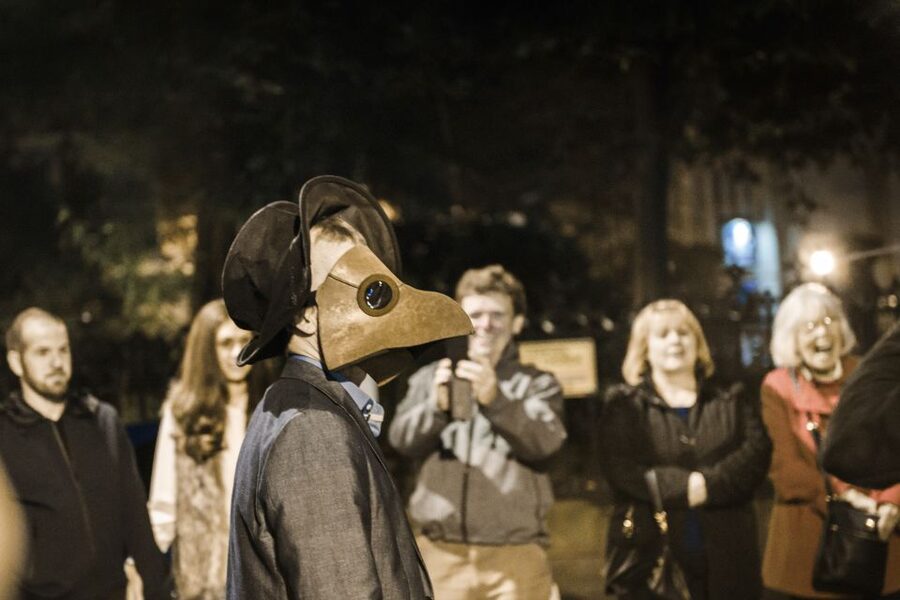
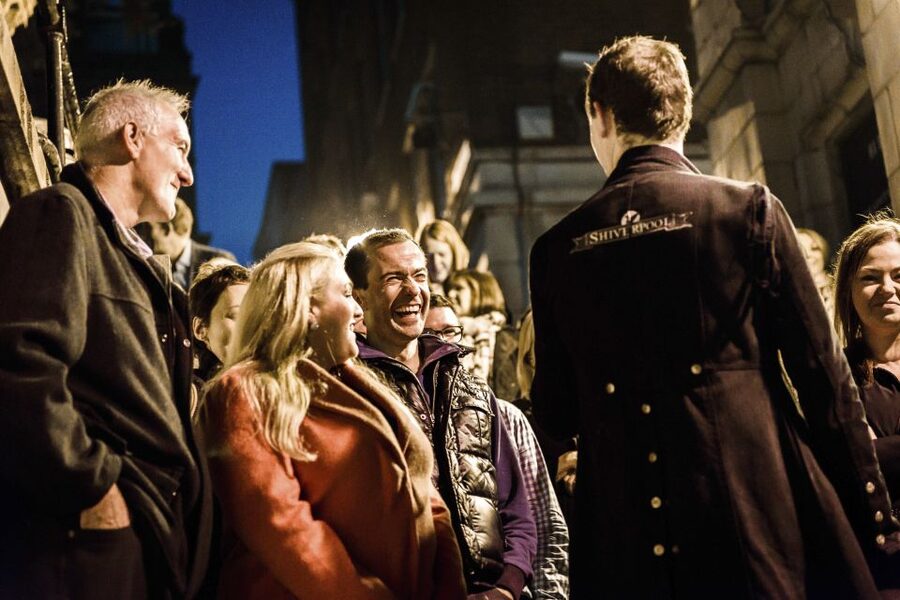
What really lifts the whole evening is the performance style. Feedback highlights that the guides play with theatrical humour and keep you involved, including audience participation. One named guide, Jo, comes up in guest comments for strong character work and an on-the-spot rhythm that keeps the group focused.
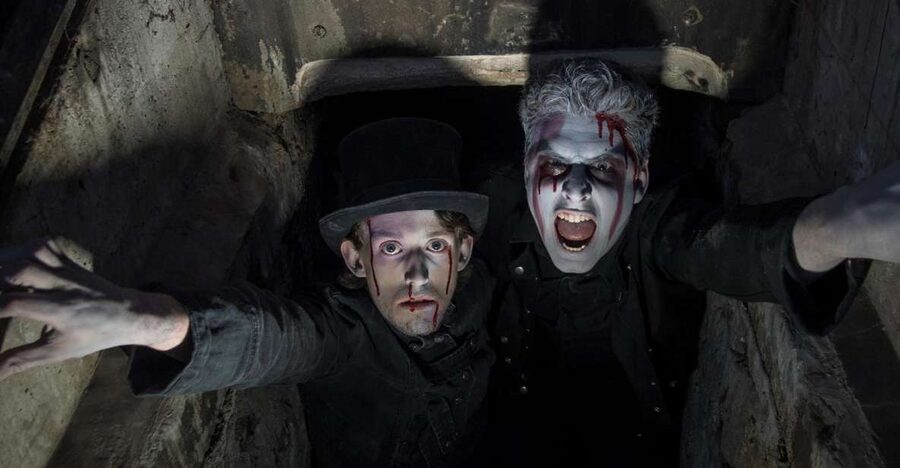
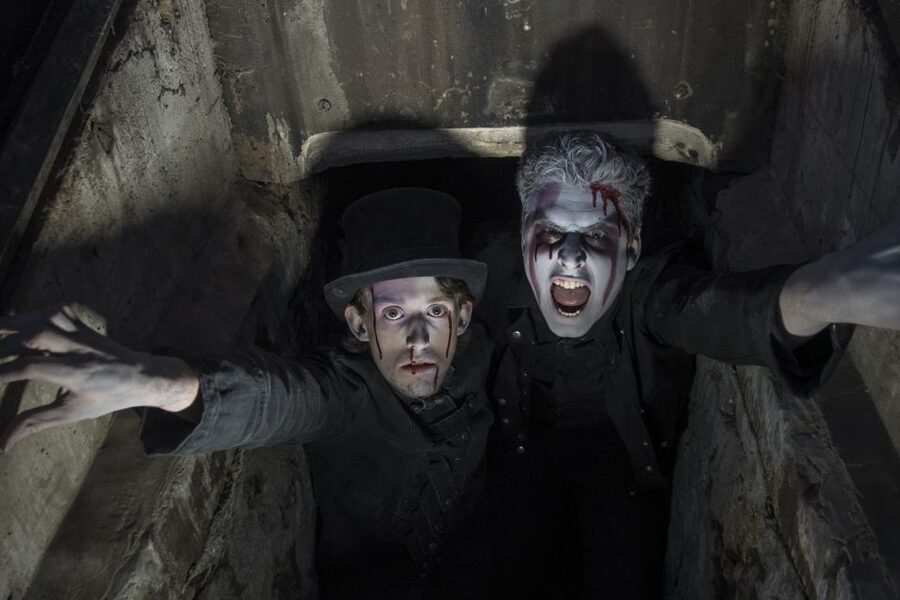
The guide pair (two performers in many moments) works like a double act: jokes land, the story pivots, and then the mood turns serious when you approach the descent. You’ll also notice a “build-up” effect—drama ramps up before the actual Dead House entrance, so the finale doesn’t feel like a sudden left turn. It feels like a planned reveal.
If you want pure chills, you might find yourself wanting more of the ghost-story angle. That said, the strongest version of this tour is the combination of theatre + site history: the guides make the space feel lived-in by the story they tell.
Price and timing: is $26 good value?
At $26 per person for about 1.5 hours, the value comes from two specific things: the theatrical guided walk and the exclusive underground access. For many Liverpool tours, you’re paying mostly for storytelling in public spaces. Here, part of what you pay for is the chance to step into a closed-under-the-church setting that hasn’t been available as a normal public attraction for a long time.
You also avoid the “all day commitment” issue. Ninety minutes is long enough for a story arc, but short enough that you can pair it with dinner plans, or with a post-tour drink and live music nearby if you want to keep the night going.
Who this tour suits (and who should skip it)
This is a highly atmospheric, darker-themed tour, and you need to match your expectations to that. It’s family-friendly in the sense that children are allowed with an adult, but it’s not for everyone because of the subject matter and the physical space.
The tour is not recommended for those with limited mobility, the visually impaired, or those with a delicate disposition. It also isn’t wheelchair accessible, and unaccompanied minors aren’t allowed. If you fit any of those categories, it’s worth thinking twice before booking.
Then there’s the torch requirement. You must bring your own torch. That’s not optional trivia; it’s tied to the underground experience. So pack one that’s bright enough to help you move comfortably.
Also note the rules: strict no smoking (including vapes/e-cigarettes), and guide dogs only. If you’re planning on vaping during a spooky evening walk, this isn’t your tour.
Planning your evening: stairs, photos, and the Mersey view
Because it’s theatrical, you’ll likely build a lot of moments you’ll want to capture. One guest described great photo opportunities with the ghoulish performers, plus a “death ambience” created by the characters’ mood and dress. You can also expect dramatic staging as the group approaches the stairs and the trapdoor entrance.
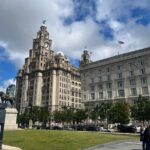
There’s even mention of a view—one comment notes a look toward the Mersey and the Liver building during the ghoulish adventure. That’s the kind of bonus that makes a dark tour feel cinematic rather than purely claustrophobic.
And if you want to extend the night, keep an eye on what’s nearby after the tour ends at Old Churchyard. One guest mentioned finishing near Ma Boyle’s hostelry for live music. If that’s your style, you’ll be well placed to continue without a major travel shuffle.
Should you book the Liverpool Theatrical History Tour and The Dead House?
Book it if you want a short, story-driven walk that ends with a genuinely unusual access point. The mix of street theatre, key landmarks like Town Hall and Nelson Monument, and the exclusive Dead House setting is exactly the kind of “Liverpool by night” experience that feels different from the usual sightseeing.
Skip it if you’re not comfortable with darker themes, if you can’t manage the physical realities of an underground space, or if you need wheelchair access. Also, if you forget your torch, you’ll be stuck—so plan that small detail before you leave your hotel.
If you’re the type who likes your history with a performance edge, this is one of the rare tours where the final destination is the point, not just the punctuation mark.
FAQ
How long is the Liverpool Theatrical History Tour and The Dead House?
The tour lasts about 1.5 hours.
How much does it cost?
It’s listed at $26 per person.
What’s included in the price?
You get the theatrical walking tour and exclusive access to The Dead House.
Are refreshments included?
No. Refreshments are not included.
Do I need to bring a torch?
Yes. You must bring your own torch.
Is the underground location open to the public?
No. The underground location is not open to the public, and participants enter at their own risk.
Is the tour wheelchair accessible?
No. The tour is not wheelchair accessible, and it’s not recommended for those with limited mobility.
Are unaccompanied minors allowed?
No. Unaccompanied minors are not allowed, and children must be accompanied by an adult.
Is there a cancellation refund?
Yes. You can cancel up to 24 hours in advance for a full refund.
Are guide dogs allowed?
Only guide dogs are allowed. Strictly guide dogs only.