REVIEW · LIVERPOOL
Liverpool: Heritage, History & Culture Guided Walking Tour
Book on GetYourGuide →Operated by Liverpool Famous Walking Tours- Purple Tours · Bookable on GetYourGuide
Liverpool clicks when you walk its story. This 2-hour guided walk threads together Liverpool’s maritime roots and music-era landmarks, from early kingship references to modern-day culture as you stop at major listed buildings. I like that you get the big-picture connections fast, without feeling like you’re stuck reading plaques all day.
I also love the human side: local Liverpool guides bring the streets to life with clear storytelling and plenty of room for questions, with guides like Mike D, Karl, and Colleen coming through as standout examples. The one real caution is the ground underfoot and the crowds: you’ll cover uneven surfaces such as cobbles and spend time in busy areas like Mathew Street, so plan on comfortable shoes and slower pace where needed.
In This Review
- Key highlights in a few minutes
- Starting at the Bluecoat: your morning-or-afternoon launch point
- From Derby Square to Liverpool Castle’s story in stone
- Liverpool One and the “keep your eyes up” city-walk rhythm
- Royal Albert Dock: where maritime history stops being abstract
- The dockland fountain and the first dry dock site
- The LIVERPOOL sign: a playful photo break with a seasonal twist
- The Beatles Statue and Cavern Quarter: music history without a museum wall
- Three Graces and Exchange Flags: listed buildings you’ll actually recognize
- Town Hall and the 1500s predecessor thread
- Eleanor Rigby Statue: the Beatles-laced finish line
- Price and value: what $31 buys you (and what it doesn’t)
- What to expect as you walk: pace, surfaces, and group energy
- The guides make the difference: what you’re likely to experience
- Who this tour is best for
- Should you book this Liverpool heritage walking tour?
- FAQ
- How long is the tour?
- Where is the meeting point?
- What’s the tour language?
- Are food or drinks included?
- Is it wheelchair accessible?
- What should I bring?
- Can I bring a dog?
- Is cancellation free?
Key highlights in a few minutes
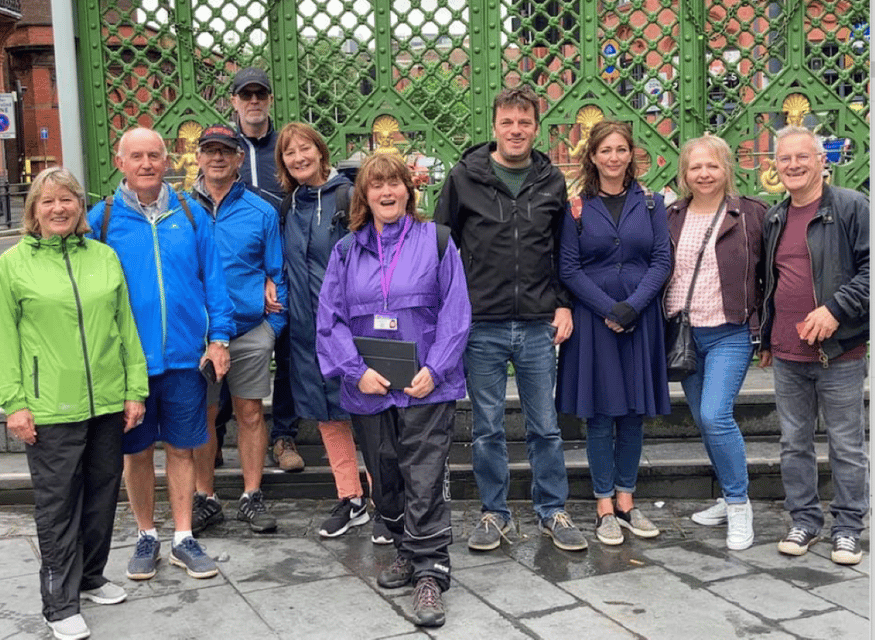
- Start at the Bluecoat Chambers with a central, easy-to-find meeting spot before you head into the city core
- King John to modern day: the guide links eras in a way that makes the city feel connected
- Royal Albert Dock + dockland details: Titanic becomes part of Liverpool’s working-history story
- Three Graces buildings in one pass: Cunard, Port of Liverpool, and the Liver Building as a set
- Mathew Street to the Cavern Quarter: you walk the Fab Four trail in real streets
- Photo stops that actually matter at Royal Albert Dock, the Beatles Statue, and the Cavern area
Starting at the Bluecoat: your morning-or-afternoon launch point
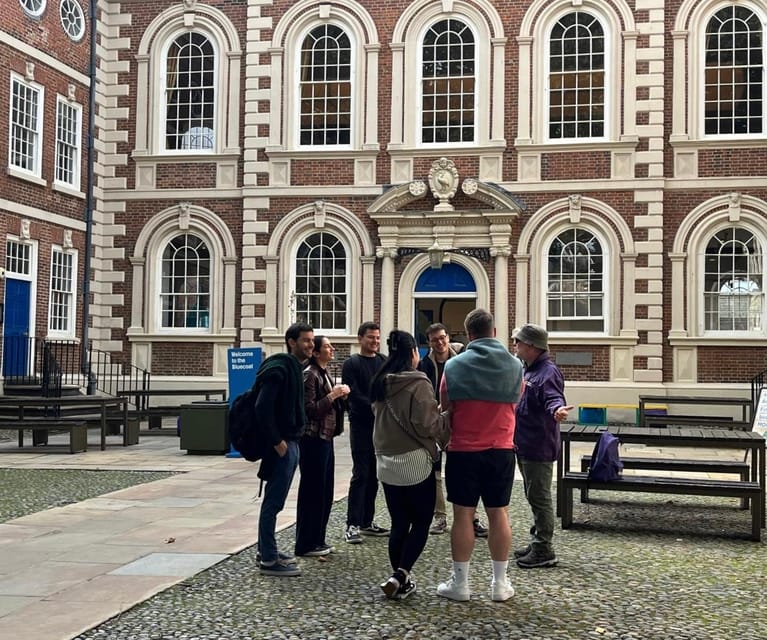
You meet at The Bluecoat (Bluecoat Chambers), 8 School Lane, Liverpool L1 3BX, outside the black metal railings/gate at the main front entrance. If you’re looking for nearby landmarks, there’s a Castle Fine Art shop opposite, which helps you confirm you’re in the right spot.
This is a practical choice. You’re already in the city centre, and the Bluecoat Chambers building is open Tuesday to Saturday from 10am, with a café and toilets inside. That means you’re not scrambling for services right before a 2-hour walking tour.
You can also read our reviews of more walking tours in Liverpool

From Derby Square to Liverpool Castle’s story in stone
As you move through the city core, the tour doesn’t treat history like a list of dates. It frames it like a series of places that changed roles—King John-era references flowing toward later chapters in Liverpool’s evolution.
One moment worth paying attention to is Derby Square. The guide explains that Liverpool Castle once stood here, and today the spot holds a monument to Queen Victoria. Even if you’ve seen Liverpool’s skyline in photos, this kind of ground-level storytelling helps you understand why certain streets and squares feel the way they do.
The practical payoff: you start to see the city as a “rebuild history,” not a single-era postcard. That’s the tone the guide keeps throughout.
Liverpool One and the “keep your eyes up” city-walk rhythm
Before you reach the docks, you’ll spend time in the central pedestrian zone around Liverpool One. The tour typically gives you a short guided pass here, which works well because it slows your pace before the bigger set-piece stops.
In this stretch, listen for the kinds of details the guide highlights—architecture, street layout, and how the city’s growth pulled people and commerce into specific directions. This part is short, but it helps you settle into the tour tempo: stop, look, listen, take a photo, then move on.
Royal Albert Dock: where maritime history stops being abstract
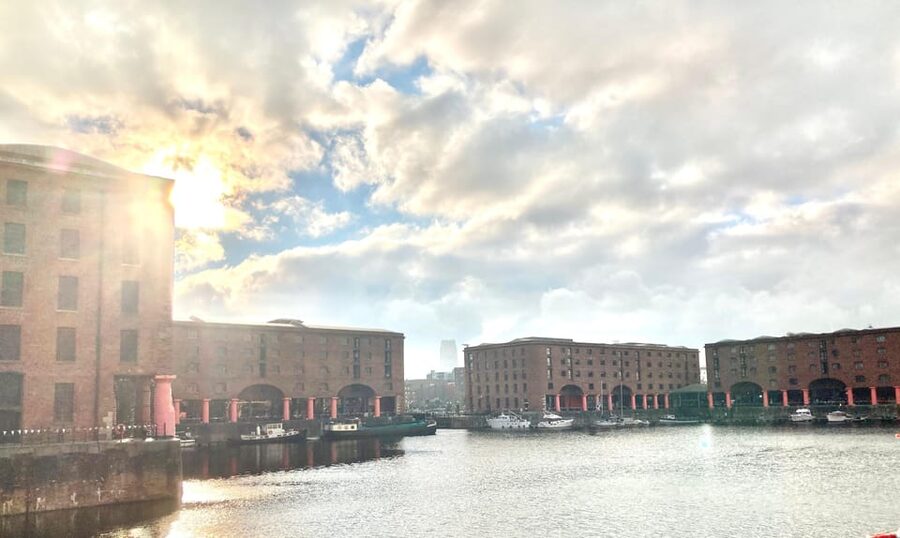
The dock section is the heart of the tour, and it starts with a straightforward idea: Liverpool’s identity is tied to how it moved goods and people by sea. You’ll spend time at Royal Albert Dock, with a photo stop and guided walk through the area (about 30 minutes at the dock).
Here’s what makes this stop more than just a pretty waterfront moment. The guide connects Liverpool’s maritime story to the Titanic narrative as part of the city’s broader dockland history, not as a standalone movie prop. You also learn how docks helped shape the city’s development, which gives you a fuller “why” behind what you’re seeing.
If you like architecture, don’t rush the views. Dockside buildings tend to look industrial from a distance, but up close there’s usually a lot more rhythm in materials and shapes than you expect.
The dockland fountain and the first dry dock site
You’ll also learn about the site of Liverpool’s first dry dock. On this walk, that history is represented through a large water fountain that captures maritime themes in a very visible way.
It’s a small detail, but I like this kind of stop because it anchors history to something you can point at. When you later read about Liverpool’s ships and engineering, you’ll remember this location-based clue rather than trying to hold everything in your head.


The LIVERPOOL sign: a playful photo break with a seasonal twist
Between the big dock moments, you’ll spot an oversized LIVERPOOL selfie sign. The colors change to reflect the season or events, which makes it feel less like a permanent gimmick.
This isn’t a history lecture. It’s a quick break in walking energy, and it gives you time to take a photo without feeling like you’re interrupting the flow. If your travel style leans practical—get the best shots, then move—this is one of those stops that fits.
The Beatles Statue and Cavern Quarter: music history without a museum wall
Next comes a Beatles-focused photo moment at the Beatles Statue, with a short guided pass (about 10 minutes). The statue is sculpted by Andrew Edwards, and the tour gives you time to get your selfie and keep walking.
Then you head into the area around Mathew Street and the Cavern Quarter. This part is special because the guide places you in the real streets tied to the music story—in the footsteps of The Fab Four—as you pass the Cavern Club area (and keep the Beatles references grounded in place).
Mathew Street is one of the most famous music streets in the world, and you’ll feel that instantly: lots of people, lots of signs, and a constant buzz. That can be fun, but it also means you should plan on moving carefully and staying aware of foot traffic.
Three Graces and Exchange Flags: listed buildings you’ll actually recognize
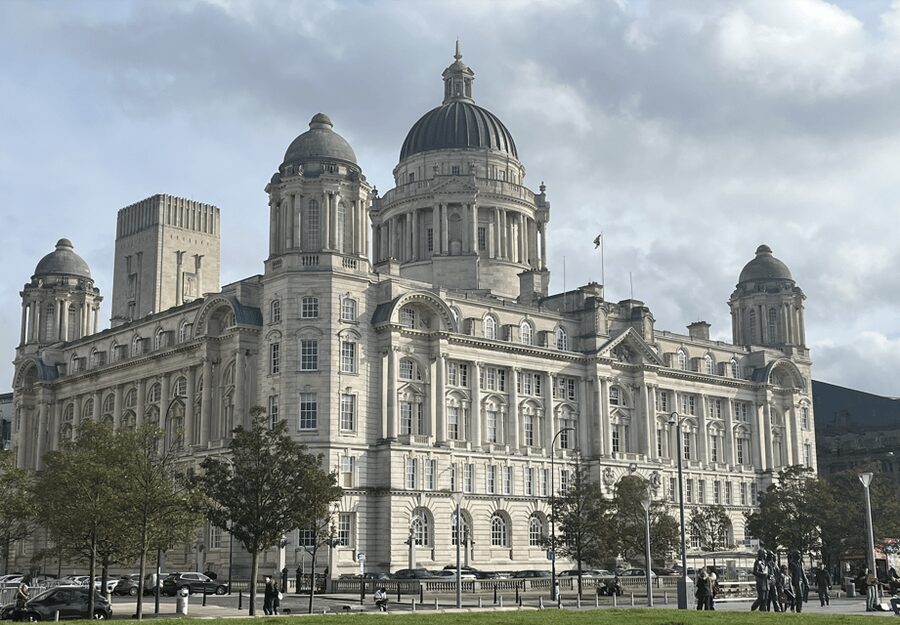
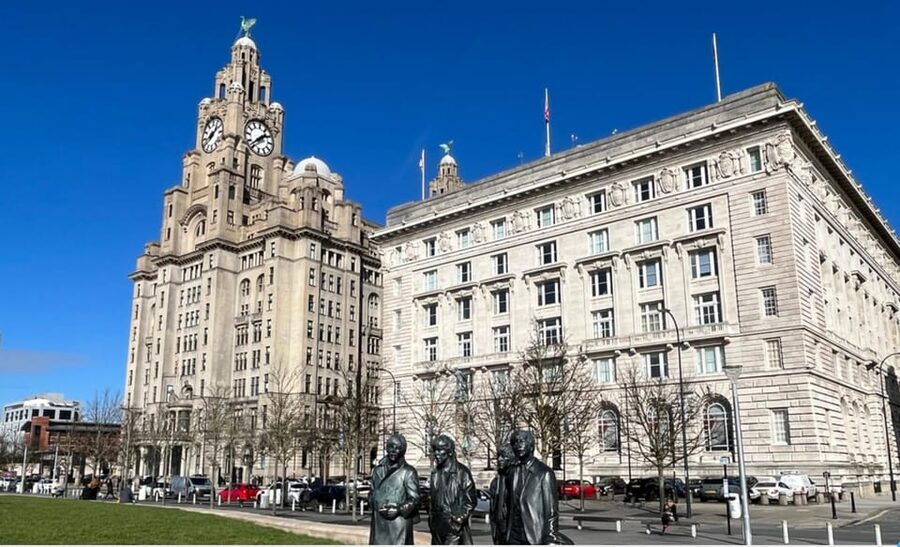
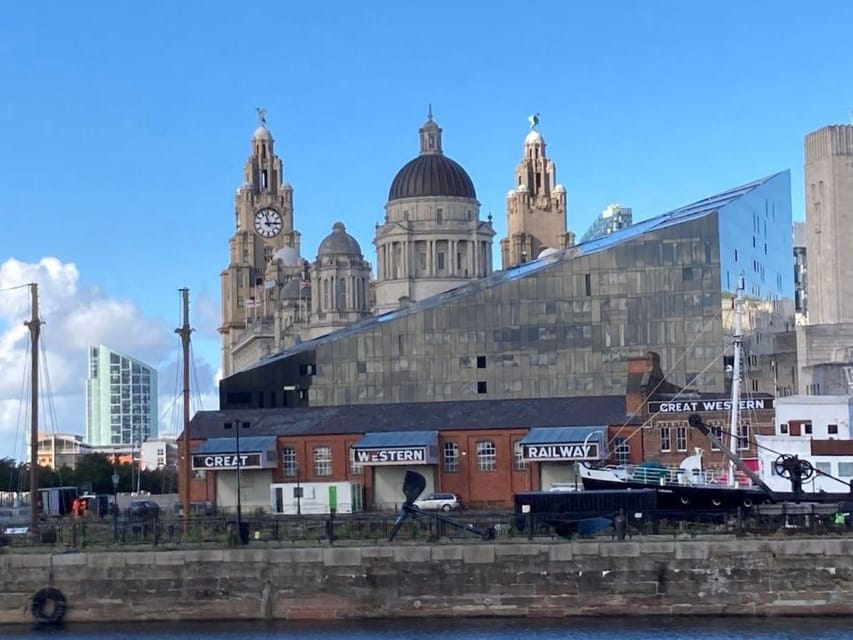
One of the most satisfying parts of this walk is how the guide teaches you to read Liverpool’s architecture as a story about shipping power and city pride. You’ll spend time with the Three Graces—the Grade II listed Cunard Building, the Grade II listed Port of Liverpool Building, and the iconic Liver Building—as a connected set.
This stop typically includes a photo moment (around 15 minutes). If you’ve ever seen these buildings in pictures, you know they’re visually distinctive. Walking past them with context makes them stick in your mind. You stop thinking of them as landmarks, and start seeing them as expressions of the era that built them.
After that, you’ll move through Exchange Flags. The guide points out that the Exchange Flags buildings form a courtyard-like space facing the Town Hall, which helps you understand the layout instead of just seeing facades.
Town Hall and the 1500s predecessor thread
The tour includes the Town Hall area, highlighting that the current building is Grade I listed and recognized as one of the finest surviving 18th-century town halls in England.
What makes the stop more interesting is the way the guide references predecessors dating back to the 1500s. That time jump matters because it shows Liverpool’s civic identity wasn’t a one-time invention. It grew, changed, and rebuilt over centuries—just like the docklands and commercial core you’ve been seeing.
For me, this is where the guided walking format really pays off. You’re not just standing at an object; you’re tracking a long-term story tied to place.
Eleanor Rigby Statue: the Beatles-laced finish line
You finish at the Eleanor Rigby Statue. It’s a fitting close if you’ve enjoyed the Beatles thread—while still leaving you with the option to continue exploring the waterfront or revisit any spot where you want a longer look.
Think of the ending as a natural “cap.” Two hours is enough time to get oriented, spot the major sights, and understand which neighborhoods and buildings deserve extra time later.
Price and value: what $31 buys you (and what it doesn’t)
At $31 per person for about 2 hours, this tour is priced like a solid orientation plus guided storytelling, not like a half-day history seminar. The value comes from two things you can feel while you walk:
- You cover multiple major landmarks in one go: docks, Three Graces, music streets, and key civic architecture
- You get local guiding that turns those landmarks into meaning, including Liverpool’s connection to the slave trade as part of the city’s maritime-era role
What it doesn’t do is replace deeper museum time. In two hours, you can’t master every era. But you can leave with a mental map of how Liverpool’s economy, civic identity, and culture became linked—so you know what to research or revisit next.
If you’re short on time and want a “first pass” that doesn’t feel shallow, this is a good spend.
What to expect as you walk: pace, surfaces, and group energy
This is an easy walking tour, but “easy” doesn’t mean “no effort.” You’ll be moving as a group through busy city areas, and you’ll pass through spots with uneven surfaces such as cobbles. That’s the main practical consideration for comfort and safety.
Bring comfortable shoes and water. Add a camera if you like photos of architecture and Beatles-related stops—there are multiple photo moments where you’ll want to actually capture what you just heard.
If you’re traveling with strollers, the tour mentions locations are accessible for strollers/wheelchairs, but it also flags cobbles and busy streets. That mismatch is worth planning around: go slow, don’t fight the crowd, and expect some patchy footing.
Dogs are welcome if they’re well behaved, but you’ll still be walking in a group and sometimes in crowded areas.
The guides make the difference: what you’re likely to experience
The consistent theme is that the guide can keep it moving without turning Liverpool into a lecture script. People mention guides like Michael, Mike D, Karl, Alan, Pam, Colleen, and Carl for being engaging and asking-and-answering friendly.
What matters for your experience is delivery style: a clear voice, lots of short anecdotes, and answers to questions. You’ll feel it most at the stops where the facts could go either way—like the maritime chapter and the dockland architecture. When the guide connects the dots, you come away with names and places that make sense together.
Who this tour is best for
This one is a great fit if you:
- want a 2-hour introduction that connects Liverpool’s maritime past to its present-day culture
- like city walks that focus on architecture plus stories, not just sightseeing photos
- want to follow the Beatles thread through real streets, from the Beatles Statue toward the Cavern Quarter
If you’re looking for a quiet, slow-paced tour where you never deal with crowds, you might find the Mathew Street stretch a bit too busy for your taste.
Should you book this Liverpool heritage walking tour?
Yes, if you want a fast, well-guided way to understand why Liverpool looks the way it does—and why its maritime story matters. The mix of docks, listed buildings (including the Three Graces), and music-era stops makes the $31 feel practical, especially as a first visit.
I’d only hold off if your top priority is deep, museum-level detail or if you’re very sensitive to cobbles and crowded pedestrian areas. Otherwise, this walk is a smart way to start your Liverpool time with your eyes open.
FAQ
How long is the tour?
It lasts 2 hours.
Where is the meeting point?
You meet outside the black metal railings/gate of the main front entrance to Bluecoat Chambers building, 8 School Lane, Liverpool L1 3BX (not the Blue Coat School).
What’s the tour language?
The live guide speaks English.
Are food or drinks included?
No, no food or drink is included.
Is it wheelchair accessible?
The activity information states wheelchair accessibility, but it also lists not suitable for wheelchair users and people with mobility impairments. If that applies to you, it’s best to confirm directly with the provider since you’ll be walking in busy areas and passing uneven cobblestones.
What should I bring?
Wear comfortable shoes, bring a camera if you want photos, and pack water.
Can I bring a dog?
Yes, well behaved dogs are welcome, but you’ll still be walking in a group in busy areas.
Is cancellation free?
Yes. You get free cancellation up to 24 hours in advance for a full refund.