REVIEW · LIVERPOOL
Liverpool Heritage, History, Culture Walking Tour-Shore Excursion
Book on Viator →Operated by Liverpool Famous Walking Tours · Bookable on Viator
A Beatles-and-docks story in just a few miles. This Liverpool Heritage, History, Culture Walking Tour starts right at the cruise terminal and uses a tight route to connect maritime landmarks, grand buildings, and famous music street corners into one easy morning. I love that it saves you from the usual scramble to “figure it out” after you step off the ship.
My second favorite part is the local guide angle. I saw in guide feedback (including Pam, Peter, Michael, and Carl) that the tour balances city context with the pop-culture hits, and the pacing works even if your group moves slower than the itinerary. One thing to consider: this is not a full-on Beatles-only tour, so if you mainly want Beatles history for 2 hours, you may find the city heritage takes the lead.
In This Review
- Key Highlights You’ll Actually Feel on the Walk
- Starting at Liverpool Cruise Terminal: Easy Meet-Up, Real Local Storytelling
- The First Big Scene: Titanic Memorial and the Three Graces
- Waterfront Streets and Film-Set Recognition
- Beatles Statue Selfie Without Losing the Bigger Picture
- Royal Albert Dock: Where Maritime History Feels Personal
- Thomas Steers Way: Dry Dock Footprints and a Chameleon LIVERPOOL Sign
- Sailors Home Gateway and Golden Liver Bird Photos
- Derby Square: From Lost Castle Footprints to Queen Victoria
- Mathew Street and the Cavern Club Area: Music Landmarks in Real Time
- Castle Street, Town Hall, and Exchange Flags: The Civic Liverpool Segment
- Our Lady and Saint Nicholas Church and Garden: Where the Tour Ends
- Price and What $37.10 Buys You on a Cruise Day
- Tips to Make This Walking Tour Feel Smooth (Not Tiring)
- Who Should Book This Tour (And Who Might Skip It)
- Final Call: Should You Book This Liverpool Heritage, History, Culture Walk?
- FAQ
- How long is the Liverpool Heritage, History, Culture Walking Tour?
- Where do I meet and where does the tour end?
- Is food or drink included?
- Is the walking easy or hard?
- Is the tour offered in English?
- What happens if weather is bad?
Key Highlights You’ll Actually Feel on the Walk
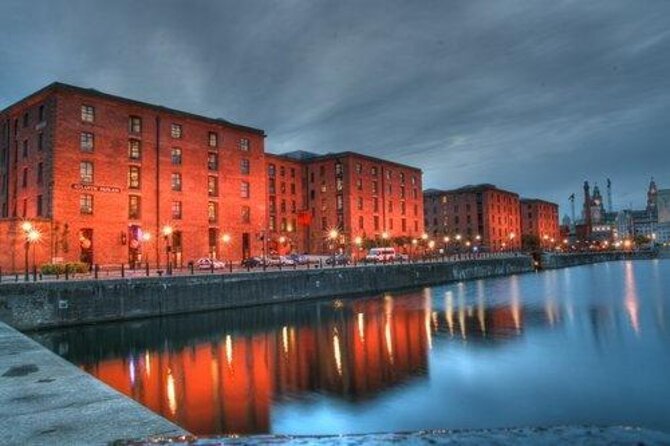
- Meet at the Liverpool Cruise Terminal so your morning starts without transit stress
- Local guides who tell the “why,” not just the dates, with strong crowd control and patience
- Three Graces waterfront architecture (Cunard Building, Port of Liverpool Building, Liver Building) in one smooth sweep
- Beatles photo moments with backup plans if one statue spot is restricted
- Docks + monuments sequence that explains how Liverpool’s maritime identity shaped the city
- Ends near the terminal at Our Lady & St Nicholas, with time to keep exploring on your own
Starting at Liverpool Cruise Terminal: Easy Meet-Up, Real Local Storytelling
This tour is designed for a cruise day. You meet your guide inside the Liverpool Cruise Terminal area (Gate, 2 Princes Parade), get a quick intro, then head out as a group while other visitors are still trying to locate the “real” Liverpool on their phones. For many people, that alone is a huge value: you’re not burning time hunting for where to start.
It helps that the tour is kept small, with a maximum of 20 travelers. That keeps the walk from turning into a slow-moving parade where it’s hard to hear. In the feedback, guides like Pam and Michael came through as friendly, engaged, and good at answering questions, which makes a big difference on a short shore excursion.
You’ll also want to know the physical side up front. It’s an easy-to-moderate street-level walking route, and you’ll be on uneven surfaces at times (cobbles are common in central Liverpool). Bring comfortable, no-slip shoes and plan to walk about 4 miles over the full experience, depending on how your group paces.
You can also read our reviews of more walking tours in Liverpool

The First Big Scene: Titanic Memorial and the Three Graces
Right after the meet-up, you head to the Titanic-themed stop. At the Titanic Memorial—specifically the Memorial to the Marine Engine Room Heroes—your guide connects Liverpool’s role to the ship’s story. Even if you think you know Titanic basics, this is the part where Liverpool’s waterfront identity starts to click. The goal isn’t just a grim monument moment; it’s to show how the city’s maritime life and shipbuilding legacy shaped the local narrative.
Then comes one of Liverpool’s most photo-friendly architecture clusters: the Three Graces. You’ll see and learn about the Grade II listed Cunard Building, the Port of Liverpool Building, and the Liver Building. The value here is context. Your guide won’t treat these like postcard backdrops; they’ll explain how these landmark buildings reflect Liverpool’s rise, ambition, and status as a port city.
A practical tip: when you stop at the Three Graces, take a second to look up as well as straight ahead. These buildings reward angle changes, and you’ll get better photos and a clearer mental picture.
Waterfront Streets and Film-Set Recognition
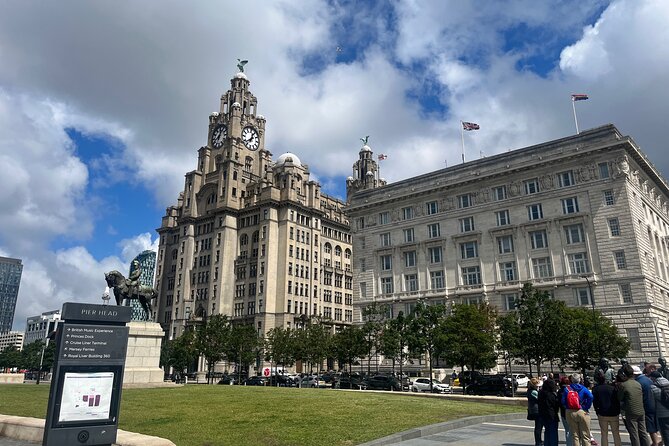
Next you walk along the Liverpool Waterfront and nearby streets. From street level, Liverpool can feel familiar fast—lots of classic façades, docks-adjacent buildings, and streets that have been photographed for decades. Your guide nudges you to watch for locations used in films and TV, because Liverpool often plays a stand-in role on screen.
This portion is especially good if you like “how cities get used” in media. Even if you don’t recognize every filming spot, you’ll probably start noticing how the waterfront blends old-world maritime design with newer city development. It’s the kind of walk that makes you look at buildings like they have storylines, not just windows.
Beatles Statue Selfie Without Losing the Bigger Picture
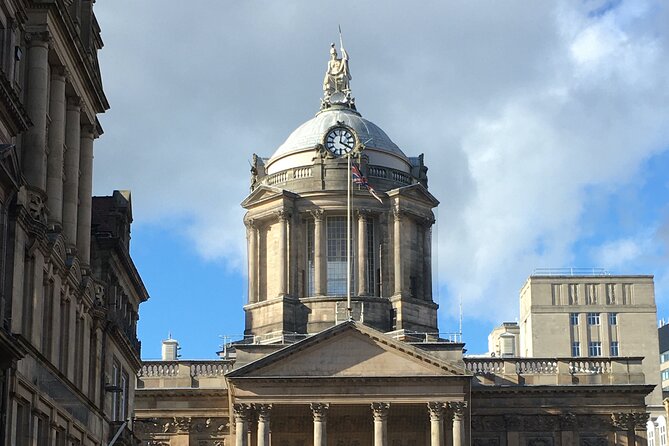
If you’re a Beatles fan, this tour includes a pass-by photo moment with the Beatles Statue, sculpted by Andrew Edwards. The tour’s approach here is smart: you get the classic Fab Four imagery for a selfie, but you don’t lose the thread of the broader heritage walk.
There’s also one planning detail you’ll appreciate: access to the Andy Edwards Beatles Statue can be restricted on occasion, and the tour swaps to alternative statue options instead. That means you’re less likely to be disappointed if the main spot is temporarily off-limits.
One reality check: some people want Beatles to be the main event. This tour uses the Beatles as part of Liverpool’s culture and identity—not as the entire program—so it works best if you’re happy with a mix of music and city history.
Royal Albert Dock: Where Maritime History Feels Personal
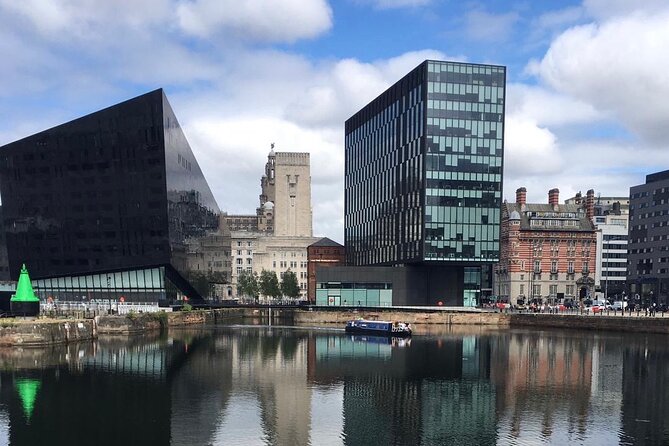
Then you head to Royal Albert Dock Liverpool, one of the waterfront anchors that helps explain Liverpool’s growth. This stop is where the Titanic story and the docks connect more directly to how the city developed. Your guide also points out standout architecture—both older and newer elements—so you can see change over time instead of just looking at one era.
You’ll also see the bronze statue to Bill Fury, which fans treat like a mini shrine. If you’ve ever had that moment where a famous name becomes real because you’re looking at it in the street, that’s what this feels like.
Even without being a hardcore dock-history person, the dock area helps you understand why Liverpool became Liverpool: trade, travel, industry, and the people who supported it.
You can also read our reviews of more historical tours in Liverpool



Thomas Steers Way: Dry Dock Footprints and a Chameleon LIVERPOOL Sign
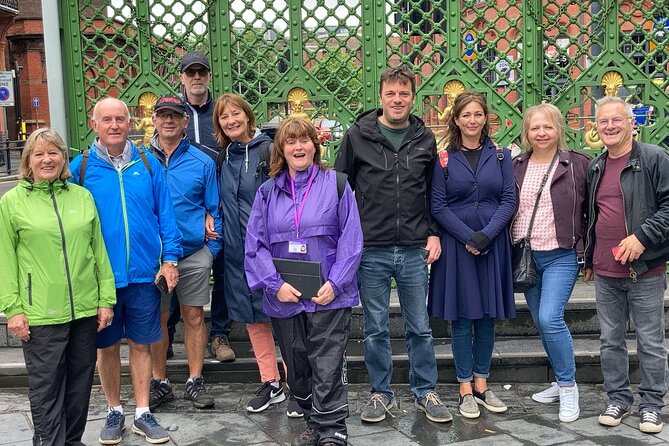
From Royal Albert Dock, you continue to Thomas Steers Way. This is built on the site of Liverpool’s first dry dock, and the stop uses design to show you that past without requiring museum time.
You’ll see a large water fountain connected to that dock story, plus you’ll have a quick look down through a porthole. It’s a small feature, but it gives you that “you’re standing where history happened” feeling.
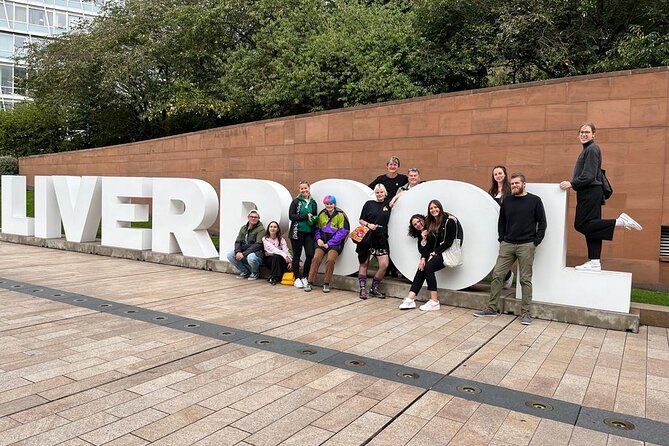
Then there’s the oversized LIVERPOOL selfie sign—and yes, it changes color depending on the season or events. That’s a fun breather in the middle of the walk, and it gives you something upbeat after the heavier maritime story moments.
Sailors Home Gateway and Golden Liver Bird Photos
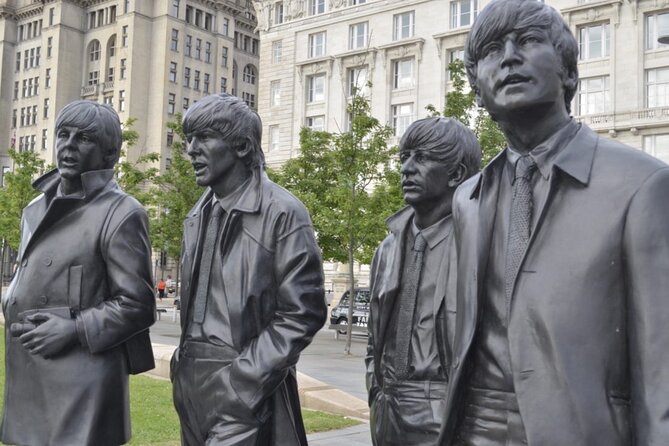
Next is the Liverpool Sailors Home Gateway, a monument tied to the maritime community. This stop is short but meaningful, and it gives you another photo angle with a golden Liver bird.
This is also one of those places where you’ll appreciate the guide’s role. If you’re just passing by, you might think it’s a decorative gateway. With commentary, it becomes part of the human side of port history—services and support for people who lived near the docks.
Derby Square: From Lost Castle Footprints to Queen Victoria
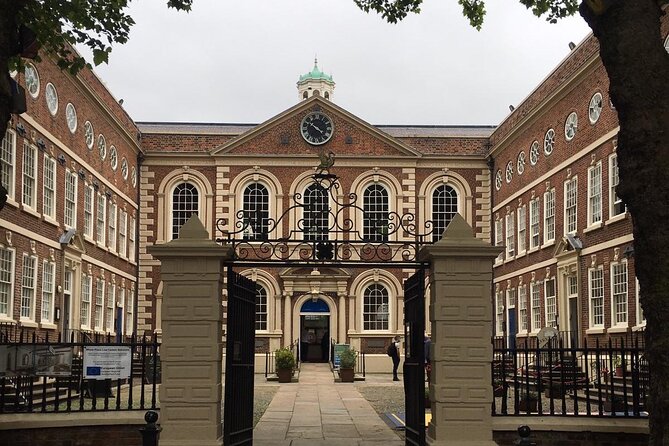
You pass through Derby Square, and your guide points out that Liverpool Castle once stood here—no longer in place, but the location still matters. Today, the square features an imposing monument to Queen Victoria.
This is a good mid-walk stop for anyone who likes turning “vanished landmarks” into something you can picture. Even if you don’t know much about the castle’s details, you’ll leave with a better map of where things used to be.
Mathew Street and the Cavern Club Area: Music Landmarks in Real Time
Now you hit Mathew Street, one of the most famous music streets in the world. Your guide brings in the Cavern Club and the wider musical connections along the street—where Liverpool culture and pop history overlap hard.
There’s time for a photo in front of the Cavern Club, and your route also includes the Cavern Quartet area. This is a strong section for Beatles fans, but it’s also fun if you’re more broadly into live music culture. Either way, it helps that you’re walking through the street instead of just stopping for one quick check-the-box moment.
If you’re photographing, watch your footing. Mathew Street and nearby streets can get busy, and cobbles can be slippery when stone is worn smooth or damp.
Castle Street, Town Hall, and Exchange Flags: The Civic Liverpool Segment
After Mathew Street, you continue toward Castle Street, where you still get a sense of medieval connection through older street layout and surrounding architecture. It’s a nice shift from music streets back into the city’s civic heartbeat.
Next up is Liverpool Town Hall. This is a Grade I listed building, described as one of the finest surviving 18th-century town halls in England, and your guide also explains that its predecessors stretch back to the 1500s. The value here is timing: you’re not just hearing “old building.” You’re seeing how Liverpool’s governance and public ambitions evolved.
From there you reach Exchange Flags, another Grade II listed area that creates a courtyard facing the Town Hall. Your guide adds WWII context here, and you’ll see the Nelson Monument and a large bronze Nelson sculpture dating to the early 1800s.
This is a section where a good guide really matters. City-history stops can turn into “name, year, next.” Here, you’ll get the sense of how Liverpool’s public spaces reflected power, defense, and identity.
Our Lady and Saint Nicholas Church and Garden: Where the Tour Ends
The guided tour ends at Our Lady & Saint Nicholas Church and Garden, which sits just a short walk back to the cruise terminal. You’ll learn that worship at this site has been going on for over 750 years. You’ll also get to see tombstones and sculptures in the surrounding graveyard and garden area.
This stop also includes a hard-to-ignore topic: Liverpool’s links to the Slave Trade and to North American history. If you’re expecting a cheerful postcard wrap-up, this is the moment that reminds you Liverpool’s story has real consequences behind the pretty architecture. It’s handled as part of the broader heritage context, and it’s one of the stops that can linger after you’re back onboard.
From the church, your guide escorts you back to the terminal, or you can choose to explore further. Either way, you’re close enough that you won’t feel like you must sprint to catch your ship.
Price and What $37.10 Buys You on a Cruise Day
At $37.10 per person for about 2 hours 15 minutes, this tour is priced like a smart cruise-add-on rather than a full independent day in Liverpool. You’re paying for a local guide, a controlled walking route, and the convenience of starting and ending near the cruise terminal.
A few things make it good value:
- It bundles multiple “signature” areas: docks, architecture, Beatles culture, and civic landmarks.
- It limits the guessing game. You don’t need to plan a route or decide what’s worth your time between ship and ship-departure.
- The small group size helps you actually hear the stories.
One clear drawback: no food or drink is included. If your shore day is tight, plan to carry water. In fact, the tour info encourages bringing a bottle since you’ll be walking through areas with uneven surfaces.
Tips to Make This Walking Tour Feel Smooth (Not Tiring)
Here are the practical things that will help you get the most out of it:
- Wear comfortable no-slip shoes, especially for cobbled areas.
- Bring a bottle of water. Short stops are time-boxed, and you’ll appreciate having it ready.
- Aim to arrive a bit early to the meeting point so you’re not stressed during the intro.
- If a Beatles statue access point is restricted that day, expect an alternative statue stop. It’s built into how the tour handles variability.
- Keep your expectations aligned: you’ll get Beatles culture moments, but the tour is primarily Liverpool heritage and city context.
From the guide feedback, punctuality and question time also seem to matter. People highlighted that Michael and Carl were enthusiastic and professional, and that guides like Peter delivered a strong mix of waterfront discovery plus Beatles culture without making the walk drag.
Who Should Book This Tour (And Who Might Skip It)
Book this if you want:
- A cruise-friendly Liverpool walking overview that doesn’t feel like random sightseeing
- A guide-led route that connects docks, architecture, and culture
- Beatles moments, but not at the expense of the city’s broader story
You might want a different option if:
- You’re only interested in a Beatles-only approach
- You dislike walking on cobbles or prefer fully museum-based experiences
Final Call: Should You Book This Liverpool Heritage, History, Culture Walk?
I’d say yes if you’re doing Liverpool from a cruise ship or you want a tight, story-focused day without planning. The biggest strengths are the start-from-the-terminal convenience and the way local guides turn landmark stops into a connected narrative—from Titanic-linked memorials through the Three Graces and Royal Albert Dock, then into Mathew Street culture, ending at Our Lady & Saint Nicholas.
Just go in with the right mindset: it’s a city heritage tour with Beatles sprinkled in—not a Beatles deep-dive. If that matches your vibe, it’s a solid, great-value way to get your bearings fast and leave with Liverpool’s “why” stuck in your head.
FAQ
How long is the Liverpool Heritage, History, Culture Walking Tour?
The tour runs about 2 hours 15 minutes (approx.).
Where do I meet and where does the tour end?
You meet at the Liverpool Cruise Terminal (Gate, 2 Princes Parade, Liverpool L3 1DL). The tour ends at the Church of Our Lady & St Nicholas, which is a short walk back to the cruise terminal.
Is food or drink included?
No. No food or drink is included.
Is the walking easy or hard?
It’s an easy to moderate street-level walking tour. You should wear comfortable no-slip shoes because the route may include uneven surfaces such as cobbles.
Is the tour offered in English?
Yes, the tour is offered in English. It uses a mobile ticket.
What happens if weather is bad?
The experience requires good weather. If it’s canceled due to poor weather, you’ll be offered a different date or a full refund.