REVIEW · LIVERPOOL
Best Of Liverpool Heritage, History & Culture Guided Walking Tour
Book on Viator →Operated by Liverpool Famous Walking Tours · Bookable on Viator
Liverpool clicks into focus fast on foot. This guided walk is the kind of city intro that helps you connect the dots between old working Liverpool and the modern names you already know. I love how the route mixes Beatles stories with maritime history, and I also like that it’s paced for a first visit, not a sprint. If you’re lucky enough to get a guide like Mike, you’ll hear the kind of behind-the-scenes details that make the street scenes feel personal.
Two hours plus is a sweet spot, but you should know it’s still a walking experience on uneven cobbles in places. A possible drawback: if you’re hard of hearing or you end up farther back in the group, it can be tougher to catch every word in busy spots.
You’ll meet in the center of town, walk through the docks area and back toward Mathew Street, and finish where you can continue exploring on your own. Along the way, you’ll pass standout landmarks like Royal Albert Dock and the Three Graces—then land at Beatles territory without feeling rushed.
In This Review
- Key things to notice before you go
- Why this Liverpool walking tour works for first-timers
- Starting at the Bluecoat School Lane: a calm kickoff with local flavor
- Sailors Home Gateway and Henry Street Ropewalks: maritime Liverpool in two quick images
- Campbell Square’s Bridewell: when the city turns into a story you can picture
- Thomas Steers Way: dry dock history plus a modern selfie stop
- Royal Albert Dock Liverpool: Titanic as Liverpool’s own story, not just a label
- Beatles Statue and the Fab Four selfie moment
- The Three Graces: Cunard, Port of Liverpool, and the Liver Building
- Castle Street to Liverpool Town Hall: from medieval connections to 18th-century authority
- Exchange Flags and Nelson Monument: why this square feels like a power center
- Derby Square and the Queen Victoria monument: where Liverpool Castle once stood
- Ending at Mathew Street: where to continue after the guided part
- How long it takes, what the walk is like, and what to bring
- Price and value: what $31.90 buys you in real terms
- A realistic drawback: weather and route changes happen
- Should you book this Liverpool walking tour?
- FAQ
- How long is the Best Of Liverpool Heritage, History & Culture Guided Walking Tour?
- Where does the tour start and where does it end?
- Is the tour suitable for someone with moderate physical fitness?
- Is food or drink included?
- What language is the tour offered in?
- How big is the group?
- Will I see the Cavern Club area and Beatles-related sights?
- What happens if there’s a problem accessing the Beatles statue or the weather is bad?
- Can I cancel and get a full refund?
Key things to notice before you go
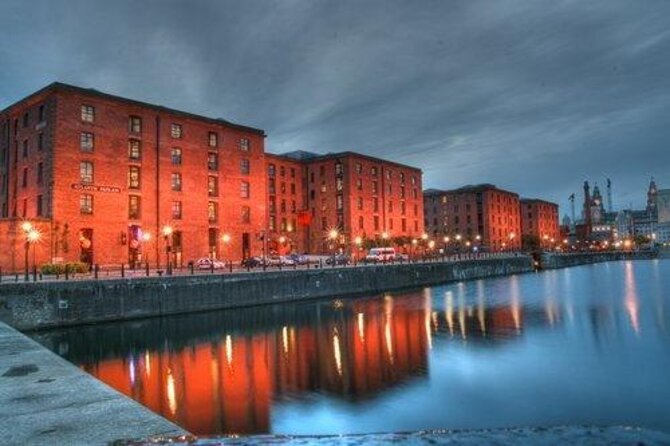
- Local-style storytelling that connects landmarks to real city life
- Docks-and-city mix: Ropewalks and dry docks, then Royal Albert Dock and back in
- Beatles sightings on the route, plus a chance to selfie with the Fab Four statue
- Photo-friendly stop design, from the golden Liver bird gateway to the LIVERPOOL sign
- Small-group feel with a maximum of 20 people
- Route flexibility when access changes, including backup statues if one is restricted
Why this Liverpool walking tour works for first-timers
Liverpool can feel like two cities at once: the shiny, famous bits and the gritty, working roots that explain why the famous bits exist. This tour helps you stitch those together fast. You’re not waiting for buses or trapped in traffic; you’re walking, looking up, and learning as the street scenes change.
I like that the tour uses a practical mix of areas. You start in a cultural building district vibe at the Bluecoat, then move through rope-making history around Ropewalks, and finally shift into dock-country at Royal Albert Dock. That progression makes it easier to remember what you’re seeing, because each stop has a job in the story.
Another thing I appreciate is the “local guide” factor. The guides are Liverpool-experienced, and the best moments come from the way they explain everyday details—what a building used to do, why the docks mattered, and how songs and pop culture layered themselves onto the city. If you’re the kind of traveler who likes context more than checklists, you’ll get a lot out of this.
A fair consideration: it’s an overview tour, not a deep research seminar. You’ll cover a lot of ground and get highlights, but if you want a super-detailed, one-building-only experience, you might add a second, focused tour later.
You can also read our reviews of more walking tours in Liverpool

Starting at the Bluecoat School Lane: a calm kickoff with local flavor
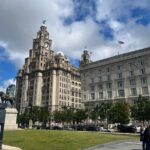
You meet at the Bluecoat on School Lane in central Liverpool (Bluecoat, School Ln, Liverpool L1 3BX). It’s a strong opening point because it’s not just another monument stop—it sets a cultural tone right away.
The Bluecoat stop is brief, but it matters. Starting here signals that Liverpool isn’t only about docks and music. It’s also about institutions, creativity, and public life that grew alongside trade and industry.
Practical tip: arrive a few minutes early. With a group size capped at 20, the start matters for keeping everyone together—and for getting the best hearing position.
Sailors Home Gateway and Henry Street Ropewalks: maritime Liverpool in two quick images
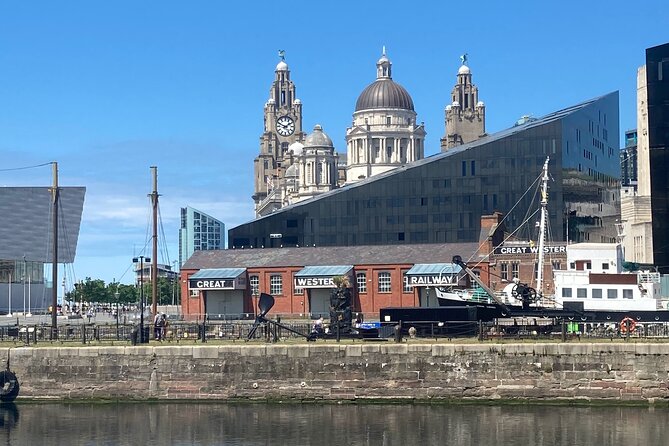
Next up is the Liverpool Sailors Home Gateway. This is the sort of monument where you can pause for photos, including the golden Liver bird detail that’s hard to miss. It’s a good early win because it gives you a visual anchor for the maritime theme.
Then you move into Henry Street and the Ropewalks area. The name matters. Ropewalks is tied to rope-making for sailing ships, and hearing that connection makes the whole docks story feel less abstract. You’re basically walking through the “materials and labor” side of Liverpool’s maritime power—not just the grand ships and famous dates.
This is a good stretch for travelers who like real-world history. Instead of a big, distant overview, you get small, concrete explanations that match what you’re looking at.
Campbell Square’s Bridewell: when the city turns into a story you can picture
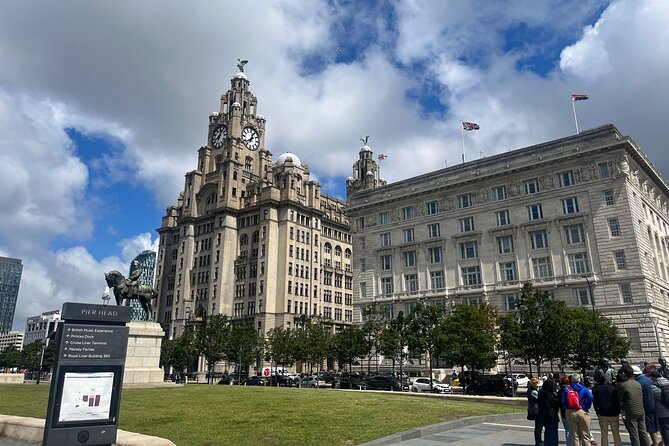
Campbell Square is where the tour adds contrast. Close by the Ropewalk district, you’ll meet The Bridewell, a converted Victorian gaol. It’s the kind of stop that breaks up the dock-and-trade pattern with a human side: discipline, confinement, and the city’s darker edges.
The timing is short, but you might get the chance to see inside one of the original cells. That’s one of those moments that makes a walking tour feel more than decorative. When you can visualize what happened behind those walls, the city’s past clicks into place.
A small heads-up: access isn’t guaranteed. The tour notes that on occasion locations may be inaccessible due to operational reasons. If that happens, don’t panic—you’ll still get the surrounding context.
Thomas Steers Way: dry dock history plus a modern selfie stop
Thomas Steers Way sits on the site of Liverpool’s first dry dock. That’s a big deal for maritime history, but the tour keeps it approachable by focusing on how the story is physically represented here.
You’ll notice a large water fountain that captures that dock history, and you may get a quick look down through a port hole. It’s a clever way to connect “industrial past” to something you can experience in the present.
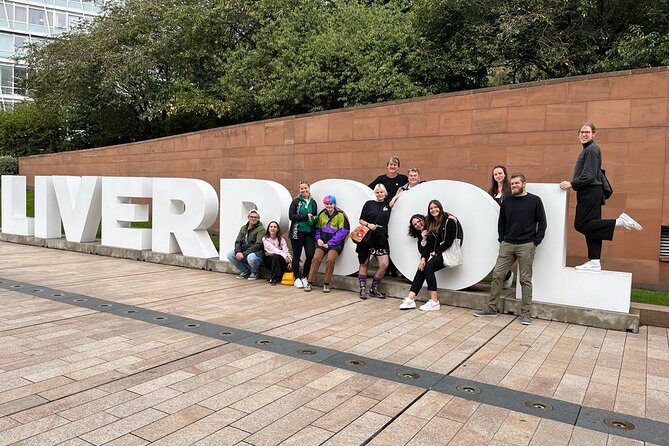
Then there’s the LIVERPOOL selfie sign, an oversized landmark whose colors change with the season or events. This is a modern insert into an older narrative, and it works because it gives you a visual reminder of how Liverpool keeps remixing its identity.
If you’re traveling with friends, this is also a practical stop. It’s easy to regroup for photos without losing the group’s flow.



Royal Albert Dock Liverpool: Titanic as Liverpool’s own story, not just a label
Royal Albert Dock Liverpool is where the tour’s maritime theme hits its peak. As you walk the waterfront, your guide explains how the Titanic story became part of Liverpool’s maritime story. That framing is important: it’s not presented as a standalone museum fact. It’s connected to the city’s dock development and the ways Liverpool shaped and handled large-scale shipping.
You’ll also look at standout architecture—old and new together. That blend is one of Liverpool’s defining visual traits: the city preserved its character while still building for today.
One more highlight here is the bronze statue to Bill Fury. For many fans, this has become a shrine-like stop, and even if you’re not a devoted follower of every local pop story, it’s the kind of marker that helps you understand how culture grows around people, not only buildings.
Tip: keep an eye on where the group pauses. Waterfront areas can feel open, but wind and sound carry. If you want to hear everything, try to keep a steady spot with the guide rather than drifting off for photos every five steps.
Beatles Statue and the Fab Four selfie moment
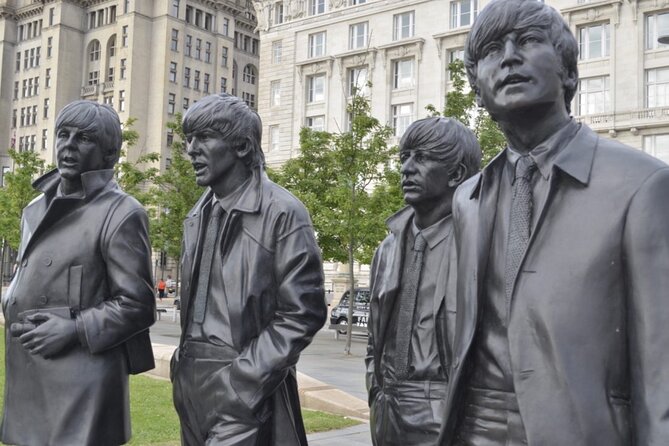
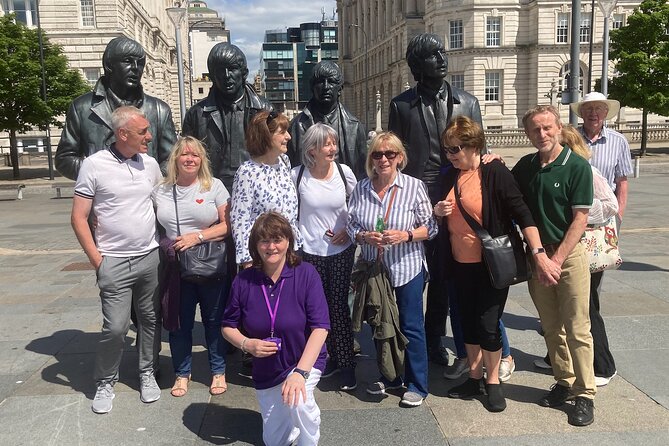
As a Beatles fan, you’ll appreciate the stop for a selfie with the Fab Four statue. The tour description notes it was sculpted by Andrew Edwards, and that name gives the stop a real-world anchor beyond just a photo opportunity.
There’s also a heads-up in the tour details: on occasion access to the Andrew Edwards Beatle Statue is restricted, and in those cases the tour visits alternative statues. That’s exactly what you want from a planning standpoint—less disappointment if plans change at street level.
Also, the tour passes by The Cavern Club area. You don’t need to stop for an entry ticket on this tour to get the connection, because the walking context sets you up for later exploration.
The Three Graces: Cunard, Port of Liverpool, and the Liver Building
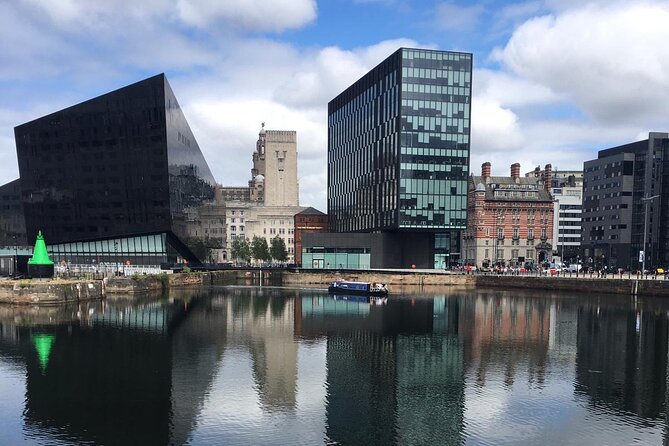
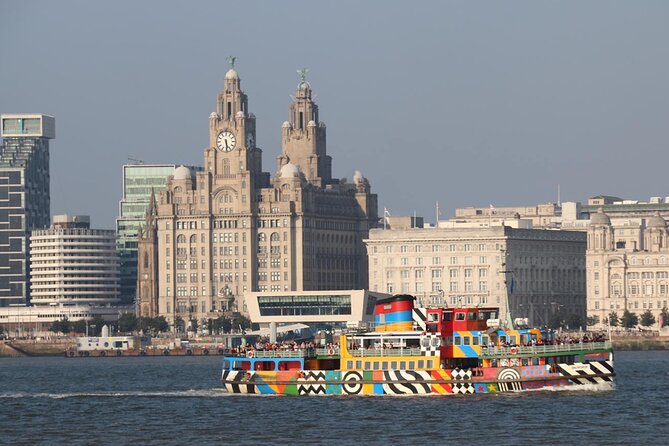
The Three Graces are a classic Liverpool skyline trio. You’ll learn about the Cunard Building, the Port of Liverpool Building, and the Liver Building, all Grade II listed as a group of landmark architecture.
I like this section because it’s about more than names. Your guide explains how the buildings reflect the city’s trading power and civic pride. When you stand there in person, you understand why these structures became symbols—not just because they look good in photos, but because they were designed to project importance.
This is also a helpful moment for orientation. Once you’ve seen the Three Graces explained, it’s easier to navigate later and interpret what you see on your own, whether you’re walking or hopping between neighborhoods.
Castle Street to Liverpool Town Hall: from medieval connections to 18th-century authority
Castle Street is a classic “look around” stretch. The tour points out that the street still carries a connection to medieval times, and the surrounding architecture helps you feel that layering. Even if you only catch small clues, the guide’s framing makes it easier to spot what matters.
Then you walk toward Liverpool Town Hall, described as a Grade I listed town hall and one of the finest surviving 18th-century town halls in England. The story goes back further too, since predecessors date back to the 1500s.
This is where the tour makes the transition from trade city to civic city. Docks explain money. Town Hall explains how that money became power, administration, and public identity. If you enjoy governance and the way cities organize themselves, you’ll find this stop satisfying.
Exchange Flags and Nelson Monument: why this square feels like a power center
Exchange Flags is a Grade II listed courtyard facing the Town Hall. Here, you’ll learn about buildings around the square and how the area played a role in the Second World War. That bit of context keeps the tour grounded—Liverpool isn’t only about old shipping glamour and Beatles fame. It has survived real conflict and rebuilt.
You’ll also see the Nelson Monument area and a large bronze monument to Nelson dating to the early 1800s. Even if you’ve seen Nelson-related monuments before, the setting matters. In Liverpool, it’s tied to maritime identity and city confidence.
Photo tip: Exchange Flags courtyards can make photos look great quickly, but watch your footing. Stone surfaces and crowd flow can get tricky around photo pauses.
Derby Square and the Queen Victoria monument: where Liverpool Castle once stood
Derby Square is another quick stop with a strong story hook. The tour explains that Liverpool Castle once stood here, and today you’ll see an imposing monument to Queen Victoria.
This works well in a walking tour because it gives you a mental time jump. You go from dock-era and pop culture markers back to older city foundations. It’s the kind of ending stretch that helps you remember Liverpool as a place of ongoing change—not a collection of unrelated landmarks.
Ending at Mathew Street: where to continue after the guided part
Your tour ends at Mathew Street, at a convenient city-centre location right near the Mathew Street entrance. This is a smart finish because Mathew Street is where Beatles-adjacent energy lives in a very walkable way.
You’ll have the option to explore Mathew Street and the Cavern quarter on your own. If you want to go deeper into Beatles-specific details, the tour description suggests booking a Beatles walking tour afterward.
For you, this finish point is useful because it matches different travel styles. If you want downtime, you can wander. If you want more story, you can stack a second tour while you’re still in the mood.
How long it takes, what the walk is like, and what to bring
The tour lasts about 2 hours 15 minutes. That timing is efficient if you have limited time but still want more than one neighborhood. It’s also long enough for a real story arc: culture, working life, docks, pop culture, and civic landmarks.
The route is described as having no hills or stairs, which helps a lot. Still, you’ll pass through areas with uneven surfaces like cobbles, so comfortable shoes with good grip are a must. I also recommend you bring a bottle of water. You’ll want it, especially if it’s warm or if you’re stopping for photos longer than planned.
Group size is capped at 20, so you’re not stuck in a megaclass crowd. The reviews backing this up often mention small-group moments, which usually means more chances to ask questions. If you care about Q&A, pick a spot where you can see and hear the guide clearly.
One more practical detail: the tour includes a mobile ticket. That’s helpful for quick entry and keeps you from hunting for paper confirmations.
Price and value: what $31.90 buys you in real terms
At $31.90 per person, this is priced like a serious deal for what you get: a guided city overview, local guide storytelling, and a route that covers major sights without requiring separate paid entrances at stops. The stop notes indicate admission tickets are free for the locations on the route, and there’s no food or drink included.
That value matters because Liverpool’s center is full of places you could visit on your own, but the “what it means” part is hard to piece together without help. Paying for a guide is basically buying time, clarity, and the ability to understand why each place matters.
If you’re traveling on a budget, think of this as your first “orientation layer.” You’ll be able to plan the rest of your trip better—where to linger, what to look for, and which neighborhoods fit your interests.
A realistic drawback: weather and route changes happen
The tour requires good weather. If conditions are poor, you may be offered a different date or a refund. This is common for walking tours, but it’s still worth planning around.
Also, on occasion the route can change or access to a location may be limited due to operational reasons. That includes the possibility of alternative Beatle statue stops if one is restricted. The upside is that the tour doesn’t leave you stranded; you still get the main themes and landmarks.
If you’re the type who hates uncertainty, go in with a flexible mindset. This is a walking story, not a rigid script.
Should you book this Liverpool walking tour?
Yes—if you want a fast, well-structured overview that connects Liverpool’s dock roots, civic landmarks, and Beatles culture into one coherent loop. This is especially worth it on your first visit, when you still don’t know which streets and stories you’ll want to revisit.
Book it if you like local guides, clear explanations, and a route that ends at Mathew Street so you can keep the momentum going. It’s also a good choice if you’re watching your schedule and want to cover a lot without renting a car or doing multiple transfers.
Skip it only if you’re looking for a super slow, single-site deep dive, or if cobbles and outdoor weather are dealbreakers for you. Otherwise, this one is a strong value way to get your bearings fast—and to leave Liverpool understanding why it became what it is.
FAQ
How long is the Best Of Liverpool Heritage, History & Culture Guided Walking Tour?
It’s approximately 2 hours 15 minutes.
Where does the tour start and where does it end?
The tour starts in front of the Bluecoat on School Lane, Liverpool L1 3BX, and it ends at the entrance to Mathew Street in Liverpool.
Is the tour suitable for someone with moderate physical fitness?
Yes. The tour is described as having no hills or stairs, but it does include walking on uneven surfaces such as cobbles, so comfortable no-slip shoes are recommended.
Is food or drink included?
No. You’ll want to plan your own refreshments, and the tour recommends bringing water.
What language is the tour offered in?
The tour is offered in English.
How big is the group?
The tour has a maximum of 20 travelers.
Will I see the Cavern Club area and Beatles-related sights?
The tour passes by The Cavern Club and includes a chance to take a selfie with the Beatles Statue. The finish at Mathew Street also lets you explore the Cavern quarter on your own.
What happens if there’s a problem accessing the Beatles statue or the weather is bad?
If access to the Beatles statue is restricted, the tour visits alternative statues. The experience requires good weather; if it’s canceled due to poor weather, you’ll be offered a different date or a full refund.
Can I cancel and get a full refund?
Yes. Free cancellation is available up to 24 hours in advance for a full refund.